
As urban living becomes more compact and holiday traditions adapt to modern lifestyles, many people are rethinking the classic floor-to-ceiling Christmas tree. For those in apartments, studio homes, or cozy cottages, space is a premium commodity—especially during the festive season. Enter the tabletop Christmas tree: a compact, stylish alternative that’s gaining popularity across cities and small households. But is it truly better suited for limited square footage than its towering counterpart? The answer depends on several factors, from spatial efficiency to aesthetic flexibility and maintenance demands.
While a full-sized tree evokes nostalgia and grandeur, it isn’t always practical. A tabletop tree, typically ranging from 12 to 24 inches in height, offers a clever compromise between tradition and functionality. It brings the warmth of the holidays into tight corners without dominating the room. This article explores the advantages and limitations of both options, backed by expert insights, real-world scenarios, and actionable guidance for making the best choice based on your living environment.
Spatial Efficiency: Maximizing Limited Square Footage
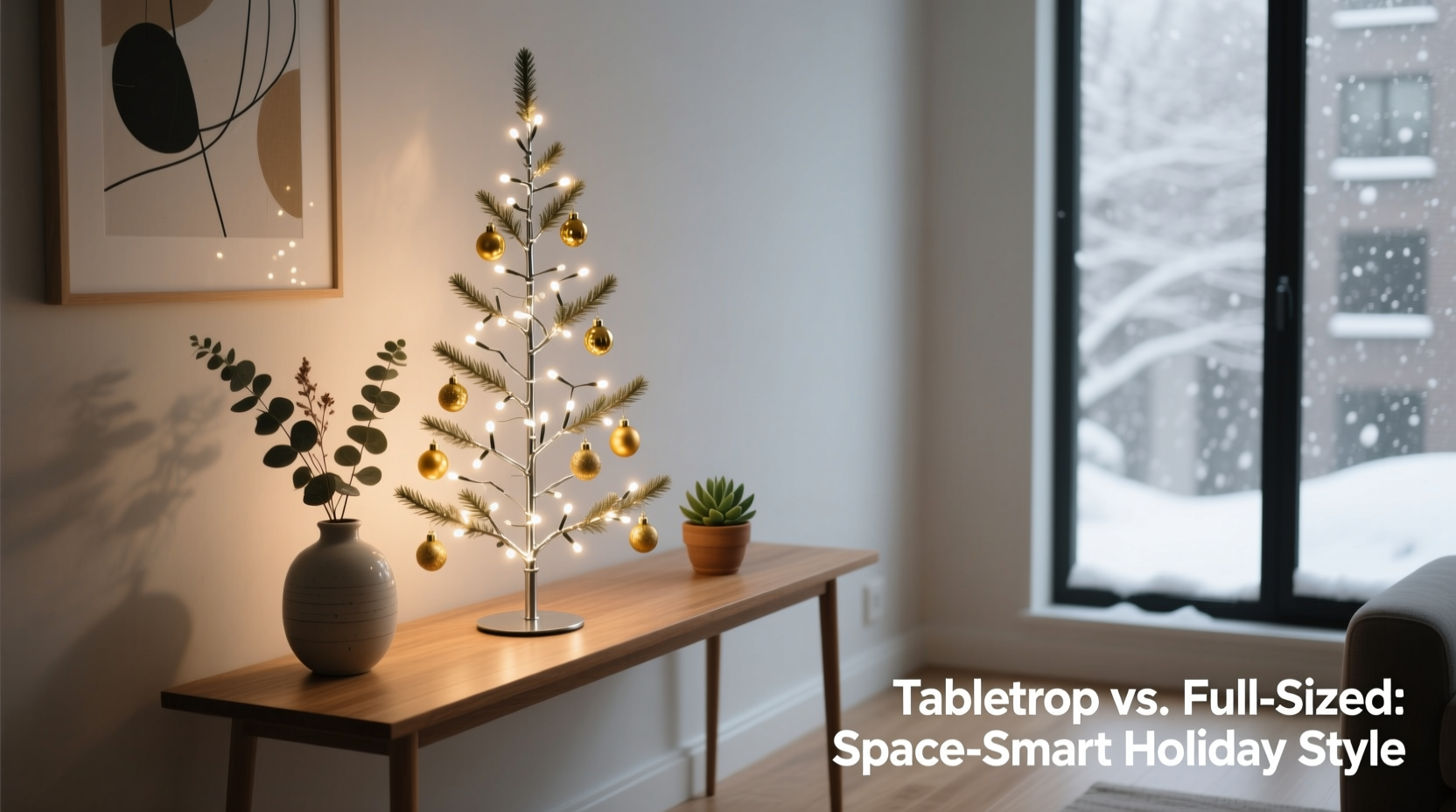
In small apartments, every inch counts. A standard full-sized Christmas tree can occupy 3 to 5 square feet of floor space—space that might otherwise be used for seating, movement, or storage. In contrast, a tabletop tree uses minimal footprint, often fitting neatly on a console table, bookshelf, or dining surface. This makes it ideal for studios, dorm rooms, or homes where open floor plans demand multipurpose furniture.
Consider a typical New York City studio apartment measuring around 400 square feet. Placing an 8-foot tree in such a space can make the room feel cluttered and obstruct natural traffic flow. A 20-inch tabletop tree, however, can sit unobtrusively on a sideboard, adding festive cheer without compromising usability.
Moreover, smaller trees allow for creative placement in areas where a full-sized version would be impractical: entryways, kitchen counters, office desks, or even bathroom vanities (if fire-safe materials are used). This versatility enables multiple decorative points throughout the home without overwhelming any single room.
Comparing Features: Tabletop vs. Full-Sized Trees
To determine which tree type suits small spaces best, it helps to compare key characteristics side by side. Below is a detailed comparison table highlighting critical differences.
| Feature | Tabletop Tree | Full-Sized Tree |
|---|---|---|
| Average Height | 12–24 inches | 6–9 feet |
| Floor Space Used | Less than 1 sq ft | 3–5 sq ft |
| Assembly Time | 5–10 minutes | 20–45 minutes |
| Storage Size | Fits in small box or drawer | Larger container, often bulky |
| Energy Use (Lights) | Low (10–30 bulbs) | Moderate to high (100+ bulbs) |
| Decorating Capacity | Limited (mini ornaments) | High (full ornament sets) |
| Mobility | Easy to move or rotate | Fixed location once set up |
| Ideal For | Small homes, renters, offices | Large rooms, family traditions |
The data shows that while full-sized trees offer greater decorating potential and visual impact, they come at the cost of space, time, and energy. For individuals prioritizing convenience and spatial harmony, the tabletop option clearly has functional advantages.
Real-Life Example: Holiday Decor in a Downtown Loft
Taylor Chen, a graphic designer living in a converted warehouse loft in Portland, Oregon, faced a dilemma each holiday season. Her 550-square-foot space blends living, sleeping, and workspace zones with minimal separation. “Every year, I’d wrestle with setting up a 7-foot tree,” she recalls. “It blocked my path to the kitchen, collected pine needles on my drafting table, and made hosting guests awkward.”
After three years of frustration, Taylor switched to a 22-inch pre-lit artificial tree on a reclaimed wood stand. She placed it on a narrow credenza near her window, flanked by vintage candlesticks and handmade garlands. “It took five minutes to set up, doesn’t shed, and still feels like Christmas,” she says. “Plus, I can move it when I need the space.”
This shift not only improved functionality but also inspired a new aesthetic approach. Taylor now incorporates multiple small greenery accents—a potted rosemary shaped like a tree, a wreath on the door, and a mini advent calendar—creating a layered holiday atmosphere without relying on one dominant centerpiece.
“Small-space decorating isn’t about sacrifice—it’s about reimagining tradition. A tabletop tree can anchor the season just as powerfully as a large one, especially when thoughtfully styled.” — Lena Patel, Interior Stylist & Urban Living Consultant
Practical Tips for Choosing and Styling a Tabletop Tree
Selecting the right tabletop tree involves more than just size. Consider material, lighting, base stability, and how it complements your existing decor. Here are key considerations for getting the most out of your compact holiday centerpiece.
- Pick the right scale: Match the tree height to the furniture it will sit on. A 12-inch tree works well on a nightstand; a 24-inch model suits a dining table.
- Opt for pre-lit models: Integrated LED lights reduce setup time and eliminate tangled cords. Warm white LEDs create a cozier ambiance than cool tones.
- Choose a stable base: Ensure the stand is weighted enough to prevent tipping, especially in homes with pets or children.
- Use themed mini ornaments: Select a cohesive color palette or theme—vintage silver, rustic wood, or Scandinavian minimalist—to enhance visual impact despite the small size.
- Elevate with a riser: Place the tree on a decorative tray, cake stand, or stack of books to add height and prominence.
For renters or frequent movers, consider a foldable or collapsible design. Many modern tabletop trees feature hinged branches that flatten for storage, making them ideal for seasonal use without long-term commitment.
Step-by-Step Guide: Setting Up a Festive Tabletop Display
Creating a charming holiday vignette around your tabletop tree enhances its presence and compensates for its smaller stature. Follow this simple sequence to build a cohesive display.
- Choose your surface: Pick a sturdy, level surface away from high-traffic paths and heat sources (like radiators or stoves).
- Measure clearance: Ensure there’s at least 6 inches of headroom above the tree if near a wall or shelf.
- Prepare the base: Lay down a festive runner, tray, or doily to define the space and protect the surface.
- Position the tree: Center it on the base, plugging in lights beforehand to test functionality.
- Add complementary décor: Surround with matching elements—candles, pinecones, snow globes, or holiday books.
- Style with intention: Vary heights and textures for visual interest. Avoid overcrowding; negative space enhances elegance.
- Secure loose cords: Use cord clips or tape to keep wires tidy and safe, especially on wooden or glass surfaces.
This method transforms a simple tree into a curated focal point, proving that small-scale décor can deliver big emotional impact.
When a Full-Sized Tree Might Still Be Worth It
Despite the advantages of tabletop trees, some situations justify going full-size—even in compact homes. Families with young children may value the experience of decorating a larger tree together. Pet owners might prefer a single, elevated tree over multiple tempting miniatures within reach. Additionally, those who host holiday gatherings may find a taller tree creates a more immersive atmosphere.
If you choose a full-sized tree in a small space, strategic choices can mitigate downsides. Opt for a slim-profile design (often called \"pencil trees\"), which can be as narrow as 18 inches in diameter. These maximize vertical impact while minimizing floor coverage. Alternatively, consider wall-mounted artificial trees, which project outward without occupying any floor space at all.
Another solution is renting a tree. Some urban services offer delivery, setup, and post-holiday pickup of live or artificial trees, eliminating long-term storage concerns and reducing environmental waste.
Frequently Asked Questions
Can a tabletop tree still feel festive?
Absolutely. With thoughtful lighting, themed ornaments, and surrounding décor, a small tree can evoke the same warmth and joy as a larger one. Its intimacy often makes it more personal and engaging.
Are tabletop trees cheaper than full-sized ones?
Generally, yes. Entry-level tabletop trees start around $20–$40, while full-sized models range from $50 to $200 or more. However, high-end designer tabletop versions with premium materials can exceed $100.
Do tabletop trees work with traditional ornaments?
Standard ornaments may overwhelm a small tree. Instead, use mini ornaments (1–2 inches) or lightweight handmade decorations. Repurposing heirloom miniatures or crafting DIY paper stars adds sentimental value without bulk.
Final Thoughts: Rethinking Holiday Tradition for Modern Living
The question isn’t whether a tabletop Christmas tree is objectively better than a full-sized one, but whether it better serves the needs of a particular lifestyle. In small spaces, where functionality and flow are paramount, the compact tree often emerges as the smarter, more sustainable choice. It respects spatial limits without sacrificing seasonal spirit.
What matters most isn’t the height of the tree, but the meaning it holds. Whether perched on a windowsill or standing tall in a corner, a Christmas tree symbolizes celebration, connection, and renewal. By embracing adaptable solutions like the tabletop tree, we honor tradition while evolving with our environments.




 浙公网安备
33010002000092号
浙公网安备
33010002000092号 浙B2-20120091-4
Comments
No comments yet. Why don't you start the discussion?