
In compact living spaces, every square foot counts—especially during the holidays. As more people embrace minimalist lifestyles and downsize into tiny homes, RVs, or micro-apartments, traditional decor choices face new constraints. The Christmas tree, once a towering centerpiece of holiday celebration, now competes for space with essential furniture and walkways. Enter the tabletop Christmas tree: a scaled-down alternative that promises charm without clutter. But does going small mean sacrificing festivity? Or can a miniature tree deliver the same warmth and joy in a fraction of the footprint?
The answer isn’t simply yes or no—it depends on priorities, aesthetics, and how thoughtfully the tree is styled. For many tiny homeowners, a tabletop tree isn’t a compromise; it’s a smart adaptation. When designed intentionally, these petite trees can be just as joyful, expressive, and meaningful as their full-sized counterparts.
Space Efficiency Meets Holiday Spirit
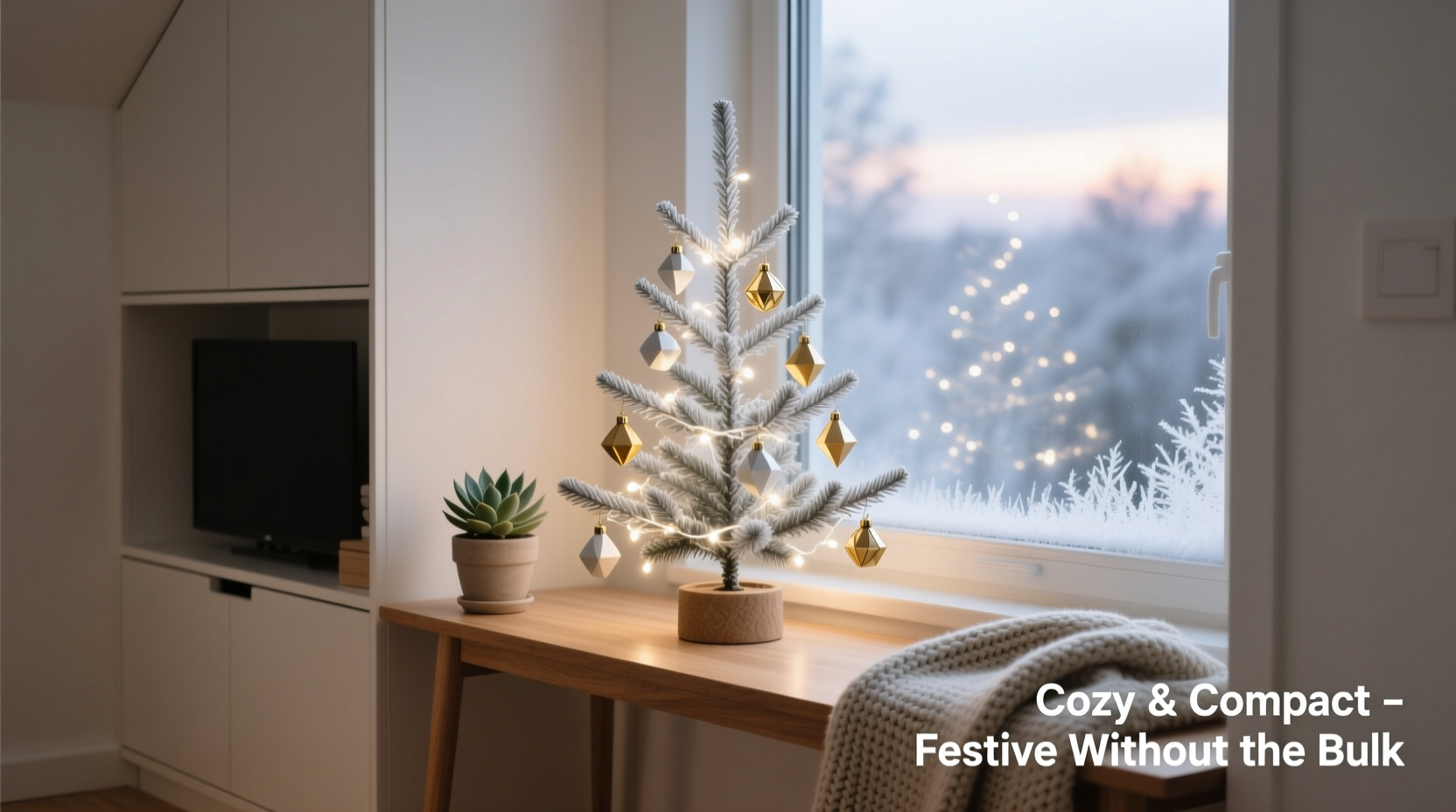
Tiny homes average between 100 and 400 square feet. In such environments, floor space is precious. A standard six- to seven-foot tree occupies not only visual dominance but also physical clearance—door swings, traffic flow, and storage access all suffer when large decor takes over.
A tabletop tree, typically ranging from 12 to 36 inches tall, eliminates those spatial conflicts. It can sit on a dining table, kitchen island, bookshelf, or even a windowsill. This flexibility allows residents to enjoy seasonal decoration without surrendering functionality.
Beyond practicality, smaller trees often encourage more creative expression. With limited branch real estate, decorators are forced to curate rather than overload. The result? A more intentional, personalized display that feels cohesive and elevated—not chaotic.
Design Versatility: From Rustic to Modern Minimalist
One misconception about tabletop trees is that they’re inherently childish or underwhelming. In reality, their size opens doors to diverse design approaches that might feel out of place with larger models.
Consider a vintage-inspired tree made of stacked books wrapped in evergreen garlands, topped with a handmade star. Or a sleek silver aluminum tree paired with geometric glass baubles for a mid-century modern aesthetic. These designs wouldn’t necessarily stand out in a sea of traditional pines—but on a coffee table, they become conversation pieces.
Material variety also expands options. While most floor trees are flocked or pre-lit green pines, tabletop versions come in metal, wood, fabric, and even paper constructions. Some are collapsible or modular, making them ideal for seasonal rotation or travel.
“Tiny home living rewards creativity, not conformity. A small tree isn’t less festive—it’s an invitation to rethink what celebration looks like.” — Maya Tran, Sustainable Interior Designer and Tiny Home Advocate
Comparing Full-Size vs. Tabletop Trees in Compact Spaces
| Feature | Full-Size Tree (6–7 ft) | Tabletop Tree (12–36 in) |
|---|---|---|
| Floor Space Used | ~4–6 sq ft | ~1–2 sq ft |
| Ideal Placement | Corners, dedicated living areas | Tables, shelves, countertops |
| Ornament Capacity | 50+ ornaments typical | 10–25 curated pieces |
| Storage Size | Larger box, ~24” x 24” x 60” | Compact case, often under 18” cube |
| Setup Time | 30–60 minutes | 5–15 minutes |
| Energy Use (if lit) | 40–100+ bulbs | 10–30 LED bulbs |
| Suitability for Tiny Homes | Limited—can dominate space | High—flexible and unobtrusive |
This comparison shows that while full-size trees offer grandeur, they demand resources that many tiny dwellers simply don’t have. Tabletop trees, by contrast, align with the core principles of efficient design: minimal input, maximum impact.
Real-Life Example: A Tiny Home Holiday in Portland
Jessica Reed lives in a 280-square-foot converted garage in Portland, Oregon. Last year, she attempted a five-foot artificial tree in the corner of her main room. “It looked fine at first,” she says, “but within days, I was bumping into branches, tripping over the stand, and realizing I couldn’t open my closet door fully.”
After two weeks, she switched to a 24-inch frosted pine tabletop tree on her reclaimed wood dining table. She decorated it with heirloom glass balls from her grandmother, tiny red cardinal ornaments, and a hand-stitched fabric star. String lights were battery-operated and remote-controlled.
“I expected to feel disappointed,” Jessica admits. “But the opposite happened. Because the tree was smaller, I paid more attention to each ornament. My kids loved helping me choose which ones to include. It felt more intimate, like we were focusing on meaning instead of mass.”
She now rotates three small trees seasonally—one on the table, one on a high shelf, and one in a bay window—creating a sense of layered celebration without congestion.
Step-by-Step Guide to Styling a Festive Tabletop Tree
Creating a joyful tabletop display requires planning, but the process is simple and rewarding. Follow this timeline for best results:
- Week 1: Assess Your Space
Measure available surfaces. Consider lighting, foot traffic, and existing decor. Choose a location that’s visible but safe (away from candles, stoves, or edge hazards). - Week 2: Select Your Tree
Pick a style that complements your interior. Artificial pre-lit models offer convenience; natural mini firs add scent but require watering; DIY wireframe trees allow total customization. - Week 3: Curate Decorations
Limited space means selective ornamentation. Aim for 10–20 meaningful pieces. Mix textures: wood, glass, fabric, and metal. Include one standout focal ornament (e.g., a family photo in a frame, a handmade piece). - Week 4: Add Lighting & Base
Use warm-white LED string lights (battery-powered for safety). Wrap the base in a decorative scarf, faux fur, or rustic burlap. Consider placing the tree on a mirrored tray to reflect light. - Final Touch: Personalize
Add a small sign (“Joy,” “Noel”), a sprig of cinnamon sticks, or a tiny gift box underneath labeled “To: Us, From: Santa.”
Expert Tips for Maximizing Festivity in Small Spaces
- Go vertical with lighting. Hang fairy lights along walls or ceilings to create a glowing ambiance that compensates for lack of tree height.
- Create a themed vignette. Surround the tree with complementary items: vintage sleds, snow globes, or a mug of cocoa. Tell a story with your setup.
- Use scent strategically. Simulate the smell of a real pine with essential oil diffusers, scented candles, or potpourri bowls nearby.
- Rotate decor throughout December. Swap out one or two ornaments weekly to keep the display feeling fresh and engaging.
- Layer multiple small trees. If space allows, group two or three different styles (e.g., a white tree, a gold wire tree, and a live rosemary plant shaped like a cone) for visual interest.
Checklist: Choosing the Right Tabletop Tree for Your Tiny Home
- ☐ Measure available surface area
- Ensure at least 2 inches of clearance on all sides.
- ☐ Decide on power source
- Battery-operated lights are safer and more flexible in tight layouts.
- ☐ Prioritize stability
- Look for weighted bases or wide footprints to prevent tipping.
- ☐ Match your aesthetic
- Rustic, modern, traditional, or whimsical—choose a tree that reflects your style.
- ☐ Plan for storage
- Confirm you have a dry, rodent-free spot to keep it post-holiday.
- ☐ Limit ornament count
- Select fewer, higher-meaning decorations to avoid clutter.
- ☐ Test visibility
- View the setup from common seating areas to ensure it’s seen and enjoyed.
FAQ: Common Questions About Tabletop Trees in Tiny Homes
Isn’t a small tree less festive than a big one?
Not necessarily. Festivity comes from emotional resonance, not size. A well-decorated tabletop tree surrounded by personal touches can evoke deeper nostalgia and connection than a generic large tree. Many find small trees cozier and more inviting.
Can I still have lights on a tabletop tree?
Absolutely—and you should. LED string lights enhance warmth and sparkle. Opt for battery-powered sets with timers for safety and convenience. Avoid plug-in models unless outlets are nearby and cords won’t pose a tripping hazard.
What if I want a real tree smell without a full tree?
You don’t need a whole tree to enjoy pine fragrance. Options include placing evergreen clippings around the base, using pine-scented candles, simmering citrus and cinnamon with pine needles on the stove, or using essential oil blends in a diffuser.
Conclusion: Rethinking Festivity for Modern Living
The question isn’t whether a tabletop Christmas tree is better for tiny homes—it clearly is, in terms of space efficiency, adaptability, and ease of use. The deeper issue is whether “less” automatically means “less festive.” That assumption stems from outdated notions of holiday grandeur tied to excess and scale.
In truth, the most memorable celebrations are often the most intimate. A small tree encourages mindfulness, curation, and presence. It invites families to gather closer, to notice details, to savor moments. In a world increasingly defined by noise and clutter, choosing simplicity can be the most radical act of joy.
For tiny homeowners, apartment dwellers, or anyone seeking a more intentional holiday, the tabletop tree isn’t a downgrade. It’s a reimagining—one that proves festivity isn’t measured in feet, but in feeling.




 浙公网安备
33010002000092号
浙公网安备
33010002000092号 浙B2-20120091-4
Comments
No comments yet. Why don't you start the discussion?