
In compact living environments like college dorms, studio apartments, or micro-lofts, holiday decorating often feels like an afterthought. Space is limited, rules may be strict, and traditional floor-standing trees can seem impractical—or even impossible. Enter the tabletop Christmas tree: a scaled-down alternative that’s gaining popularity among urban dwellers and students alike. But beyond its charming size, is it truly practical? The answer depends on your needs, lifestyle, and how you define “practical.” This article explores the functionality, benefits, limitations, and smart strategies for using a tabletop tree in tight quarters.
Why Space Constraints Demand Creative Holiday Solutions
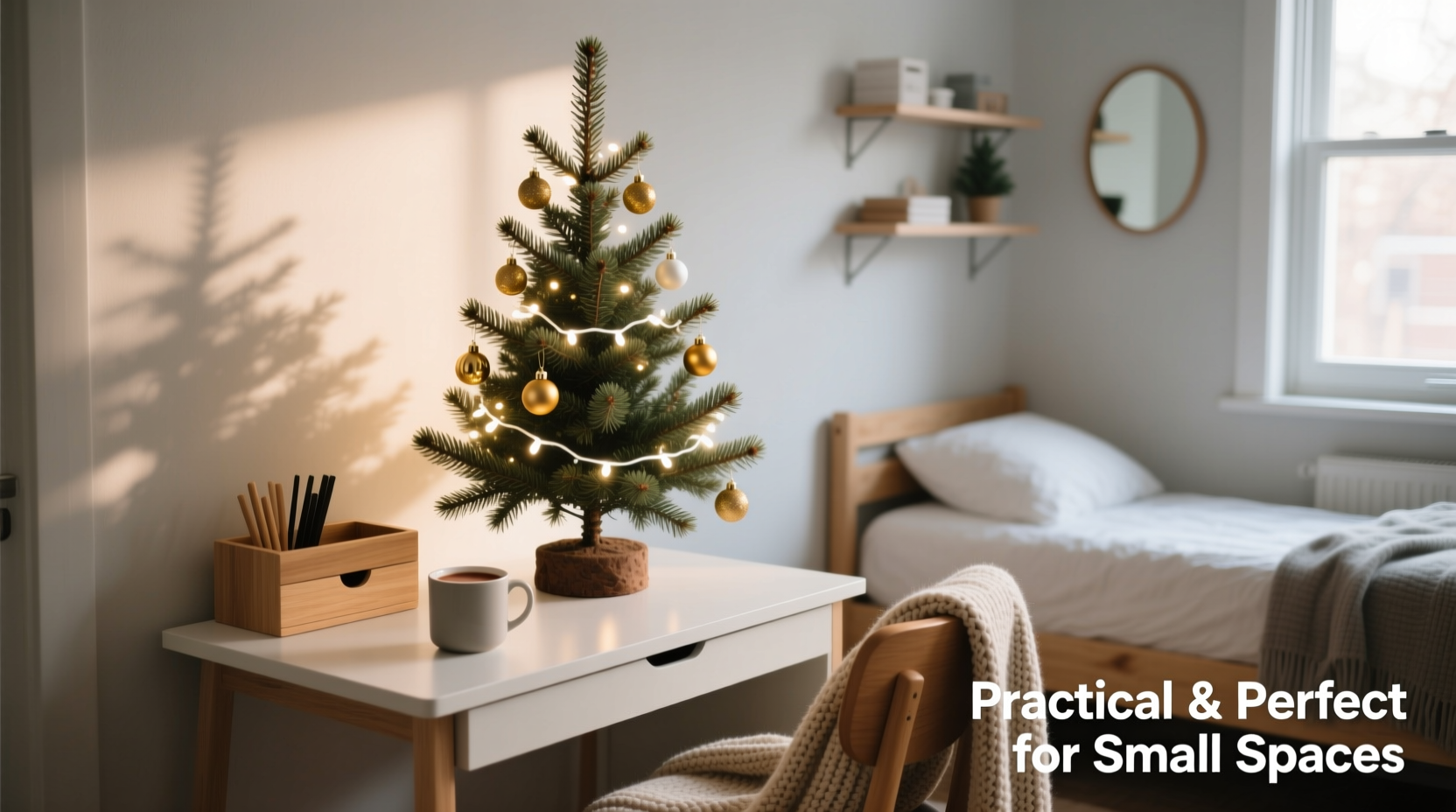
Dorm rooms average between 100 and 200 square feet. Studio apartments rarely exceed 500. In such confined areas, every inch counts. A standard Christmas tree—typically 6 to 7 feet tall—occupies valuable floor space, creates tripping hazards, and may violate housing policies regarding open flames or artificial materials. Tabletop trees, usually ranging from 12 to 36 inches in height, offer a realistic compromise. They deliver seasonal charm without monopolizing room layout or requiring complex assembly.
Moreover, many institutions restrict decorations for fire safety or liability reasons. A small, battery-operated LED-lit tabletop tree often falls within acceptable guidelines, especially if it’s flame-retardant and unobtrusive. For students and renters, compliance isn’t just about avoiding fines—it’s about maintaining good standing with housing authorities.
Advantages of Tabletop Trees in Small Living Spaces
The appeal of a tabletop Christmas tree goes beyond mere size. When thoughtfully chosen and styled, it enhances coziness, supports mental well-being during the holidays, and personalizes otherwise sterile environments—all while staying out of the way.
- Space efficiency: Fits neatly on desks, dressers, bookshelves, or coffee tables without blocking walkways.
- Mobility: Lightweight and easy to move—ideal for students who travel home for breaks or relocate frequently.
- Affordability: Typically cost less than full-sized trees, both in purchase price and associated accessories (stands, lights, storage bins).
- Low maintenance: No water refills, needle cleanup, or trimming required—especially true for pre-lit artificial models.
- Decorative flexibility: Serves as a centerpiece or accent piece that complements existing furniture rather than competing with it.
Psychologically, having a visible symbol of celebration can boost mood during stressful periods like finals week or holiday isolation. A small tree provides sensory comfort—a familiar scent (if using faux pine sprays), soft lighting, and tactile ornaments—without overwhelming the senses in a cramped room.
Practical Considerations: What to Evaluate Before Buying
Not all tabletop trees are created equal. Practicality hinges on several factors, including design, power source, durability, and storage potential. Choosing wisely ensures longevity and daily usability.
Size and Proportion
A 24-inch tree might seem perfect until placed on a desk already crowded with textbooks and a laptop. Measure available surface area and consider vertical clearance—will opening a closet door or pulling out a chair interfere?
Lighting Options
Battery-powered LED lights are safest and most convenient for dorms where outlets are scarce or shared. Look for models with timer functions to conserve battery life. Avoid plug-in versions unless you’re certain about outlet access and circuit load limits.
Material Quality
Low-cost plastic trees can look flimsy and tangle easily when stored. Opt for hinged metal bases and PVC or PE (polyethylene) needles, which mimic realism and resist shedding. Hinged branches also speed up setup and breakdown.
Storage and Portability
Since dorm residents pack up belongings twice a year, ease of disassembly matters. Trees that fold into compact boxes or reusable bags save space in suitcases or under-bunk storage bins.
“Students often overlook long-term practicality when choosing decor. A $30 tree that breaks after one season costs more than a durable $50 model used for four years.” — Laura Nguyen, Interior Designer & Tiny Space Specialist
Step-by-Step Guide: Setting Up a Tabletop Tree in a Dorm Room
Maximizing function and aesthetics requires planning. Follow this timeline to install your tree efficiently and safely.
- Week 1: Research and Purchase
Select a tree based on measurements, lighting preferences, and university regulations. Read reviews focusing on sturdiness and ease of assembly. - Day of Arrival: Unbox and Inspect
Check for missing parts, tangled wires, or damaged tips. Test lights immediately to ensure returns are possible if needed. - Choose Location Strategically
Pick a stable surface away from high-traffic zones, heat sources, or moisture (e.g., near sinks). Avoid blocking emergency exits or vents. - Assemble Branches Gradually
Flip down each tier of branches, fluffing them outward for fullness. Rotate the tree as you go to maintain symmetry. - Add Lights (If Not Pre-Lit)
Use mini LED string lights with a battery pack no larger than a deck of cards. Wrap gently from base to tip, spacing evenly. - Decorate Mindfully
Limited branch strength means lightweight ornaments only—paper, felt, or small wooden pieces. Avoid glass or heavy metals. - Final Safety Check
Ensure cords (if any) are secured, batteries are fresh, and the tree won’t tip if bumped. Place a non-slip pad underneath if necessary.
Comparison: Tabletop vs. Floor Trees in Compact Environments
| Feature | Tabletop Tree | Floor Tree |
|---|---|---|
| Height Range | 12–36 inches | 5–8 feet |
| Footprint | Under 1 sq ft | 3–6 sq ft |
| Setup Time | 5–15 minutes | 30–60 minutes |
| Storage Size | Fits in backpack or tote | Requires large box or bag |
| Safety Compliance | High (battery-powered, non-flammable) | Variable (fire risk, water spillage) |
| Ideal For | Dorms, studios, offices | Homes with dedicated living space |
Real-Life Example: A College Student’s Holiday Setup
Maria, a sophomore at NYU, lives in a double-occupancy dorm room measuring 12’ x 14’. With two beds, two desks, and shared closet space, floor space was non-negotiable. She opted for a 20-inch pre-lit artificial tree with warm-white LEDs and a built-in timer. She placed it on a floating shelf above her desk—the only surface not constantly in use.
She decorated with handmade paper snowflakes, miniature fabric stockings, and a few vintage-inspired ornaments from home. The tree ran on batteries set to turn off automatically at midnight, preserving energy and minimizing distraction during late-night study sessions. During exams, she removed fragile items but left the lit tree as a calming focal point.
“It gave me a sense of normalcy,” Maria said. “Even though I couldn’t have a big tree like at home, seeing those little lights every night made the room feel festive and mine.” Her RA noted it was one of the few decorations that complied fully with fire code and didn’t obstruct movement.
Do’s and Don’ts Checklist for Dorm-Friendly Trees
- ✅ Do measure your space before buying.
- ✅ Do choose battery-powered lights for safety.
- ✅ Do use non-slip pads to prevent tipping.
- ✅ Do pack ornaments in labeled containers for easy storage.
- ❌ Don’t overload branches with heavy decorations.
- ❌ Don’t place near heating vents or open flames.
- ❌ Don’t ignore school decoration policies.
- ❌ Don’t leave lights on unattended overnight (unless timer-controlled).
Frequently Asked Questions
Can I bring a real tree into my dorm room?
Most colleges prohibit live-cut trees due to fire hazards, sap mess, and pest risks. Even potted live trees are often banned because of watering requirements and root expansion. Artificial trees are nearly always the only approved option.
How do I make a small tree look fuller?
Fluff each branch thoroughly, separating individual tips outward. Choose a tree with higher \"tip count\" for density. Add decorative elements like garland coils at the base or mirrored trays underneath to create visual depth.
What if I don’t have a table or desk space?
Consider wall-mounted alternatives—some companies sell flat-back artificial trees designed to hang like art. Alternatively, use a narrow plant stand, windowsill, or stacked crates as a temporary platform.
Final Thoughts: Practicality Meets Personalization
A tabletop Christmas tree isn’t just a compromise—it’s a smart adaptation to modern living conditions. In dorm rooms and tiny homes, practicality doesn’t mean sacrificing tradition; it means reimagining it. A well-chosen miniature tree offers emotional warmth, visual interest, and seasonal joy without infringing on space or safety.
The key lies in intentionality: selecting the right size, prioritizing safety features, and decorating with meaning rather than volume. When done thoughtfully, a small tree becomes more than decor—it becomes a personal anchor during a busy, transitional time of year.
For students far from home, city dwellers in shoebox apartments, or anyone navigating spatial limits, the tabletop tree proves that celebration doesn’t require grand gestures. Sometimes, the most meaningful traditions come in the smallest packages.




 浙公网安备
33010002000092号
浙公网安备
33010002000092号 浙B2-20120091-4
Comments
No comments yet. Why don't you start the discussion?