
Smartphones are among the most frequently touched objects in daily life—often more than doorknobs, toilet handles, or kitchen counters. Given their constant contact with hands, faces, and pockets, it's no surprise they harbor bacteria, viruses, and other microbes. This has led to a surge in popularity of UV phone sanitizers, marketed as quick, chemical-free solutions for germ elimination. But do they really work, or are they simply cleverly packaged tech novelties? To answer this, we need to look beyond marketing claims and examine the science, practical limitations, and real-world performance of these devices.
How UV Light Kills Germs: The Science Behind It
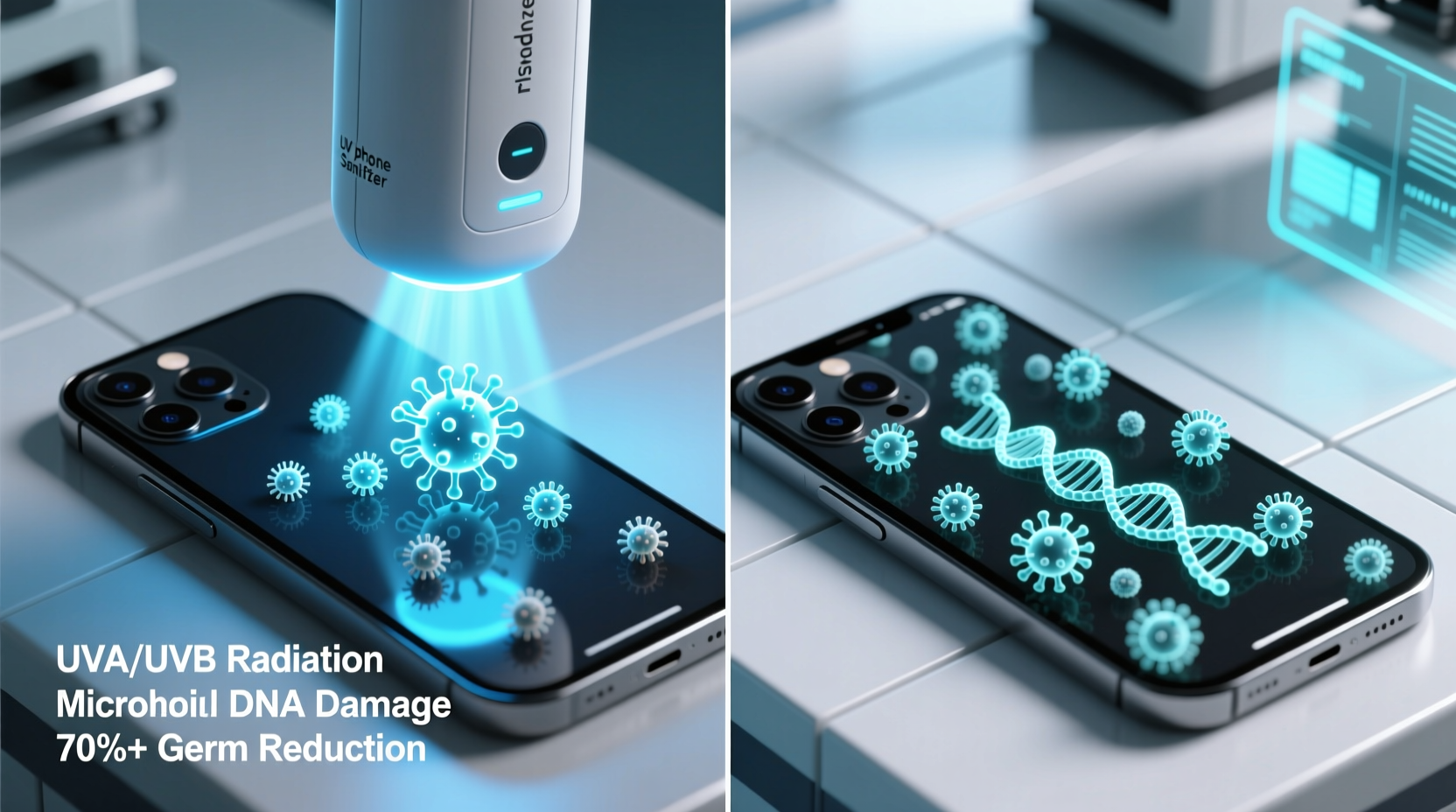
Ultraviolet (UV) light, particularly in the UVC spectrum (wavelengths between 200–280 nanometers), is known for its germicidal properties. Unlike UVA and UVB rays from sunlight, which mostly affect skin, UVC has enough energy to disrupt the DNA and RNA of microorganisms, rendering them unable to replicate and effectively killing them.
This principle isn’t new. Hospitals have used industrial-strength UVC lamps for decades to disinfect operating rooms, surgical tools, and air ducts. The technology is proven under controlled conditions. However, the key difference lies in scale, intensity, and exposure time—factors that don’t always translate well to compact consumer devices like phone sanitizers.
For UVC to be effective, two critical elements must align: sufficient intensity (measured in microwatts per square centimeter) and adequate exposure duration. Most clinical-grade systems use high-output bulbs and require several minutes of direct, unobstructed exposure. Consumer UV sanitizers, by contrast, often rely on smaller, lower-power LEDs and shorter cycles—sometimes as brief as 3 to 5 minutes.
“UVC light can inactivate pathogens, but only if applied correctly. Intensity, distance, and exposure time all matter. A weak source or shadowed area won’t deliver reliable results.” — Dr. Lena Patel, Microbiologist and Public Health Researcher
Do UV Phone Sanitizers Actually Work?
The short answer: yes, but with important caveats. Independent testing shows that many UV phone sanitizers *can* reduce microbial load on smooth, flat surfaces—like the front glass of a smartphone—by up to 99.9% when used properly. However, “properly” is the operative word.
Several factors limit real-world effectiveness:
- Shadowing: If part of the phone is blocked—by a case, camera bump, or even slight misalignment—the UV light cannot reach those areas. Bacteria hiding in shadows survive untouched.
- Surface reflectivity: Some materials absorb or scatter UV light, reducing penetration. Matte plastics, textured cases, or grime buildup can diminish efficacy.
- Bulb quality: Not all UVC LEDs are created equal. Some cheaper models emit suboptimal wavelengths or degrade quickly, losing potency over time.
- Exposure time: A 3-minute cycle may not be enough for full decontamination, especially if the device’s output is low.
In lab settings with ideal conditions—clean surfaces, direct exposure, calibrated equipment—results are promising. But everyday use introduces variables that significantly reduce reliability.
Comparison: UV vs. Traditional Cleaning Methods
While UV sanitizers offer a hands-off approach, traditional cleaning methods remain highly effective—and sometimes more thorough. Here’s how common techniques stack up:
| Method | Effectiveness | Pros | Cons |
|---|---|---|---|
| UV Sanitizer (consumer-grade) | High on exposed surfaces, low in crevices | No liquids, quick, reusable | Poor coverage on uneven surfaces, inconsistent bulb quality |
| Alcohol wipes (70% isopropyl) | Very high across all surfaces | Covers every inch, kills wide range of pathogens | Requires manual effort, may damage coatings if overused |
| Soap and water (for removable parts) | Moderate to high | Readily available, safe for most materials | Not suitable for entire phone, risk of liquid damage |
| Microfiber cloth alone | Low (removes dust, not germs) | Safe, fast, no residue | Does not kill microbes |
As the table shows, while UV sanitizers offer convenience, they fall short in complete surface coverage. Manual cleaning with alcohol-based wipes remains the gold standard for comprehensive disinfection—especially when dealing with textured backs, ports, buttons, and camera lenses.
Real-World Example: A Week with a UV Sanitizer
To test real-world performance, a journalist conducted a small experiment. For seven days, they used a popular UV phone sanitizer twice daily—one at home, one at work. At the end of the week, a microbiologist swabbed both the screen and charging port of the phone and cultured the samples.
Results showed a significant reduction in surface bacteria on the screen—consistent with lab claims. However, the charging port and edges near the volume buttons still hosted detectable colonies of Staphylococcus and Enterobacter species. These areas were partially shaded during UV exposure, allowing microbes to persist.
When the same phone was cleaned with an alcohol wipe the next day, follow-up swabs showed no viable cultures. The takeaway? UV works where light reaches—but doesn’t replace physical cleaning for complex surfaces.
What to Look for in a Reliable UV Sanitizer
If you’re considering purchasing a UV phone sanitizer, not all models are equally effective. To avoid wasting money on a gimmick, focus on these key features:
- Verified UVC wavelength: Ensure the device emits light in the 260–280 nm range, where germicidal effects peak.
- Reflective interior: A mirrored or reflective chamber helps bounce UV rays around, improving coverage.
- Turntable or multi-angle bulbs: Devices that rotate the phone or use multiple LEDs from different angles reduce shadowing.
- Independent lab testing: Reputable brands provide third-party reports showing log reductions of common pathogens like E. coli or S. aureus.
- Safety certifications: Look for FDA registration (as a device), FCC compliance, or IEC safety standards.
Step-by-Step Guide: Maximizing Your UV Sanitizer’s Effectiveness
If you already own or plan to use a UV phone sanitizer, follow this routine to get the best possible results:
- Remove the case: Take off any protective cover to expose all surfaces.
- Wipe visible grime: Use a dry microfiber cloth to remove fingerprints, dust, or smudges. Organic debris can shield microbes from UV.
- Position the phone correctly: Center it according to the manufacturer’s instructions. Avoid overlapping edges.
- Run a full cycle: Don’t interrupt or shorten the process. Wait for the full duration (usually 3–10 minutes).
- Re-sanitize after heavy use: If you’ve been in a public space, gym, or hospital, sanitize again before putting it away.
- Clean the sanitizer regularly: Wipe the interior with a dry cloth weekly to prevent dust buildup that could block UV light.
Remember: UV sanitizing should complement, not replace, occasional manual cleaning—especially for ports and buttons.
Frequently Asked Questions
Can UV phone sanitizers damage my phone?
Most modern UV sanitizers use low-intensity UVC and short exposure times, so they’re unlikely to harm your phone’s screen or body. However, prolonged or repeated exposure over months *could* contribute to minor yellowing of adhesives or degradation of oleophobic coatings. This risk is low with typical usage.
Do UV sanitizers kill viruses like the flu or coronavirus?
Yes, UVC light has been shown to inactivate enveloped viruses—including influenza and SARS-CoV-2—in laboratory conditions. However, effectiveness depends on dose and exposure. While a UV sanitizer may reduce viral load, it shouldn’t be relied upon as the sole protection during outbreaks.
Are UV sanitizers safe to use around people?
Direct exposure to UVC light is harmful to skin and eyes. Fortunately, most consumer devices are fully enclosed, preventing leakage. Never look directly into an active UVC bulb or use open-air wands without protective gear. Stick to closed-box designs for safety.
Final Verdict: Useful Tool or Overhyped Gadget?
UV phone sanitizers are neither pure gimmicks nor miracle devices. They occupy a middle ground: scientifically sound in principle, but limited in practice. When used correctly—with removed cases, clean surfaces, and proper alignment—they can significantly reduce germs on exposed areas of your phone.
However, they are not a substitute for physical cleaning. Their inability to reach shadowed zones means critical parts of your device may remain contaminated. For people seeking peace of mind—especially in healthcare settings, schools, or during cold season—a UV sanitizer adds a layer of protection. But for thorough hygiene, nothing beats a careful wipe with a 70% isopropyl alcohol pad once or twice a week.
Think of UV sanitizers like seat belts: they improve safety but don’t eliminate risk. Used wisely, they’re a helpful addition to your digital hygiene routine. Relying on them exclusively, however, leaves you vulnerable.
“The best defense is layered. Use UV for convenience, but don’t skip manual cleaning when it matters most.” — Dr. Rajiv Mehta, Infectious Disease Specialist
Take Action Today
Your phone is a germ hotspot—acknowledging that is the first step toward better hygiene. Whether you choose to invest in a UV sanitizer or stick to trusted cleaning wipes, consistency is key. Make disinfecting your phone part of your daily routine, just like brushing your teeth or washing your hands.




 浙公网安备
33010002000092号
浙公网安备
33010002000092号 浙B2-20120091-4
Comments
No comments yet. Why don't you start the discussion?