
In the evolving landscape of home and office interiors, the way we decorate our personal spaces has shifted dramatically. Where once towering bookshelves filled with leather-bound tomes symbolized intellectual sophistication, today’s professionals and creatives are redefining what meaningful decor looks like. A growing number are opting for a single vase on a desk instead of elaborate bookshelf arrangements. But is this minimalist choice truly better—or just a passing trend? More importantly, what are people actually using in their daily environments, and why?
The answer lies not in aesthetics alone, but in function, psychology, and modern lifestyle demands. As remote work blurs the line between professional and personal space, the items we choose to surround ourselves with carry more weight than ever.
The Rise of the Desk Vase: Simplicity with Purpose
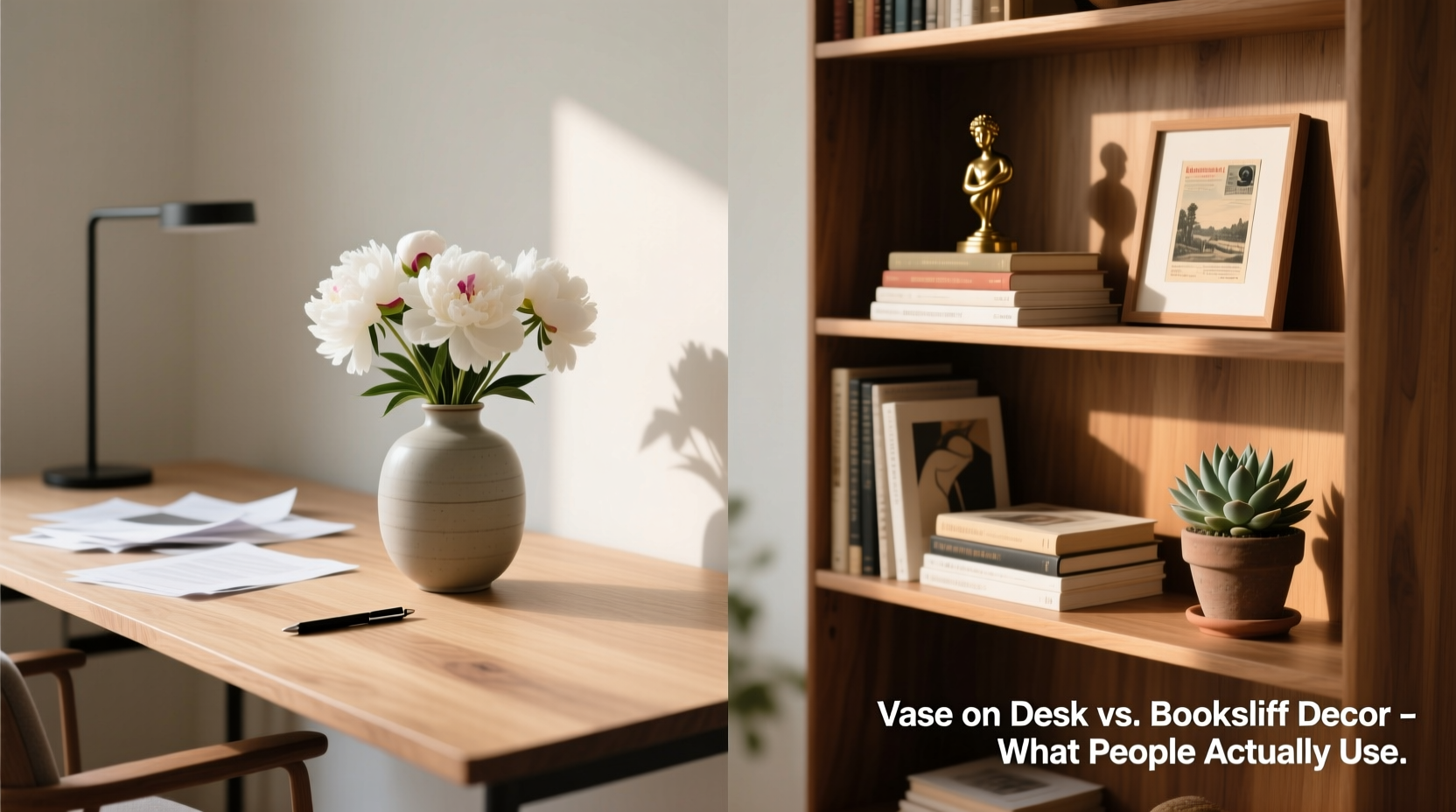
A vase on a desk—especially one holding fresh or dried botanicals—has become a signature element in curated workspace photos across social media and design blogs. Unlike bookshelves, which often accumulate clutter over time, a desk vase offers a clean focal point. It introduces nature, color, and movement into an environment typically dominated by screens and metal.
Interior designers note that small, intentional objects like vases create “micro-moments of calm” in high-focus zones. According to Maya Tran, a spatial psychologist specializing in productivity environments, “A vase isn’t just decorative—it’s a sensory anchor. The sight of greenery or soft petals can reduce cognitive fatigue during long work sessions.”
“People don’t need more stuff—they need fewer things that mean more.” — Lena Choi, Interior Stylist & Author of *Essential Spaces*
Bookshelf Decor: The Traditional Choice Under Scrutiny
For decades, bookshelves served as both storage and status symbols. A well-stocked shelf implied knowledge, taste, and cultural capital. Yet in practice, many bookshelves have become repositories for unread books, forgotten souvenirs, and mismatched knickknacks.
Recent surveys suggest only 37% of books displayed on shelves are regularly read. The rest serve primarily decorative purposes—often dust collectors rather than sources of inspiration. This realization has led many to question the practicality of large-scale bookshelf styling.
Moreover, in compact urban apartments or hybrid workspaces, floor-to-ceiling shelving units consume valuable square footage. Their visual density can also overwhelm a room, especially when poorly curated.
What Are People Actually Using Today?
To understand current preferences, we analyzed interior trends from design platforms, remote work setup guides, and user-submitted photos from 2022–2024. The data reveals a clear shift:
- Minimalist desktop accents (vases, small sculptures, candles) appear in 68% of professionally styled home offices.
- Functional bookshelves (used primarily for active reading or reference materials) are present in only 41% of setups.
- Digital-first organization has reduced physical book ownership among under-40 professionals by nearly 50% since 2018.
People aren’t eliminating books—they’re relocating them. Instead of prominent display, books are being stored out of sight or digitized. What remains visible is chosen for emotional resonance or daily utility.
Real Example: The Freelance Writer’s Setup
Sophie R., a freelance journalist based in Portland, recently redesigned her home office. She removed her large oak bookshelf, donating half its contents and storing the rest in a closet. In its place, she added a walnut writing desk with a single ceramic vase holding eucalyptus sprigs.
“I realized I wasn’t pulling books off the shelf—I was staring at them while procrastinating,” she said. “Now, my desk feels like a place for creation, not performance. The vase changes with the seasons. It’s alive, unlike a static display.”
Comparing Desk Vases vs. Bookshelf Decor
| Feature | Desk Vase | Bookshelf Decor |
|---|---|---|
| Space Efficiency | High – occupies minimal surface area | Low – requires significant floor/wall space |
| Maintenance | Medium – needs water changes or dusting | High – frequent dusting, organizing, updating |
| Psychological Impact | Calming, focused, seasonal | Potentially overwhelming or guilt-inducing (unread books) |
| Flexibility | High – easy to swap or remove | Low – rearranging entire shelves is time-consuming |
| Personal Expression | Subtle but meaningful | Broad but often inconsistent |
When a Vase Works Best (And When It Doesn’t)
A desk vase excels in environments where focus, simplicity, and emotional balance are priorities. It’s ideal for:
- Home offices with limited space
- Creative professionals needing visual inspiration
- Individuals practicing mindfulness or stress reduction
However, it’s not a universal solution. In academic, legal, or research-based fields, access to physical references may justify dedicated bookshelves. Similarly, collectors, bibliophiles, and educators may find deep value in visible libraries.
Step-by-Step: Creating a Meaningful Desk Display
- Clear your desk completely. Remove everything except your computer and essential tools.
- Assess natural light and airflow. Choose a spot where a plant or dried arrangement will thrive.
- Select a vase that complements your desk material. Ceramic for warmth, glass for clarity, metal for modernism.
- Add botanicals intentionally. Use seasonal branches, herbs, or a single bloom for impact.
- Evaluate weekly. Replace or refresh based on mood, season, or project cycle.
FAQ
Can a vase be distracting on a work desk?
Only if it’s overly large or visually chaotic. A modest, neutral-toned vase with simple greenery tends to enhance focus by reducing mental noise. Avoid bright colors or strong scents unless they’re personally soothing.
What if I don’t have fresh flowers all the time?
Dried florals, pampas grass, or even a single artfully placed branch last months with no maintenance. Many users report preferring the evolving texture of dried arrangements over the fleeting nature of blooms.
Does removing books make a space feel less intelligent?
Not necessarily. Intelligence is demonstrated through output, not display. A clean, organized space often signals greater clarity of thought. Consider displaying one or two meaningful volumes instead of dozens as placeholders.
Checklist: Is Your Workspace Decor Working for You?
- ☑ Does each visible item serve a purpose (aesthetic, functional, emotional)?
- ☑ Do you interact with your decor, or just look at it?
- ☑ Is your bookshelf curated, or just full?
- ☑ Does your desk feel open and inviting, or crowded and performative?
- ☑ Can you easily update or change elements without major effort?
Conclusion: Less Display, More Intention
The debate between a vase on a desk and bookshelf decor isn’t about superiority—it’s about alignment. A vase wins in contexts that value presence, adaptability, and mental clarity. Bookshelves retain power where access, legacy, and depth matter. But the real shift isn’t stylistic; it’s philosophical.
People are moving away from decoration as performance and toward curation as practice. They’re choosing items that evolve with them, not just fill space. Whether it’s a changing bouquet or a selectively stocked shelf, the goal is authenticity over appearance.




 浙公网安备
33010002000092号
浙公网安备
33010002000092号 浙B2-20120091-4
Comments
No comments yet. Why don't you start the discussion?