
Maintaining optimal oral hygiene isn’t just about brushing twice a day. Flossing plays a critical role in removing plaque and food debris from between teeth—areas a toothbrush can't effectively reach. But when it comes to choosing between traditional string floss and a water flosser, many people are left wondering which method truly delivers superior results. Dentists often weigh in on this debate, but their recommendations vary depending on individual needs, dexterity, and oral conditions. This article dives deep into the science, practicality, and professional insights behind both tools to help you make an informed decision.
How Each Method Works
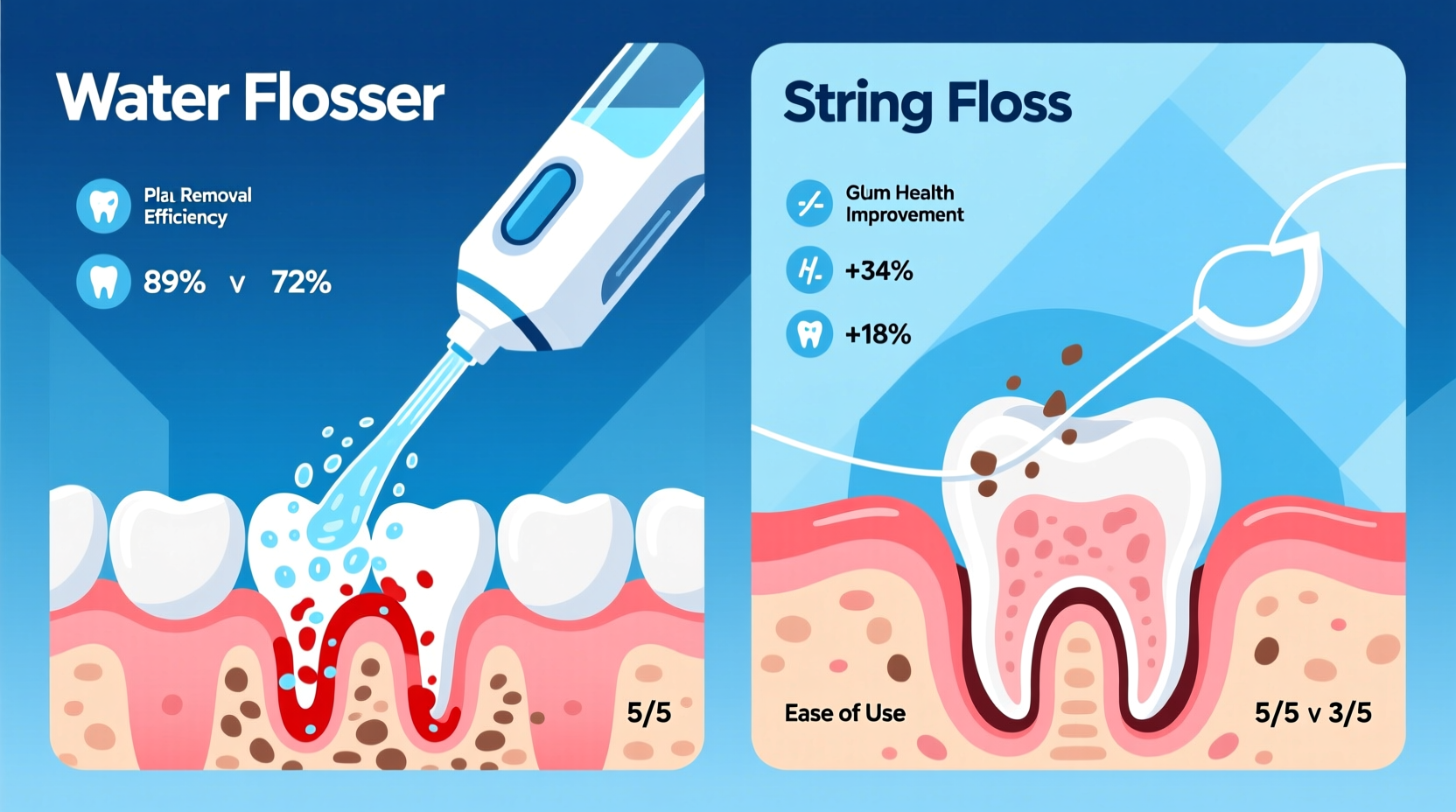
String floss—typically made from nylon or PTFE—is manually threaded between teeth using a back-and-forth motion. It physically scrapes plaque off tooth surfaces and along the gumline. The technique requires precision, especially in tight spaces or around dental work like bridges and braces.
In contrast, a water flosser (also known as an oral irrigator) uses a stream of pulsating water to dislodge debris and bacteria from interdental spaces and below the gumline. Devices like the Waterpik® have become popular for their ease of use and ability to flush out particles without physical contact.
While both aim to reduce plaque and gingivitis, their mechanisms differ significantly. One relies on mechanical friction; the other on hydrodynamic force. Understanding these differences is key to determining which might be more effective for your specific situation.
Dentist Perspectives: Clinical Evidence Compared
Dental professionals base their recommendations on clinical research and patient outcomes. Multiple studies have evaluated the efficacy of water flossers versus string floss.
A 2005 study published in the Journal of Clinical Dentistry found that water flossing was up to 93% more effective than string floss at reducing gingival bleeding. Another study in the same journal concluded that water flossers removed significantly more plaque than manual flossing when used consistently over two weeks.
“Water flossers offer a measurable advantage for patients with orthodontic appliances, implants, or periodontal pockets. They improve compliance because they’re easier to use.” — Dr. Linda Young, DDS, American Dental Association Member
However, the American Dental Association (ADA) maintains that both methods are acceptable for interdental cleaning, provided they’re used correctly. The ADA Seal of Acceptance has been awarded to certain water flossing devices, indicating safety and efficacy—but not necessarily superiority over traditional floss.
The consensus among dentists tends to lean toward personalization: water flossers may be better for some, while string floss remains highly effective for others.
Comparative Analysis: Water Flosser vs. String Floss
| Feature | Water Flosser | String Floss |
|---|---|---|
| Plaque Removal | Effective, especially below gumline | Highly effective with proper technique |
| Gum Health Improvement | Superior reduction in gingival bleeding | Good, if done daily and thoroughly |
| Ease of Use | Very easy; minimal dexterity needed | Requires coordination and practice |
| Time Required | 60–90 seconds | 2–3 minutes for full arch |
| Cost Over Time | Higher initial cost ($40–$100), low maintenance | Low upfront cost, recurring expense |
| Best For | Braces, implants, arthritis, deep pockets | Healthy gums, tight contacts, budget-conscious users |
| Travel-Friendly | Somewhat bulky; needs power and water | Highly portable; compact containers |
This comparison reveals that neither tool is universally “better.” Instead, each excels under different circumstances. For example, someone with limited hand mobility may find a water flosser life-changing, while another person with healthy teeth and good habits may achieve excellent results with string floss alone.
Real-World Example: A Patient’s Journey
Sarah, a 42-year-old office worker, struggled with gum inflammation despite brushing diligently. Her dentist noticed persistent bleeding during cleanings and asked about her flossing routine. Sarah admitted she skipped flossing most days, finding string floss awkward and time-consuming.
Her hygienist suggested trying a countertop water flosser. Within three weeks, Sarah reported less gum sensitivity and improved comfort while eating. At her next checkup, her periodontal probing depths had decreased by an average of 1.5 mm—a significant improvement indicating reduced inflammation.
For Sarah, the convenience and gentleness of the water flosser led to consistent use, which ultimately drove better outcomes. Her case illustrates a common truth: adherence often matters more than the tool itself.
Step-by-Step Guide: Maximizing Effectiveness of Either Tool
No matter which method you choose, technique determines success. Follow this step-by-step process to ensure you're getting the most out of your flossing routine.
- Start after brushing – Flossing last allows dislodged debris to be rinsed away, maximizing cleanliness.
- Use fresh sections of string floss – Roll to a clean segment between teeth to avoid reinserting bacteria.
- Angle the floss gently – Curve it around the base of each tooth in a C-shape to clean beneath the gumline without cutting the tissue.
- For water flossers, adjust pressure – Begin on low settings, especially if new, and increase only as tolerated.
- Target all interdental zones – Pause briefly between each tooth pair to allow the water stream or floss to do its job.
- Don’t skip the back molars – These areas trap the most food and are prone to decay.
- Rinse mouth afterward – Swish with water or antimicrobial mouthwash to clear any remaining particles.
Consistency is crucial. Doing either method properly once per day yields far better results than sporadic, aggressive attempts.
Combining Both Methods: The Hybrid Approach
Some dental professionals advocate for combining both techniques. Using string floss first removes adhered plaque, followed by a water flosser to flush out loosened debris and reach deeper pockets. This dual strategy leverages the strengths of each tool.
Dr. Alan Chen, a periodontist in San Francisco, recommends this approach for patients with early signs of periodontitis: “I tell my patients to ‘floss then flush.’ Mechanical disruption plus irrigation gives the best defense against bacterial buildup.”
Though it takes slightly longer, the hybrid method may offer the highest level of interdental cleaning available outside a professional setting.
Common Misconceptions Debunked
- Myth: Water flossers replace brushing. False. They complement brushing but don’t remove surface stains or biofilm as effectively.
- Myth: String floss causes gaps between teeth. Incorrect. Proper flossing doesn’t widen contacts; aggressive picking with sharp objects does.
- Myth: Water flossers aren’t strong enough for tight spaces. Modern devices with tapered tips can penetrate narrow gaps effectively.
- Myth: If my gums bleed, I should stop flossing. Bleeding indicates inflammation, not injury. Continuing gentle flossing helps resolve it over time.
Checklist: Choosing the Right Option for You
Answer these questions to determine which flossing method suits your lifestyle and oral health needs:
- Do you wear braces, implants, or bridges? → Water flosser likely better
- Do you have arthritis or limited hand mobility? → Water flosser recommended
- Are you frequently traveling? → String floss more convenient
- Do you dislike the feeling of string between teeth? → Try water alternative
- Is cost a concern? → String floss is cheaper long-term
- Have you struggled with gum disease? → Water flosser may provide added benefit
- Can you commit to proper technique? → String floss works well with discipline
If multiple answers point to one option, that’s likely your best fit. Some individuals may even rotate based on context—using a water flosser at home and carrying string floss for travel.
Frequently Asked Questions
Can a water flosser completely replace string floss?
Not entirely. While water flossers excel at flushing debris and improving gum health, they don’t physically scrape plaque off tooth surfaces as effectively as string floss. For maximum protection, many dentists recommend using both or relying on string floss if only one method is chosen.
Are water flossers safe for people with sensitive gums?
Yes, and often preferred. The pulsating water is gentler than abrasive flossing, especially when set to lower pressure modes. Many users with gingivitis or post-surgical sensitivity report less discomfort with water flossing.
How often should I replace the tip of my water flosser?
Manufacturers generally recommend replacing the nozzle every 3–6 months, depending on usage. Worn tips lose efficiency and may harbor bacteria. Label each tip if using multiple ones (e.g., for braces or implants) to track replacement schedules.
Final Verdict: What Dentists Really Recommend
The question isn’t whether a water flosser is objectively better than string floss—it’s whether it’s better *for you*. Dentists agree: the best flossing method is the one you’ll use consistently and correctly.
For patients with specific challenges—orthodontia, gum recession, or difficulty maneuvering string tools—water flossers offer a clinically supported advantage. However, for those with healthy mouths and good manual dexterity, traditional floss remains a gold standard due to its precision and affordability.
Ultimately, your dentist’s recommendation should be personalized. During your next cleaning, ask for a demonstration of both techniques. Many offices now include interdental hygiene coaching as part of preventive care.
“The goal isn’t perfection with one tool—it’s daily commitment to cleaning between your teeth, whatever it takes.” — Dr. Naomi Patel, Preventive Care Specialist
Take Action Today for a Healthier Smile
Your gums are the foundation of lifelong oral health. Whether you choose a sleek water flosser or stick with trusted string floss, what matters most is showing up every night. Try one method for two weeks, assess how your gums feel, and adjust as needed. Small changes in your routine can lead to dramatic improvements in gum health, breath freshness, and overall wellness.




 浙公网安备
33010002000092号
浙公网安备
33010002000092号 浙B2-20120091-4
Comments
No comments yet. Why don't you start the discussion?