
For individuals with sensitive gums, traditional string flossing can be uncomfortable, even painful. Bleeding, irritation, and gum recession are common concerns that deter many from maintaining daily interdental hygiene. As alternatives gain popularity, the water flosser has emerged as a promising solution—especially for those seeking a gentler yet effective method. But is it truly better than string floss? And more importantly, do dentists approve of its use for people with gum sensitivity? The answer lies in understanding how each tool works, what clinical research shows, and how real-world users respond.
How Gum Sensitivity Affects Oral Hygiene Choices
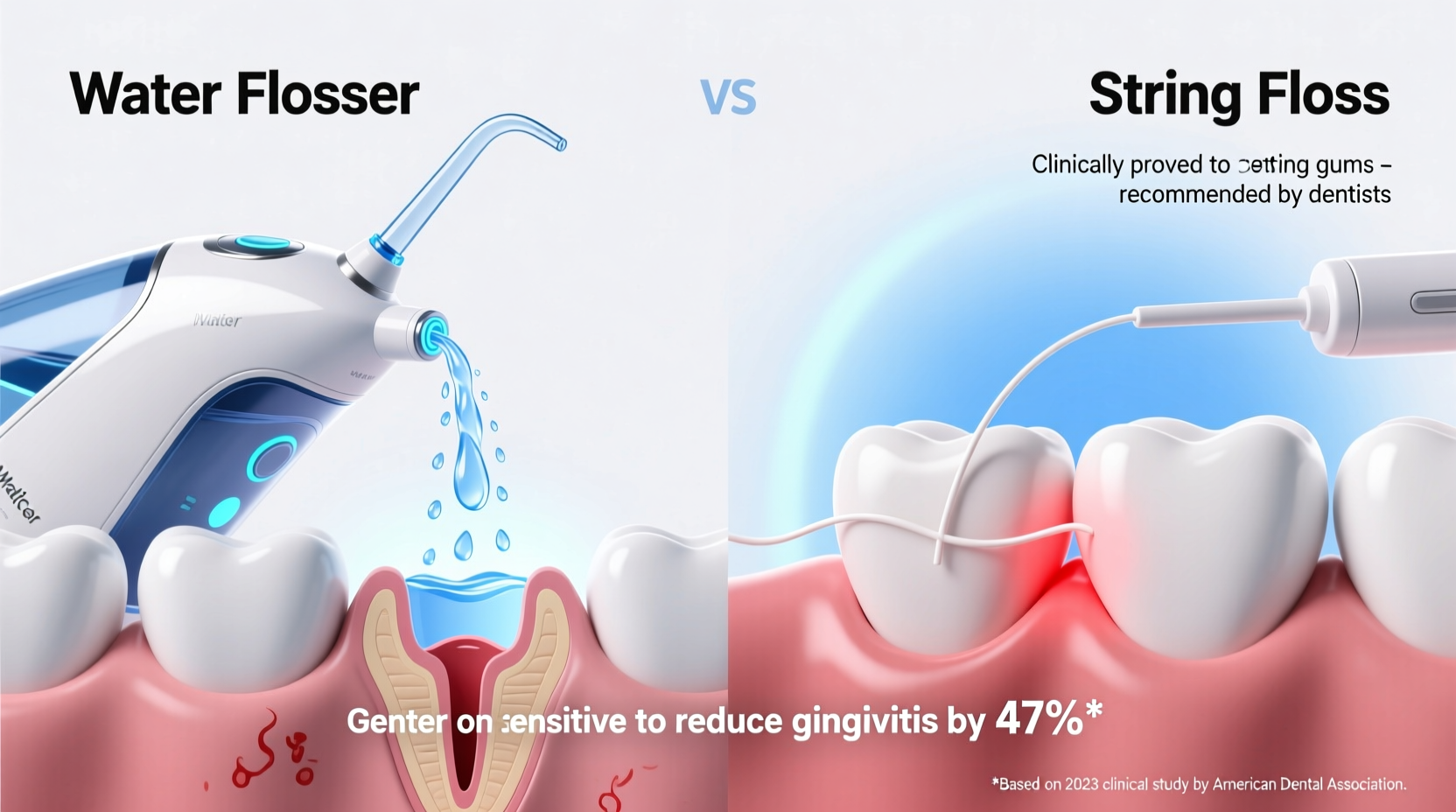
Gum sensitivity often stems from conditions like gingivitis, periodontitis, or enamel erosion. It may also result from aggressive brushing, hormonal changes, or orthodontic treatments such as braces. When gums are inflamed or receded, the act of sliding string floss between teeth can cause micro-tears, discomfort, and bleeding—leading many to skip flossing altogether.
This avoidance creates a dangerous cycle: poor cleaning leads to plaque buildup, which worsens inflammation, further increasing sensitivity. The challenge, then, is finding a method that effectively removes debris without aggravating already vulnerable tissue.
Water Flossers vs. String Floss: Mechanism and Efficacy
String floss works through mechanical abrasion. By rubbing against tooth surfaces and under the gumline, it dislodges food particles and biofilm. However, this friction-based action requires precision. Too light, and plaque remains; too forceful, and gums suffer.
In contrast, water flossers use a pulsating stream of water to flush out debris and bacteria from between teeth and below the gumline. The pressure can be adjusted, making it inherently customizable. Unlike string floss, it doesn’t rely on physical contact with delicate gum tissue, reducing the risk of trauma.
A 2013 study published in the *Journal of Clinical Dentistry* found that water flossers removed up to 29% more plaque than traditional floss when used consistently over two weeks. Another study in the *American Journal of Dentistry* showed a 52% greater reduction in gingival bleeding among participants using water flossers compared to string floss users.
“Water flossing offers a clinically proven alternative for patients who struggle with manual dexterity or gum sensitivity. It’s not just convenient—it’s therapeutic.” — Dr. Linda Wan, DDS, American Dental Association (ADA) Member
Dentist Approval and ADA Recognition
The American Dental Association (ADA) has granted its Seal of Acceptance to several water flossing devices, including models from Waterpik. This seal indicates that the product is safe and effective for removing plaque and improving gum health when used as directed. Importantly, the ADA does not claim that water flossers replace brushing or flossing entirely but recognizes them as valuable adjuncts—or even substitutes—for individuals who cannot tolerate traditional methods.
Many dentists now recommend water flossers specifically for patients with:
- Gingivitis or early-stage periodontal disease
- Braces, implants, or bridges
- Arthritis or limited hand mobility
- Post-surgical healing (e.g., after gum grafts)
Dr. Alan Stern, a periodontist based in Chicago, notes: “I’ve seen patients reverse mild gum disease simply by switching to a water flosser because they finally flossed every day. Compliance is half the battle.”
Comparative Analysis: Water Flosser vs. String Floss
| Feature | Water Flosser | String Floss |
|---|---|---|
| Gentleness on Gums | High – adjustable pressure reduces irritation | Low to Moderate – friction can cause bleeding |
| Effectiveness in Plaque Removal | Strong – especially below gumline | Strong – with proper technique |
| Learning Curve | Low – intuitive operation | High – requires coordination and angle control |
| Accessibility Around Braces/Implants | Excellent – reaches tight spaces easily | Poor – difficult to maneuver |
| Portability | Moderate – needs power and water source | High – compact and travel-friendly |
| Dentist Recommendation Rate | Increasingly recommended for sensitive cases | Routinely recommended for general use |
Real-World Case: Managing Sensitivity with a Water Flosser
Sarah M., a 42-year-old teacher from Portland, had struggled with gum sensitivity for years. After being diagnosed with mild gingivitis, her hygienist urged her to floss daily. But each attempt with string floss left her gums raw and bleeding.
“I’d try for a few days, then give up,” she recalls. “It felt like punishment.” Her dentist suggested a countertop Waterpik model. Skeptical at first, Sarah began using it on the lowest pressure setting. Within a week, she noticed less morning tartar buildup. By the third week, her gums stopped bleeding during cleanings.
At her six-month checkup, her hygienist remarked on the improvement: “Your gum pockets have decreased from 4mm to 2–3mm. That’s significant.” For Sarah, the switch wasn’t about convenience—it was about sustainability. “Finally, I found something I could actually stick with,” she says.
Best Practices for Using a Water Flosser with Sensitive Gums
To maximize benefits while minimizing irritation, follow these steps:
- Start on the lowest pressure setting. Gradually increase as your gums adapt.
- Aim the tip at a 90-degree angle to the gumline. Move slowly from tooth to tooth, allowing the water pulse to penetrate pockets.
- Use lukewarm water. Cold water can trigger sensitivity; warm water feels soothing.
- Floss before brushing. This loosens debris so toothpaste fluoride can better penetrate.
- Clean the nozzle weekly. Prevent bacterial buildup by rinsing or soaking in vinegar.
When String Floss Might Still Be Preferred
Despite the advantages of water flossers, string floss retains certain strengths. It provides tactile feedback, allowing users to feel plaque and resistance. In tightly spaced teeth, the thin thread can sometimes reach areas a water stream might miss, especially if not aimed precisely.
Dentists often advise combining both methods: using a water flosser for overall cleansing and comfort, followed by string floss in stubborn spots. For patients with healthy gums and no dexterity issues, traditional floss remains a low-cost, highly portable option.
However, for those with chronic sensitivity, the priority should be consistent plaque removal—not adherence to tradition. As Dr. Wan puts it: “The best floss is the one you’ll actually use every day.”
Checklist: Choosing the Right Option for Sensitive Gums
- ☐ Assess your gum condition—do you bleed frequently during flossing?
- ☐ Consult your dentist or hygienist for personalized advice.
- ☐ Try a water flosser on low pressure for two weeks to evaluate comfort.
- ☐ Look for ADA-accepted models with variable settings.
- ☐ Maintain regular dental cleanings to monitor progress.
- ☐ Don’t abandon brushing—pair your flossing method with fluoride toothpaste and soft-bristle brushing.
Frequently Asked Questions
Can a water flosser completely replace string floss?
Yes, for many people—especially those with sensitive gums, braces, or mobility issues. The ADA acknowledges water flossers as an effective alternative when used correctly. However, some dentists still recommend occasional string flossing for spot treatment of tight contacts.
Do water flossers help with bad breath caused by gum disease?
Absolutely. Chronic halitosis often stems from bacteria trapped below the gumline. Water flossers excel at disrupting these colonies, reducing odor-causing microbes. Combined with tongue cleaning and hydration, they can significantly improve breath quality.
Are water flossers safe for children or elderly users?
Yes. Pediatric dentists often recommend water flossers for kids with braces or difficulty handling string floss. For older adults with arthritis, the ease of use improves compliance. Supervise young children to prevent choking hazards and ensure proper aiming.
Conclusion: Making an Informed, Sustainable Choice
The debate isn’t about declaring one tool universally superior—it’s about matching the method to the individual. For people with sensitive gums, the evidence increasingly supports water flossers as a dentist-approved, clinically effective alternative to string floss. They reduce bleeding, improve gum health, and most importantly, encourage daily use.
Technology shouldn’t replace good oral hygiene—it should make it more accessible. If traditional flossing causes pain or discouragement, switching to a water flosser isn’t giving up; it’s upgrading to a solution designed for real-life challenges.




 浙公网安备
33010002000092号
浙公网安备
33010002000092号 浙B2-20120091-4
Comments
No comments yet. Why don't you start the discussion?