
For people with sensitive gums, traditional dental flossing can be uncomfortable—sometimes even painful. Bleeding, tenderness, and irritation are common complaints, especially among those with gingivitis or periodontal concerns. As alternatives gain popularity, many patients are turning to water flossers as a gentler option. But is a water flosser truly better than string floss when it comes to caring for sensitive gums? Dental professionals weigh in with clinical evidence, patient outcomes, and practical recommendations.
Understanding Gum Sensitivity and Its Causes
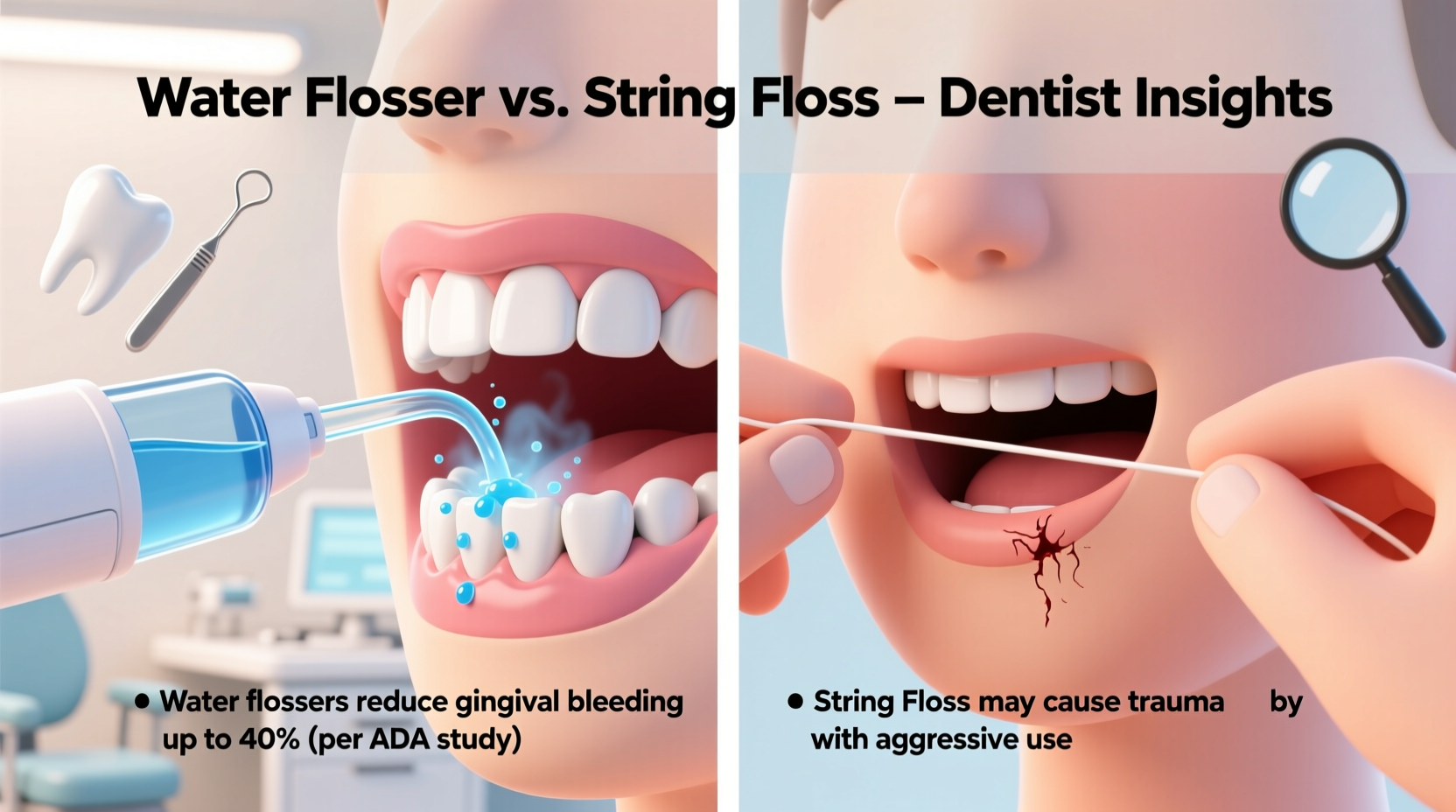
Gum sensitivity isn’t just an inconvenience—it’s often a sign of underlying inflammation or early-stage gum disease. Common causes include:
- Gingivitis: The earliest stage of gum disease, caused by plaque buildup along the gumline.
- Aggressive brushing or flossing: Using excessive force can damage delicate gum tissue.
- Hormonal changes: Pregnancy, menstruation, or hormonal contraceptives can increase gum sensitivity.
- Dry mouth: Reduced saliva flow increases bacterial growth and gum irritation.
- Orthodontic appliances: Braces or aligners trap food particles and make traditional flossing difficult.
When gums are already inflamed, the mechanical action of string floss—especially if used incorrectly—can exacerbate discomfort. This leads many to seek alternatives that clean effectively without causing pain.
How Water Flossers Work and Who Benefits Most
A water flosser, also known as an oral irrigator, uses a stream of pulsating water to remove plaque, food debris, and bacteria from between teeth and below the gumline. Unlike string floss, which relies on physical scraping, water flossers use hydrodynamic action to disrupt biofilm gently.
The device typically consists of a motorized base, water reservoir, and interchangeable tips. It's especially beneficial for individuals who struggle with manual dexterity, wear braces, have dental implants, or suffer from chronic gum sensitivity.
Research supports its efficacy. A 2013 study published in the Journal of Clinical Dentistry found that water flossers removed up to 29% more plaque than traditional floss when used alongside brushing. Another study showed a 52% reduction in gingival bleeding after two weeks of water flosser use.
“Patients with moderate gingivitis who switched to a water flosser reported significantly less discomfort and better compliance.” — Dr. Linda Chen, Periodontist, American Academy of Periodontology
Water Flosser vs. String Floss: A Direct Comparison
To determine which method is better for sensitive gums, let’s compare them across several critical categories:
| Factor | Water Flosser | String Floss |
|---|---|---|
| Gentleness on Gums | High – pulsating water cleans without friction or abrasion | Low to Moderate – can irritate inflamed tissue if used aggressively |
| Effectiveness in Plaque Removal | High – especially effective below the gumline and around crowns/implants | High – when used correctly, removes interdental plaque efficiently |
| Learning Curve | Moderate – requires practice to aim the tip properly | Low – simple in concept but technique-dependent |
| Convenience & Portability | Low – needs power source and water; travel models exist but are bulkier | High – compact, disposable, no setup required |
| Cleaning Around Braces/Implants | Excellent – reaches areas inaccessible to string floss | Poor to Fair – requires specialized tools like floss threaders |
| Cost Over Time | Higher upfront cost ($50–$100), minimal ongoing expenses | Low – floss is inexpensive and widely available |
While both methods are effective at reducing plaque and improving gum health, the water flosser clearly holds an advantage in comfort and accessibility for those with sensitive or compromised gum tissue.
Expert Recommendations for Sensitive Gum Care
Dentists agree: consistency matters more than the tool. Whether you choose string floss or a water flosser, daily interdental cleaning is non-negotiable for preventing gum disease. However, when sensitivity is present, the right choice can mean the difference between adherence and avoidance.
Dr. Alan Kim, a general dentist with over 15 years of experience, explains: “I recommend water flossers to nearly all my patients with gum sensitivity. They’re less intimidating, easier to use correctly, and patients actually stick with them.”
That said, some dentists advocate for a hybrid approach—using a water flosser for daily maintenance and string floss once or twice a week for thorough mechanical disruption of stubborn plaque.
Step-by-Step Guide to Using a Water Flosser Safely with Sensitive Gums
- Fill the reservoir with warm water (not hot) to reduce shock to sensitive tissues.
- Select a soft-tip attachment designed for sensitive gums or periodontal care.
- Set the pressure to low or medium initially; increase only as tolerated.
- Tilt your head over the sink and place the tip in your mouth before turning it on.
- Aim the stream at a 90-degree angle to the gumline, moving slowly from tooth to tooth.
- Pause briefly between teeth to allow water to dislodge debris from tight spaces.
- Follow up with regular brushing to remove any loosened plaque.
- Clean the reservoir and tip after each use to prevent bacterial buildup.
Real-World Example: Sarah’s Experience with Gum Sensitivity
Sarah, a 34-year-old teacher, had struggled with bleeding gums for years. Every time she tried string floss, her gums would ache and bleed excessively. She avoided flossing altogether, despite regular dental cleanings. After being diagnosed with mild gingivitis, her hygienist suggested trying a water flosser.
She started on the lowest pressure setting, using warm water and a soft tip. Within a week, she noticed less bleeding. By the end of the second week, her gums felt firmer and less tender. At her next checkup, her dentist noted a 40% reduction in gum pocket depth and praised her improved home care.
“I never thought I’d enjoy flossing,” Sarah said. “But this feels more like a massage than a chore.”
Common Misconceptions About Water Flossers
Despite growing acceptance, several myths persist about water flossers:
- Myth: Water flossers replace brushing.
Truth: They complement brushing but do not remove surface plaque like a toothbrush. - Myth: They’re only for people with braces.
Truth: While ideal for orthodontic patients, they benefit anyone with hard-to-reach areas or gum disease. - Myth: They’re too messy.
Truth: With proper technique (chin down, mouth slightly open), mess is minimal—especially with newer countertop and cordless models. - Myth: They don’t remove plaque as well as string floss.
Truth: Multiple studies show water flossers are equally or more effective, particularly below the gumline.
Checklist: Choosing the Right Option for Your Sensitive Gums
Use this checklist to decide whether a water flosser or string floss is best for you:
- ✅ Do your gums bleed or hurt when you floss? → Favors water flosser
- ✅ Do you wear braces, implants, or bridges? → Favors water flosser
- ✅ Are you likely to skip flossing due to discomfort? → Favors water flosser
- ✅ Do you travel frequently and need portability? → Favors string floss
- ✅ Is cost a major concern? → Favors string floss
- ✅ Can you commit to proper technique with string floss? → Either option works
If three or more items point toward the water flosser, it may be the better investment for long-term gum health and daily compliance.
FAQ: Your Top Questions Answered
Can a water flosser cure gum disease?
No single tool cures gum disease, but consistent use of a water flosser can significantly reduce inflammation, bleeding, and plaque buildup associated with gingivitis. For advanced periodontitis, professional treatment is essential, but home care—including water flossing—plays a critical role in managing the condition.
Is string floss obsolete?
No. String floss remains a highly effective, low-cost option, especially when used correctly. It’s still recommended by the American Dental Association (ADA) as a standard for interdental cleaning. However, it’s not the only valid method. The ADA now recognizes water flossers as effective alternatives, particularly for those with physical limitations or sensitivity.
How often should I use a water flosser?
Once per day is sufficient, ideally before bedtime. Like string floss, it should be part of your daily oral hygiene routine, alongside brushing and mouthwash if recommended. Overuse on high pressure may lead to gum irritation, so moderation and proper settings are key.
Final Thoughts: Prioritizing Comfort Without Sacrificing Results
The goal of flossing isn’t pain or punishment—it’s prevention. For individuals with sensitive gums, the discomfort of traditional flossing often leads to avoidance, undermining overall oral health. A water flosser offers a scientifically supported, gentler alternative that improves compliance and delivers measurable benefits.
Dentists increasingly view water flossers not as luxury gadgets, but as valuable tools in personalized preventive care. When comfort meets effectiveness, patients are more likely to maintain healthy habits long-term.
Ultimately, the best flossing method is the one you’ll use consistently. If string floss causes pain and you avoid it, switching to a water flosser could be one of the most impactful changes you make for your gum health.




 浙公网安备
33010002000092号
浙公网安备
33010002000092号 浙B2-20120091-4
Comments
No comments yet. Why don't you start the discussion?