
Brushing your teeth twice a day is the cornerstone of good oral hygiene. It removes plaque, prevents cavities, and keeps your breath fresh. But even with diligent brushing, certain areas—especially between teeth and below the gumline—remain vulnerable to bacterial buildup. This raises an important question: if you’re already brushing consistently, does adding a water flosser truly make a difference?
The short answer is yes—for many people, a water flosser isn’t just a luxury; it’s a meaningful upgrade in preventive dental care. While brushing cleans surfaces, it can't reach deep interdental spaces or subgingival pockets where harmful bacteria thrive. That’s where water flossing comes in. Backed by clinical research and recommended by dentists, this tool enhances plaque removal, reduces gum inflammation, and improves overall periodontal health.
This article explores whether integrating a water flosser into your existing routine offers measurable benefits, who stands to gain the most, and how to use it effectively for long-term oral wellness.
Why Brushing Alone Isn’t Enough
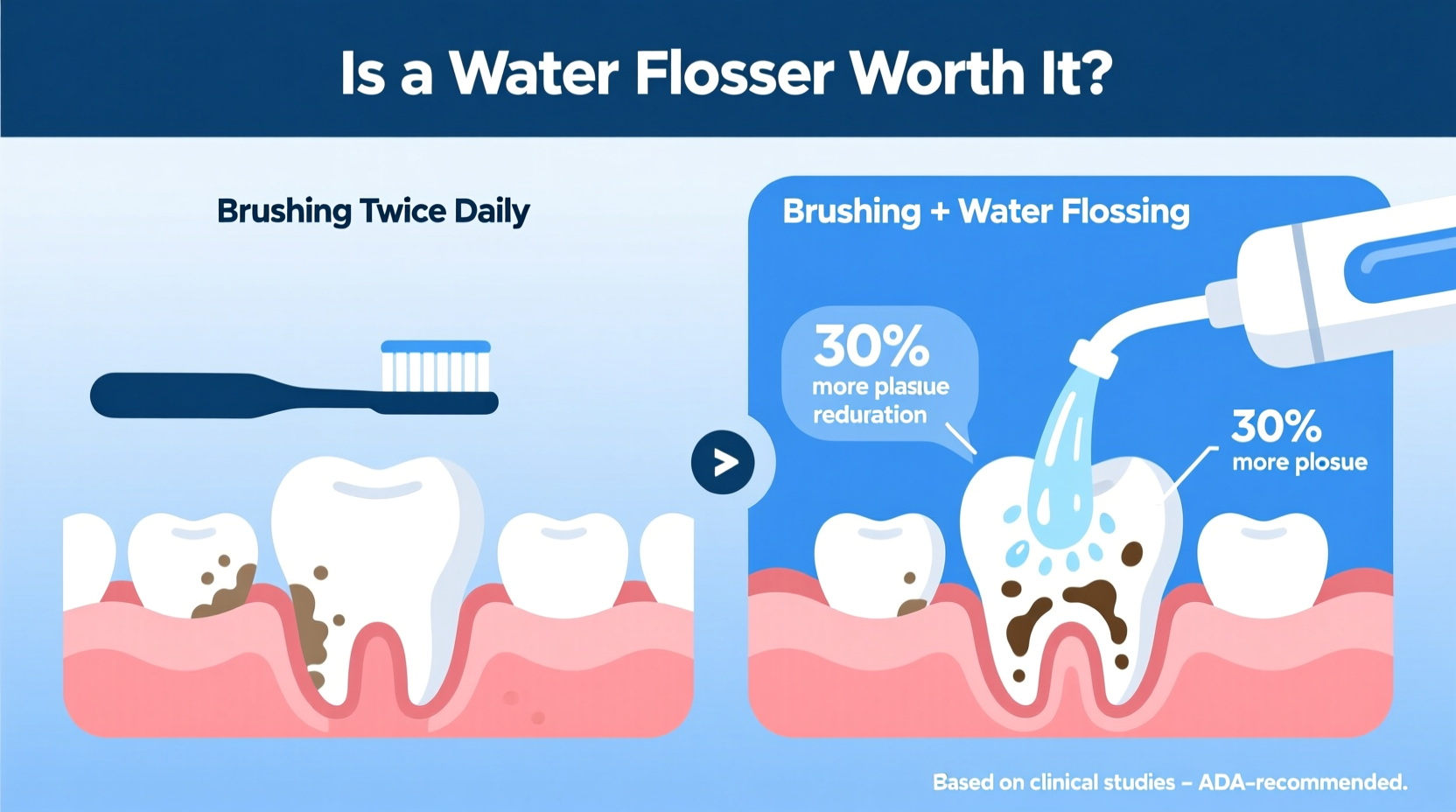
Despite being essential, brushing only cleans about 60% of tooth surfaces. The remaining 40%—the tight spaces between teeth and along the gumline—are often missed, even with proper technique. Plaque that accumulates in these zones hardens into tartar within 24–72 hours, leading to gingivitis, periodontitis, and eventual tooth loss if left untreated.
Traditional string flossing helps bridge this gap, but studies show low compliance due to discomfort, difficulty maneuvering, or perceived time consumption. A 2019 study published in the *Journal of Clinical Periodontology* found that fewer than 30% of adults floss daily, despite knowing its importance.
This is where water flossers step in—not as replacements, but as complementary tools designed to improve accessibility and efficacy in cleaning hard-to-reach zones.
How Water Flossers Work and What the Research Says
A water flosser (also known as an oral irrigator) uses a stream of pulsating water to dislodge plaque, debris, and bacteria from between teeth and beneath the gums. Unlike string floss, which relies on mechanical friction, water flossers use hydrodynamic action—the force and turbulence of water—to flush out contaminants.
Clinical evidence supports their effectiveness. A meta-analysis from the *American Journal of Dentistry* concluded that water flossers remove up to 29% more plaque than string floss when used in conjunction with brushing. Another study showed a 51% reduction in gingival bleeding after two weeks of regular water flossing compared to brushing alone.
“Water flossing significantly improves gum health, especially for patients with orthodontic appliances or periodontal conditions.” — Dr. Susan Maples, DDS, MS, Founder of the Institute for Holistic Dentistry
The pulsation frequency—typically 1,200 to 1,600 pulses per minute—creates pressure waves that penetrate up to 6 mm below the gumline, disrupting bacterial colonies deeper than manual methods can safely reach.
Key Benefits of Water Flossing
- Improved gum health: Reduces gingival inflammation and bleeding.
- Better interdental cleaning: Reaches areas brushing and string floss may miss.
- Ideal for braces and implants: Navigates around wires, brackets, and prosthetics effortlessly.
- Enhanced comfort: Gentler on sensitive gums than aggressive string flossing.
- Supports overall health: Reduces oral bacteria linked to systemic issues like heart disease and diabetes complications.
Who Benefits Most from Adding a Water Flosser?
While anyone can benefit from improved interdental hygiene, certain groups see disproportionately positive results:
| Group | Challenges with Traditional Flossing | Advantages of Water Flossing |
|---|---|---|
| People with braces or aligners | Floss threaders required; difficult to clean around brackets | Flushes debris from under wires and between teeth without threading |
| Those with dental implants or bridges | String floss risks damaging restoration; hard to access underneath | Cleans around fixed prosthetics safely and effectively |
| Individuals with arthritis or limited mobility | Dexterity issues make manual flossing painful or impossible | One-handed operation; no need to grip thin floss |
| Patients with gum disease (gingivitis/periodontitis) | String floss may irritate inflamed tissue | Gentle yet effective cleansing below the gumline |
| Parents helping children floss | Kids resist flossing due to discomfort or fear | Fun, easy-to-use method increases compliance in young users |
If any of these apply to you—or someone in your household—a water flosser becomes far more than a convenience. It transforms oral care from a chore into a sustainable habit with tangible health outcomes.
Step-by-Step Guide to Using a Water Flosser Effectively
To maximize the benefits, follow this simple routine:
- Fill the reservoir with lukewarm water. For added antibacterial effect, mix in antimicrobial mouthwash (check device compatibility first).
- Select the appropriate tip: Standard for general use, orthodontic for braces, periodontal for deep pockets, or tongue cleaner for halitosis control.
- Set the pressure level: Start on low, especially if new or sensitive. Gradually increase as tolerance builds.
- Lean over the sink and place the tip in your mouth before turning it on to avoid splashing.
- Position the nozzle at a 90-degree angle to the gumline, moving systematically from back molars to front teeth.
- Pause briefly between each tooth to allow water to flush out debris.
- Breathe through your nose while pulsing—don’t inhale accidentally.
- After finishing, turn off the unit, empty remaining fluid, and rinse the reservoir to prevent microbial growth.
Duration: Aim for 60 seconds total. Consistency matters more than intensity—daily use yields cumulative improvements.
Mini Case Study: Real-Life Impact After Six Weeks
Sarah, a 38-year-old teacher with mild gingivitis, brushed twice daily and occasionally flossed with string—but inconsistently. Her dentist noted persistent bleeding during cleanings and recommended trying a water flosser.
She began using a countertop model every morning after brushing. Starting on low pressure, she gradually increased settings over two weeks. By week four, she noticed less morning plaque film and reduced gum sensitivity. At her six-week checkup, her hygienist reported a 40% decrease in probing depths and no bleeding on examination.
“I didn’t think I needed anything beyond brushing,” Sarah said. “But seeing actual improvement at my cleaning made me realize how much was getting missed.”
This case illustrates a common pattern: individuals assume their routine is sufficient until objective metrics reveal otherwise. Water flossing provided Sarah with both immediate sensory feedback and measurable clinical gains.
Water Flosser vs. String Floss: A Practical Comparison
Both tools have merit, but they serve slightly different purposes:
| Feature | Water Flosser | String Floss |
|---|---|---|
| Cleaning Mechanism | Hydrodynamic flushing | Mechanical scraping |
| Effectiveness Below Gumline | Superior (reaches 3–6 mm) | Limited (1–2 mm unless guided) |
| User Comfort | High, especially for sensitive gums | Variable; can cause gum trauma if misused |
| Learning Curve | Low; intuitive operation | Moderate; requires coordination |
| Portability | Lower (cordless models help) | Very high (compact, travel-friendly) |
| Cost Over Time | Higher upfront ($50–$150), minimal consumables | Low upfront, recurring cost for floss |
| Evidence-Based Efficacy | Strong, particularly for gum health | Well-established for cavity prevention |
The best approach? Combine both. Use string floss to physically disrupt mature plaque films, then follow with a water flosser to rinse away remnants and soothe tissues. Alternatively, use the water flosser daily and reserve string floss for weekly deep maintenance.
FAQ: Common Questions About Water Flossers
Can I replace string floss entirely with a water flosser?
While water flossers are highly effective, they don’t provide the same tactile scrubbing action as string floss. For optimal results, consider them complementary rather than interchangeable. However, if you currently don’t floss at all, switching to a water flosser is a significant upgrade.
Do water flossers damage gums?
No—when used correctly. High pressure on delicate tissue can cause irritation, so always start on the lowest setting. People with advanced periodontal disease should consult their dentist before beginning. Most modern units offer adjustable pressure and soft-tissue tips for safety.
Are there models suitable for travel?
Yes. Cordless, battery-operated water flossers (like the Philips Sonicare AirFloss Ultra or Waterpik Traveler) are compact, rechargeable, and ideal for frequent travelers. They hold enough water for one session and fit easily in toiletry bags.
Checklist: Is a Water Flosser Right for You?
Answer the following to determine if adding one makes sense:
- ☐ Do you experience gum bleeding when brushing?
- ☐ Have you been diagnosed with gingivitis or early periodontitis?
- ☐ Wear braces, implants, crowns, or bridges?
- ☐ Struggle with hand mobility or arthritis?
- ☐ Find traditional flossing uncomfortable or time-consuming?
- ☐ Want to improve freshness beyond what brushing provides?
If three or more apply, a water flosser is likely a worthwhile investment in your long-term oral health.
Conclusion: Elevating Your Oral Care Beyond Brushing
Brushing twice daily is non-negotiable—but it’s only part of a complete oral hygiene strategy. A water flosser fills critical gaps left by brushing and even traditional flossing, offering superior gum protection, ease of use, and measurable clinical benefits. Whether you're managing gum disease, wearing orthodontics, or simply seeking a fresher, healthier mouth, integrating a water flosser can be a game-changer.
It’s not about perfection; it’s about progress. Small upgrades compound over time. By adding just one minute of water flossing to your morning or evening routine, you’re investing in stronger gums, fresher breath, and potentially avoiding costly dental procedures down the line.




 浙公网安备
33010002000092号
浙公网安备
33010002000092号 浙B2-20120091-4
Comments
No comments yet. Why don't you start the discussion?