
In recent years, air fryers have surged in popularity, promising crispy, golden food with little to no oil. Many consumers view them as a healthier alternative to traditional deep frying. But is this perception backed by science? While air frying reduces fat and calorie intake compared to deep frying, the full picture involves more than just oil use. Understanding the chemical changes during cooking, nutrient preservation, and long-term health implications requires a closer look at research from nutritionists, food scientists, and public health experts.
This article examines the key differences between air frying and deep frying, evaluates their impact on health using peer-reviewed studies, and offers practical guidance for making informed choices in the kitchen.
How Air Frying and Deep Frying Work
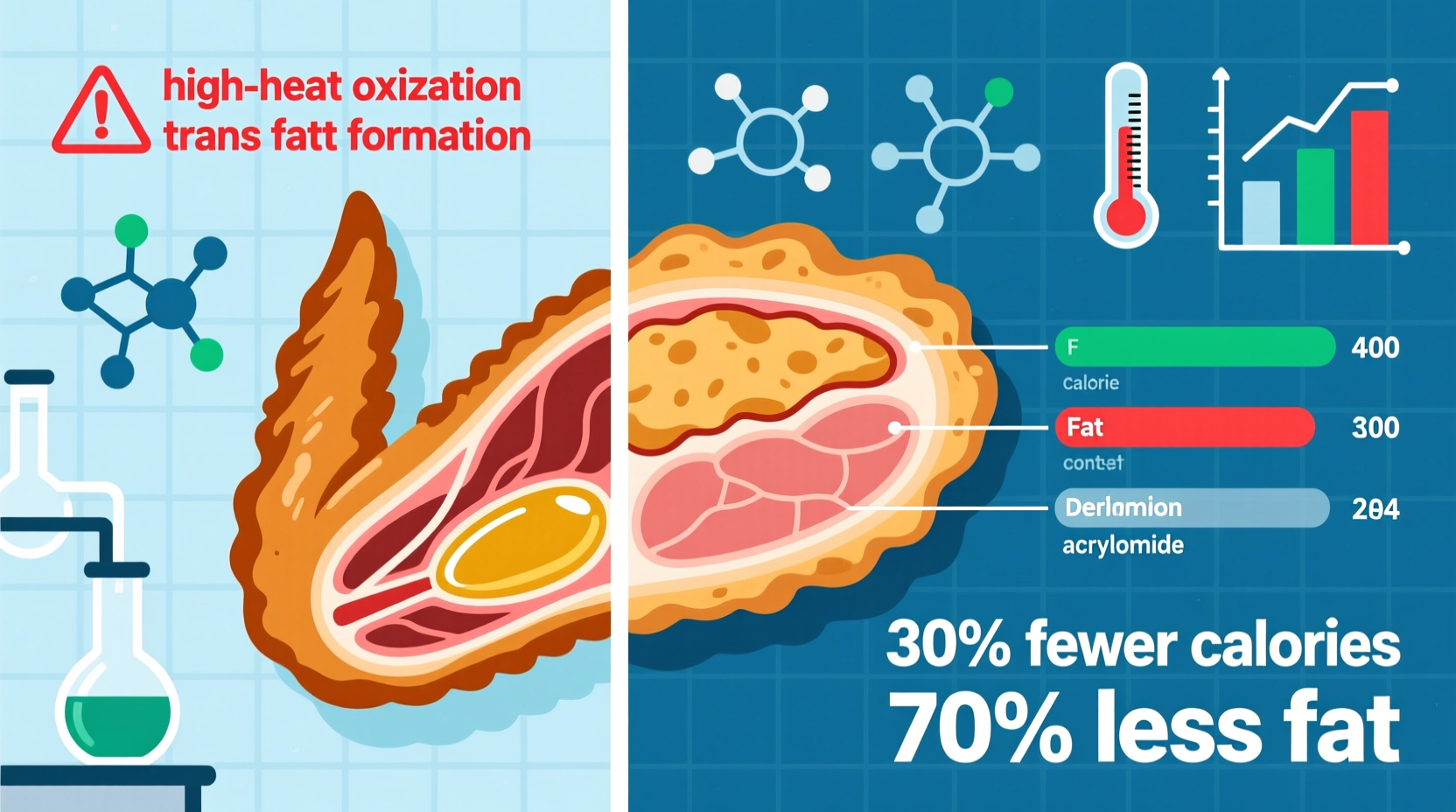
At their core, both methods aim to achieve similar sensory results: crisp exteriors, tender interiors, and rich flavor. However, the mechanisms differ significantly.
Deep frying submerges food entirely in hot oil, typically between 350°F and 375°F (175–190°C). The high temperature rapidly dehydrates the surface while cooking the interior, creating a crunchy crust through the Maillard reaction—a chemical process between amino acids and sugars that produces browning and complex flavors.
Air frying, on the other hand, uses rapid convection heating. A fan circulates hot air around the food, often combined with a small amount of oil (one to two teaspoons) sprayed or brushed onto the surface. This mimics the texture of frying but without full immersion. Most air fryers operate between 320°F and 400°F (160–205°C), allowing for similar browning with less fat absorption.
The fundamental difference lies in fat volume. Deep-fried foods absorb substantial oil—sometimes up to 40% of their weight depending on batter type and cooking time. Air-fried versions typically absorb less than 5%, drastically reducing caloric density.
Nutritional Comparison: Fat, Calories, and Beyond
Reduced fat and calorie content is the most cited advantage of air frying. A study published in the Journal of Food Science (2020) analyzed French fries cooked via both methods. Results showed air-fried versions contained 60–80% less fat and approximately 20–30% fewer calories than their deep-fried counterparts.
This reduction matters for individuals managing weight or cardiovascular risk. Excess dietary fat—especially saturated and trans fats from reused oils—has been linked to elevated LDL cholesterol and increased heart disease risk. By minimizing oil use, air frying inherently lowers intake of these harmful lipids.
However, nutritional value isn’t solely about fat. Some vitamins, like vitamin C and certain B-complex vitamins, are heat-sensitive. Both frying methods degrade these nutrients, but due to shorter cook times and lower surface moisture loss, air frying may preserve slightly more. A 2021 analysis in LWT - Food Science and Technology found broccoli and zucchini retained up to 15% more vitamin C when air-fried versus deep-fried.
Still, neither method compares favorably to steaming or boiling in terms of nutrient retention. The real benefit of air frying lies not in maximizing nutrition, but in enabling indulgent textures with reduced harm.
Comparative Nutrition Table: Common Foods
| Food Item | Cooking Method | Avg. Fat (g per 100g) | Calories (per 100g) | Vitamin C Retention (%) |
|---|---|---|---|---|
| Potato Fries | Deep Fried | 12–15g | 312 kcal | ~40% |
| Potato Fries | Air Fried | 3–5g | 210 kcal | ~55% |
| Chicken Wings | Deep Fried | 18–22g | 365 kcal | ~35% |
| Chicken Wings | Air Fried | 6–9g | 275 kcal | ~50% |
| Battered Fish | Deep Fried | 15–20g | 340 kcal | ~30% |
| Baked then Air Fried | Air Fried | 5–7g | 220 kcal | ~45% |
Health Risks: Acrylamide and Oxidative Byproducts
While fat reduction is beneficial, another concern arises from high-heat cooking: the formation of potentially carcinogenic compounds.
Acrylamide forms when starchy foods are cooked above 248°F (120°C), particularly in low-moisture environments. It results from a reaction between sugars and the amino acid asparagine. The World Health Organization classifies acrylamide as a \"probable human carcinogen.\"
Surprisingly, air frying can produce higher levels of acrylamide than deep frying. A 2022 study in Food Chemistry found that air-fried potato chips had up to 30% more acrylamide than deep-fried ones. Why? Because oil acts as a heat buffer, moderating surface temperature and limiting excessive browning. In contrast, dry, circulating hot air promotes rapid dehydration and higher surface temps—ideal conditions for acrylamide formation.
Similarly, both methods generate advanced glycation end products (AGEs), linked to inflammation and insulin resistance. Dry-heat cooking increases AGEs more than moist-heat methods. While no direct comparison study exists yet, the mechanism suggests air frying likely produces comparable or higher AGE levels than deep frying due to similar browning intensity.
“Air frying reduces fat, which is good, but we must also consider what’s forming on the surface. High-heat, dry cooking—even without oil—can generate compounds we’d rather avoid.” — Dr. Lena Patel, Food Toxicologist, Harvard T.H. Chan School of Public Health
Real-World Example: A Family’s Shift to Air Frying
The Thompson family in Portland, Oregon, switched to air frying two years ago after their youngest son was diagnosed with early signs of obesity. Previously, weekend meals often included deep-fried chicken tenders and mozzarella sticks. After purchasing an air fryer, they began preparing the same foods using minimal oil.
Within six months, the child lost 8 pounds, and blood tests showed improved lipid profiles. His LDL cholesterol dropped from 138 mg/dL to 112 mg/dL. While diet and activity changes were multifaceted, the parents noted a significant reduction in visible oil consumption. “We used to drain half a cup of oil after frying,” said Maria Thompson. “Now we spray one teaspoon. It feels like a real change.”
However, they later learned about acrylamide risks when their daughter, a college nutrition student, brought home research. They adjusted their habits: soaking potatoes before cooking, avoiding over-browning, and rotating air frying with baking and grilling.
Their experience illustrates a balanced approach: leveraging air frying’s benefits while mitigating emerging risks through informed practices.
Best Practices for Healthier Air Frying
To maximize benefits and minimize potential downsides, consider the following checklist when using an air fryer:
- Soak sliced potatoes in water for 15–30 minutes before cooking to reduce acrylamide-forming sugars.
- Cook at lower temperatures (350°F or below) when possible to limit harmful compound formation.
- Avoid overcooking or charring; aim for golden, not dark brown.
- Use heart-healthy oils like avocado or olive oil in moderation (spray, don’t pour).
- Don’t overcrowd the basket—ensure airflow for even cooking and reduced cooking time.
- Rotate or shake food mid-cycle to promote uniform browning without excess heat exposure.
- Alternate air frying with baking, steaming, or sautéing to diversify cooking methods.
Frequently Asked Questions
Does air frying destroy more nutrients than deep frying?
Not necessarily. Air frying generally preserves slightly more heat-sensitive vitamins due to shorter cooking times and less oil degradation. However, both methods degrade nutrients more than gentler techniques like steaming. The primary advantage of air frying is reduced fat, not superior nutrient retention.
Can I use an air fryer every day?
You can, but variety matters. Relying solely on high-heat cooking—even with less oil—may increase exposure to acrylamide and AGEs over time. For optimal health, balance air-fried meals with other preparation methods such as roasting, poaching, or stir-frying with minimal oil.
Is air-fried food completely free of trans fats?
If you use unhydrogenated oils (like olive, avocado, or canola), yes. However, some pre-made frozen foods designed for air frying contain partially hydrogenated oils or palm oil, which may include trans fats or high saturated fat. Always check ingredient labels.
Expert Consensus and Scientific Verdict
The scientific community largely agrees: air frying is healthier than deep frying in terms of fat and calorie reduction, but it is not a “risk-free” method. The American Heart Association acknowledges air frying as a useful tool for lowering saturated fat intake, especially for those accustomed to fried foods.
Yet, organizations like the European Food Safety Authority (EFSA) caution against assuming safety based on oil reduction alone. Their 2021 report emphasized that cooking method, temperature, and duration are critical factors in determining the formation of hazardous compounds.
In essence, air frying represents a lesser-of-two-evils scenario when compared to deep frying. It allows people to enjoy familiar textures while cutting back on unhealthy fats. But from a public health standpoint, the ideal would be reducing overall consumption of fried-style foods—regardless of technique—and prioritizing whole, minimally processed ingredients prepared with gentle heat.
Conclusion: Making Smarter Choices in Modern Cooking
Air frying is undeniably a step forward from deep frying when it comes to reducing dietary fat and calories. For individuals managing weight, heart health, or cholesterol, switching to air frying can yield measurable benefits. However, viewing it as a “healthy” cooking method without qualification overlooks important nuances—particularly the formation of acrylamide and other oxidative byproducts under high, dry heat.
The science doesn’t support treating air frying as a free pass to eat fried foods daily. Instead, it should be seen as a transitional or occasional tool within a broader strategy of balanced eating. Pairing it with smart practices—soaking starches, avoiding over-browning, and varying cooking methods—can help mitigate risks.
Ultimately, the goal isn’t just to fry smarter, but to eat better. Whether you’re using an air fryer or a skillet, what matters most is the quality of your ingredients and the frequency of highly processed, high-heat-cooked foods in your diet.




 浙公网安备
33010002000092号
浙公网安备
33010002000092号 浙B2-20120091-4
Comments
No comments yet. Why don't you start the discussion?