
In modern home environments, the line between audio devices and ambient decor is blurring. RGB Bluetooth speakers—compact sound systems with built-in color-changing LED lights—are increasingly marketed as multifunctional gadgets. They promise immersive sound paired with dynamic lighting effects, often positioned as all-in-one solutions for mood-setting in living rooms, bedrooms, or parties. But can these colorful speakers genuinely replace purpose-built ambient lighting? The answer depends on context, expectations, and design priorities.
Ambient lighting isn’t just about brightness; it’s about atmosphere. It influences mood, supports circadian rhythms, enhances spatial perception, and contributes to interior aesthetics. Dedicated ambient lighting—such as LED strips, smart bulbs, floor lamps, or cove lighting—is engineered with light diffusion, color temperature control, and placement flexibility in mind. RGB speakers, by contrast, prioritize audio performance and visual flair over lighting precision. Understanding their strengths and shortcomings helps determine whether they’re a practical alternative or merely a novelty.
Understanding RGB Bluetooth Speakers: Functionality and Design
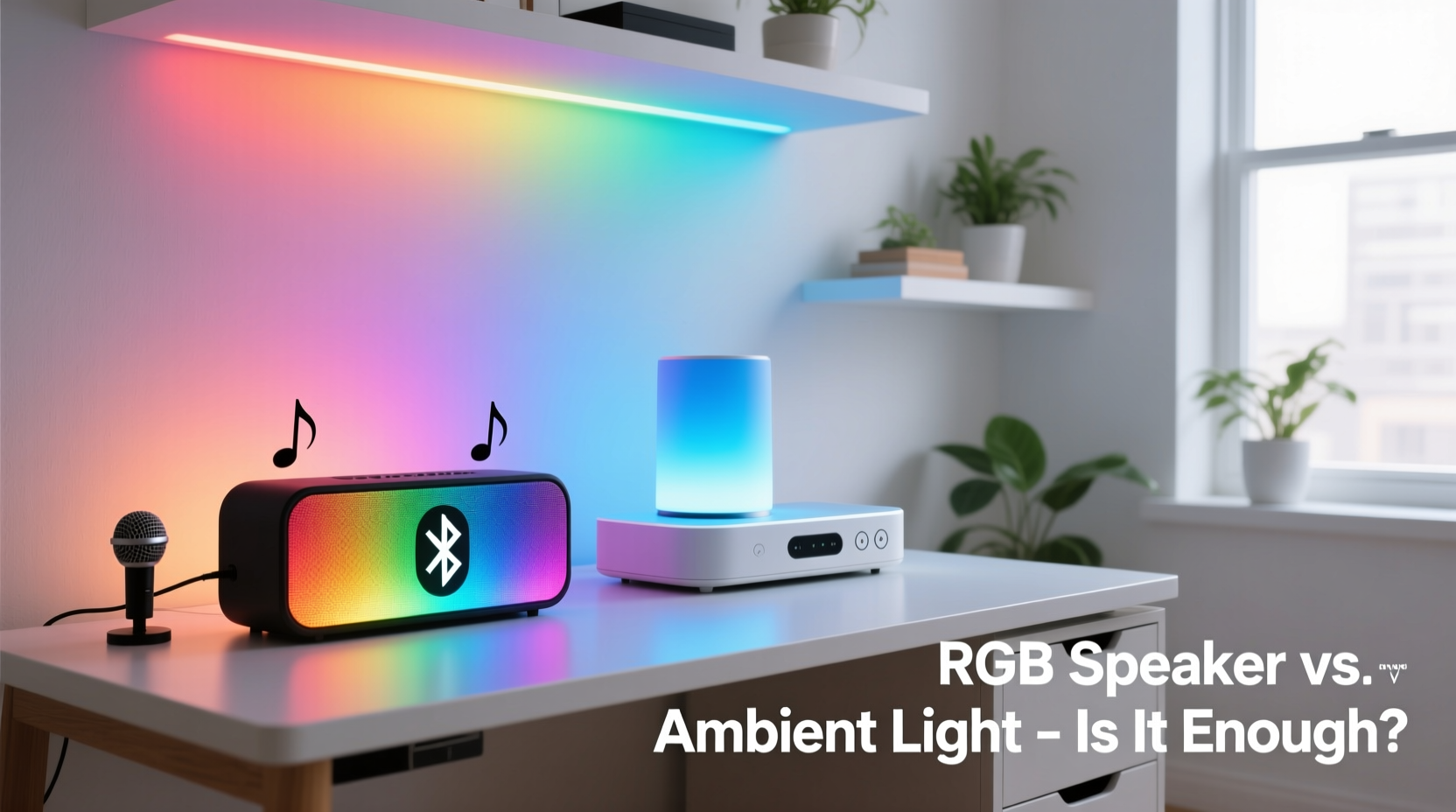
RGB Bluetooth speakers integrate full-range audio drivers with programmable LED arrays that emit red, green, and blue light, capable of producing millions of color combinations. These lights are typically located at the base, around the driver housing, or along the perimeter of the unit. Many models offer synchronization with music beats, app-controlled color schemes, and even voice assistant integration.
Their appeal lies in convenience: one device delivers both sound and light. For casual users hosting impromptu gatherings or looking to enhance a small space without cluttering it with multiple devices, this dual function seems efficient. However, the lighting component is usually secondary in engineering priority. LEDs are often bright but narrowly focused, lack dimming finesse, and produce saturated hues rather than soft, diffused glows typical of ambient fixtures.
Key Differences Between Speaker Lighting and Dedicated Ambient Fixtures
To assess substitutability, it’s essential to compare core characteristics:
| Feature | RGB Bluetooth Speaker Lighting | Dedicated Ambient Lighting |
|---|---|---|
| Light Output (Lumens) | Low (50–200 lumens) | Moderate to High (200–800+ lumens) |
| Color Temperature Range | Limited (usually only RGB colors) | Full spectrum (warm white to cool daylight) |
| Diffusion & Spread | Narrow, directional glow | Wide, even dispersion |
| Dimming Control | Basic on/off or preset levels | Precise, continuous dimming |
| Placement Flexibility | Fixed to speaker location | Wall, ceiling, under-shelf, floor options |
| Primary Purpose | Audio enhancement + visual effect | Illumination + mood setting |
As shown, dedicated lighting systems outperform RGB speakers in nearly every metric relevant to ambient illumination. While speaker LEDs create eye-catching patterns, they rarely provide functional or comfortable background lighting. Their intensity is often too localized, causing glare or uneven pools of color rather than a cohesive environment.
When RGB Speakers Work as Ambient Light Sources
There are specific scenarios where RGB Bluetooth speakers serve adequately as ambient lighting supplements:
- Small spaces like dorm rooms or studio apartments where minimalism is key.
- Temporary setups such as parties, outdoor lounges, or camping trips where portability matters more than precision.
- Mood accentuation when used alongside other lights—for example, pulsing red during a movie scene or shifting blues during relaxation sessions.
- Youth-oriented environments where vibrant, interactive visuals are preferred over subtlety.
“While RGB speakers add flair, they should be seen as accent pieces, not primary light sources. True ambient lighting requires thoughtful distribution and warmth.” — Lena Park, Interior Lighting Designer
A Real-World Example: The College Dorm Setup
Consider Mark, a university student furnishing his first dorm room. With limited space and budget, he purchases a JBL PartyBox with RGB effects instead of buying separate speakers and lamps. At night, he uses the speaker’s slow-color-cycle mode while studying, finding the soft purple glow calming. During weekend hangouts, he syncs the lights to the music, impressing friends.
However, after a few weeks, he notices eye strain under the speaker’s narrow beam and realizes it doesn’t help him wake up naturally in the morning. He eventually adds a warm-white desk lamp for task lighting and disables the speaker lights during daytime hours. His experience illustrates a balanced approach: the RGB speaker enhances ambiance situationally but doesn’t fully meet functional lighting needs.
Limitations That Prevent Full Substitution
Despite their visual appeal, several critical drawbacks limit RGB speakers as standalone ambient lighting:
- Lack of Warm White Options: Most models don’t offer adjustable white light temperatures, eliminating their usefulness for reading, working, or supporting natural circadian rhythms.
- Poor Light Distribution: LEDs are mounted to emphasize visibility of the speaker itself, not to illuminate walls or ceilings—the foundation of effective ambient lighting.
- Overstimulation Risk: Bright, shifting colors can disrupt relaxation, especially in bedrooms, contradicting the calming intent of ambient setups.
- No Integration with Smart Home Ecosystems: Unlike Philips Hue or LIFX bulbs, many RGB speakers can’t be scheduled, grouped, or controlled via unified platforms like Google Home or Apple HomeKit.
Best Practices for Maximizing Dual-Function Use
If you choose to use an RGB Bluetooth speaker as part of your ambient strategy, follow these guidelines to optimize results:
📋 **Checklist: Using RGB Speakers Effectively for Ambiance**- Position the speaker where its light reflects off walls or surfaces to soften output.
- Use static or slow-transition modes instead of rapid strobes for a calmer effect.
- Pair with dimmable white lights to balance color accents with functional illumination.
- Disable LEDs when audio is the focus (e.g., podcast listening or calls).
- Update firmware regularly to access improved lighting controls via companion apps.
Frequently Asked Questions
Can RGB speaker lights affect sleep quality?
Yes. Blue and bright multicolor lighting can suppress melatonin production, making it harder to fall asleep. Avoid using active RGB modes in bedrooms within 1–2 hours of bedtime. Opt for warm white lighting or no lights at all during wind-down periods.
Are there any RGB speakers with true ambient lighting capabilities?
A few premium models, such as certain Sony XBA series or Anker Soundcore variants, include diffused lighting rings and tunable white settings. However, even these remain audio-first devices. True ambient performance still requires dedicated fixtures.
Is it energy-efficient to use a speaker for lighting?
Not necessarily. While individual LEDs consume little power, running a speaker continuously just for light wastes energy and reduces speaker lifespan. A standalone LED strip or bulb uses less electricity and lasts longer when used solely for illumination.
Conclusion: Complement, Don’t Replace
An RGB Bluetooth speaker is not a true substitute for dedicated ambient lighting, but it can play a supportive role in a well-designed environment. Its strength lies in dynamic visual expression—not in providing consistent, comfortable, or health-conscious illumination. When used intentionally—as an accent piece, party enhancer, or youth-focused gadget—it adds value. But for genuine ambient lighting that supports well-being, spatial harmony, and daily routines, invest in purpose-built solutions.
Technology continues to blur functional boundaries, but smart consumers recognize that specialization often outperforms generalization. Combine your RGB speaker’s vibrant personality with high-quality ambient fixtures, and you’ll achieve both atmosphere and utility without compromise.




 浙公网安备
33010002000092号
浙公网安备
33010002000092号 浙B2-20120091-4
Comments
No comments yet. Why don't you start the discussion?