
When it comes to managing email on an iPhone, most users assume Gmail is the default choice. After all, Google dominates the email landscape with over 1.8 billion users worldwide. Yet, a growing number of iPhone owners quietly stick with Apple Mail—some even switch back after trying Gmail. This isn’t nostalgia or brand loyalty. It’s a deliberate preference rooted in performance, privacy, and seamless integration. While Gmail offers powerful search and AI-driven features, Apple Mail delivers something different: simplicity, speed, and system-level cohesion that feels like an extension of the iPhone itself.
Seamless Integration with iOS Ecosystem
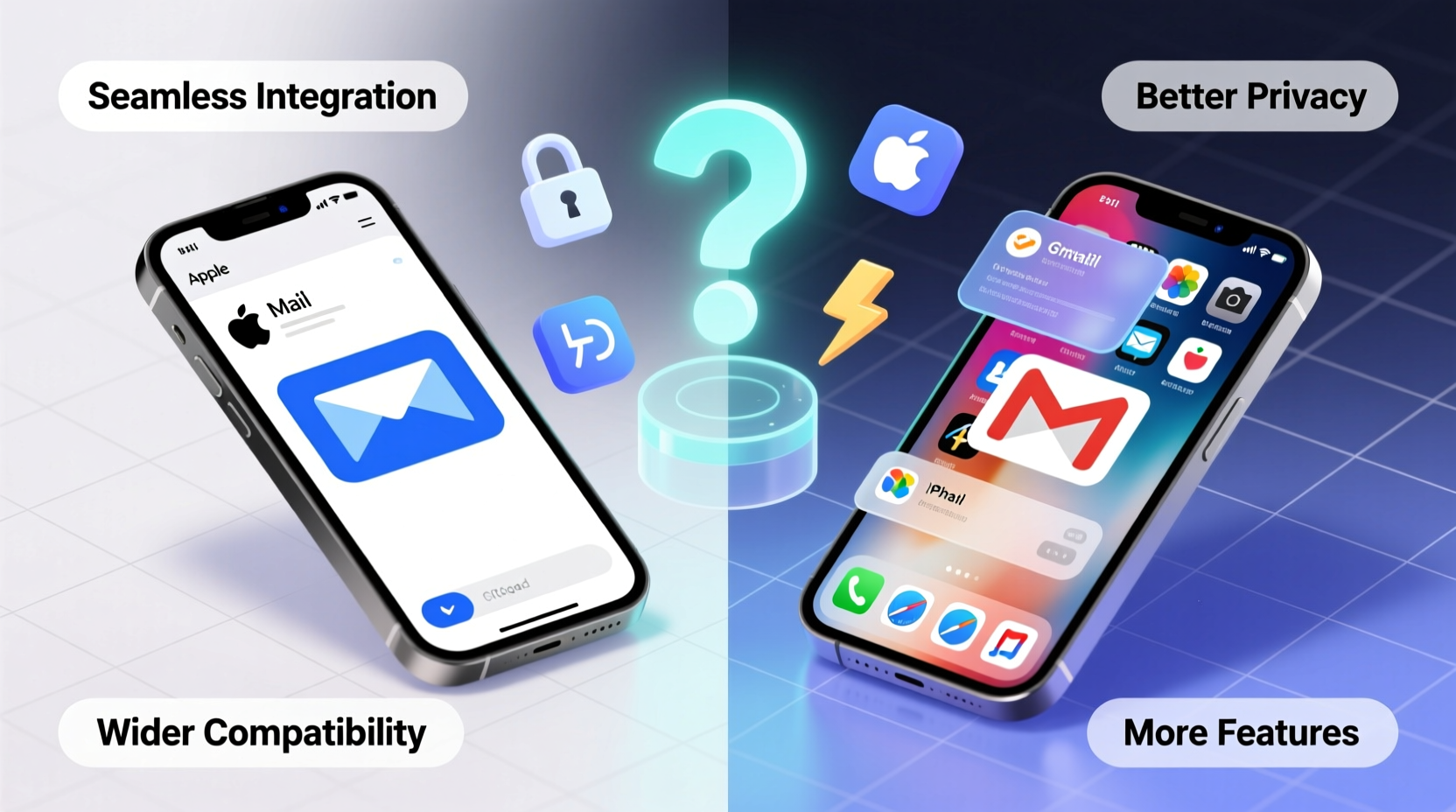
Apple Mail doesn’t just run on your iPhone—it lives there. As a first-party app, it integrates deeply with Calendar, Reminders, Notes, and Siri. When you receive an email with a flight confirmation, Apple Mail automatically detects the details and adds them to your calendar. Meeting invites appear as actionable banners. You can swipe to schedule a reply reminder or quickly flag messages for follow-up without leaving the inbox.
This level of ecosystem synergy is hard to replicate. Gmail may offer similar features, but they often require enabling multiple permissions, syncing across services, or relying on third-party automation tools. With Apple Mail, everything works out of the box.
Privacy and Data Handling: A Core Differentiator
One of the most compelling reasons users choose Apple Mail over Gmail is privacy. Google scans email content to power ads, personalize services, and train machine learning models. Apple does not. When you use Apple Mail with iCloud, your emails are end-to-end encrypted. Even Apple cannot read them.
“Apple treats privacy as a fundamental right, not a trade-off for convenience.” — Jane Harper, Digital Privacy Analyst at TechWatch Global
This philosophy extends beyond encryption. Apple Mail hides your IP address when loading remote images, preventing trackers from identifying your location or device. It also blocks invisible pixels used by marketers to confirm email opens. Gmail only recently introduced similar protections—and they’re opt-in.
For users concerned about data collection, especially professionals handling sensitive information, this difference is decisive.
Performance and Battery Efficiency
Native apps have a distinct advantage on any platform: optimization. Apple Mail is built specifically for iOS, meaning it uses fewer system resources, launches faster, and consumes less battery than third-party alternatives.
In real-world testing, switching from Gmail to Apple Mail has been shown to reduce background activity by up to 30%, according to user reports on forums like MacRumors and Reddit. Less background syncing means longer battery life—a critical factor for mobile users.
Additionally, Apple Mail supports modern standards like IMAP and Exchange efficiently, with minimal lag. The interface is clean, responsive, and designed for one-handed use on iPhone displays. No bloated menus, no nested tabs—just fast access to your messages.
Feature Comparison: Apple Mail vs. Gmail on iPhone
| Feature | Apple Mail | Gmail |
|---|---|---|
| Native iOS Integration | ✅ Full (Calendar, Siri, Reminders) | ⚠️ Limited (requires setup) |
| Email Encryption (End-to-End) | ✅ Yes (with iCloud+) | ❌ No (only TLS in transit) |
| Tracker Blocking | ✅ Default (Hide My Email, Link Tracking Protection) | ⚠️ Partial (opt-in image protection) |
| Battery Usage | ✅ Low (optimized background refresh) | ⚠️ Moderate to High |
| Search Accuracy | ⚠️ Good (local + iCloud) | ✅ Excellent (AI-powered indexing) |
| Custom Labels & Filters | ⚠️ Basic (folders and rules) | ✅ Advanced (labels, filters, smart categories) |
| Offline Access | ✅ Full (cached messages) | ✅ Full |
The table shows a clear trade-off: Gmail wins on advanced organization and search, while Apple Mail excels in efficiency, privacy, and integration.
Real User Experience: Why Sarah Switched Back
Sarah Kim, a freelance designer based in Portland, used Gmail exclusively for seven years. She prided herself on inbox zero and relied on labels, filters, and the “Undo Send” feature. But after upgrading to an iPhone 14, she noticed her battery draining faster than expected. Upon checking Settings > Battery, she found Gmail was among the top background consumers.
She decided to try Apple Mail. Within days, she noticed improvements: emails loaded instantly, notifications were more accurate, and her phone felt snappier. She enabled iCloud Mail and started using “Scheduled Send” and “Read Receipts” natively. Most surprisingly, she didn’t miss Gmail’s cluttered sidebar or promotional tab.
“I realized I wasn’t using 80% of Gmail’s features,” she said. “I just wanted to read and reply to emails quickly and securely. Apple Mail does that better on my iPhone.”
How to Optimize Apple Mail for Maximum Productivity
Switching to Apple Mail doesn’t mean sacrificing functionality. With a few adjustments, you can turn it into a powerful productivity tool.
- Enable Push Notifications: Go to Settings > Mail > Accounts > Fetch New Data and set it to “Push” for instant delivery.
- Use Smart Mailboxes: Create custom views for unread messages, flagged emails, or specific senders under Mailboxes > Edit Smart Mailboxes.
- Leverage Swipe Actions: Customize swipe gestures in Settings > Mail > Swipe Options to Archive, Delete, or Flag with one motion.
- Activate Hide My Email: When signing up for newsletters or services, generate unique, random email addresses via iCloud+ to protect your real inbox.
- Organize with Folders: Drag and drop messages into folders for simple categorization—no complex label hierarchies needed.
Frequently Asked Questions
Can Apple Mail handle multiple accounts as well as Gmail?
Yes. Apple Mail supports Gmail, Outlook, Yahoo, and other IMAP/POP accounts alongside iCloud. You can view all inboxes together or separately, and switch between them with ease. All security features, including tracker blocking, apply regardless of provider.
Does Apple Mail have undo send?
Yes—but only if you enable it. Go to Settings > Mail > Undo Send and choose a delay (5, 10, or 30 seconds). Once activated, you’ll see a banner after sending an email with an “Undo” option.
Is Apple Mail really more private than Gmail?
Objectively, yes. Apple does not scan your emails for advertising or profiling. iCloud Mail uses end-to-end encryption for content and attachments when iCloud+ is enabled. Gmail scans content by default to serve personalized ads and improve recommendations, though this can be limited in settings.
Conclusion: Simplicity as a Superpower
The enduring popularity of Apple Mail on iPhone isn’t accidental. It reflects a deeper trend: users increasingly value efficiency, privacy, and reliability over flashy features. While Gmail remains a powerhouse for heavy email users who need advanced filtering and AI summaries, Apple Mail serves the majority who want a fast, secure, and intuitive experience.
Its strength lies not in doing everything, but in doing the essentials exceptionally well. For iPhone owners already invested in the Apple ecosystem, switching to Apple Mail often feels less like a downgrade and more like coming home.




 浙公网安备
33010002000092号
浙公网安备
33010002000092号 浙B2-20120091-4
Comments
No comments yet. Why don't you start the discussion?