
In an era where sustainability is no longer optional but essential, many households are reevaluating everyday items that contribute to environmental waste. One such item is plastic wrap—ubiquitous in kitchens for covering food, yet notorious for its single-use nature and non-biodegradable footprint. Enter beeswax wrap: a reusable, plant-based alternative made from cotton infused with beeswax, tree resin, and jojoba oil. Marketed as eco-friendly and functional, it promises to reduce plastic consumption while maintaining food freshness. But can it truly replace plastic wrap in real-world kitchen use?
The answer isn't a simple yes or no. Beeswax wrap offers tangible benefits for certain applications, but it also comes with limitations that affect its practicality across all kitchen tasks. Understanding when and how to use it—and when to stick with other solutions—is key to making informed, sustainable choices.
How Beeswax Wrap Works
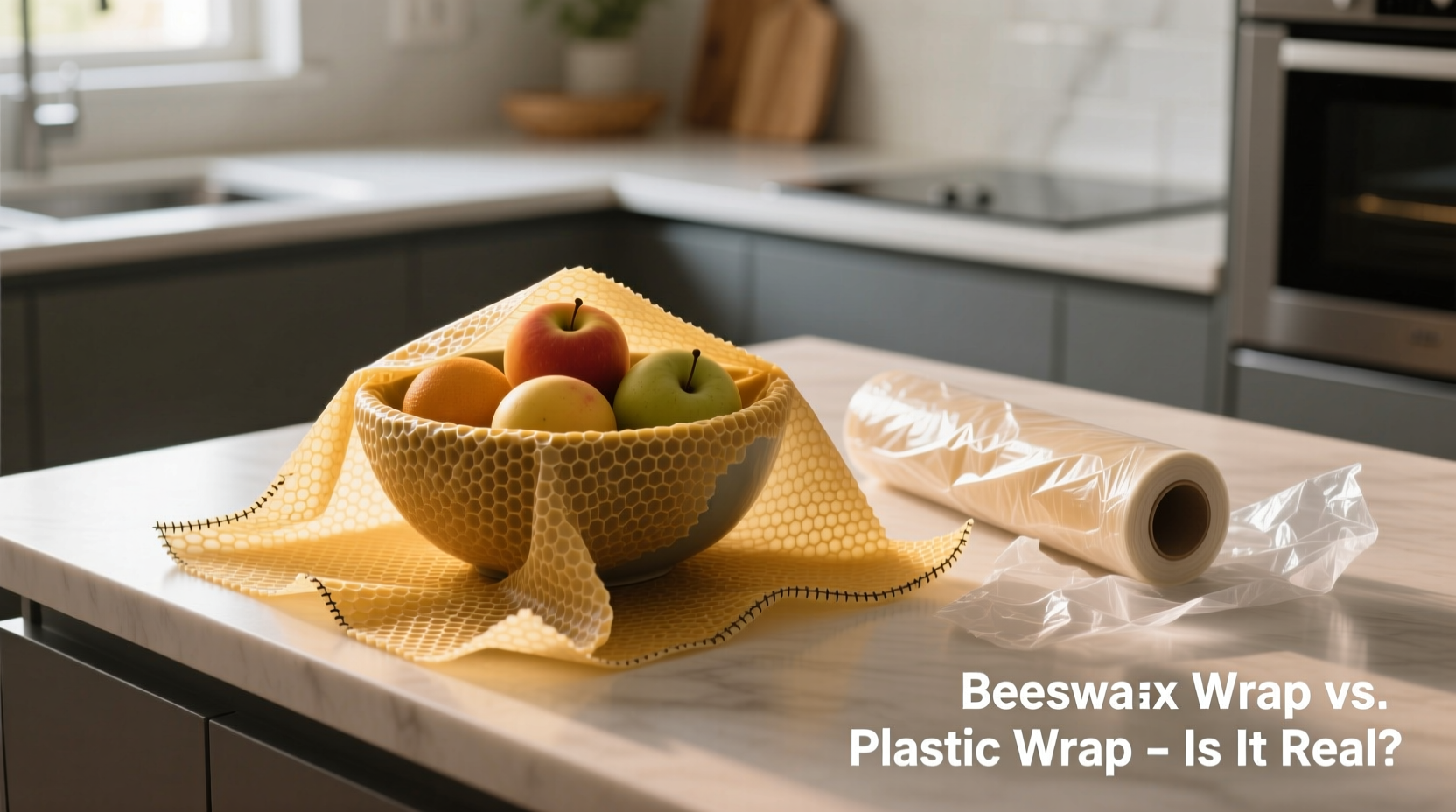
Beeswax wrap functions through a combination of natural ingredients and user interaction. The primary components—organic cotton fabric, food-grade beeswax, pine resin, and jojoba oil—work together to create a pliable, slightly sticky surface that conforms to containers or wraps around food items when warmed by hand. The warmth softens the wax, allowing the wrap to mold tightly and form a breathable seal.
Unlike plastic wrap, which creates an airtight barrier, beeswax wrap allows minimal airflow. This breathability helps prevent moisture buildup and extends the shelf life of certain perishables like cheese, bread, and vegetables without trapping condensation—a common cause of spoilage under plastic.
Its antimicrobial properties, particularly from beeswax and jojoba oil, further enhance its ability to preserve food naturally. However, this does not make it suitable for long-term storage or high-risk environments like raw meat handling.
Advantages Over Plastic Wrap
- Reusability: A single beeswax wrap can last up to a year with proper care, replacing hundreds of feet of disposable plastic wrap.
- Eco-Friendly End-of-Life: At the end of its lifespan, most beeswax wraps can be composted (check manufacturer guidelines), unlike plastic wrap, which persists in landfills for centuries.
- Reduced Chemical Exposure: Free from PVC, phthalates, and BPA commonly found in plastic wraps, beeswax wraps eliminate concerns about chemical leaching into food.
- Aesthetic & Sensory Appeal: Available in various patterns and colors, they add visual charm to kitchen organization. Their natural scent is often preferred over the synthetic odor of plastic.
- Supports Sustainable Agriculture: When sourced responsibly, beeswax supports beekeeping practices that promote pollinator health—an added ecological benefit.
“Switching to beeswax wrap isn’t just about reducing waste—it’s about reconnecting with materials that come from nature and return to it safely.” — Dr. Lena Patel, Environmental Scientist and Food Packaging Researcher
Limitations and Practical Constraints
Despite its appeal, beeswax wrap cannot fully replicate the functionality of plastic wrap in every scenario. Several factors limit its effectiveness:
- Temperature Sensitivity: High heat melts the wax; low temperatures harden it. This makes it unsuitable for microwaves, ovens, or freezing.
- Liquid Containment: It cannot reliably hold liquids. Pouring soup into a bowl covered with beeswax wrap will likely result in leaks.
- Hygiene Concerns: While washable, repeated exposure to strong odors (like onions or garlic) may linger despite cleaning. Raw meats should never be wrapped due to contamination risks.
- Durability: With frequent use, the wax layer can thin or flake, especially at folded edges, reducing sealing efficiency.
These constraints mean that while beeswax wrap excels in specific roles—covering bowls, wrapping sandwiches, storing cut produce—it falls short in others, particularly those requiring impermeability or thermal resistance.
When Beeswax Wrap Shines vs. When It Falls Short
| Use Case | Beeswax Wrap Suitability | Notes |
|---|---|---|
| Covering leftover salad in a bowl | ✅ Excellent | Forms a breathable seal; keeps greens crisp. |
| Wrapping half a lemon or avocado | ✅ Good | Prevents browning better than open-air storage. |
| Storing bread or baked goods | ✅ Very Good | Breathability prevents sogginess compared to plastic. |
| Packing a sandwich | ✅ Suitable | Reusable and leak-resistant for dry fillings. |
| Freezing leftovers | ❌ Not Recommended | Wax becomes brittle; poor seal formation. |
| Microwaving food | ❌ Unsafe | Wax melts and contaminates food. |
| Containing soups or sauces | ❌ Poor | Likely to leak; not waterproof. |
| Handling raw meat or fish | ❌ Inadvisable | Difficult to sanitize completely; risk of cross-contamination. |
Real-World Example: A Week in a Zero-Waste Kitchen
Sarah, a home cook in Portland, Oregon, decided to go plastic-free in her kitchen for one month. She replaced all plastic wrap with beeswax wraps and monitored their performance daily.
On day two, she used a medium-sized wrap to cover a bowl of chopped cucumbers and tomatoes. After three days in the fridge, the vegetables remained crisp—better than when stored under plastic, she noted. She wrapped a block of cheddar cheese in another piece, reporting that it stayed fresh for over a week without drying out.
However, challenges arose. When she tried to cover a warm casserole dish straight from the oven, the residual heat softened the wrap excessively, causing it to sag and lose adhesion. Later, an attempt to freeze marinated chicken breasts failed—the wrap cracked during storage, and freezer burn developed within 48 hours.
By week three, Sarah adjusted her habits. She began using glass containers with lids for hot foods and freezing, reserving beeswax wraps exclusively for cold, dry items. “It’s not a total replacement,” she concluded, “but it handles about 60% of what I used to use plastic wrap for—and that’s meaningful.”
Step-by-Step Guide to Using and Caring for Beeswax Wrap
- Activation: Warm the wrap in your hands for 10–15 seconds until slightly tacky, then press it over a bowl or around food.
- Cleaning: Rinse with cool water and mild dish soap. Use a sponge lightly if needed, but avoid scrubbing. Never use hot water—it removes the wax.
- Drying: Air-dry flat or hang on a line. Do not wring or twist.
- Storage: Keep in a cool, dry drawer away from direct sunlight. Store flat or rolled—never folded in the same spot repeatedly to prevent cracking.
- Revival: If the wrap loses stickiness after months of use, refresh it by placing it on a baking sheet in a 150°F (65°C) oven for 3–5 minutes, then let it cool. This redistributes the wax.
- End of Life: Once the fabric wears thin or the wax no longer adheres, cut into strips and compost (if 100% natural) or use as kindling for fire starters.
Expert Insight on Long-Term Viability
Dr. Alan Zhou, a materials scientist specializing in biodegradable packaging, emphasizes that beeswax wrap is part of a broader shift toward \"appropriate material matching.\"
“The goal isn’t to find a one-size-fits-all substitute for plastic, but to develop a toolkit of alternatives tailored to specific needs. Beeswax wrap fits neatly into the category of short-term, ambient-temperature food protection. Expecting it to do everything plastic does sets it up for failure.” — Dr. Alan Zhou, Materials Innovation Lab, University of British Columbia
This perspective reframes the conversation: instead of asking whether beeswax wrap can replace plastic entirely, we should ask how it complements other sustainable options like silicone lids, glass containers, and compostable bags.
Frequently Asked Questions
Can beeswax wrap be washed in a dishwasher?
No. The high heat and strong detergents in dishwashers will degrade the wax coating and shorten the wrap’s lifespan. Always hand-wash with cool water.
Are there vegan alternatives to beeswax wrap?
Yes. Some brands offer plant-based versions using candelilla wax or soy wax instead of beeswax, catering to vegan users. These perform similarly but may have slightly different texture and durability.
How many times can a beeswax wrap be reused?
With proper care, a high-quality beeswax wrap lasts 6 to 12 months. Frequent washing, exposure to heat, or rough handling will reduce longevity.
Checklist: Getting Started with Beeswax Wrap
- ☐ Purchase wraps in multiple sizes for versatility
- ☐ Designate a drawer for storage, away from heat sources
- ☐ Test on small tasks first (e.g., covering fruit)
- ☐ Establish a gentle washing routine
- ☐ Pair with rigid containers for best results
- ☐ Refresh wraps periodically with oven treatment
- ☐ Compost or repurpose when worn out
Conclusion: A Realistic Path Forward
Beeswax wrap is not a perfect replacement for plastic wrap, nor was it designed to be. Its strength lies in targeted, responsible use—not universal substitution. For covering bowls, preserving produce, and packing dry meals, it performs admirably while significantly cutting down household plastic waste.
Adopting beeswax wrap requires a mindset shift: from convenience-driven disposability to intentional, reusable systems. When combined with other sustainable tools—silicone lids, mason jars, cloth produce bags—it becomes part of a holistic approach to kitchen sustainability.
If you’re considering the switch, start small. Replace one or two common plastic wrap uses with beeswax alternatives and assess performance over time. Learn its rhythms, respect its limits, and appreciate its role in building a less wasteful kitchen.




 浙公网安备
33010002000092号
浙公网安备
33010002000092号 浙B2-20120091-4
Comments
No comments yet. Why don't you start the discussion?