
In an era dominated by screens—laptops, smartphones, tablets, and televisions—concerns about digital eye strain and sleep disruption have surged. One solution that has gained widespread popularity is blue light blocking glasses. Marketed as a defense against eye fatigue, insomnia, and long-term retinal damage, these amber- or yellow-tinted lenses are now sold everywhere from optometry clinics to online marketplaces. But do they actually work, or are they simply a modern placebo wrapped in sleek branding?
The answer isn’t straightforward. While some users swear by their effects, scientific evidence remains mixed. To understand whether blue light blocking glasses are necessary, we need to explore how blue light affects the body, what research says about their efficacy, and who might truly benefit from using them.
Understanding Blue Light and Its Biological Impact
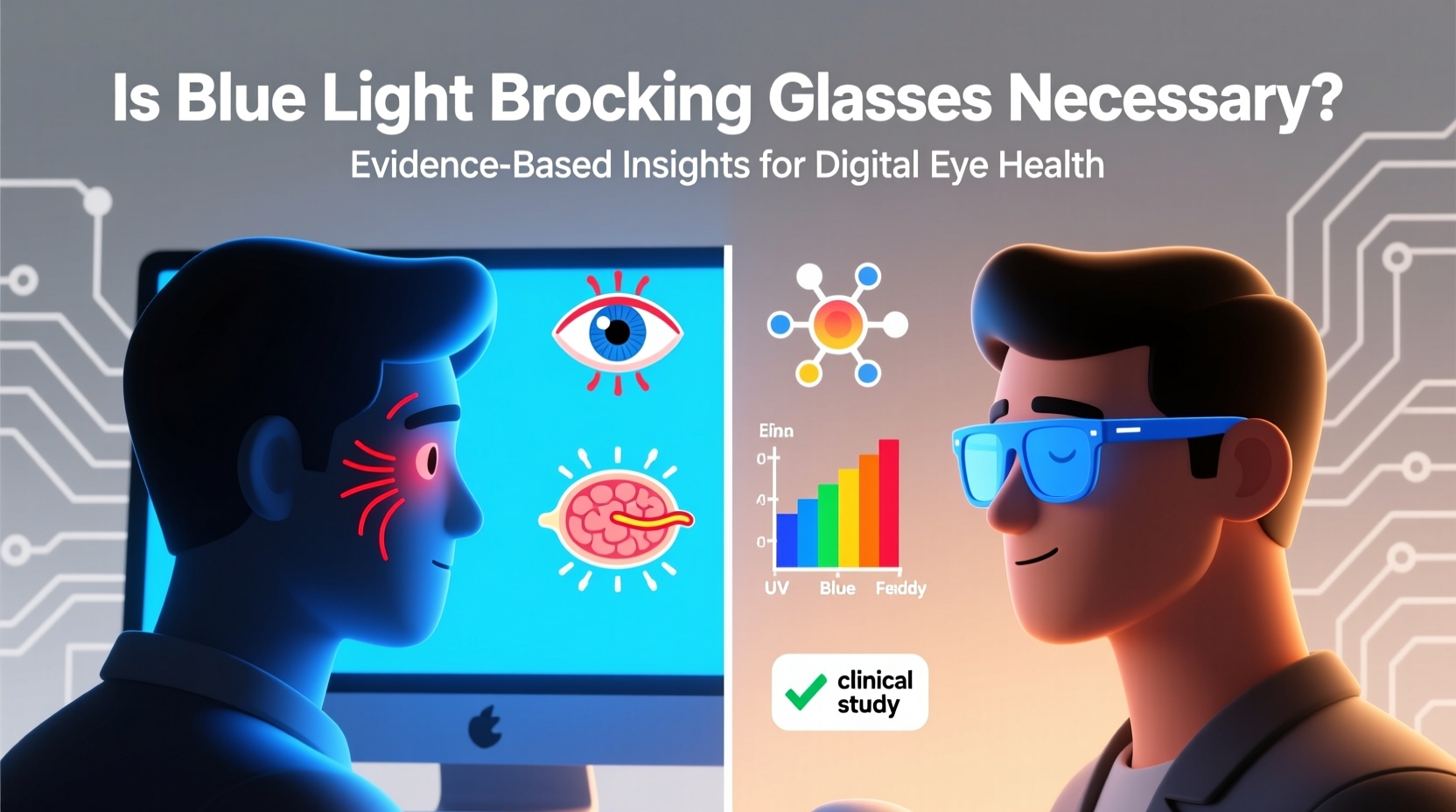
Blue light is part of the visible light spectrum, with wavelengths between approximately 380 and 500 nanometers. It's naturally emitted by the sun and helps regulate our circadian rhythm—the internal clock that tells us when to be alert and when to sleep. Exposure to natural blue light during the day boosts attention, mood, and reaction times.
However, artificial sources—especially LED screens—emit concentrated blue light, particularly in the evening hours when our bodies should be winding down. This is where concern arises. Research shows that exposure to blue light at night suppresses melatonin, the hormone responsible for sleep onset. A 2014 study published in *Applied Ergonomics* found that participants exposed to unfiltered LED screens before bedtime experienced significantly delayed melatonin release compared to those using blue light filters.
But here’s the catch: not all blue light is harmful. Short-wavelength blue light (around 460–480 nm) is the most disruptive to melatonin production. Some blue light blocking glasses filter only this specific range, while others block a broader spectrum, including longer wavelengths that may not interfere with sleep. The effectiveness of a pair of glasses depends heavily on the quality of the lens coating and the precision of its filtering capability.
“Even moderate evening exposure to screen-based blue light can shift circadian timing by up to three hours.” — Dr. Steven Lockley, Neuroscientist, Harvard Medical School
Scientific Evidence: What Does the Research Say?
The medical and scientific communities remain divided on the real-world benefits of blue light blocking glasses. Several studies suggest modest improvements in sleep quality and reduced eye strain, while others find no significant difference compared to placebo.
A 2020 meta-analysis in the journal *Ophthalmic & Physiological Optics* reviewed 17 clinical trials and concluded that while some individuals reported better sleep and less discomfort, the overall effect size was small and inconsistent. The researchers noted that subjective improvements could be influenced by expectation bias—users feeling better because they believe the glasses should work.
On the other hand, a randomized controlled trial from the University of Houston found that participants wearing blue light blocking glasses in the evening showed a 58% increase in nighttime melatonin levels compared to a control group wearing clear lenses. The study authors suggested that properly designed lenses could offer meaningful protection for people with high evening screen exposure.
It appears that context matters. For individuals who spend several hours on screens after sunset—especially those with existing sleep issues—the right type of blue light blocking glasses may provide measurable benefits. However, for average daytime users with healthy sleep hygiene, the impact may be negligible.
Who Might Actually Benefit?
Not every screen user needs blue light blocking glasses. However, certain groups are more likely to experience tangible benefits:
- Night shift workers: Their natural sleep cycles are already disrupted. Blocking blue light during nighttime screen use can help maintain hormonal balance.
- Individuals with insomnia or delayed sleep phase syndrome: These users often struggle with falling asleep due to elevated alertness. Reducing blue light exposure in the evening may support earlier melatonin release.
- Teenagers and young adults: This demographic tends to use devices late into the night. Since their circadian rhythms are naturally delayed, additional blue light exposure compounds sleep difficulties.
- People sensitive to light or experiencing digital eye strain: While blue light may not be the sole cause of eye fatigue, reducing glare and high-energy light can improve comfort during prolonged screen sessions.
For office workers who primarily use screens during daylight hours and limit device use before bed, the necessity of blue light glasses diminishes. In such cases, behavioral changes—like taking regular breaks and adjusting screen brightness—are often more effective than relying on specialized eyewear.
Placebo or Practical Tool? Evaluating Real-World Results
Anecdotal evidence plays a major role in the popularity of blue light blocking glasses. Many users report falling asleep faster, waking up less frequently, and feeling more rested. But how much of this is physiological versus psychological?
A mini case study illustrates this ambiguity:
Maria, a 32-year-old software developer, started wearing blue light glasses two hours before bed after struggling with insomnia for months. Within a week, she reported falling asleep 20 minutes faster and feeling more alert in the mornings. However, she also began turning off her phone earlier, dimming room lights, and avoiding caffeine after 4 PM—changes that likely contributed to her improved sleep. When she tested a pair of clear placebo glasses (unknowingly), she still felt a similar improvement, suggesting that her routine adjustments—not the lenses—were the primary factor.
This scenario reflects a common pattern: users adopt multiple healthy habits alongside wearing blue light glasses, making it difficult to isolate the glasses’ true impact. The placebo effect is powerful, especially when people invest in a product expecting results.
That said, if the glasses encourage better nighttime routines—like screen curfews or reduced scrolling—they serve a valuable purpose, even if their optical filtering is only partially effective.
Choosing the Right Glasses: A Practical Checklist
If you’re considering trying blue light blocking glasses, not all products are created equal. Use this checklist to ensure you’re getting a functional pair rather than a fashion accessory:
- Check the wavelength range: Opt for lenses that block at least 90% of light between 400–450 nm. Some premium brands provide spectral transmission reports.
- Avoid overly dark or colored lenses for daytime use: Amber or red tints can distort color perception and aren't necessary during daylight hours.
- Look for anti-reflective coating: This reduces glare and enhances visual comfort, independent of blue light filtering.
- Verify third-party testing: Reputable brands often publish lab results confirming their claims.
- Consider fit and comfort: If the glasses are uncomfortable, you won’t wear them consistently, negating any potential benefit.
| Feature | Recommended | Avoid |
|---|---|---|
| Lens Color | Clear (day), Amber (night) | Dark red or orange for daytime |
| Blue Light Blocked | 90% in 400–450 nm range | Claims without data |
| Coating | Anti-reflective + UV protection | Bare plastic without treatment |
| Use Case | Nighttime screen use, shift work | All-day wear without breaks |
Beyond Glasses: More Effective Strategies for Screen Users
While blue light blocking glasses get the spotlight, simpler and often more effective strategies exist for managing screen-related fatigue and sleep disruption.
One of the most impactful is adjusting device settings. Most smartphones and computers now include built-in “night mode” or “blue light filter” features (such as Night Shift on iOS or Night Light on Windows). These reduce blue emission automatically based on time of day. Though less potent than physical lenses, they require no extra cost or equipment.
Another proven method is following the 20-20-20 rule: every 20 minutes, look at something 20 feet away for at least 20 seconds. This reduces eye strain far more effectively than any lens.
Environmental adjustments also play a key role:
- Keep screen brightness aligned with ambient lighting.
- Position monitors slightly below eye level to reduce dry eyes.
- Use indirect lighting to minimize screen glare.
And perhaps most importantly: establish a screen curfew. Avoiding bright screens for at least 60–90 minutes before bed allows natural melatonin production to rise, supporting deeper, more restorative sleep.
Frequently Asked Questions
Do blue light blocking glasses improve vision?
No, they do not correct vision problems like nearsightedness or astigmatism. They are designed to filter specific wavelengths of light, not to enhance visual acuity.
Can I wear blue light glasses during the day?
You can, but it’s generally unnecessary—and potentially counterproductive. Natural blue light during the day supports alertness and mood. Wearing strong filtering lenses in daylight may lead to drowsiness or reduced concentration.
Are there any risks to using blue light blocking glasses?
There are no known health risks, though cheap or poorly made lenses may cause visual distortion or headaches. Additionally, relying solely on glasses without addressing screen time habits may give a false sense of protection.
Conclusion: A Tool, Not a Cure-All
Blue light blocking glasses are neither a miracle solution nor a complete placebo. For certain individuals—particularly those with high evening screen exposure or sleep disorders—they can be a helpful component of a broader strategy to improve sleep and reduce eye strain. However, for the average user, their benefits are often overstated.
The most effective approach combines smart technology use, environmental adjustments, and consistent routines. Whether or not you choose to wear blue light glasses, the foundation of eye and sleep health lies in behavior: taking breaks, managing screen time, and prioritizing darkness before bed.




 浙公网安备
33010002000092号
浙公网安备
33010002000092号 浙B2-20120091-4
Comments
No comments yet. Why don't you start the discussion?