
In recent years, beauty brands have flooded the market with products promising protection from blue light—specifically the kind emitted by digital screens. From tinted moisturizers to foundations and primers, the claim is consistent: these formulas shield your skin from the damaging effects of prolonged screen exposure. But how much of this is grounded in science, and how much is simply savvy marketing capitalizing on digital-age anxieties? As consumers spend more time in front of phones, laptops, and tablets, the demand for \"digital defense\" skincare and makeup has surged. Yet, understanding whether blue light blocking makeup delivers tangible benefits requires a closer look at dermatological research, product formulation, and realistic expectations.
The Science Behind Blue Light and Skin Health
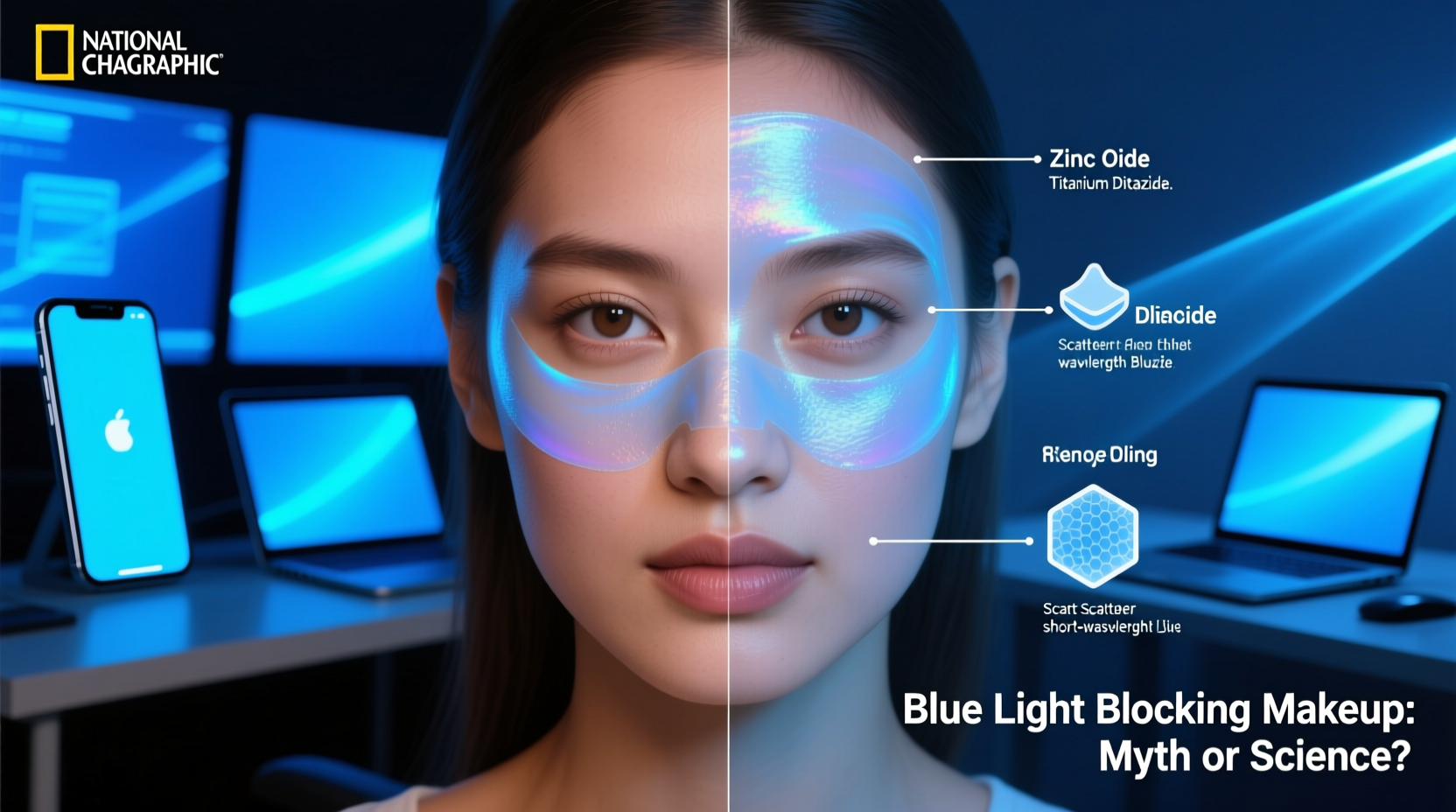
Blue light, part of the visible light spectrum (400–500 nanometers), is naturally present in sunlight but also emitted by LED screens, fluorescent lighting, and electronic devices. While high-energy visible (HEV) blue light from the sun has been linked to oxidative stress and potential pigment changes in the skin, the intensity of blue light from screens is significantly lower.
Studies suggest that excessive exposure to HEV light—particularly from the sun—can contribute to premature aging by generating free radicals. This process may degrade collagen and elastin over time, leading to fine lines and uneven tone. However, the amount of blue light emitted by smartphones and computers is orders of magnitude weaker than solar exposure. According to Dr. Whitney Bowe, a board-certified dermatologist and clinical assistant professor at Mount Sinai Medical Center:
“While there’s emerging evidence that blue light can affect skin, especially in people with melasma or hyperpigmentation, the dose from screens is so low that it’s unlikely to cause significant damage compared to UV radiation from the sun.” — Dr. Whitney Bowe, Dermatologist
In other words, while blue light *can* impact skin under extreme or prolonged conditions, everyday screen use likely doesn’t pose a serious threat—especially when compared to UVA/UVB rays, which remain the primary cause of photoaging and skin cancer.
How Blue Light Blocking Makeup Claims to Work
Brands promoting blue light protection typically incorporate ingredients known to reflect or absorb high-energy visible light. Common components include:
- Iron oxides – Pigments commonly found in tinted sunscreens and foundations, known to block both UV and some HEV light.
- Niacinamide – An antioxidant that helps strengthen the skin barrier and reduce inflammation.
- Antioxidants like vitamin C, E, and green tea extract – Neutralize free radicals generated by environmental stressors, including light exposure.
- Titanium dioxide and zinc oxide – Physical sunscreen agents that offer broad-spectrum protection, including partial HEV coverage.
Some formulations are marketed as “digital shields,” suggesting they create a protective film on the skin. While iron oxides—especially in higher concentrations—have demonstrated efficacy in blocking blue light in lab settings, most makeup products do not contain enough of these pigments to provide full protection unless applied thickly and evenly across the face.
Marketing vs. Reality: What You’re Really Paying For
The rise of blue light blocking claims coincides with the broader clean beauty and tech-integrated skincare trends. Consumers increasingly seek products that address modern lifestyle challenges, and brands respond with targeted messaging. However, many of these products lack independent clinical validation.
A review of ingredient lists reveals that some “blue light defense” foundations contain minimal amounts of protective compounds. In several cases, the difference between a regular foundation and its “blue light” counterpart lies only in added antioxidants or subtle rebranding—not in meaningful photoprotection.
Moreover, regulatory bodies like the U.S. FDA do not recognize blue light protection as an official sunscreen claim. Unlike SPF, which measures UVB protection, there is no standardized testing method or labeling requirement for blue light defense in cosmetics. This absence allows brands considerable leeway in making loosely defined claims.
Consider this: if a foundation contains SPF 20 and iron oxides, it may offer incidental blue light filtering. But if the same product is worn thin or not reapplied, protection diminishes quickly. In contrast, dedicated sunscreens with iron oxide—such as those formulated for melasma patients—are more consistently effective.
Comparison of Product Types and Protective Capabilities
| Product Type | Typical Active Ingredients | Blue Light Protection Level | Notes |
|---|---|---|---|
| Mineral Sunscreen (Tinted) | Zinc oxide, titanium dioxide, iron oxides | High (when iron oxide is ≥3%) | Best option for proven HEV protection |
| Foundation with SPF & Iron Oxide | SPF agents, iron oxides, antioxidants | Moderate (depends on application thickness) | Effective only with generous, even layering |
| “Blue Light Defense” Primer | Antioxidants, silicones, color correctors | Low to None | Mostly marketing; limited physical blocking |
| Untinted Chemical Sunscreen | Avobenzone, octinoxate, etc. | Minimal | No iron oxide = negligible blue light blocking |
When Blue Light Protection Might Actually Matter
While average users may not need to worry about screen-emitted blue light, certain individuals could benefit from extra precautions:
- People with melasma or post-inflammatory hyperpigmentation: Clinical studies show that visible light, especially blue-violet wavelengths, can worsen pigmentation disorders. For these individuals, wearing tinted sunscreen or makeup with iron oxide provides measurable benefits.
- Night shift workers exposed to artificial light: Irregular light exposure may disrupt circadian rhythms and potentially affect skin repair cycles, though direct dermal damage remains unproven.
- Those undergoing acne treatments (like isotretinoin or retinoids): These medications increase photosensitivity, making comprehensive light protection—including HEV—a sensible addition to routine care.
In such cases, using makeup with functional levels of iron oxide isn’t just branding—it’s a practical extension of sun-safe habits. However, for the general population spending typical hours in front of screens, the risk of screen-based blue light damage is minimal.
Real-World Example: A Dermatology Clinic Observation
In a private dermatology clinic in Austin, Texas, patients with persistent melasma were split into two groups. One group used only standard SPF 30 sunscreen daily. The other used a tinted mineral sunscreen containing 4% iron oxide. After three months, 70% of the tinted sunscreen group reported reduced darkening episodes, compared to only 35% in the untinted group. While this wasn’t a formal study, it aligns with published research indicating that iron oxide enhances protection against visible light-induced pigmentation.
One patient, Maria, noted: “I work from home and am on Zoom all day. I thought my screen was harmless, but once I switched to a tinted sunscreen, my cheek spots stopped flaring up.” Her experience underscores that for sensitive skin types, even low-dose light exposure can trigger reactions—making protective makeup potentially valuable, but only when properly formulated.
How to Evaluate Blue Light Claims When Shopping
With so much ambiguity in labeling, consumers must become informed skeptics. Here’s a step-by-step guide to assessing whether a product offers real protection or just buzzwords:
- Check the ingredient list: Look for iron oxides near the top. Concentrations above 3% are considered effective for HEV blocking.
- Verify SPF presence: True protection starts with UV defense. A product without SPF cannot be relied upon for any form of photoprotection.
- Assess texture and opacity: Sheer, lightweight formulas are unlikely to provide substantial filtering. Thicker, tinted products offer better coverage.
- Research the brand’s claims: Reputable companies often cite third-party testing or peer-reviewed studies. Be wary of vague terms like “digital pollution defense” without specifics.
- Don’t rely solely on makeup: Use blue light blocking products as a supplement—not a replacement—for daily sunscreen.
What You Should Do: A Practical Checklist
Here’s what actually works for protecting your skin in a screen-heavy world:
- ✅ Use a broad-spectrum sunscreen with SPF 30+ every morning—even indoors.
- ✅ Choose tinted sunscreens with iron oxide if you have pigmentation concerns.
- ✅ Layer makeup over sunscreen, not as a substitute.
- ✅ Limit heavy makeup use if you’re prone to clogged pores or irritation.
- ❌ Don’t assume “blue light blocking” labels mean medical-grade protection.
- ❌ Avoid skipping traditional sun protection in favor of trendy claims.
Frequently Asked Questions
Does blue light from phones age your skin?
Prolonged, intense exposure to high-energy visible light can contribute to oxidative stress, but the amount emitted by phones is extremely low. There is no strong evidence that normal phone use causes visible aging. Sunlight remains the far greater concern.
Can I skip sunscreen if I wear blue light blocking makeup?
No. Most makeup does not provide sufficient or consistent UV protection. Always apply a dedicated sunscreen underneath. Makeup should enhance—not replace—your sun safety routine.
Are there any side effects to blue light blocking ingredients?
Iron oxides and common antioxidants are generally safe and non-irritating. However, heavier formulations may clog pores in acne-prone individuals. Patch testing is recommended for sensitive skin.
Conclusion: Smart Choices Over Hype
Blue light blocking makeup sits at the intersection of genuine science and aggressive marketing. For individuals with specific skin conditions like melasma, products containing iron oxide can offer meaningful protection against visible light. However, for the average consumer, the benefits are often overstated. Real protection comes from proven strategies: daily sunscreen, antioxidants, and minimizing unnecessary sun exposure.
Instead of chasing novelty claims, focus on formulations with transparent ingredient lists and multi-functional benefits. Let evidence—not emotion—guide your choices. If a product helps you maintain a consistent routine and contains beneficial ingredients like SPF and antioxidants, it’s worth considering. But don’t mistake cosmetic marketing for clinical necessity.




 浙公网安备
33010002000092号
浙公网安备
33010002000092号 浙B2-20120091-4
Comments
No comments yet. Why don't you start the discussion?