
At first glance, purchasing a coffee cup set seems like a smart financial move. Bundled mugs often appear significantly cheaper per unit than buying the same style individually. But is that always true? While sets can offer savings, they come with conditions—some obvious, others subtle—that may erode their value. Understanding when a set is truly economical versus when it’s just marketing requires looking beyond price tags at factors like quality, usage patterns, design flexibility, and long-term durability.
The Math Behind Mug Pricing: Sets vs. Singles
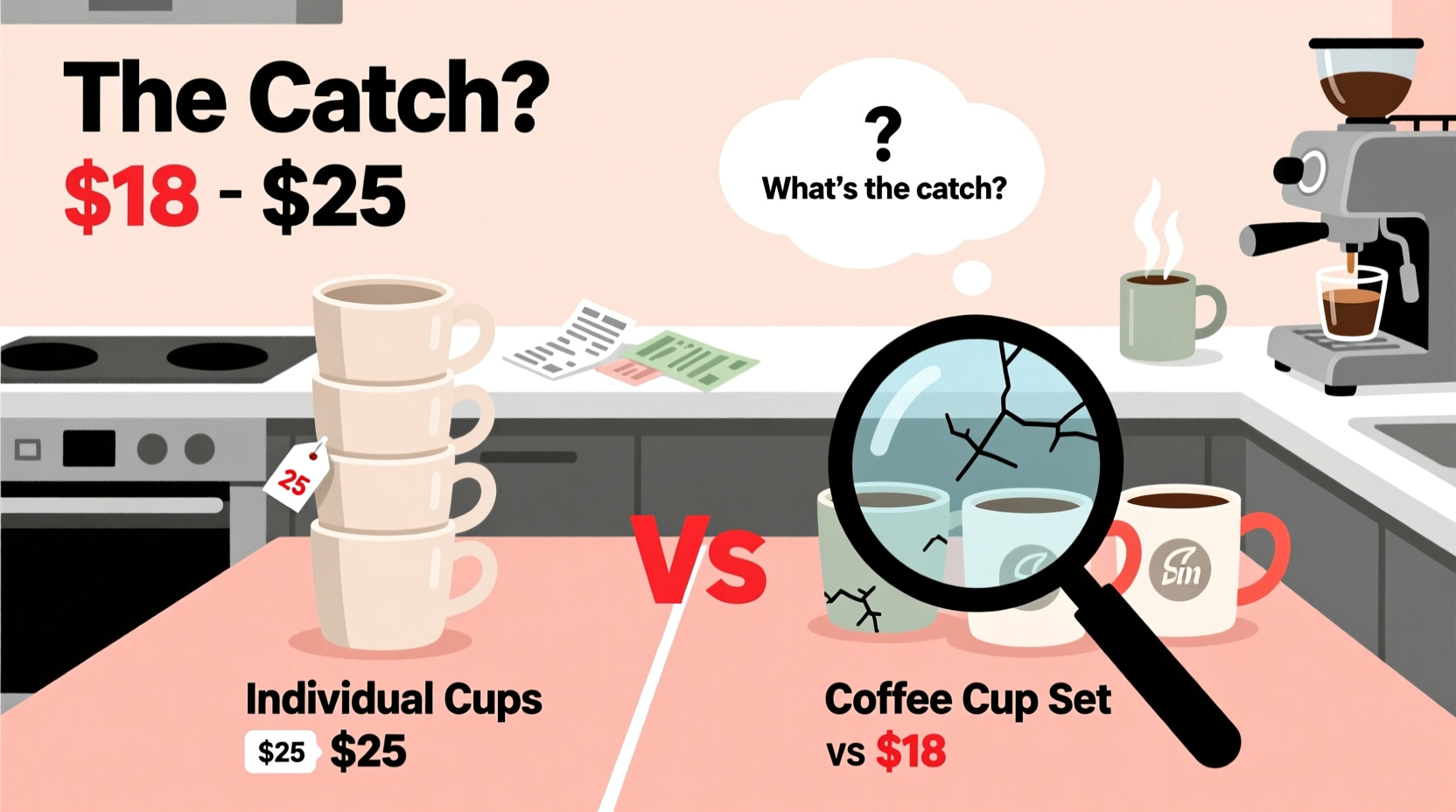
Let’s start with the numbers. A typical ceramic coffee mug retails for $10–$15 when purchased alone. In contrast, a four-piece set might cost $30–$40, averaging $7.50 to $10 per mug. On paper, that’s a 25% to 40% discount. The math looks solid—until you consider whether you actually need four identical mugs.
If you live alone or only regularly serve one guest, two mugs are likely sufficient. Buying a four-pack means spending $30+ on items you won’t use frequently. That unused capacity dilutes the real savings. Worse, if one mug breaks, you’re left with three matching ones and must either replace the entire set or accept mismatched replacements.
| Purchase Type | Number of Mugs | Total Cost | Cost Per Mug | Notes |
|---|---|---|---|---|
| Individual Purchase (x2) | 2 | $26 | $13 | Full control over design and timing |
| 4-Piece Set | 4 | $36 | $9 | Saved $4 total, but spent $10 on unused mugs |
| Individual Purchase (x4) | 4 | $52 | $13 | Most expensive option, maximum flexibility |
The table illustrates a key insight: while per-unit cost drops with sets, total expenditure and utility matter more in real-world decisions. Savings only count if you use what you buy.
Quality Compromises in Budget Sets
Not all mugs are created equal. Many budget-friendly sets cut corners to maintain low prices. Common compromises include:
- Thinner ceramic walls – Less insulation, more prone to chipping.
- Lower-grade glaze – May crack or discolor after repeated dishwasher use.
- Inconsistent sizing – Slight variations between mugs affect stacking and aesthetics.
- Non-ergonomic handles – Can make holding uncomfortable, especially with hot liquids.
A premium single mug from a specialty brand like Le Creuset or Denby uses higher-fired clay, durable glazes, and precision molding. These features extend lifespan and improve user experience—but rarely appear in mass-market sets priced under $40.
“Many ‘value’ sets use second-run ceramics—pieces that didn’t meet strict quality standards during production. They look fine initially but degrade faster.” — Daniel Ruiz, Product Manager at Hearth & Vessel Ceramics
Design Limitations and Lifestyle Fit
One of the biggest hidden costs of sets is reduced design flexibility. When you commit to six identical mugs, you lose the ability to rotate styles, match seasonal decor, or accommodate personal preferences among household members.
Consider a family of four: one person prefers oversized travel-style mugs, another likes vintage designs, and two want minimalist white cups. A uniform set forces compromise—or leads to the unused mugs being relegated to cabinets, defeating the purpose of ownership.
In contrast, curated individual purchases allow each person to select based on grip comfort, capacity, aesthetic preference, and functional needs. Over time, this leads to higher satisfaction and more consistent use.
When Sets Make Sense: Real-World Example
Take Sarah, a remote team lead who hosts weekly virtual coffee mornings with her colleagues. She wanted to send branded mugs as appreciation gifts. Buying six identical mugs individually would cost $90. A custom-printed set of six was available for $72, including logo printing and free shipping.
In this case, the set wasn’t just cheaper—it was essential. Uniformity was part of the gesture. Plus, she used every mug. The bulk order also came with a carrying tote, adding incidental value. For group gifting, events, or office kitchens, sets clearly win.
Long-Term Value and Replacement Costs
Durability affects long-term value more than initial price. A $12 mug that lasts five years costs $2.40 annually. A $9 mug from a set that chips after 18 months costs $6 per year—2.5 times more over time.
Mix-and-match replacement is another hurdle. If your favorite set is discontinued, finding an exact match is nearly impossible. Retailers rarely sell individual pieces from closed collections. You’re then forced to either stop using the remaining mugs or absorb the cost of a new set.
This “breakage penalty” disproportionately affects set owners. Individual mug buyers face no such issue—they simply replace one item with a similar style.
Step-by-Step: How to Decide Between Set or Single
- Assess your actual usage – How many mugs do you use daily? Who uses them?
- Estimate frequency – Will extra mugs sit unused for months?
- Compare materials – Is the set made from the same quality as individual options?
- Check return and replacement policies – Can you buy one later if needed?
- Calculate total lifetime cost – Factor in expected lifespan and breakage risk.
Checklist: Smart Mug Buying Strategy
- ✅ Determine how many mugs you genuinely need
- ✅ Compare material specs between set and individual versions
- ✅ Read customer reviews focusing on durability and consistency
- ✅ Confirm whether single replacements are available
- ✅ Consider gifting or shared-use scenarios where sets add value
- ✅ Prioritize ergonomics and heat retention over appearance
Frequently Asked Questions
Are coffee cup sets dishwasher safe?
Most are labeled dishwasher safe, but repeated cycles can degrade lower-quality glazes over time. Hand washing extends lifespan, especially for sets with printed designs or metallic accents.
Can I buy one mug from a set later?
Rarely. Most manufacturers don’t sell individual pieces from discontinued or bundled collections. Some premium brands like Crate & Barrel or Williams Sonoma offer limited single replacements—check their policy before committing.
Do mug sets save money in offices or cafés?
Yes. High-turnover environments benefit from standardized inventory, easier cleaning, and bulk pricing. For commercial use, sets are almost always more cost-effective and operationally efficient.
Conclusion: Value Beyond the Price Tag
The idea that coffee cup sets are automatically cheaper is a myth rooted in superficial math. True savings depend on usage, quality, and long-term practicality. For households with diverse preferences or low consumption, individual purchases often deliver better value through higher utilization and longevity. For hosts, gift-givers, or teams needing uniformity, sets remain a logical and economical choice.
The real catch isn’t in the pricing—it’s in the assumption that lower per-unit cost equals smarter spending. Thoughtful consumption means aligning purchases with actual needs, not just discounts. Before clicking “add to cart,” ask: Will I use all these mugs? Will they last? Can I replace one if it breaks?




 浙公网安备
33010002000092号
浙公网安备
33010002000092号 浙B2-20120091-4
Comments
No comments yet. Why don't you start the discussion?