
The promise of cloud gaming has been on the horizon for over a decade—play AAA titles instantly, without expensive hardware, from any device with a screen and internet. For years, the technology lagged behind the vision. High latency, limited libraries, and inconsistent streaming quality made most services feel like novelties rather than viable alternatives to consoles or gaming PCs.
But 2025 marks a turning point. With widespread rollout of 5G, fiber expansion, edge computing, and aggressive content deals, major providers have significantly closed the performance gap. The question is no longer whether cloud gaming *might* work—it’s whether it’s now genuinely competitive with traditional setups.
This article dives deep into two critical factors: latency and game library availability. By comparing current offerings, real-world performance data, and user experiences, we’ll assess whether cloud gaming is finally ready for mainstream adoption.
Latency: The Make-or-Break Factor
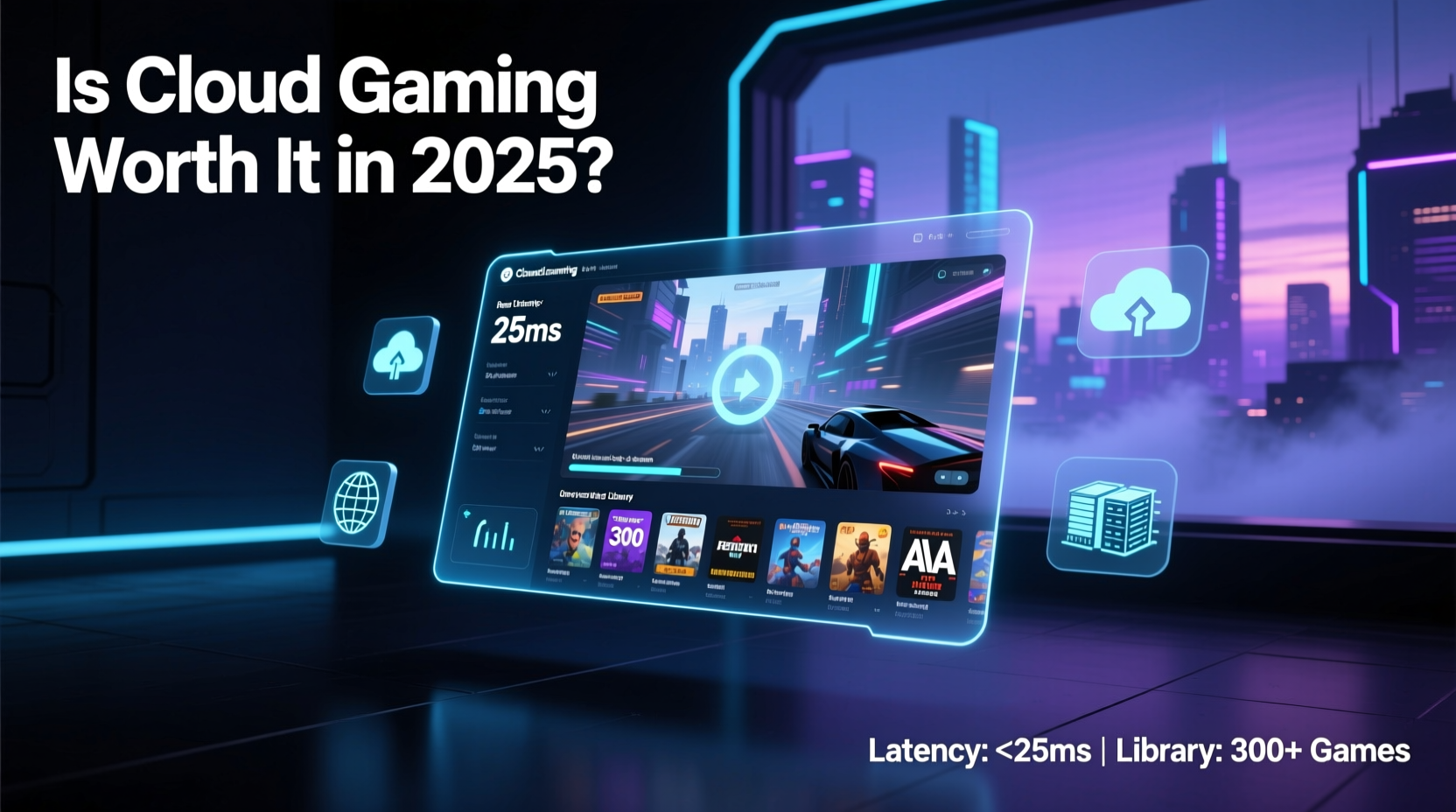
Latency has always been the Achilles’ heel of cloud gaming. No matter how powerful the remote server, if your inputs take too long to register on screen, gameplay feels sluggish—especially in fast-paced genres like first-person shooters or fighting games.
In 2025, average input-to-display latency across top platforms has dropped to between 30ms and 60ms under ideal conditions. This range is within striking distance of local console or PC gaming, which typically runs at 15–40ms depending on display and system configuration.
Key improvements driving this shift:
- Edge computing infrastructure: Providers like Xbox Cloud Gaming and NVIDIA GeForce NOW now deploy servers closer to users, reducing round-trip time.
- Adaptive encoding: Advanced codecs like AV1 and improved H.265 implementations reduce compression lag and improve visual fidelity at lower bitrates.
- Network optimization: ISPs are offering “gaming priority” tiers, and mobile carriers support low-latency 5G modes specifically for cloud services.
Real-World Latency Benchmarks (2025)
| Service | Avg. Latency (ms) | Recommended Bandwidth | Supported Devices |
|---|---|---|---|
| Xbox Cloud Gaming | 38–52 | 15 Mbps (1080p/60fps) | Phone, tablet, browser, select TVs |
| NVIDIA GeForce NOW (Ultimate) | 30–45 | 25 Mbps (4K HDR) | PC, Mac, Android, SHIELD |
| PlayStation Plus Premium | 45–65 | 15 Mbps (1080p) | PS5, PC, mobile (beta) |
| Amazon Luna | 40–58 | 10–35 Mbps (variable) | Fire TV, PC, iOS, Android |
Note that these figures assume optimal network conditions. In practice, peak-hour congestion, distance from server nodes, and device decoding capabilities can add 10–30ms of variability.
“With modern edge networks and AV1 encoding, we’re seeing sub-50ms experiences even on mid-tier connections. That’s functionally indistinguishable from local play for most gamers.” — Dr. Lena Patel, Network Engineer at CloudStream Labs
Game Library Depth: From Niche to Competitive
A service can stream flawlessly, but if it lacks compelling titles, it won’t retain users. In 2025, the game library landscape has evolved dramatically. Gone are the days when cloud platforms offered only older or indie titles.
Today, major services provide access to hundreds of high-profile games, including day-one releases from first-party studios and strong third-party representation.
Xbox Cloud Gaming: The Catalog Leader
Backed by Microsoft’s aggressive acquisition strategy (Bethesda, Activision Blizzard), Xbox Cloud Gaming offers the most comprehensive library. Subscribers to Game Pass Ultimate gain instant access to:
- All first-party Xbox titles on launch day (e.g., Fable, Starfield 2)
- Select Activision Blizzard games (Call of Duty: Black Ops 2025, Diablo V)
- EA Play catalog integration, including FIFA 25 and Battlefield 2025
- Indie gems and backward-compatible classics
GeForce NOW: Your Steam & Epic Library, Streamed
NVIDIA’s approach differs—it doesn’t license games directly. Instead, it streams whatever you already own on Steam, Epic, Ubisoft Connect, and GOG. As of 2025, it supports over 1,700 playable titles, including:
- Cyberpunk 2077: Overdrive Edition
- Elden Ring: Shadow of the Erdtree
- Forza Motorsport (2023)
- Hades II
PlayStation Plus Premium: Strong Legacy, Slower Forward Momentum
Sony’s catalog remains anchored in PS4 and early PS5 hits. While it includes excellent remasters (The Last of Us Part I Remastered, Ghost of Tsushima: Legends Update), its day-one cloud release policy lags behind Xbox. However, its strength lies in exclusive back catalog:
- Classic PS1/PS2 titles with AI upscaling
- Streaming-only access to some PS5 exclusives (Horizon Forbidden West: Burning Shores)
Luna and Others: Niche Appeal
Amazon Luna continues to grow through channel-based subscriptions (Ubisoft+, Jackbox, LGN). It’s particularly strong for casual and social gaming but lacks breadth in AAA content. Meanwhile, Boosteroid and Shadow PC offer flexible Windows-in-the-cloud models appealing to power users who want full desktop control.
“The real competition isn’t just between services—it’s between value propositions. Do you want someone else’s curated catalog, or do you want to stream your own collection?” — Marcus Tran, Industry Analyst at GameTech Insights
Mini Case Study: Sarah’s Switch to Cloud Gaming
Sarah, a 32-year-old graphic designer in Austin, Texas, never owned a gaming console. She played mobile games casually but missed immersive single-player experiences. In early 2025, she decided to try Xbox Cloud Gaming using her iPad Pro and a Bluetooth controller.
She started with Starfield, a title she’d wanted to play for months. After initial buffering issues (resolved by switching from Wi-Fi to a wired hotspot), she achieved stable 1080p/60fps gameplay with minimal input lag. Over three months, she completed 60% of the game, playing 3–4 hours weekly during commutes and evenings.
“I was shocked at how smooth it felt,” she said. “It’s not quite as crisp as a $1,500 gaming rig, but for $15/month and zero hardware cost, it’s incredible. I even played Halo Infinite competitively—and held my own.”
Her main frustrations? Occasional audio sync drift and lack of ultrawide monitor support. Still, she canceled her unused PlayStation Plus subscription and now recommends cloud gaming to friends with similar space or budget constraints.
Step-by-Step Guide: How to Test Cloud Gaming Responsibly in 2025
If you're considering making the leap, follow this proven sequence to evaluate performance and fit:
- Check your internet speed: Run a test using fast.com or speedtest.net. Aim for at least 25 Mbps download, low jitter (<15ms), and ping under 40ms to a nearby city.
- Identify your primary use case: Will you play on a phone, TV, or laptop? This determines which services are viable.
- Start with free trials: Most platforms offer 1–7 day passes. Test Xbox Cloud Gaming (via Game Pass trial), GeForce NOW (Free tier), or PlayStation Plus (7-day demo).
- Benchmark responsiveness: Play a fast-paced game (e.g., DOOM Eternal or Fortnite). Note any delay between movement commands and on-screen action.
- Test during peak hours: Try sessions at 7–9 PM to simulate real-world load conditions.
- Evaluate library match: Cross-reference your wishlist against each platform’s catalog.
- Upgrade selectively: Only commit to paid tiers after confirming consistent performance and content relevance.
Cloud Gaming Checklist: Is It Right for You?
- My internet consistently delivers 25+ Mbps with low latency.
- I don’t want to invest $500+ in a gaming PC or console.
- I travel frequently and want access to games across devices.
- I mostly play single-player or turn-based multiplayer games.
- I already own PC games on Steam/Epic and want to play them on other screens.
FAQ: Common Questions About Cloud Gaming in 2025
Can I use cloud gaming for competitive esports?
It depends on your tolerance for variability. In ideal conditions, GeForce NOW Ultimate or Xbox Cloud Gaming can support competitive play in titles like Counter-Strike 2 or Rainbow Six Siege. However, pro players still prefer local hardware due to micro-stutter risks and potential disconnections. For amateur ranked play, it’s increasingly viable.
Do I need a special controller?
No. Most services support standard Bluetooth controllers, including Xbox Wireless, DualSense, and Nintendo Switch Pro. Some even work with touch controls on mobile, though precision suffers. For best results, use a physical controller.
What happens if my internet drops mid-game?
Most platforms resume from the last autosave once reconnected. However, in online multiplayer, you may be disconnected and lose progress for that session. Services like Shadow PC offer persistent virtual machines, preserving state even during outages—but at higher cost.
Conclusion: The Verdict for 2025
Cloud gaming is no longer a futuristic experiment—it’s a functional, accessible alternative for millions of players. Thanks to dramatic reductions in latency and the expansion of high-quality game libraries, the technology has crossed a threshold of practicality.
It won’t replace high-end gaming rigs for enthusiasts who demand maximum frame rates, mod support, or pixel-perfect responsiveness. But for casual to mid-core gamers, travelers, secondary households, or those constrained by budget or space, cloud gaming now delivers a genuinely satisfying experience.
The leaders—Xbox Cloud Gaming for breadth, GeForce NOW for flexibility, and PlayStation Plus for legacy fans—offer compelling reasons to try. With free trials widely available, there’s little risk in testing the waters.




 浙公网安备
33010002000092号
浙公网安备
33010002000092号 浙B2-20120091-4
Comments
No comments yet. Why don't you start the discussion?