
The gaming landscape is evolving faster than ever. As internet speeds improve and streaming technology matures, cloud gaming has emerged as a serious contender to traditional home consoles. Services like Xbox Cloud Gaming, NVIDIA GeForce NOW, PlayStation Plus Premium, and Amazon Luna promise high-quality gaming on any device—no expensive hardware required. But in 2025, are we actually seeing cloud gaming replace consoles, or is it still struggling to catch up?
The answer isn’t binary. While cloud gaming offers undeniable convenience and accessibility, dedicated consoles remain dominant in terms of performance, reliability, and player experience. This article examines where cloud gaming stands today, its advantages and limitations, and whether it’s poised to overtake—or merely coexist with—traditional consoles by 2025.
The Rise of Cloud Gaming: A Brief Overview
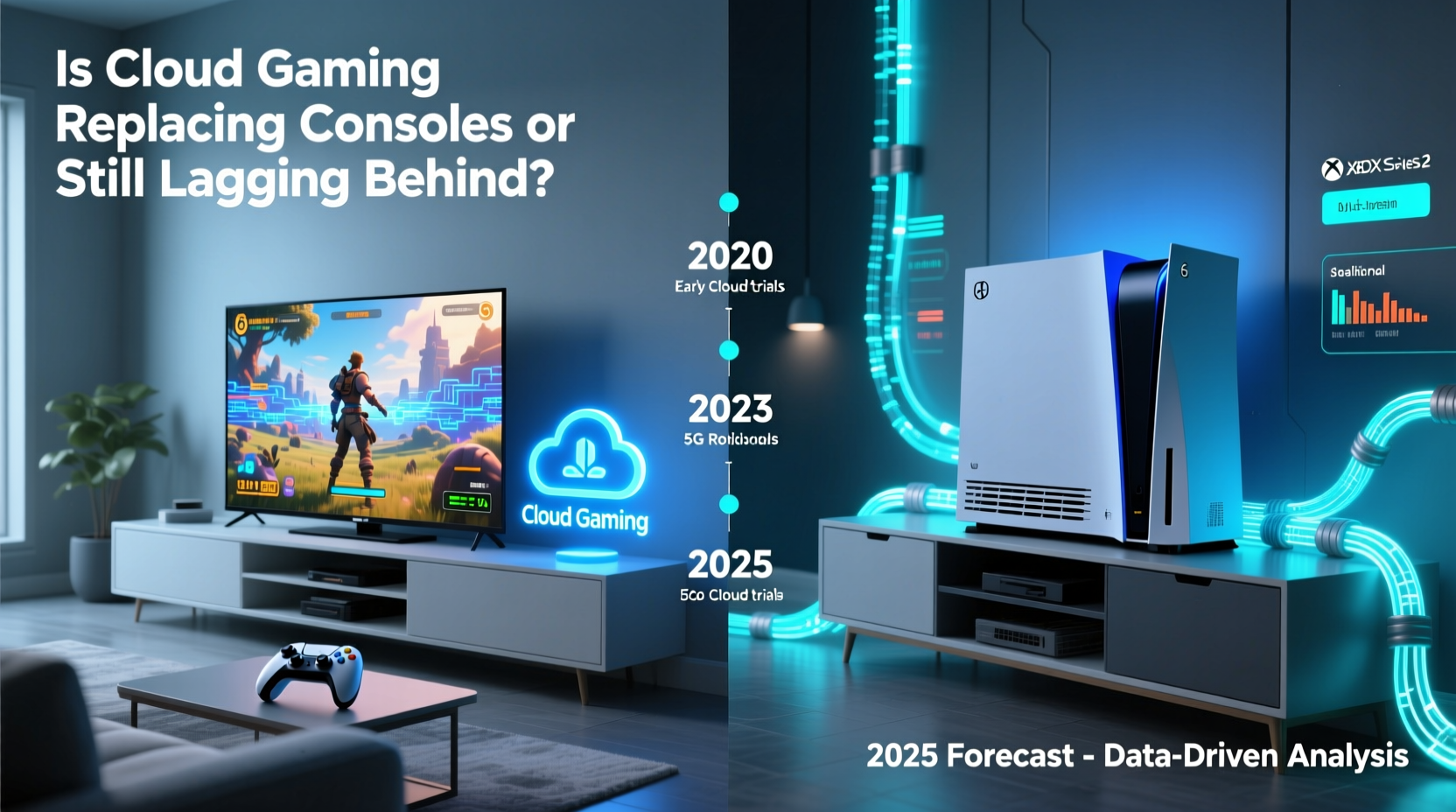
Cloud gaming operates on a simple principle: instead of running games locally on your console or PC, they run on powerful servers in data centers and stream video output to your device in real time. Input commands are sent back to the server, creating a closed-loop system that mimics local gameplay.
This model eliminates the need for costly hardware upgrades. Gamers can play AAA titles on smartphones, tablets, or low-end laptops as long as they have a stable internet connection. Major tech companies have invested heavily in this space:
- Xbox Cloud Gaming (xCloud): Integrated into Game Pass Ultimate, allowing subscribers to stream hundreds of titles across devices.
- NVIDIA GeForce NOW: Offers access to users’ existing Steam, Epic, and Ubisoft libraries with RTX-powered servers.
- PlayStation Plus Premium: Sony’s entry with streaming support for PS4 and select PS5 titles.
- Amazon Luna: Focused on casual and indie gaming with flexible channel-based subscriptions.
In theory, this shift could democratize gaming. But real-world performance depends on more than just infrastructure—it hinges on network stability, latency, and user expectations.
Performance Comparison: Latency, Quality, and Reliability
One of the most critical factors in gaming is input lag—the delay between pressing a button and seeing a response on screen. For fast-paced genres like first-person shooters or fighting games, even a 50ms delay can be the difference between victory and defeat.
Consoles excel here because processing happens locally. With SSDs, optimized operating systems, and direct controller-to-screen communication, modern consoles like the PS5 and Xbox Series X deliver near-instantaneous response times. In contrast, cloud gaming must account for upload latency (your inputs to the server), server processing time, and download latency (video stream to your screen).
A 2024 study by the University of California, Irvine found that average end-to-end latency for cloud gaming services ranged from 70ms to over 130ms under peak conditions—significantly higher than the sub-30ms typical of local console play.
“Latency remains the Achilles’ heel of cloud gaming. No matter how powerful the server, physics cannot be cheated.” — Dr. Alan Reyes, Network Optimization Researcher at MIT
Video quality is another trade-off. Most services cap streaming at 1080p or 4K at 60fps, but compression artifacts, frame drops, and inconsistent bitrates can degrade the experience, especially during fast-motion sequences. Console players enjoy uncompressed rendering, HDR support, and features like variable refresh rate (VRR) without compromise.
Accessibility vs. Infrastructure: Who Can Actually Use It?
Cloud gaming promises universal access, but in practice, it’s limited by geography and internet quality. High-speed broadband with low latency is essential, yet millions of gamers worldwide still rely on unstable connections or mobile data.
In urban areas with fiber-optic networks, cloud gaming performs well. However, rural regions, developing countries, and even densely populated cities with congested networks often struggle with buffering, stuttering, and disconnections.
Consider Maria, a college student in Austin, Texas, who uses Xbox Cloud Gaming on her iPad during breaks between classes. She enjoys playing *Halo Infinite* and *Forza Horizon 5* without owning a console. But when she visits her family in rural New Mexico, the same service becomes unplayable due to poor LTE signal and high ping.
This disparity highlights a fundamental limitation: cloud gaming shifts the cost from hardware to connectivity. While you save on buying a $500 console, you may need to invest in better internet plans, Wi-Fi extenders, or even 5G hotspots to maintain consistent performance.
Cost Analysis: Is Cloud Gaming Really Cheaper?
At first glance, subscription models seem economical. Most cloud gaming services range from $10 to $20 per month. Compare that to the $499 price tag of a PS5 or Xbox Series X, and the math favors streaming.
But deeper analysis reveals hidden costs and constraints:
| Factor | Cloud Gaming | Traditional Console |
|---|---|---|
| Upfront Cost | $0–$20/month | $400–$500 one-time |
| Long-Term Cost (5 years) | $600–$1,200 | $400 + occasional game purchases |
| Game Library Access | Limited to service catalog; no ownership | Fully own digital/physical copies |
| Offline Play | None (requires constant internet) | Full support |
| Resale/Transfer Rights | No resale; tied to account | Physical discs can be resold |
As shown, after five years, a cloud gamer paying $15/month spends $900—nearly double the cost of a new console. And if the service shuts down or removes a game, users lose access entirely. There’s no legacy preservation, no way to pass games to friends or family.
Ownership matters. Gamers who value digital permanence, modding, or collecting will continue to favor consoles despite higher initial investment.
The Future Outlook: Coexistence, Not Replacement
By 2025, cloud gaming hasn’t replaced consoles—but it has carved out a meaningful niche. It’s not a winner-takes-all battle; instead, both models are adapting to serve different needs.
Console manufacturers now integrate cloud features. The PS5 allows streaming select titles via Remote Play, while Xbox deeply embeds xCloud into its ecosystem. These aren’t replacements—they’re enhancements. Players might start a game on their console and continue it on their phone via streaming, blending local and cloud experiences.
Meanwhile, cloud platforms are improving. Google Stadia may have failed, but its lessons informed next-gen architectures. Edge computing, AI-driven bandwidth optimization, and adaptive streaming are reducing latency and boosting visual fidelity. Some providers now offer “priority servers” for competitive gamers willing to pay a premium for lower ping.
However, technological ceilings remain. Even with 5G and Wi-Fi 6E, wireless networks introduce variability. Wired connections are more reliable, but not all households prioritize them. Until quantum leap improvements in network infrastructure occur globally, cloud gaming will remain a secondary option for many.
Expert Insight: Industry Predictions for 2025 and Beyond
“Cloud gaming won’t kill consoles. It will push them to innovate. Think of it like Netflix didn’t kill movie theaters—it changed how people consume content.” — Lisa Tran, Senior Analyst at GameTech Insights
Tran emphasizes that convergence is key. The future isn’t about choosing between cloud and console—it’s about flexibility. Hybrid models, where games can be streamed or downloaded based on context, are likely to dominate.
Practical Tips for Choosing Between Cloud and Console in 2025
Deciding which platform suits you depends on lifestyle, budget, and gaming preferences. Here’s a checklist to help evaluate your options:
✅ Cloud Gaming Might Be Right If You:
- Want to play on multiple devices (phone, tablet, laptop)
- Have limited space or don’t want bulky hardware
- Live in an area with reliable, high-speed internet
- Prefer trying many games without buying them individually
- Travel frequently and need portable access
🎮 Consoles Are Better If You:
- Play competitively and demand minimal input lag
- Value offline access and game ownership
- Enjoy 4K, HDR, and advanced audio features
- Want to build a personal game library over time
- Live in areas with spotty or metered internet
Step-by-Step Guide: How to Optimize Your Cloud Gaming Setup
If you decide to try cloud gaming, follow these steps to maximize performance:
- Check Internet Speed: Run a speed test. Aim for at least 25 Mbps download and 5 Mbps upload for 1080p streaming.
- Use Ethernet When Possible: Connect your device directly to the router instead of relying on Wi-Fi.
- Close Background Apps: Stop downloads, video streams, or cloud backups that consume bandwidth.
- Select the Nearest Server Region: Most services let you choose a data center. Pick the closest one for lowest latency.
- Invest in a Compatible Controller: Use official or certified Bluetooth controllers for smoother input response.
- Monitor Data Caps: Streaming uses ~3–7 GB per hour. Ensure your plan doesn’t throttle after certain limits.
- Test Before Committing: Try free trials across multiple platforms to compare quality and library.
FAQ: Common Questions About Cloud Gaming in 2025
Can I play multiplayer games effectively on cloud platforms?
Yes, but performance varies. Fast-paced shooters like *Call of Duty* may feel less responsive due to latency. Turn-based or slower games like RPGs work much better. Using a wired connection and nearby server improves competitiveness.
What happens if a cloud gaming service shuts down?
You lose access to all streamed games. Unlike physical or digital purchases, you don’t own the titles. Always keep backups of progress if possible, and consider this risk before investing heavily in exclusive cloud-only content.
Do I need a powerful device to stream games?
No. Since processing happens on remote servers, even older phones or budget tablets can run demanding games—as long as the display resolution and internet connection are sufficient.
Conclusion: The Verdict for 2025
As of 2025, cloud gaming is not replacing consoles. Instead, it’s expanding the ways people access games. It excels in portability, instant access, and lowering entry barriers. Yet, it still lags behind in latency, reliability, and long-term value compared to dedicated hardware.
Consoles remain the gold standard for performance, ownership, and immersive experiences. But they’re no longer the only viable path into gaming. The future belongs to hybrid ecosystems—where players seamlessly switch between streaming and local play based on context, location, and preference.
Whether you're a hardcore enthusiast with a top-tier setup or a casual player exploring games on a lunch break, both models have something to offer. Rather than asking which will win, the smarter question is: how can you leverage both to enhance your gaming life?




 浙公网安备
33010002000092号
浙公网安备
33010002000092号 浙B2-20120091-4
Comments
No comments yet. Why don't you start the discussion?