
By 2025, cloud gaming has evolved from a futuristic experiment into a mainstream alternative to traditional console and PC setups. With faster internet infrastructure, improved compression algorithms, and broader device compatibility, services like Xbox Cloud Gaming and NVIDIA GeForce Now are delivering console-grade experiences on phones, tablets, and low-end laptops. But is the promise of high-fidelity gaming without expensive hardware truly fulfilled? For consumers weighing options, the decision hinges on performance, cost, library access, and long-term value.
This analysis breaks down both platforms across key criteria, offering real-world insights for gamers deciding whether to adopt or expand their use of cloud-based play in 2025.
How Cloud Gaming Works: The Foundation
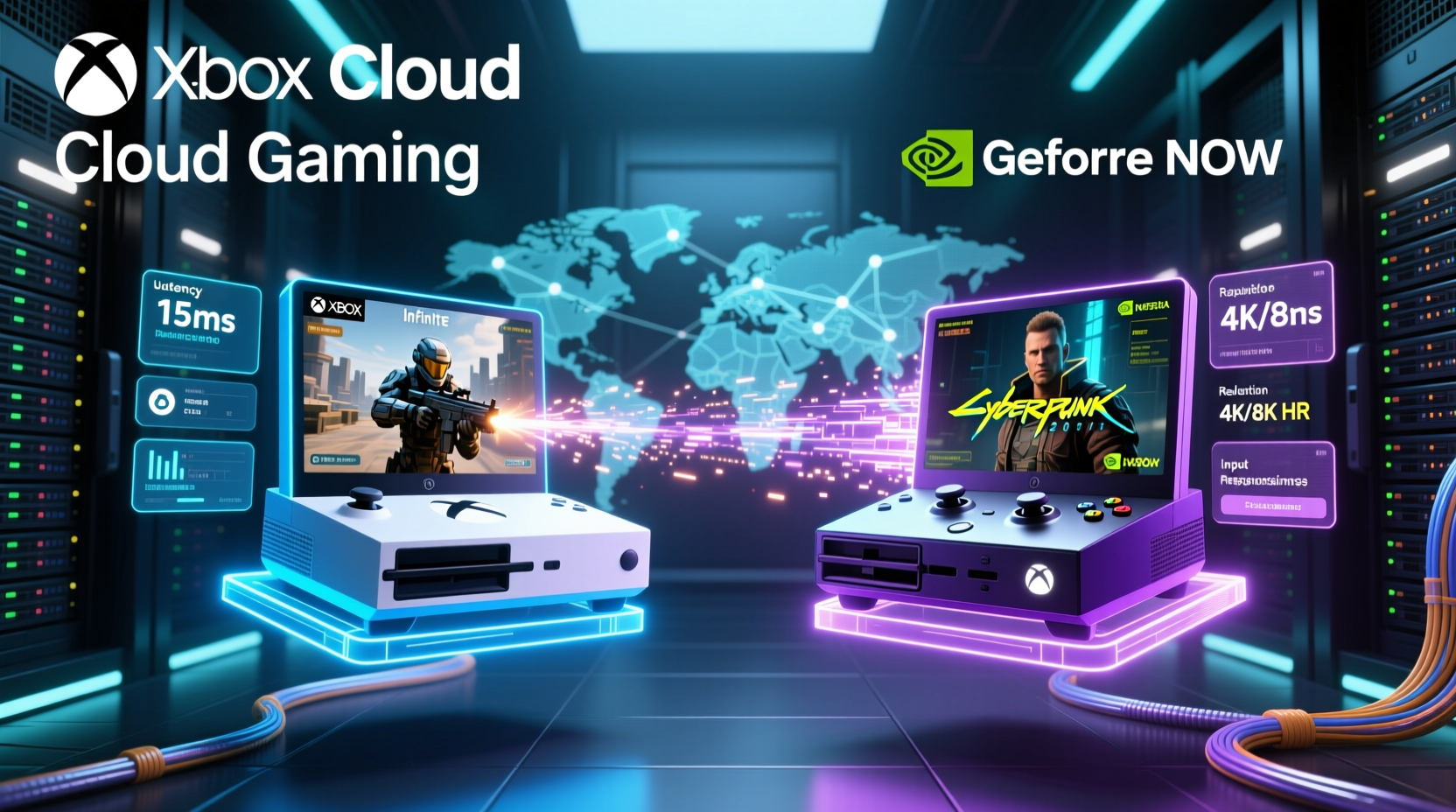
Cloud gaming streams games from remote servers directly to your device over the internet. Instead of running on local hardware, games are processed on powerful data center machines equipped with high-end GPUs and CPUs. The video output is compressed and sent to your screen in real time, while your inputs (controller movements, button presses) are transmitted back to the server with minimal delay.
The viability of this model depends on three factors:
- Latency: The round-trip time between input and response must be under 60ms for smooth gameplay.
- Bandwidth: A stable connection of at least 15–25 Mbps is required for 1080p streaming.
- Server Proximity: Closer server locations reduce lag and improve consistency.
In 2025, both Microsoft and NVIDIA have expanded regional server coverage and optimized encoding through AV1 and H.265 codecs, significantly improving reliability compared to earlier iterations.
Xbox Cloud Gaming: Microsoft’s Ecosystem Play
Xbox Cloud Gaming, part of the Xbox Game Pass Ultimate subscription ($17/month), allows users to stream over 100+ titles directly from Microsoft’s Azure-powered data centers. It supports Android devices, iOS via web browsers, Windows PCs, and select Samsung Smart TVs.
The service leverages Xbox Series X hardware for streaming, targeting 1080p resolution at up to 60fps. While 4K is not supported via cloud, some compatible apps allow HDR passthrough where available.
One major advantage is seamless integration with Xbox Live and Game Pass. Gamers can jump between cloud and console play, maintaining save files and achievements across devices. Progress syncs instantly thanks to Microsoft’s unified ecosystem.
Game selection includes first-party Microsoft titles like Starfield, Halo Infinite, and Fable (2025 release), as well as third-party hits such as Forza Horizon 5 and Hi-Fi Rush. However, many AAA third-party exclusives—especially those tied to Sony or Nintendo—are absent.
“Xbox Cloud Gaming isn’t about replacing consoles—it’s about extending them.” — Sarah Chen, Senior Analyst at GameTech Insights
Strengths of Xbox Cloud Gaming
- Tight integration with Game Pass Ultimate
- Strong lineup of first-party exclusives
- Free access to subscribers—no additional fees
- Cross-device continuity with cloud saves
- Support for Bluetooth controllers including DualSense, Joy-Cons, and Xbox Wireless
Limits and Drawbacks
- No native iOS app due to App Store restrictions (requires Safari workaround)
- Max 1080p streaming only
- Input lag still noticeable in fast-paced shooters or rhythm games
- Geographic limitations: Available in ~30 countries, excluding much of Africa and South America
NVIDIA GeForce Now: Power Without Ownership
NVIDIA GeForce Now takes a different approach. Rather than offering its own game library, it acts as a streaming platform for games you already own on Steam, Epic Games Store, Ubisoft Connect, and other storefronts. Subscribers can launch their purchased titles from the cloud using NVIDIA’s RTX 4080-level server rigs.
Pricing tiers include:
- Free Tier: 1-hour sessions, 720p/30fps, priority queuing
- Priority ($9.99/month): 2-hour sessions, 1080p/60fps, faster queue access
- Ultimate ($19.99/month): 8-hour sessions, 4K/120fps with HDR, RTX ON for ray tracing, AV1 decode support
In 2025, GeForce Now supports over 1,700 games, including demanding titles like Cyberpunk 2077, Baldur’s Gate 3, and Alan Wake 2. Its standout feature is full ray tracing capability on Ultimate, making it the only cloud service that replicates true high-end PC performance remotely.
The platform also introduced “Deep Link” technology in late 2024, allowing hybrid rendering—part local, part cloud—for users with mid-tier GPUs who want enhanced visuals without upgrading hardware.
Advantages of GeForce Now
- Access to personal game library across platforms
- True 4K streaming with HDR and ray tracing (Ultimate tier)
- No re-purchasing required—use existing Steam/Epic keys
- Superior audiovisual fidelity compared to competitors
- Global reach with over 25 server regions including Japan, Australia, and Germany
Challenges and Limitations
- No built-in game library—you must own titles separately
- Longer queues during peak hours on free and Priority tiers
- Some publishers restrict cloud access (e.g., EA removed most titles in 2023)
- Higher price point for top-tier features
Direct Comparison: Xbox Cloud vs GeForce Now
| Feature | Xbox Cloud Gaming | GeForce Now |
|---|---|---|
| Base Price | $17/month (Game Pass Ultimate) | $0–$19.99/month (tiered) |
| Game Library | 100+ curated titles via Game Pass | 1,700+ user-owned titles |
| Max Resolution/FPS | 1080p / 60fps | 4K / 120fps (Ultimate) |
| Ray Tracing Support | No | Yes (RTX ON, Ultimate tier) |
| Controller Support | Xbox, DualShock, Joy-Con, touch | Xbox, DualShock, mouse/keyboard |
| Save Syncing | Full cloud save integration | Limited to platform-specific saves |
| Device Compatibility | Android, iOS (web), PC, TV | PC, Mac, Android, Chromebook, SHIELD |
| Data Usage | ~20 GB/hour at 1080p | ~15–25 GB/hour depending on settings |
| Offline Play | No | No |
The table highlights a fundamental difference: Xbox Cloud offers convenience and curation within an all-in-one subscription, while GeForce Now provides technical superiority and flexibility for owners of digital libraries.
Real-World Example: Two Gamers, Two Choices
Consider two users navigating cloud gaming in early 2025:
Alex, the Casual Mobile Gamer: Alex owns a mid-range smartphone and wants to play premium games during commutes. He subscribes to Game Pass Ultimate and uses Xbox Cloud Gaming on his Android phone with a clip-on controller. He enjoys Forza Horizon 5 and Minecraft on the go, appreciating instant access and no downloads. His internet averages 30 Mbps, so performance is consistently smooth. For him, the $17 bundle—including cloud gaming, console access, and PC play—is excellent value.
Jamal, the Enthusiast PC Owner: Jamal has a modest laptop that can’t run modern AAA games well. He owns over 80 games on Steam but rarely plays them due to hardware limits. After trying GeForce Now Ultimate, he streams Horizon Forbidden West and Resident Evil Village at 1440p/60fps with ray tracing enabled. Though he pays $19.99 monthly, he views it as cheaper than upgrading his GPU. He schedules play sessions during weekdays when queues are short and uses a wired network for stability.
Their experiences illustrate that “worth it” depends on usage patterns, existing investments, and expectations.
Is Cloud Gaming Worth It in 2025? A Practical Checklist
Before committing to either service, evaluate your situation using this checklist:
- ✅ Do I have a stable internet connection with at least 25 Mbps download speed?
- ✅ Am I willing to tolerate minor input lag in competitive multiplayer games?
- ✅ Do I prefer owning games outright (favor GeForce Now) or subscribing to a curated library (favor Xbox)?
- ✅ Will I primarily play on mobile, TV, or low-spec devices?
- ✅ Is my region supported by the service I’m considering?
- ✅ Can I use Ethernet instead of Wi-Fi for reduced latency?
- ✅ Am I looking for 4K/HDR/ray tracing, or is 1080p sufficient?
If most answers align with one platform, that service likely fits your needs better.
Expert Insight: The Future of Game Streaming
“The next frontier isn’t just resolution or frame rate—it’s interactivity. By 2026, we’ll see AI-driven predictive rendering that preloads likely player actions, cutting perceived latency below 30ms.” — Dr. Rajiv Mehta, Cloud Infrastructure Lead at NVIDIA Research
Experts agree that cloud gaming will continue closing the gap with local hardware. Edge computing deployments, 5G expansion, and adaptive bitrate streaming are reducing barriers. However, ownership models remain contentious. Publishers worry about revenue loss, which explains why some block their titles on GeForce Now despite technical feasibility.
Microsoft’s strategy of bundling cloud access with Game Pass may prove more sustainable long-term, especially as they invest in AI upscaling and session persistence. Meanwhile, NVIDIA focuses on high-end fidelity, betting that performance will justify premium pricing.
Frequently Asked Questions
Can I use my own controller with both services?
Yes. Both Xbox Cloud Gaming and GeForce Now support a wide range of Bluetooth controllers, including Xbox Wireless, PlayStation DualShock/DualSense, and Nintendo Switch Joy-Cons. Some third-party accessories may require firmware updates for compatibility.
Does cloud gaming consume a lot of data?
Yes. At 1080p, expect 15–25 GB per hour. Streaming at 4K increases this to around 30 GB/hour. Users with data caps should monitor usage closely or limit sessions to Wi-Fi networks.
Which service is better for competitive gaming?
Neither is ideal for high-level esports due to inherent latency. However, GeForce Now Ultimate—with its superior encoding and lower packet loss optimization—offers slightly better responsiveness for games like Apex Legends or Overwatch 2 when played on a wired connection.
Final Verdict: Making the Right Choice for You
In 2025, cloud gaming is absolutely worth considering—but not universally. For casual players, travelers, or those with limited hardware, Xbox Cloud Gaming delivers exceptional value as part of Game Pass Ultimate. It’s the easiest entry point, requiring no prior game purchases and working seamlessly across devices.
For enthusiasts who already own a robust game library and demand top-tier visual quality, GeForce Now—particularly the Ultimate tier—is unmatched. Its ability to unlock high-end PC performance on budget devices makes it a compelling alternative to costly upgrades.
Ultimately, the best choice depends on how you play, what you own, and what you’re willing to pay. Many savvy gamers now use both: Xbox Cloud for exclusive titles and quick mobile sessions, GeForce Now for deep dives into their personal collection with maximum graphical fidelity.




 浙公网安备
33010002000092号
浙公网安备
33010002000092号 浙B2-20120091-4
Comments
No comments yet. Why don't you start the discussion?