
Coffee lovers often debate the merits of cold brew versus traditional hot-brewed coffee. Among the most common questions: Is cold brew actually stronger in terms of caffeine? And perhaps more surprisingly—does it stain your teeth less despite its dark appearance? These aren’t just casual curiosities. They matter to people managing energy levels, acid sensitivity, or oral health. The answers aren’t as straightforward as they seem, and misconceptions abound. Let’s clarify the science behind strength, extraction, and staining potential—so you can make informed choices about your daily cup.
What \"Strength\" Really Means in Coffee
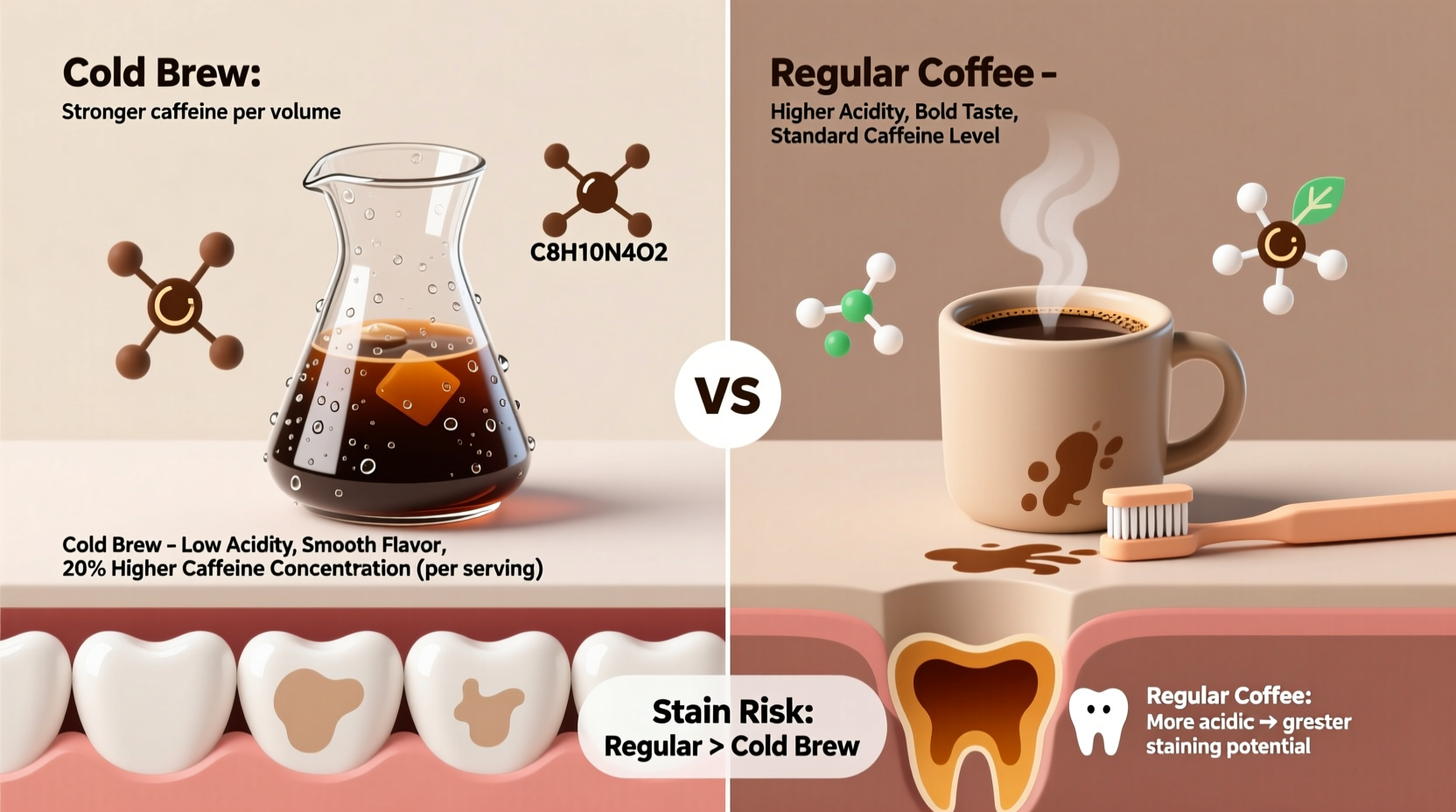
When people ask if cold brew is “stronger,” they usually mean one of two things: higher caffeine content or a bolder, more intense flavor. But strength isn’t a single metric—it depends on brewing method, bean type, grind size, water temperature, and concentration.
Hot-brewed coffee extracts quickly due to high water temperatures (around 195–205°F), which pull out caffeine, oils, and acids rapidly. Cold brew, by contrast, steeps coarsely ground beans in room-temperature or cold water for 12 to 24 hours. This slow process results in a smoother, less acidic concentrate that’s often diluted before drinking.
Here’s where confusion arises: cold brew concentrate contains more caffeine per ounce than regular coffee—but most people don’t drink it straight. Once mixed with water or milk, the final caffeine level typically lands close to or slightly below that of a standard drip coffee.
Caffeine Comparison: Cold Brew vs. Regular Coffee
To understand real-world differences, consider typical serving sizes and preparation methods. Below is a comparison based on average values from USDA data and independent lab testing.
| Beverage Type | Serving Size | Average Caffeine Content | Notes |
|---|---|---|---|
| Drip Coffee (regular) | 8 oz | 95 mg | Brewed at optimal temperature; varies by roast and origin |
| Cold Brew Concentrate | 8 oz | 150–200 mg | Rarely consumed undiluted; used as base for drinks |
| Diluted Cold Brew (ready-to-drink) | 8 oz | 70–100 mg | Mixed with equal parts water or milk; smoother profile |
| Espresso (single shot) | 1 oz | 63 mg | High concentration but small volume |
The takeaway? While cold brew concentrate packs a punch, most consumers end up with a similar or even lower caffeine dose compared to a standard 8-ounce cup of drip coffee. However, because cold brew is often served in larger formats (like 16-oz bottles), total caffeine intake can add up quickly.
“Cold brew isn’t inherently ‘stronger’ across the board. It’s concentrated by design, but how you prepare and consume it determines the actual caffeine load.” — Dr. Laura Chen, Food Scientist and Beverage Analyst
Acidity and Tooth Staining: The Hidden Dental Impact
Teeth staining from coffee is a widespread concern. Many assume darker liquids cause more discoloration, but color alone doesn’t tell the whole story. Two key factors influence staining: chromogens (pigmented compounds) and acidity.
Chromogens are molecules that bind to tooth enamel, creating surface stains. Both hot and cold brew contain them. However, acidity plays a critical role in how easily these pigments adhere. Acidic environments soften enamel temporarily, making it more porous and vulnerable to staining agents.
Here’s the advantage cold brew holds: it’s significantly less acidic than hot coffee—often up to 67% less, according to research published in *Food Chemistry*. The cold steeping process minimizes the extraction of acidic compounds like chlorogenic acid, resulting in a pH closer to neutral (around 6.0) compared to hot coffee’s average pH of 4.85.
This lower acidity means two things:
- Enamel remains harder and less prone to pigment absorption during consumption.
- Fewer micro-etches on the tooth surface reduce long-term discoloration risk.
That said, cold brew still contains tannins and melanoidins—both known staining agents. So while it may be gentler on teeth than regular coffee, it’s not stain-free.
Real Example: A Barista’s Experience
Jamal, a barista in Portland who drinks three coffee beverages daily, switched from drip coffee to cold brew two years ago. After noticing persistent yellowing despite brushing twice a day, he consulted a cosmetic dentist. To his surprise, the dentist noted that his front teeth showed less staining than expected given his intake. When asked about his habits, Jamal mentioned he’d been drinking mostly cold brew for the past 18 months.
The dentist explained that while any coffee contributes to discoloration, the reduced acidity of cold brew likely slowed down enamel erosion and pigment retention. He advised continuing with cold brew but adding a few preventive measures—like rinsing with water after drinking and avoiding prolonged sipping.
How to Minimize Teeth Staining from Any Coffee
No coffee is completely safe for pristine white teeth, but smart habits can dramatically reduce staining. Whether you prefer cold brew or drip, follow this checklist to protect your smile.
Stain-Reduction Checklist
- Use a straw – Especially for iced coffee; reduces direct contact with front teeth.
- Rinse with water afterward – Neutralizes pH and washes away residual pigments.
- Limit sipping throughout the day – Frequent exposure prolongs acid attacks and staining windows.
- Choose lighter roasts cautiously – Though less bitter, they’re often more acidic than dark roasts.
- Maintain regular dental cleanings – Professional scaling removes surface stains before they set in.
- Consider whitening toothpaste – Look for ADA-approved options with mild abrasives or hydrogen peroxide.
Brewing Methods That Influence Strength and Stain Potential
Not all cold brews are created equal. The way you prepare it affects both caffeine content and chemical composition. Here’s a step-by-step guide to optimizing your brew for balanced strength and reduced dental impact.
Step-by-Step: Crafting a Smoother, Lower-Stain Cold Brew
- Select coarsely ground beans – Fine grounds increase sediment and over-extraction, raising bitterness and tannin levels.
- Use filtered water – Impurities in tap water can react with coffee compounds, altering taste and acidity.
- Steep for 14–18 hours at room temperature – Longer than 24 hours increases bitterness; shorter times yield weaker extraction.
- Filter thoroughly – Use a paper filter after initial cloth straining to remove fine particles and excess oils.
- Dilute properly – Mix one part concentrate with one to two parts water or milk to balance strength and smoothness.
- Serve promptly – Avoid leaving brewed coffee sitting out; oxidation increases acidity over time.
For those concerned about dental effects, consider using a slightly coarser grind and reducing steep time to 12 hours. This yields a milder concentrate with fewer extracted tannins—ideal for sensitive teeth.
FAQ: Common Questions About Cold Brew and Dental Health
Does cold brew have more caffeine than espresso?
Per ounce, yes—cold brew concentrate can exceed espresso in caffeine density. However, since espresso is typically consumed in 1-ounce servings and cold brew is diluted, a standard shot of espresso (63 mg) usually delivers less caffeine than an 8-oz glass of ready-to-drink cold brew (70–100 mg).
Can switching to cold brew help prevent tooth stains?
It can help reduce the rate of staining due to lower acidity, but it won’t eliminate it. Pigment-laden beverages will still contribute to discoloration over time. Pairing cold brew with good oral hygiene offers the best protection.
Is decaf cold brew a better option for teeth?
Decaf versions have similar chromogen levels and acidity profiles, so their staining potential is nearly identical to regular cold brew. The primary benefit of decaf is reduced caffeine, not improved dental safety.
Expert Insight: What Dentists Say About Coffee and Enamel
Dental professionals increasingly recognize the cumulative effect of dietary acids on oral health. While coffee is far from the worst offender (soda and citrus juices are more erosive), its frequency of consumption makes it a significant factor.
“Patients who drink multiple cups of coffee daily should treat it like any other acidic food. Timing matters—drinking it all at once is better than sipping for hours. And always follow with water.” — Dr. Naomi Patel, Cosmetic Dentist and Oral Health Educator
She also emphasizes that modern lifestyles often combine multiple staining sources: coffee in the morning, red wine at dinner, and occasional smoking. Each adds to the burden on enamel. Her recommendation? Consolidate coffee consumption into a shorter window and adopt protective routines.
Final Thoughts and Actionable Takeaways
Cold brew isn’t universally “stronger” than regular coffee—it depends on how it’s prepared and consumed. As a concentrate, it contains more caffeine per ounce, but typical dilution brings it in line with standard drip coffee. Flavor-wise, it’s smoother and less bitter, appealing to those sensitive to acidity.
When it comes to teeth staining, cold brew has a modest advantage. Its lower acidity means less enamel softening and reduced susceptibility to chromogen binding. But it still contains staining compounds, so expecting a stain-free experience would be unrealistic.
The smart approach combines knowledge with habit. Understand what goes into your cup. Adjust brewing methods to suit your needs. Protect your teeth with simple post-consumption routines. And remember: moderation, timing, and oral hygiene matter more than the type of coffee alone.




 浙公网安备
33010002000092号
浙公网安备
33010002000092号 浙B2-20120091-4
Comments
No comments yet. Why don't you start the discussion?