
Collagen has become a household name in the world of skincare and wellness. Marketed as the key to youthful skin, stronger nails, and healthier hair, it appears in everything from luxury serums to flavored powders stirred into morning coffee. But with so many delivery methods—oral supplements versus topical creams—consumers are left wondering: which actually works better? More importantly, is drinking collagen supplements truly more effective than applying it directly to the skin?
The answer isn’t straightforward. It depends on how collagen functions in the body, the limitations of each application method, and what you’re trying to achieve. This article breaks down the science, compares absorption mechanisms, reviews clinical evidence, and offers practical guidance to help you make an informed decision.
How Collagen Works in the Body
Collagen is the most abundant protein in the human body, making up about 30% of total protein content. It provides structural support to the skin, bones, tendons, ligaments, and connective tissues. In the skin, collagen forms a network that gives elasticity and firmness. As we age, natural collagen production declines—by about 1% per year after age 20—which contributes to wrinkles, sagging, and dryness.
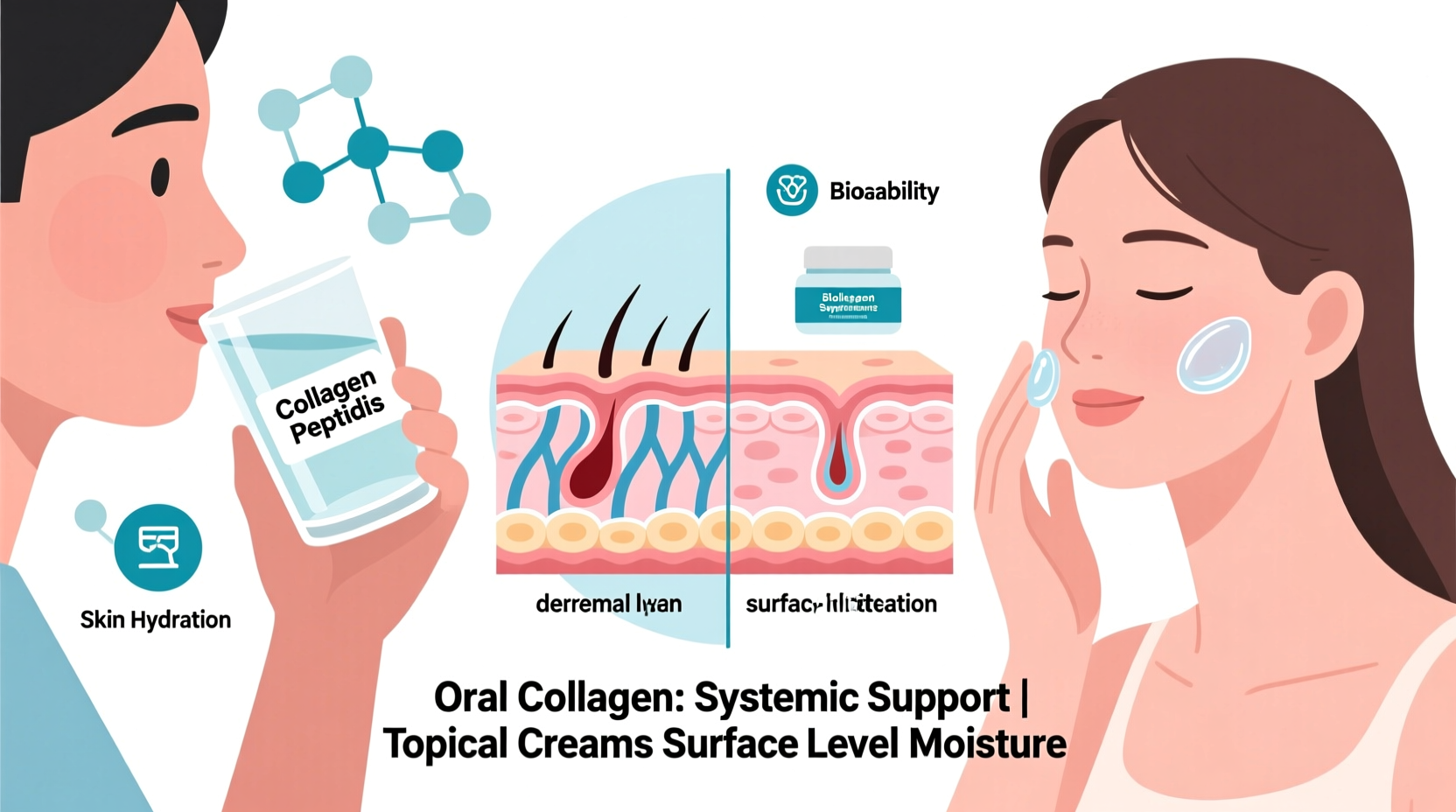
The goal of both oral supplements and topical creams is to counteract this decline. However, they approach the problem differently. Oral collagen is ingested, broken down into peptides, absorbed in the gut, and distributed via the bloodstream. Topical collagen, applied directly to the skin, aims to deliver collagen or its building blocks through the epidermis.
Here’s where biology complicates things: intact collagen molecules are too large to penetrate the skin barrier effectively. Most topical products rely on hydrolyzed (broken-down) collagen or other ingredients that stimulate collagen synthesis rather than delivering functional collagen itself.
“Topical collagen can improve hydration and texture, but it won’t rebuild deep dermal structure like endogenous collagen. Systemic support through oral supplementation shows more promise for long-term remodeling.” — Dr. Lena Torres, Dermatologist and Clinical Researcher
Oral Collagen Supplements: Mechanism and Evidence
Oral collagen supplements typically contain hydrolyzed collagen peptides—small chains of amino acids derived from animal sources like bovine, marine, or chicken. These peptides are more easily absorbed in the digestive tract than full-length collagen proteins.
Once absorbed, these peptides enter the bloodstream and are believed to signal fibroblasts (skin cells responsible for collagen production) to increase synthesis. Some studies suggest a “homing effect,” where collagen fragments accumulate in the skin and trigger repair responses.
A 2019 meta-analysis published in *Skin Pharmacology and Physiology* reviewed 11 studies and concluded that oral collagen supplementation significantly improved skin elasticity, hydration, and dermal collagen density after 8–12 weeks of daily use. Another study in *Journal of Cosmetic Dermatology* (2021) found that women taking 2.5g of hydrolyzed collagen daily showed reduced wrinkle depth compared to placebo.
Benefits reported in clinical trials include:
- Improved skin hydration within 4–8 weeks
- Increased elasticity after 8–12 weeks
- Reduced appearance of fine lines and wrinkles
- Support for joint and hair health (a bonus for whole-body wellness)
However, results vary by individual, formulation, dosage, and consistency. Not all supplements are created equal—bioavailability, source quality, and additional ingredients (like vitamin C, which aids collagen synthesis) matter significantly.
Topical Collagen Creams: What They Can—and Can’t—Do
Topical collagen products are widely available, from drugstore moisturizers to high-end serums. While they often claim to “replenish” collagen, their actual mechanism is more nuanced.
Because full collagen molecules are too large to pass through the stratum corneum (the outermost layer of skin), most creams don’t deliver functional collagen into deeper layers. Instead, they work in one of two ways:
- Hydration and Barrier Support: Collagen in creams acts as a humectant, drawing moisture into the skin. This creates a plumping effect that temporarily minimizes the look of fine lines.
- Stimulation of Natural Production: Some advanced formulations include bioactive peptides (e.g., palmitoyl pentapeptide-4) that mimic collagen fragments and signal the skin to produce more of its own.
In short, topical collagen improves surface-level appearance but doesn’t reverse deep structural aging. It’s excellent for immediate cosmetic enhancement—think smoother texture and dewier finish—but lacks the systemic reach of oral supplements.
A 2020 review in *Cosmetics* noted that while peptide-infused topicals show modest improvements in skin firmness over 12 weeks, effects plateau without continued use and are less pronounced than those seen with oral supplementation.
Comparing Effectiveness: A Direct Breakdown
To clarify the differences, here’s a side-by-side comparison of oral supplements and topical creams based on key criteria:
| Criteria | Oral Collagen Supplements | Topical Collagen Creams |
|---|---|---|
| Mechanism | Systemic delivery via bloodstream; stimulates fibroblasts | Surface hydration; may signal collagen production |
| Penetration Depth | Reaches dermis and connective tissues | Limited to epidermis (outer layer) |
| Onset of Results | Visible changes in 4–12 weeks | Immediate plumping; subtle long-term improvement |
| Durability | Long-term structural benefits with consistent use | Temporary effects; stops when discontinued |
| Additional Benefits | Joint, nail, hair, and gut support | Skin-specific only |
| Scientific Support | Strong clinical evidence for skin and joint health | Moderate; mainly short-term cosmetic studies |
This table illustrates a clear distinction: oral supplements offer deeper, longer-lasting physiological changes, while topical creams excel at surface-level refinement.
Real-World Example: A 45-Year-Old Professional’s Routine
Sophie, a marketing executive in Toronto, began noticing deeper lines around her eyes and jawline at 45. She had used anti-aging creams for years but saw diminishing returns. After consulting a dermatologist, she started taking 5g of marine collagen daily and switched to a peptide-based serum instead of a collagen-heavy cream.
After three months, her skin felt firmer, and coworkers commented on her “glow.” A follow-up skin analysis showed a 17% increase in hydration and improved dermal density. “I didn’t expect such a difference from just adding a powder to my smoothie,” she said. “The cream helps with makeup prep, but the real change came from within.”
Sophie’s experience reflects a growing trend: combining internal support with smart topical choices yields better outcomes than relying on either method alone.
Can You Combine Both? The Synergy Approach
Instead of choosing one over the other, many dermatologists recommend a dual approach. Oral supplements provide foundational support by boosting collagen synthesis from within, while topical products enhance surface appearance and protect the skin barrier.
For example:
- Take hydrolyzed collagen daily with vitamin C for optimal absorption.
- Use a peptide-rich serum that signals collagen production.
- Apply a moisturizer with humectants (like hyaluronic acid) to lock in hydration.
- Always wear sunscreen—UV exposure degrades collagen regardless of intake.
This layered strategy addresses both internal depletion and external damage, offering a comprehensive defense against aging.
What to Look for in Quality Products
Not all collagen products deliver on their promises. To ensure effectiveness, consider the following checklist before purchasing:
📋 **Collagen Product Checklist**- ✅ Form: Hydrolyzed collagen peptides (for maximum absorption)
- ✅ Source: Marine (for sustainability and lower allergenic risk) or bovine (for type I & III collagen)
- ✅ Dosage: At least 2.5–5g per serving
- ✅ Added Nutrients: Vitamin C, hyaluronic acid, or biotin for enhanced benefits
- ✅ Third-Party Testing: Look for NSF, Informed-Sport, or USP verification
- ✅ Transparent Labeling: No proprietary blends hiding ingredient amounts
- ✅ Allergen Information: Clearly stated sourcing and processing details
Avoid products with excessive fillers, artificial flavors, or unverified claims like “instant results” or “collagen infusion.” Real change takes time and consistency.
Frequently Asked Questions
Can your body absorb collagen if you drink it?
Yes, but only in hydrolyzed form. When collagen is broken down into small peptides, it can be absorbed through the intestines and distributed to tissues, including the skin. Studies confirm increased levels of collagen peptides in the bloodstream after oral intake.
Do collagen creams really do anything?
They can improve hydration and give a temporary plumping effect, but they don’t deliver functional collagen deep into the skin. Peptide-based formulas may stimulate natural collagen production over time, but results are milder than with oral supplements.
How long does it take to see results from collagen supplements?
Most people notice improved skin hydration within 4 weeks. Elasticity and wrinkle reduction typically become visible after 8–12 weeks of daily use. Consistency is key—effects diminish if supplementation stops.
Final Verdict: Is Drinking Collagen Better?
When it comes to measurable, long-term improvements in skin structure, yes—drinking collagen supplements is generally more effective than relying solely on topical creams. Oral supplements work systemically, reaching the dermis where collagen matters most. They also support overall tissue health beyond the skin.
That said, topical products still have a role. They provide immediate cosmetic benefits, reinforce the skin barrier, and can complement internal supplementation. The most effective anti-aging routines combine both: nourishing the skin from within while protecting and enhancing it from the outside.
Ultimately, the best choice depends on your goals. If you want lasting changes in skin firmness and elasticity, prioritize oral collagen. If you want quick fixes for dryness or dullness, a good topical can help. For optimal results? Use both—strategically and consistently.




 浙公网安备
33010002000092号
浙公网安备
33010002000092号 浙B2-20120091-4
Comments
No comments yet. Why don't you start the discussion?