
Dry brushing has surged in popularity over the past decade, championed by wellness influencers, dermatologists, and spa professionals alike. Advocates claim it removes dead skin cells, boosts circulation, reduces cellulite, and even \"detoxifies\" the body. But how much of this is backed by science, and how much is skincare theater? While dry brushing clearly exfoliates, the idea that it detoxifies through lymphatic drainage or pore-level cleansing raises eyebrows among medical experts. This article dissects the practice from a dermatological and physiological standpoint to clarify what dry brushing actually does — and what it doesn’t.
The Mechanics of Dry Brushing: What Happens on Your Skin
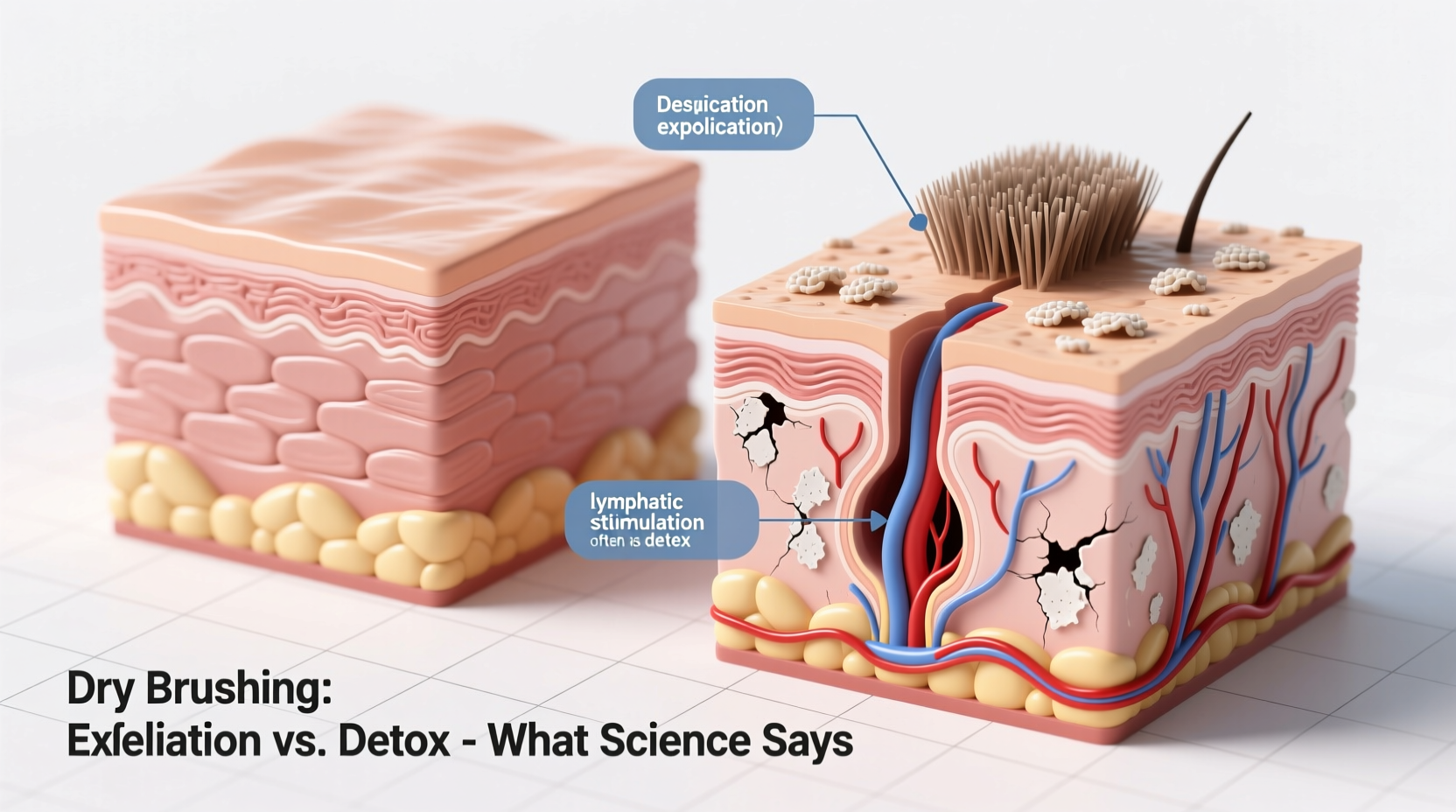
Dry brushing involves using a stiff-bristled brush on dry skin, typically before showering. The technique starts at the feet and moves upward toward the heart using long, sweeping motions. Proponents argue this direction supports lymphatic flow, though we’ll examine that claim shortly.
At its core, dry brushing is a mechanical form of exfoliation. The bristles physically loosen and remove dead skin cells from the stratum corneum, the outermost layer of the epidermis. Unlike chemical exfoliants such as AHAs or BHAs, which dissolve cellular bonds, dry brushing relies purely on friction. This can result in smoother skin, improved texture, and enhanced absorption of moisturizers applied afterward.
However, because the pressure and bristle stiffness vary widely between tools and users, there’s a fine line between effective exfoliation and micro-abrasions. Overzealous brushing can compromise the skin barrier, especially on sensitive areas like the inner arms or décolletage.
Detoxification Claims: Science vs. Marketing Hype
The term “detox” is one of the most misused in wellness culture. When applied to dry brushing, it often implies that toxins are being flushed from pores or released via lymphatic stimulation. But human physiology tells a different story.
The body already has highly efficient detoxification systems: the liver processes metabolic waste and neutralizes harmful compounds; the kidneys filter blood and excrete byproducts through urine; the lungs expel carbon dioxide; and the digestive tract eliminates residues through feces. The skin, while involved in minor excretion (e.g., sweat), is not a primary organ of detoxification.
Sweat glands do release small amounts of urea, salts, and trace metals, but this is not equivalent to “cleansing toxins” in the way marketing materials suggest. There is no scientific evidence that dry brushing increases the skin’s ability to eliminate toxins beyond normal sweating.
“We don’t have data showing that dry brushing meaningfully impacts systemic detoxification. The liver and kidneys handle that job far more effectively than any topical method.” — Dr. Nina Rodriguez, Board-Certified Dermatologist
Lymphatic Drainage: Myth or Mechanism?
One persistent claim is that upward brushing motions stimulate the lymphatic system, helping to reduce swelling and “flush out toxins.” While manual lymphatic drainage (MLD) is a real therapeutic technique used clinically for conditions like lymphedema, it requires precise, gentle pressure and trained hands.
Dry brushing, by contrast, is often performed with firm strokes and coarse bristles—more abrasive than therapeutic. Research shows that aggressive manipulation can actually irritate lymphatic vessels rather than support them. Moreover, the lymphatic system lacks a pump like the heart; it depends on muscle movement and respiration, not brushing, for flow.
In short, while light massage may assist circulation, equating dry brushing with lymphatic detox is a stretch unsupported by clinical evidence.
What Dry Brushing Actually Does: Evidence-Based Benefits
Despite the exaggerated claims, dry brushing offers several legitimate, albeit modest, benefits when done correctly:
- Exfoliation: Removes dead skin cells, preventing clogged pores and improving skin texture.
- Enhanced circulation: Temporary increase in blood flow due to friction, giving skin a rosy glow.
- Improved product absorption: Smoother skin allows lotions and oils to penetrate more effectively.
- Keratosis pilaris management: May help reduce rough patches on arms and thighs by loosening trapped keratin.
- Routine mindfulness: The ritual encourages body awareness and self-care habits.
A 2018 review published in *Clinical, Cosmetic and Investigational Dermatology* noted that physical exfoliation methods, including brushing, can improve skin appearance in individuals with mild dryness or uneven tone. However, the study emphasized moderation and cautioned against overuse, particularly in those with inflammatory skin conditions.
Limitations and Risks
Dry brushing isn’t suitable for everyone. It can exacerbate conditions like eczema, psoriasis, rosacea, or acne. Broken skin, cuts, or sunburns are absolute contraindications. Additionally, using non-sanitized brushes may introduce bacteria, increasing infection risk.
Another concern is habituation. Some users report needing increasingly firmer brushes or longer sessions to achieve the same sensation, which heightens the risk of micro-tears and irritation.
| Benefit | Evidence Level | Notes |
|---|---|---|
| Exfoliation | Strong | Mechanically effective; comparable to loofahs or scrubs |
| Circulation boost | Moderate | Temporary vasodilation from friction |
| Cellulite reduction | Weak | No structural change to fat or connective tissue |
| Detoxification | None | Not supported by physiology or research |
| Lymphatic support | Low | Requires specific technique; brushing unlikely to help |
Best Practices: How to Dry Brush Safely and Effectively
If you choose to incorporate dry brushing into your routine, doing so mindfully maximizes benefits and minimizes harm. Follow these steps for optimal results:
- Choose the right brush: Opt for natural bristles with moderate firmness and a long handle for hard-to-reach areas.
- Brush on dry skin: Always perform before showering, never on wet or damp skin. <3> Start at the feet: Use upward, circular motions on limbs and gentle circles on torso.
- Move toward the heart: This follows venous and lymphatic flow patterns, though impact is minimal.
- Avoid sensitive areas: Steer clear of breasts, face, varicose veins, and irritated skin.
- Shower afterward: Rinse off loosened skin cells and follow with moisturizer.
- Clean your brush weekly: Wash with mild soap and water; let air dry completely.
- Limited frequency: 2–3 times per week is sufficient; daily use risks over-exfoliation.
Mini Case Study: Sarah’s Experience with Dry Brushing
Sarah, a 34-year-old office worker, began dry brushing after reading about its supposed detox benefits. She started daily, using a firm brush and vigorous strokes, hoping to reduce bloating and improve skin clarity. Within two weeks, she noticed her legs felt smoother, but her lower abdomen developed red, itchy patches.
After consulting a dermatologist, she learned she had aggravated an underlying sensitivity. Following advice, she reduced frequency to twice weekly, switched to a softer brush, and avoided inflamed areas. Her skin improved, and she now values dry brushing primarily for exfoliation—not detox. “I still do it,” she says, “but I don’t expect miracles. It’s part of a bigger routine, not a magic fix.”
Checklist: Is Dry Brushing Right for You?
Before starting, ask yourself the following:
- ✅ Do I have healthy, intact skin without active rashes or infections?
- ✅ Am I looking for gentle exfoliation, not medical treatment?
- ✅ Am I willing to clean my brush regularly and replace it as needed?
- ✅ Can I commit to gentle technique without overdoing pressure?
- ❌ Do I have eczema, psoriasis, or sensitive skin? (May need to avoid)
- ❌ Am I expecting dramatic detox or cellulite reduction? (Unrealistic expectations)
If most answers align with the first four, dry brushing may be a safe addition to your regimen. If you're managing skin conditions or seeking deep therapeutic effects, consult a dermatologist first.
Frequently Asked Questions
Can dry brushing reduce cellulite?
No credible evidence shows that dry brushing reduces cellulite long-term. Cellulite stems from fat pushing through connective tissue, influenced by genetics, hormones, and circulation. While temporary skin plumping from increased blood flow might make it appear less noticeable briefly, dry brushing does not alter its structure.
Should I dry brush my face?
Generally not recommended. Facial skin is thinner and more sensitive than the body. Stiff bristles can cause micro-tears, inflammation, or worsen acne. If exfoliation is desired, opt for gentler facial scrubs or chemical exfoliants formulated for the face.
How soon will I see results?
Most notice smoother skin within a few sessions, especially on rough areas like elbows or heels. Visible glow comes from exfoliation and increased surface circulation. However, these effects are temporary and require maintenance. Long-term benefits depend on consistency and proper technique.
Conclusion: Exfoliate with Intent, Not Hype
Dry brushing is not a detox miracle. It won’t purge toxins, reshape fat distribution, or replace medical treatments. But as a low-cost, accessible method of physical exfoliation, it holds value when approached realistically. The ritual can enhance skin texture, support moisturizer efficacy, and foster a mindful self-care habit.
The key is separating fact from fiction. Embrace dry brushing for what it does well—sloughing off dead skin and invigorating the surface—without buying into exaggerated wellness narratives. When practiced gently and consistently, it earns its place in a thoughtful skincare routine. Just don’t expect your pores to “breathe” or your liver to thank you.




 浙公网安备
33010002000092号
浙公网安备
33010002000092号 浙B2-20120091-4
Comments
No comments yet. Why don't you start the discussion?