
Dry conditioner has quietly infiltrated beauty shelves and influencer routines, often marketed as a quick fix for frizz, split ends, or second-day hair. But with growing skepticism—especially among those battling oily roots—the question arises: is dry conditioner actually effective, or is it just another cleverly branded product designed to exploit consumer desire for convenience? To answer this, we need to look beyond the aerosol cans and Instagram reels and examine the formulation, function, and real-world performance of dry conditioners.
Unlike traditional leave-in or rinse-out conditioners, dry conditioners are typically alcohol-based sprays or powders that deposit lightweight conditioning agents onto the mid-lengths and ends of hair without requiring water. They’re positioned as time-savers for busy mornings, travel days, or when washing isn’t feasible. But how do they interact with different hair types, especially when oiliness at the scalp is a concern? Let’s dissect the truth behind the claims.
The Science Behind Dry Conditioner Formulations
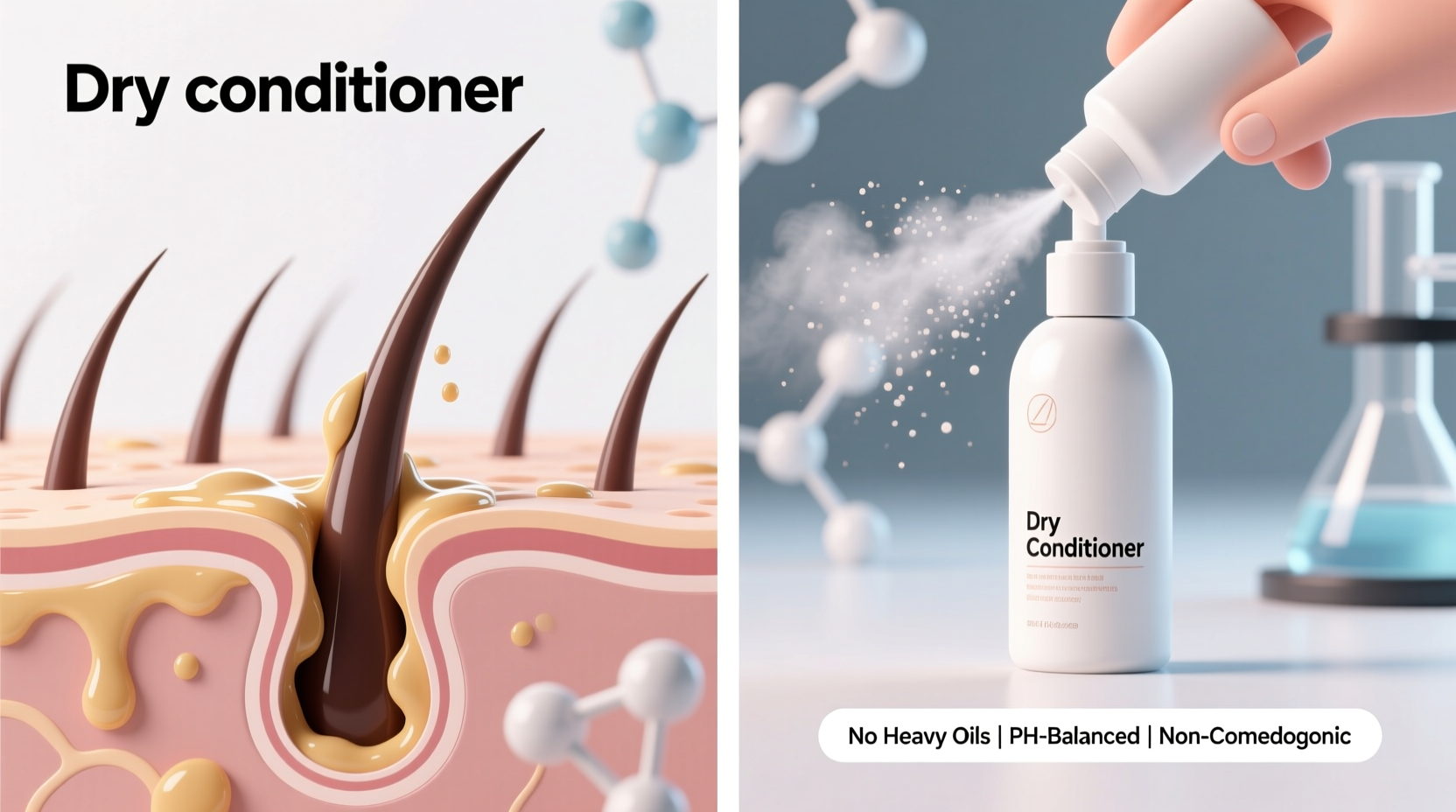
Dry conditioners aren’t magic—they rely on specific chemistry to deliver results without residue or greasiness. Most contain three core components:
- Lightweight silicones (like dimethicone or cyclomethicone) – These coat the hair shaft to smooth the cuticle, reduce friction, and add shine without heaviness.
- Volatilizers (often alcohol or hydrocarbons) – These carry the conditioning agents and evaporate quickly, leaving no wet feeling.
- Natural oils or humectants (in small concentrations) – Such as argan oil, jojoba oil, or panthenol, which provide moisture and protection but are carefully balanced to avoid buildup.
When properly formulated, these ingredients work together to mimic the smoothing effect of traditional conditioner—but only where needed. The key difference lies in targeted application: dry conditioner is meant for the lengths and ends, not the scalp. This precision helps prevent the very issue it’s often blamed for: greasy roots.
Debunking the Myth: Does Dry Conditioner Cause Oily Roots?
The belief that dry conditioner leads to oily roots stems from misuse—not the product itself. Many users spray too close to the scalp or apply excessive amounts, causing product migration. Over time, accumulated silicones and oils can weigh hair down and trap sebum, creating the illusion of increased oiliness.
However, clinical studies and trichologist insights confirm that when used correctly, dry conditioner does not stimulate sebum production. In fact, by reducing tangling and mechanical damage, it may indirectly help maintain scalp health by minimizing irritation caused by constant brushing of dry, brittle strands.
“Dry conditioner doesn’t increase oil production—it’s the application technique that determines its impact. Focus on the lower two-thirds of the hair, and you’ll avoid root buildup entirely.” — Dr. Lena Patel, Trichologist & Hair Health Researcher
The confusion is further fueled by the term “conditioner” itself, which consumers associate with heavy, creamy formulas that coat the scalp. Dry conditioner operates differently. It’s more akin to a texturizing treatment than a deep moisturizer.
Who Actually Benefits From Dry Conditioner?
Not all hair types respond the same way to dry conditioner. Here’s a breakdown of who gains the most—and who should proceed with caution:
| Hair Type | Benefits | Cautions |
|---|---|---|
| Curly/Coily (Type 3–4) | Reduces frizz, defines curls between washes, prevents dryness | Avoid overuse; can lead to buildup if not clarified weekly |
| Fine/Straight (Type 1–2) | Adds subtle texture, protects ends from heat damage | Use sparingly; prone to weighing down fine strands |
| Color-Treated or Chemically Processed | Repairs surface damage, restores shine, reduces porosity issues | Prioritize alcohol-free versions to prevent further drying |
| Oily-Root, Dry-End Hair (Common combo) | Moisturizes dry ends without touching the scalp | Misapplication causes greasiness—precision is key |
The ideal candidate for dry conditioner is someone with dry, damaged, or textured hair who struggles with maintaining softness between washes. Those with naturally oily scalps can still benefit—as long as they respect the application boundaries.
How to Use Dry Conditioner Without Compromising Root Freshness
Using dry conditioner effectively requires technique, not just timing. Follow this step-by-step guide to maximize benefits while keeping roots clean and voluminous:
- Section your hair: Part your hair into 4–6 sections to ensure even coverage and avoid overspray near the scalp.
- Hold the bottle 8–10 inches away: This distance allows the mist to disperse evenly and minimizes concentrated deposits.
- Spray only from mid-length to ends: Avoid the top third of your hair, particularly within 2 inches of the scalp.
- Let it sit for 10–15 seconds: Allow the volatilizers to evaporate before touching your hair.
- Comb through gently: Use a wide-tooth comb to distribute the product and detangle without friction.
- Style as usual: Whether air-drying or using heat tools, the product will enhance manageability and shine.
For best results, use dry conditioner every 2–3 days or as needed for frizz control. If you notice any residue, incorporate a clarifying shampoo into your routine once every 7–10 days, depending on usage frequency.
Real-World Example: A Week With Dry Conditioner
Consider Sarah, a 32-year-old teacher with wavy, color-treated hair and an oily scalp. She washes her hair every other day but hates how dry and tangled it feels by day two. After hearing about dry conditioner, she tried a popular brand—but sprayed it too close to her roots. By day three, her hair looked flat and greasy, reinforcing her belief that the product was flawed.
She revisited the instructions, adjusted her method, and resprayed—this time focusing only on the ends, holding the bottle at arm’s length. The result? Her waves stayed defined, her ends felt softer, and her roots remained oil-free until her next wash. The product hadn’t changed—only her application had.
This case illustrates a common pattern: initial disappointment due to improper use, followed by success once technique improves. Dry conditioner isn’t foolproof, but it’s far from useless.
Dos and Don’ts of Dry Conditioner Use
To help you navigate the nuances, here’s a clear checklist of recommended practices:
- Do apply only to mid-lengths and ends.
- Do shake the bottle before each use.
- Do use on dry or slightly damp hair.
- Do pair with a clarifying shampoo weekly if you use it frequently.
- Don’t spray directly onto the scalp.
- Don’t overapply—start with 1–2 sprays per section.
- Don’t use it as a substitute for regular conditioning treatments.
- Don’t ignore ingredient labels if you have sensitivities.
Additionally, consider opting for non-aerosol pump sprays if you want more control over dosage. While less convenient, they reduce the risk of overspray and environmental impact from propellants.
FAQ: Common Questions About Dry Conditioner
Can I use dry conditioner every day?
Yes, but with caution. Daily use is acceptable if applied only to the ends and paired with a clarifying shampoo at least once a week to prevent buildup. Those with fine or low-porosity hair should limit use to every other day.
Is dry conditioner safe for colored hair?
Most dry conditioners are safe for color-treated hair, especially those formulated with UV filters and antioxidants. However, avoid products with high alcohol content, as they can accelerate fading and dryness. Look for labels indicating “color-safe” or “for chemically treated hair.”
Does dry conditioner replace regular conditioner?
No. Dry conditioner is a temporary treatment for surface-level smoothing and frizz control. It doesn’t penetrate the hair shaft like rinse-out conditioners, which deliver deeper hydration and repair. Think of it as a maintenance tool, not a replacement.
Conclusion: A Practical Tool, Not a Gimmick
Dry conditioner is neither a miracle nor a marketing scam—it’s a niche product that serves a specific purpose when used correctly. For people with dry ends, frizzy textures, or limited time for hair care, it offers a legitimate shortcut to smoother, healthier-looking hair. The perception that it causes oily roots is largely a consequence of misuse, not inherent flaws in the formula.
Like any styling product, its effectiveness depends on understanding your hair type, reading labels, and applying it with intention. When integrated thoughtfully into a broader hair care routine, dry conditioner can extend the life of styles, reduce damage from brushing, and enhance daily manageability.




 浙公网安备
33010002000092号
浙公网安备
33010002000092号 浙B2-20120091-4
Comments
No comments yet. Why don't you start the discussion?