
For frequent international travelers, staying connected across borders is more than a convenience—it’s a necessity. Whether you're managing remote work, navigating unfamiliar cities, or keeping in touch with family back home, reliable mobile service is non-negotiable. In recent years, dual SIM smartphones have gained popularity, especially among globetrotters. But is the feature truly beneficial, or just another gadget gimmick? The answer depends on how you travel, where you go, and what you need from your phone.
Dual SIM technology allows a single device to support two active phone lines simultaneously—typically one physical nano-SIM and one eSIM (embedded SIM), or two physical cards. This capability opens up strategic possibilities for managing connectivity without carrying multiple devices. For international travelers, this can mean seamless switching between local data plans and home numbers, reduced roaming charges, and greater flexibility. But like any tech decision, it comes with trade-offs.
How Dual SIM Works for International Travelers
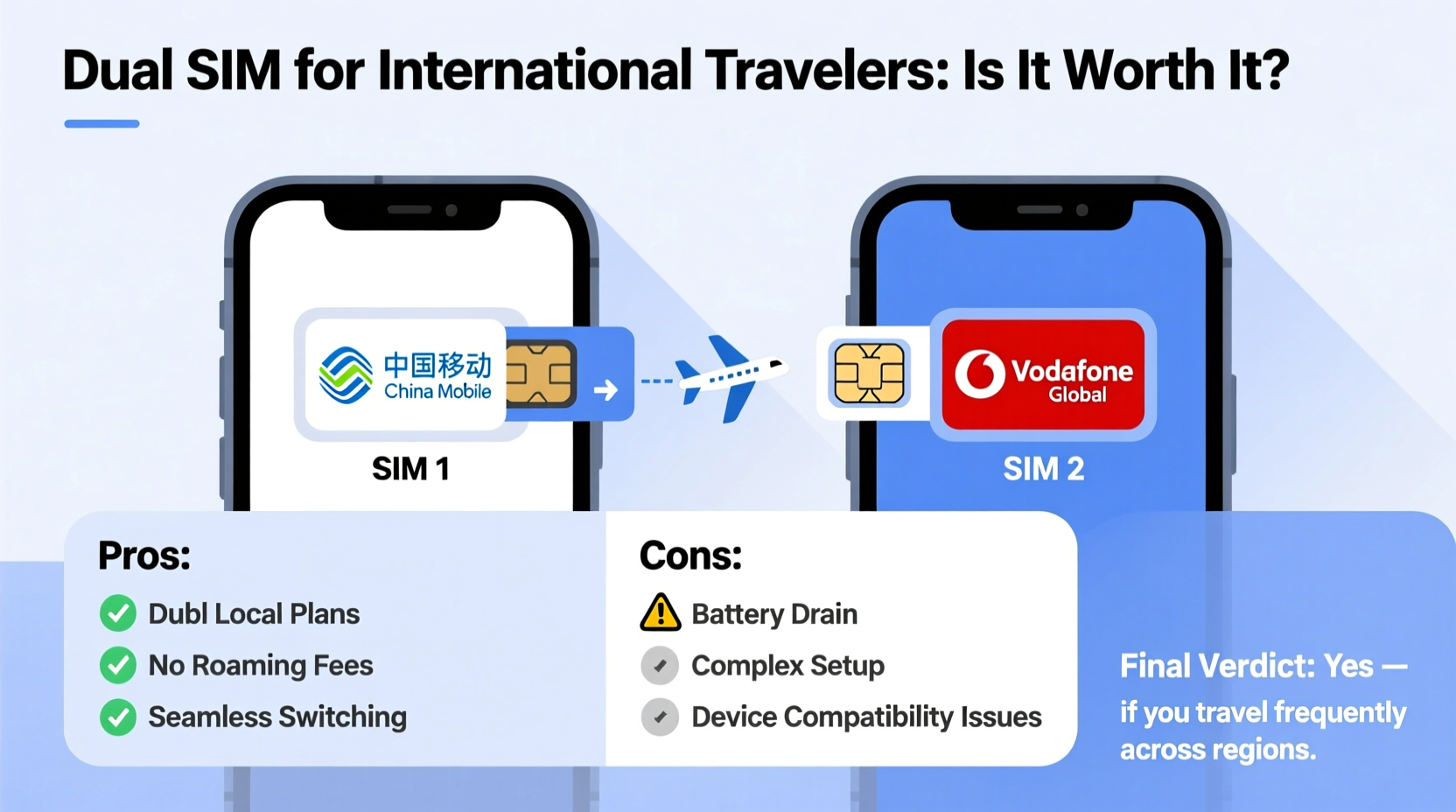
At its core, dual SIM functionality enables users to maintain two separate phone numbers on one device. Most modern dual SIM phones support either:
- Dual SIM Dual Standby (DSDS): Both SIMs are active but only one can be used for calls/data at a time.
- Dual SIM Dual Active (DSDA): Rare; both SIMs can receive calls simultaneously.
For most travelers, DSDS is sufficient. When traveling internationally, the typical setup involves:
- Keeping the primary SIM from your home country (for calls, texts, and account verification).
- Adding a local prepaid SIM or eSIM from the destination country (for affordable data and local calling).
This configuration avoids expensive international roaming fees while preserving access to your original number. Incoming calls to your home number still reach you as long as the SIM is active and within network range—even if you’re using data from the second line.
Cost Savings and Connectivity Benefits
The most compelling reason for travelers to adopt dual SIM setups is financial efficiency. Roaming charges remain notoriously high, particularly for data usage. A 2023 report by the European Commission found that average roaming data costs exceed $5 per MB in some regions outside the EU—making unrestricted browsing prohibitively expensive.
By inserting a local SIM card upon arrival, travelers can access affordable data packages. For example:
| Country | Local Data Plan (7 days) | Equivalent Roaming Cost (Est.) | Savings |
|---|---|---|---|
| Thailand | $5 for 10GB | $45+ | ~89% |
| Turkey | $6 for unlimited | $30+ | ~80% |
| Japan | $8 for 15GB | $50+ | ~84% |
| France (non-EU visitor) | $7 for 20GB | $35+ | ~80% |
These savings add up quickly, especially during extended trips or multi-country tours. With dual SIM, there’s no need to swap out physical cards constantly—you can keep your home SIM active while routing internet traffic through the local one.
“Dual SIM has become a game-changer for digital nomads and business travelers alike. It bridges the gap between affordability and reliability.” — Carlos Mendez, Telecommunications Analyst at Global Connect Insights
Practical Use Cases and Real-World Scenarios
To understand the true value of dual SIM, consider a realistic scenario:
Mini Case Study: Sarah, Freelancer Traveling Across Southeast Asia
Sarah, a freelance graphic designer from Canada, spends three months working remotely across Thailand, Vietnam, and Indonesia. She needs stable internet for client calls, cloud backups, and project submissions. Her Canadian carrier offers an international plan at $30/month for 3GB of data—insufficient for video conferencing and file uploads.
Instead, she uses her iPhone 14 (which supports dual SIM via nano + eSIM). Before departure, she keeps her Canadian SIM active for voice and SMS. Upon landing in Bangkok, she purchases a local AIS SIM with 10GB of data for $5, valid for seven days. Afterward, she buys a longer-term eSIM package covering all three countries for $25 (unlimited data, fair usage policy).
She configures her phone so that:
- Data runs on the eSIM.
- Calls and messages use the Canadian number unless contacting locals (then she dials via WhatsApp over local data).
- Two-factor authentication continues to work because her primary number remains active.
The result? Total communication cost: under $60 for three months. Without dual SIM, she would have spent over $270 on roaming or juggled two separate phones.
Key Considerations Before Going Dual SIM
While the advantages are clear, several factors determine whether dual SIM makes sense for your travel style:
Phone Compatibility
Not all smartphones support dual SIM. Apple introduced dual SIM in the iPhone XS and later models (nano + eSIM). Android manufacturers vary—Samsung Galaxy S20 and newer flagships support it, but mid-range devices may lack eSIM capabilities. Always verify specs before purchasing.
eSIM Availability
eSIM adoption is growing, but not universal. Some countries restrict local eSIM sales to foreign visitors, requiring in-person registration with ID. Others, like India, only recently opened eSIM access to tourists. Research ahead of time or rely on physical SIMs as backup.
Battery and Performance Impact
Running two SIMs increases power consumption slightly, as the phone maintains connections to two networks. However, modern processors and optimized radios minimize this effect—most users won’t notice a meaningful drop in battery life.
Security and Privacy
Using a local SIM means trusting a foreign carrier with your data. While rare, some governments monitor telecommunications closely. For sensitive communications, continue using encrypted apps (Signal, ProtonMail) regardless of SIM type.
Step-by-Step Guide to Setting Up Dual SIM for Travel
Maximizing dual SIM functionality requires preparation. Follow this timeline before and during your trip:
- 4 Weeks Before Departure: Confirm your phone supports dual SIM and eSIM. Update to the latest OS version.
- 2 Weeks Before: Research local carriers at your destination. Compare prepaid plans focusing on data volume, validity, and hotspot support.
- 1 Week Before: Purchase an eSIM online from providers like Airalo, Nomad, or Holafly. Save the QR code to your cloud storage.
- Day of Arrival: Land, connect to airport Wi-Fi, scan the eSIM QR code, and activate. Ensure data roaming is enabled for the new line.
- First Hour: Test internet speed, set the eSIM as default for data, and confirm your home SIM still receives calls/SMS.
- Ongoing: Monitor usage via carrier app or iOS/Android settings. Renew or top-up as needed.
This process ensures a smooth transition without losing access to critical services tied to your home number.
Checklist: Is Dual SIM Right for You?
Use this checklist to evaluate whether dual SIM functionality aligns with your travel habits:
- ✅ Do you travel internationally more than twice a year?
- ✅ Are you frustrated by high roaming bills?
- ✅ Do you need constant access to your home number for 2FA or work calls?
- ✅ Is your current phone compatible with dual SIM (physical + eSIM)?
- ✅ Are you comfortable managing multiple cellular plans and settings?
- ✅ Do you often visit countries where eSIMs or prepaid SIMs are readily available?
If you answered yes to four or more, dual SIM is likely a worthwhile investment.
Frequently Asked Questions
Can I use FaceTime and iMessage with two different numbers?
Yes. On iPhones, go to Settings > Messages/FaceTime and select which number(s) you want associated with each service. You can even choose different defaults for calls and texts.
Will my bank or social media accounts log me out if I switch SIMs?
Generally, no—as long as your primary SIM remains active and able to receive SMS. Many apps tie login sessions to the device itself, not the network. However, if you deactivate your main number, you may face verification issues.
Are eSIMs less secure than physical SIMs?
No inherent security difference exists. Both transmit signals the same way. Security risks depend more on network encryption and user behavior (e.g., avoiding public Wi-Fi for banking).
Final Thoughts: Making the Decision
Dual SIM functionality isn't essential for every traveler—but for those who cross borders regularly, it offers tangible benefits. The ability to separate personal and professional lines, reduce data costs dramatically, and maintain uninterrupted connectivity transforms how we experience global mobility.
It’s not merely about convenience; it’s about control. Control over your expenses, your privacy, and your productivity. As eSIM infrastructure expands and more countries embrace open telecom policies, dual SIM will shift from niche feature to standard expectation.
If you're still using a single-line phone and paying premium rates to stay online abroad, now is the time to reassess. Upgrade your device if needed, learn the setup process, and start traveling smarter.




 浙公网安备
33010002000092号
浙公网安备
33010002000092号 浙B2-20120091-4
Comments
No comments yet. Why don't you start the discussion?