
Facial gua sha has surged in popularity over the past few years, promoted by influencers, estheticians, and wellness advocates as a transformative self-care ritual. Sold as a tool for sculpting jawlines, reducing puffiness, and boosting circulation, it’s easy to see why so many are drawn to its promise of glowing, lifted skin. But beneath the glossy social media reels lies a more nuanced reality: is facial gua sha truly effective, or is its impact limited to short-term visual improvements?
The truth is not binary. While some benefits are immediate and transient—like reduced morning puffiness—others may emerge with consistent use over time. Understanding what gua sha can realistically achieve requires separating myth from mechanism, trend from tradition, and placebo from physiology.
Understanding Facial Gua Sha: Origins and Purpose
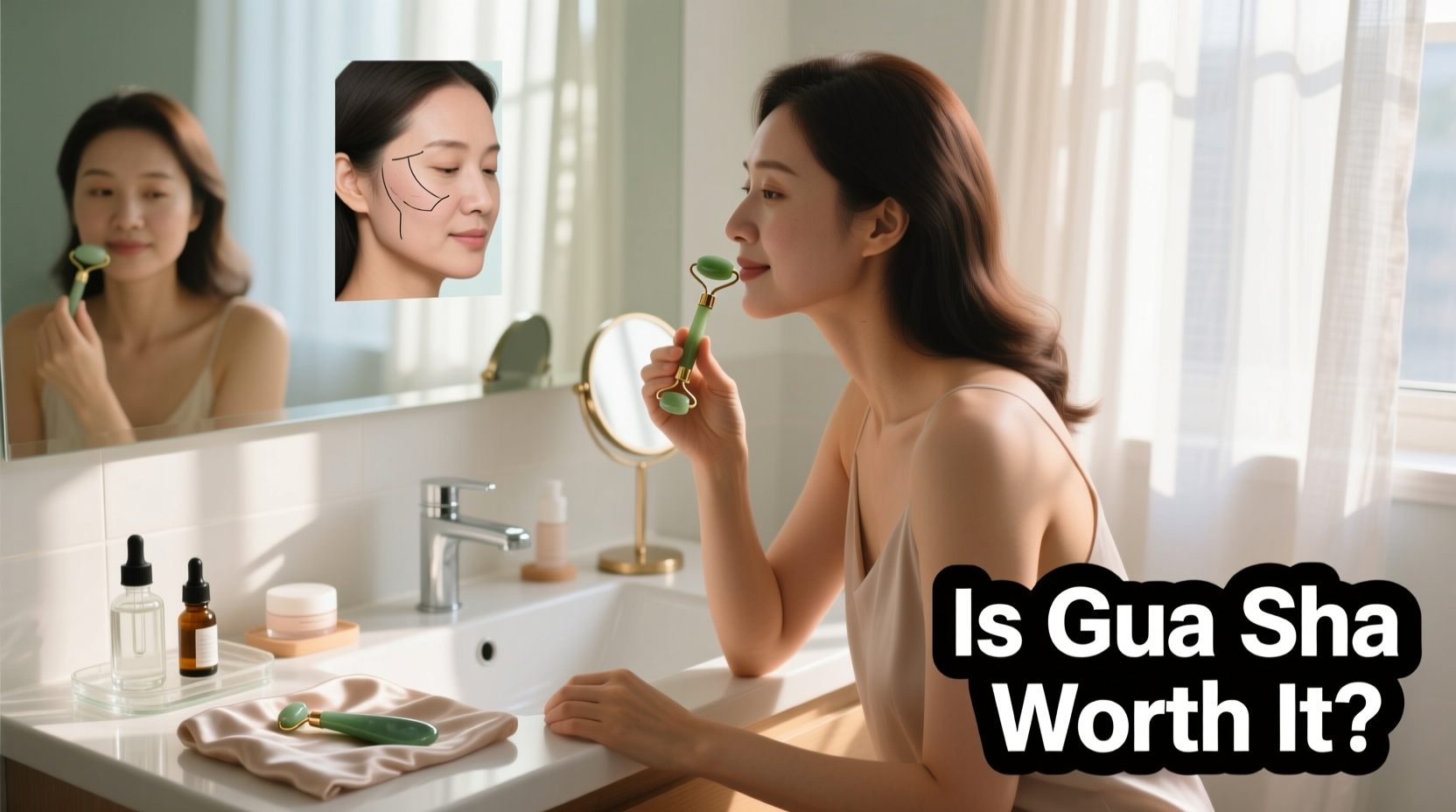
Gua sha, pronounced “gwa-shah,” originates from traditional Chinese medicine (TCM). The term translates to “scraping” (gua) “sand” (sha), referring to the red petechiae that sometimes appear on the skin after vigorous body scraping—a technique used therapeutically to release stagnation and improve qi flow. In its modern facial adaptation, however, the practice is far gentler, using smooth jade or rose quartz tools to glide across the face with light pressure.
Unlike body gua sha, which often leaves visible marks, facial gua sha aims for subtle lymphatic drainage, improved circulation, and muscle relaxation. It’s typically performed with facial oils or serums to reduce friction and enhance glide. Proponents claim it reduces puffiness, tightens skin, diminishes fine lines, and promotes radiance—all without needles or downtime.
“Gua sha isn’t about instant transformation; it’s about supporting the body’s natural detoxification and circulation processes over time.” — Dr. Ming Chen, Licensed Acupuncturist and TCM Practitioner
The Science Behind the Glow: What Does Research Say?
While rigorous clinical studies on facial gua sha specifically are limited, related research offers insight into its potential mechanisms:
- Lymphatic drainage: The gentle upward strokes mimic manual lymphatic drainage techniques used in physical therapy. A 2016 study published in *Lymphology* confirmed that rhythmic massage can stimulate lymph flow, helping remove excess fluid and metabolic waste from tissues.
- Blood circulation: Increased microcirculation delivers oxygen and nutrients to skin cells. A 2019 study in *Skin Research and Technology* found that facial massage significantly boosts blood flow, which may support collagen production and skin repair.
- Muscle tension release: Chronic facial tension—from clenching jaws or furrowing brows—can contribute to premature wrinkles. Myofascial release techniques, similar to those used in gua sha, have been shown to reduce muscle tightness and improve facial mobility.
However, most observed benefits are short-term. One peer-reviewed case report in *Complementary Therapies in Clinical Practice* documented visible reduction in periorbital puffiness after a single 10-minute session—but effects lasted only 4–6 hours. This suggests that while gua sha may offer real physiological changes, they are often temporary without regular repetition.
Immediate Effects vs. Long-Term Benefits: Separating Fact from Hype
Many users report an immediate \"glow\" post-gua sha. This is likely due to increased blood flow rather than structural change. Similarly, reduced puffiness is often attributed to lymphatic movement, but it's not permanent—it’s akin to how exercise temporarily reduces water retention.
To assess long-term value, consider these distinctions:
| Effect | Nature | Duration | Evidence Level |
|---|---|---|---|
| Reduced facial puffiness | Fluid redistribution | Hours | Moderate (anecdotal + mechanistic) |
| Improved skin radiance | Increased circulation | 6–12 hours | Low to moderate |
| Jawline definition | Temporary contouring via drainage | Short-term | Anecdotal |
| Fine line softening | Possible collagen stimulation over time | Months (if any) | Very low |
| Relaxation & stress relief | Neurological response to touch | Immediate to lasting | High (supported by massage therapy research) |
As the table shows, most aesthetic outcomes are fleeting. True structural improvements—such as enhanced elasticity or wrinkle reduction—would require sustained stimulation over months, possibly combined with other evidence-based skincare practices like retinoids or sun protection.
A Realistic Routine: How to Use Gua Sha Effectively
If you're considering adding gua sha to your regimen, approach it as a complementary ritual—not a replacement for medical-grade treatments. Done correctly, it can enhance product absorption, promote relaxation, and support skin health. Done incorrectly, it can cause irritation, broken capillaries, or even stretch marks from excessive pulling.
Follow this step-by-step guide for safe and effective use:
- Cleanse your face: Start with a clean canvas to prevent pushing dirt into pores.
- Apply a slippery medium: Use facial oil, serum, or a dedicated facial slick. Avoid dry gliding.
- Warm the tool: Hold the gua sha in your hand for a minute to bring it close to body temperature—cold stones can constrict blood vessels.
- Use light pressure: Let the tool glide; don’t press hard. You should never feel pain or see redness beyond mild pinkness.
- Follow directional strokes:
- Neck: Upward sweeps from collarbone to jawline (3–5 reps)
- Jawline: From chin along the jaw toward ears (3–5 reps per side)
- Under eyes: From inner corner outward along cheekbone (gentle, 3 reps)
- Forehead: From center outward and upward (3–5 reps)
- Finish with skincare: Apply moisturizer or sunscreen afterward to lock in hydration.
- Sanitize the tool: Clean with mild soap and water after each use to prevent bacterial buildup.
Mini Case Study: Two Months of Consistent Gua Sha Practice
Sophie, a 34-year-old graphic designer, began incorporating facial gua sha into her morning routine after noticing persistent puffiness around her eyes and jawline. She had no major skin concerns but wanted to explore non-invasive ways to look more awake.
She committed to five mornings per week, using a rose quartz heart-shaped tool with a lightweight facial oil. Her technique followed online tutorials emphasizing lymphatic drainage patterns. After two weeks, she noticed her under-eye area looked less swollen upon waking. By week six, her partner commented that her jawline appeared “sharper,” though Sophie acknowledged this coincided with improved sleep and reduced sodium intake.
At the two-month mark, Sophie reported greater enjoyment of her skincare routine and reduced tension in her temples—likely due to the ritualistic aspect. However, when she skipped sessions for a week during travel, the puffiness returned. This reinforced her observation: the benefits were cumulative but not permanent.
Sophie concluded that gua sha wasn’t a miracle fix but a valuable addition to her self-care toolkit—particularly for days when she felt bloated or fatigued.
Common Mistakes That Undermine Results
Even with good intentions, improper technique can limit effectiveness or cause harm. Watch out for these pitfalls:
- Using too much pressure: Can damage delicate facial capillaries or lead to telangiectasia (visible broken veins).
- Skipping lubricant: Increases friction, potentially causing micro-tears in the skin.
- Incorrect stroke direction: Going against lymphatic flow (e.g., downward on the neck) may trap fluid.
- Overuse: Daily aggressive scraping may irritate the skin barrier, especially for sensitive or acne-prone types.
- Unsanitized tools: Can harbor bacteria and trigger breakouts.
“The key is consistency paired with gentleness. Think of it like brushing your teeth—daily maintenance matters more than intensity.” — Nadia Patel, Licensed Esthetician and Skincare Educator
Checklist: Is Gua Sha Right for You?
Before adopting gua sha, evaluate your goals and skin type. Use this checklist to determine if it aligns with your needs:
- ✅ I experience morning facial puffiness
- ✅ I enjoy mindful, tactile skincare routines
- ✅ I’m willing to commit 5–7 minutes, 3–5 times per week
- ✅ My skin is not highly reactive or prone to rosacea flare-ups
- ✅ I understand results are subtle and gradual
- ❌ I expect dramatic lifting or wrinkle elimination
- ❌ I have active cystic acne or open wounds on my face
- ❌ I’m looking for a one-time solution
If most checked items are positive, gua sha could be a worthwhile addition. If not, consider alternatives like cold rollers or professional lymphatic facials.
Frequently Asked Questions
How often should I do facial gua sha?
For most people, 3–5 times per week is sufficient. Daily use is acceptable if performed gently and with proper technique. Overdoing it may lead to irritation or compromised skin barrier function.
Can gua sha really slim your face?
It cannot reduce facial fat or alter bone structure. Any slimming effect comes from temporary fluid drainage and improved muscle tone. Think of it as a “skin tune-up,” not a non-surgical facelift.
What material is best for a gua sha tool?
Jade, rose quartz, and bian stone are popular, but material matters less than shape and smoothness. Choose a tool with curved edges that fit your facial contours. Synthetic options made from medical-grade plastic are also hygienic and affordable.
Conclusion: Worthwhile Ritual, Not Magic Wand
Facial gua sha is not a miracle cure, nor is it merely a fleeting trend. Its value lies in the intersection of physiology and ritual. Yes, it provides temporary puff reduction—often within minutes. But its deeper benefit may be the daily moment of mindfulness it encourages, the way it connects touch to intention, and the subtle yet real support it offers to circulation and lymphatic health.
When practiced consistently and correctly, gua sha can complement a thoughtful skincare routine. It won’t replace sunscreen, retinoids, or dermatological treatments, but it might make applying them feel more intentional. And in a world where beauty routines often prioritize speed and efficiency, carving out a few quiet minutes to care for your face—tool in hand—might be the most transformative part of all.




 浙公网安备
33010002000092号
浙公网安备
33010002000092号 浙B2-20120091-4
Comments
No comments yet. Why don't you start the discussion?