
Facial puffiness—especially around the eyes, cheeks, and jawline—is a common morning complaint. While hydration, sleep, and diet play foundational roles, many turn to topical tools and techniques for faster relief. Among them, facial gua sha has gained significant traction in wellness and skincare circles. Advocates praise its sculpting effects, lymphatic drainage benefits, and ability to reduce facial swelling with regular use. But is it truly effective for puffiness, and does the effort required to learn proper technique justify the results?
The short answer: yes—for many users, especially those dealing with chronic morning puffiness or fluid retention, facial gua sha offers tangible, visible improvements. However, its effectiveness hinges on consistency, correct application, and realistic expectations. Unlike instant-fix products, gua sha operates on cumulative benefits, making the initial learning curve a worthwhile investment rather than an obstacle.
Understanding Facial Puffiness: Causes and Context
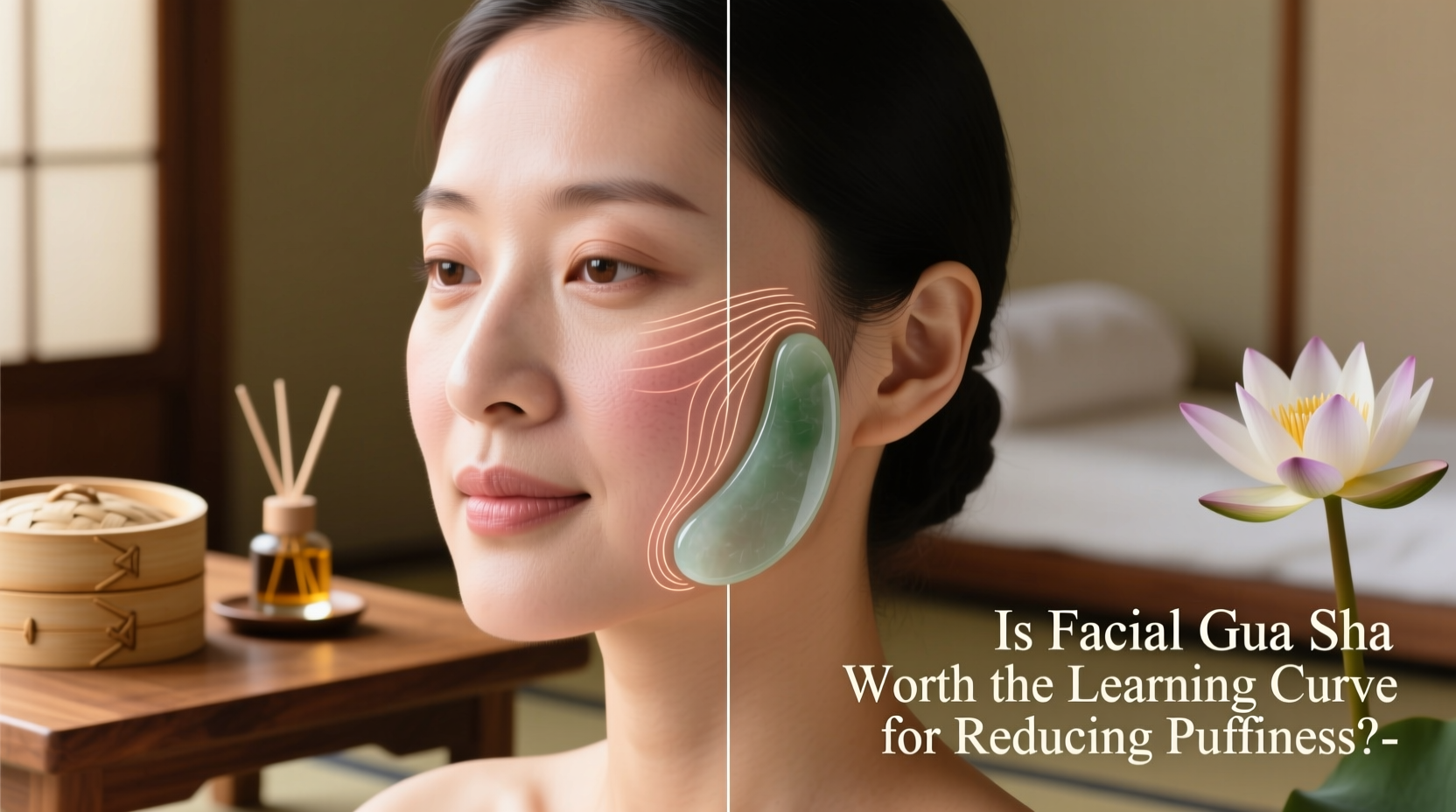
Facial puffiness typically stems from fluid accumulation in the soft tissues, often due to gravity, poor circulation, dietary factors (like high sodium), hormonal fluctuations, or lack of sleep. Unlike inflammation or allergies, which require medical attention, everyday puffiness is usually benign but cosmetically bothersome.
The face contains a network of lymphatic vessels that help drain excess fluid and waste. When this system slows—due to sedentary habits, dehydration, or stress—fluid pools, particularly in areas with looser skin like under the eyes and along the jaw. This is where gua sha comes in: by stimulating gentle pressure and directional strokes, it may encourage lymphatic flow, promoting drainage and reducing temporary swelling.
“Manual lymphatic drainage techniques, including tool-assisted massage like gua sha, can temporarily improve facial contour by moving stagnant fluid,” says Dr. Lena Park, board-certified dermatologist and integrative skincare specialist. “It’s not magic—it’s physiology.”
How Gua Sha Works: Science Meets Tradition
Gua sha, meaning “scraping sand” in Chinese, is a traditional East Asian therapy originally used on the body to release muscle tension and improve circulation. Facial gua sha adapts this practice using smooth, flat stones—typically jade or rose quartz—applied with light pressure across oiled skin.
The mechanism behind its anti-puffiness effect involves three key actions:
- Lymphatic stimulation: Upward and outward strokes follow natural lymph pathways, encouraging fluid movement toward drainage points near the ears and collarbones.
- Increased microcirculation: The friction and pressure boost blood flow, delivering oxygen and aiding detoxification at the cellular level.
- Muscle toning: Repeated gliding over facial muscles may promote mild toning and reduce the appearance of sagging associated with fluid buildup.
A 2021 pilot study published in *Complementary Therapies in Clinical Practice* observed measurable reductions in periorbital (under-eye) puffiness after four weeks of twice-weekly gua sha sessions. While small in scale, the findings support anecdotal reports of improved facial definition and reduced morning swelling.
Mastering the Technique: A Step-by-Step Guide
Improper use can lead to redness, broken capillaries, or no results at all. To get the most out of gua sha for puffiness, follow this structured routine. Allow 5–7 minutes daily, ideally in the morning when puffiness is most noticeable.
- Cleanse and prep skin: Start with a clean face. Apply a few drops of facial oil or hydrating serum to reduce friction.
- Warm the tool: Hold the gua sha stone in your palms for 30 seconds. Warm stone enhances comfort and promotes circulation.
- Neck and collarbone clearance: Begin here to open drainage pathways. Use the curved end of the tool to sweep downward from the base of the throat, then upward along the sides of the neck. Repeat 3 times per side.
- Under-eye area: With the narrow edge, gently sweep from the inner corner of the eye outward toward the temple. Use feather-light pressure—this skin is delicate. Repeat 3–5 times.
- Jawline and chin: Place the broad side of the tool under the chin. Sweep upward and backward along the jaw to the lymph nodes near the earlobe. Repeat 5 times per side.
- Cheeks and midface: Starting from the nose, glide outward along the cheekbone toward the ear. Focus on areas prone to puffiness. Repeat 5 times per side.
- Forehead: Use the straight edge to sweep from the center of the forehead outward and upward to the temples. Avoid dragging vertically, which may encourage wrinkles.
- Finish with deep breathing: Take three slow breaths, placing hands over the face to seal in warmth and intention.
Consistency matters more than duration. Daily 5-minute sessions yield better results than weekly 20-minute attempts.
Real Results: A Mini Case Study
Sophie, a 34-year-old graphic designer based in Portland, struggled with persistent under-eye puffiness despite adequate sleep and hydration. “I’d wake up looking swollen, even after eight hours,” she said. Skeptical but curious, she committed to a 30-day gua sha regimen each morning after cleansing.
She followed the standard protocol using a rose quartz heart-shaped tool and a lightweight squalane oil. Within two weeks, she noticed her eyes appeared less puffy and her jawline seemed more defined. By day 30, her partner commented, “You look more awake.” Sophie attributes the change primarily to consistent lymphatic clearing. “It’s not dramatic like a filter,” she noted, “but I look like myself—just rested.”
Her experience aligns with what dermatologists observe: subtle, cumulative improvement rather than overnight transformation.
Do’s and Don’ts of Facial Gua Sha
| Do’s | Don’ts |
|---|---|
| Use upward and outward motions only | Scrape downward on the face (can stretch skin) |
| Apply light to moderate pressure | Press so hard that skin turns bright red or bruises |
| Use a slick facial oil or serum | Perform on dry or irritated skin |
| Clean your tool after each use | Share your tool without sanitizing (risk of bacteria transfer) |
| Store in a cool, dry place | Leave in humid bathrooms or direct sunlight |
Expert Tips for Maximizing Benefits
To get the most out of gua sha for puffiness reduction, consider these advanced strategies:
- Pair with cold therapy: Combine gua sha with chilled spoons or a refrigerated roller for amplified de-puffing.
- Hydrate before and after: Drink a glass of water post-session to support systemic fluid balance.
- Sync with skincare: Layer gua sha after applying serums to boost product absorption through increased circulation.
- Track progress: Take weekly photos in consistent lighting to objectively assess changes in facial contour.
FAQ: Common Questions About Gua Sha and Puffiness
Can gua sha really reduce puffiness, or is it just placebo?
While some subjective improvement may stem from ritual and self-care, clinical observation and user reports consistently show reduced fluid retention with proper technique. The mechanical action supports lymphatic flow, which is a physiological process—not perceptual.
How long does it take to see results?
Most users report a subtle lifting effect immediately after the first session. Noticeable reduction in daily puffiness typically appears within 2–4 weeks of consistent use (5–7 days per week). Long-term toning may take 8–12 weeks.
Is gua sha safe for sensitive or acne-prone skin?
Yes, with caution. Avoid active breakouts or inflamed areas. Use minimal pressure and non-comedogenic oils. Those with rosacea or fragile capillaries should consult a dermatologist before starting.
Final Verdict: Is the Learning Curve Worth It?
The learning curve for facial gua sha is modest but real. Beginners often apply too much pressure, use incorrect angles, or skip essential prep steps. It takes time to internalize the stroke patterns and understand how much glide versus resistance is ideal. Yet, compared to other skincare investments—devices, injectables, or recurring treatments—gua sha is low-cost, non-invasive, and empowers personal agency over one’s routine.
For puffiness specifically, gua sha stands out as one of the few at-home methods that directly targets lymphatic stagnation. Unlike creams that sit on the surface, it engages the underlying physiology of fluid dynamics. When practiced correctly, it delivers subtle but meaningful improvements: brighter eyes, a clearer jawline, and a more alert appearance—all without chemicals or downtime.
The payoff isn’t instant, nor is it exaggerated. But for those willing to invest ten minutes a day and a few weeks of mindful practice, the return is both functional and aesthetic. It transforms a skincare moment into a ritual of awareness, where touch becomes therapeutic and routine becomes restorative.




 浙公网安备
33010002000092号
浙公网安备
33010002000092号 浙B2-20120091-4
Comments
No comments yet. Why don't you start the discussion?