
In the era of viral skincare routines, few tools have captured attention like the facial gua sha. With millions of videos showcasing smooth jade stones gliding over glowing skin, it’s easy to wonder: Is this ancient practice truly transformative, or is it simply another fleeting social media sensation? While some swear by its sculpting effects and improved circulation, others dismiss it as performative self-care with little scientific backing. The truth lies somewhere in between — but understanding where requires more than scrolling through before-and-after clips.
Gua sha, which translates to “scraping petechiae” in Chinese, has roots in traditional East Asian medicine dating back centuries. Originally used on the body to relieve muscle tension and improve energy flow, the technique was later adapted for facial use. Today’s version typically involves a flat, contoured stone — often jade or rose quartz — gently scraped across the face in specific patterns to promote lymphatic drainage, reduce puffiness, and support natural collagen production. But does it actually work? And if so, is mastering the technique worth the time and investment?
The Science Behind Facial Gua Sha
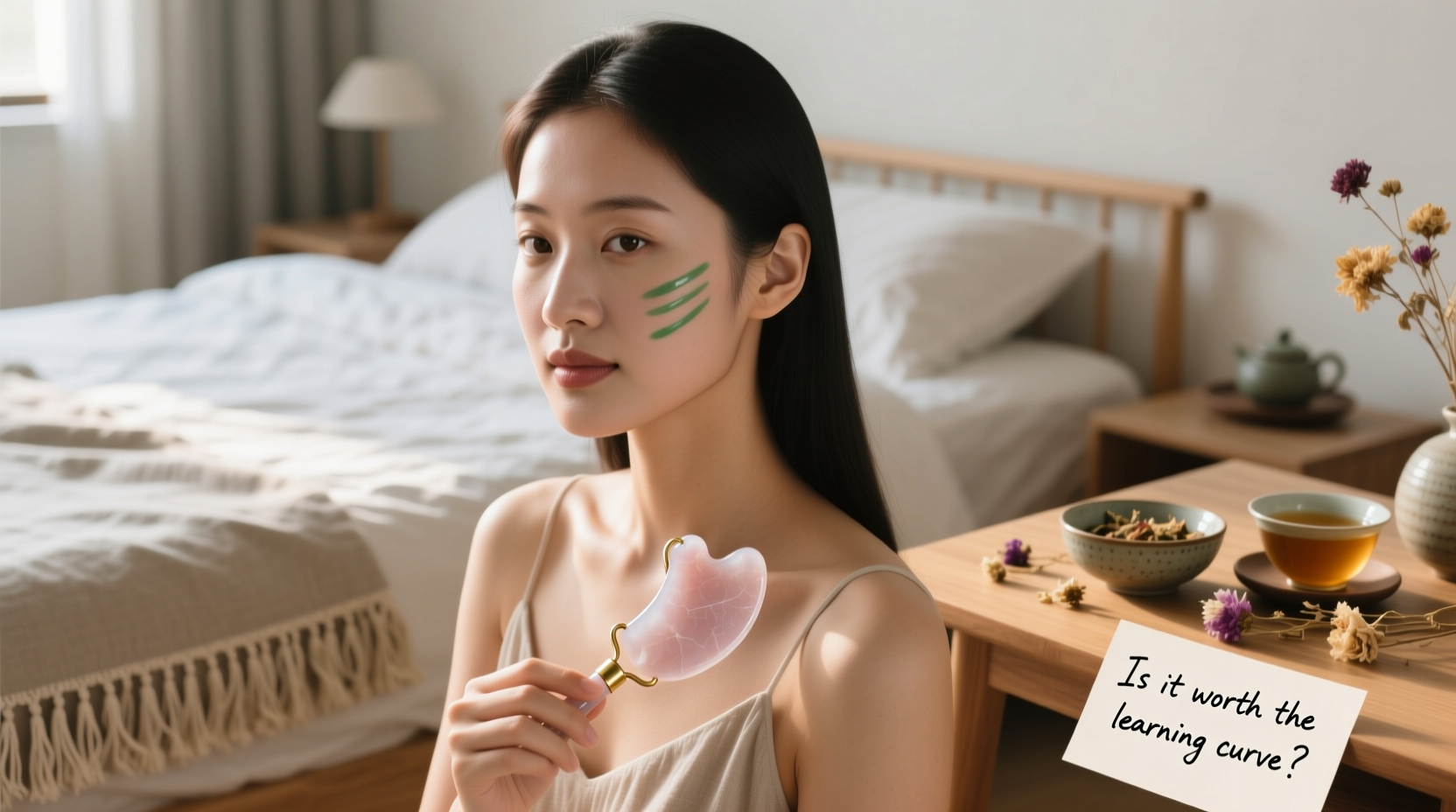
At first glance, gua sha may seem mystical, but several physiological mechanisms explain how it might benefit the skin. The primary claim centers on lymphatic drainage — the process by which excess fluid and toxins are removed from tissues. When lymph flow slows due to stress, poor sleep, or aging, facial puffiness and dullness can occur. Manual manipulation, such as that performed during gua sha, may stimulate this system.
A 2019 study published in *Complementary Therapies in Clinical Practice* found that facial massage significantly reduced under-eye puffiness and improved skin elasticity after four weeks of consistent use. While the study didn’t specifically test gua sha, the principles align closely with its techniques. Additionally, research shows that increased blood circulation brings oxygen and nutrients to skin cells, potentially enhancing radiance and supporting repair processes.
Dr. Lindsey Zubritsky, a board-certified dermatologist based in Pittsburgh, explains:
“Facial massage, including gua sha, can provide temporary improvements in tone and texture by boosting microcirculation and reducing fluid retention. It won't replace medical treatments like retinoids or lasers, but as part of a holistic routine, it can complement other regimens.”
Importantly, most experts agree that results are subtle and cumulative. Unlike injectables or peels, gua sha doesn’t alter skin structure overnight. Instead, it supports the skin’s natural functions — much like exercise supports overall health.
Benefits vs. Hype: What You Can Realistically Expect
Before investing in a $60 crystal tool, it's essential to separate realistic outcomes from exaggerated claims. Social media often highlights dramatic \"instant lift\" transformations, but these are frequently enhanced by lighting, angles, or post-procedure swelling. Here’s what gua sha can and cannot do:
| What Gua Sha Can Do | What Gua Sha Cannot Do |
|---|---|
| Reduce morning puffiness through lymphatic stimulation | Permanently reshape your jawline or nose |
| Improve product absorption when used after applying serums | Erase deep wrinkles or reverse sun damage |
| Enhance facial circulation for a healthier glow | Replace professional dermatological treatments |
| Provide relaxation and stress relief through ritualistic use | Work without consistency or proper technique |
The real value of gua sha often lies not in radical transformation, but in daily mindfulness. For many users, the ritual becomes a grounding moment in an otherwise hectic day — a chance to pause, breathe, and connect with their bodies. This psychological benefit shouldn’t be underestimated, especially given the well-documented link between stress and skin conditions like acne and eczema.
Mastering the Technique: A Step-by-Step Guide
One reason people abandon gua sha is improper technique. Using the tool incorrectly can lead to irritation, broken capillaries, or no noticeable effect at all. To get the most out of your practice, follow this evidence-informed sequence:
- Cleanse and prep your skin. Start with a clean face and apply a generous layer of facial oil or serum. This reduces drag and allows the stone to move smoothly.
- Warm the tool (optional). Some prefer chilling the stone for depuffing; others warm it slightly for relaxation. Either is fine, but avoid extreme temperatures.
- Begin at the center of the face. Use the curved edge of the stone and make upward-and-outward strokes starting from the décolletage up to the collarbones to open lymph pathways.
- Move to the jawline. Place the tool under the chin and sweep outward along the jaw toward the lymph nodes near the ears. Repeat 5–7 times per side.
- Address the cheeks. Starting from the nose, glide the stone diagonally up and back along the cheekbone, ending near the temple. Repeat 5 times per side.
- Smooth the forehead. Use long, horizontal strokes from the center of the brow outward toward the hairline.
- Finish with gentle neck sweeps. Downward motions from the jaw to the collarbone help drain accumulated fluid.
- Wipe and store the tool. Clean with mild soap and water after each use to prevent bacterial buildup.
Consistency matters more than duration. Just five minutes daily yields better results than a 20-minute weekly session. Over time, users report firmer contours, less bloating after salty meals, and a more even skin tone.
Real User Experience: A Mini Case Study
Sarah K., a 38-year-old graphic designer from Portland, began using gua sha during a period of high stress and hormonal breakouts. Skeptical at first, she committed to six weeks of daily use following online tutorials.
\"I didn’t expect much,\" she says. \"But around week three, I noticed my face looked less puffy in the mornings. My contour seemed sharper, especially along the jaw. I also started looking forward to my evening routine — it became a form of meditation.\"
After two months, Sarah took progress photos under consistent lighting. While there was no dramatic overhaul, her skin appeared more toned and radiant. Her dermatologist noted improved texture during her annual checkup, though cautioned that concurrent changes in diet and sleep likely contributed.
Sarah’s experience reflects a common pattern: modest physical improvements paired with significant psychological benefits. The act of caring for oneself — deliberately and consistently — often leads to broader wellness shifts.
Common Mistakes That Diminish Results
Even with the right tool, many people sabotage their efforts unknowingly. Avoid these pitfalls:
- Skipping lubrication. Dragging a dry stone across the skin causes micro-tears and inflammation.
- Using excessive pressure. Gua sha is not deep tissue massage. Too much force can damage delicate facial capillaries.
- Going too fast. Rushing through strokes defeats the purpose. Slow, deliberate movements yield better lymphatic response.
- Ignoring hygiene. Oils and dead skin accumulate on the tool. Rinse it after every use.
- Expecting immediate results. Changes take weeks. Impatience leads to abandonment before benefits manifest.
Is It Worth the Learning Curve?
The learning curve for gua sha is moderate. Beginners often struggle with angle, pressure, and sequence, leading to inconsistent results. However, unlike complex skincare formulations or invasive procedures, gua sha is low-risk and inexpensive once you have the tool.
Consider this checklist to determine if it’s right for you:
- ✅ You want a non-invasive way to support skin health
- ✅ You enjoy routines that combine self-care and mindfulness
- ✅ You’re dealing with mild puffiness or dullness
- ✅ You’re willing to practice consistently for at least 4–6 weeks
- ✅ You understand it complements — but doesn’t replace — proven skincare ingredients like SPF, vitamin C, and retinol
If most of these apply, gua sha is likely worth trying. If you're seeking dramatic anti-aging fixes or instant results, you may be disappointed.
Frequently Asked Questions
How often should I use facial gua sha?
Daily use is safe for most skin types, especially when done gently. Many users prefer doing it in the morning to reduce puffiness or at night to unwind. Listen to your skin — if redness or irritation occurs, scale back to every other day.
Does the type of stone matter?
Jade, rose quartz, amethyst, and bian stone are popular choices, but there’s no clinical evidence that one material outperforms another. Choose based on aesthetics, weight, and comfort. Smooth, well-polished edges are more important than mineral composition.
Can gua sha cause sagging or worsen aging?
No, when performed correctly. However, aggressive pulling or tugging on loose skin could contribute to strain over time. Always use upward and outward motions with light-to-moderate pressure.
Final Verdict: Trend or Timeless Tool?
Facial gua sha isn’t just a TikTok fad — it’s a modern adaptation of an ancient practice with plausible biological benefits. While influencers may exaggerate its powers, the core principles of facial massage and lymphatic stimulation are supported by both tradition and emerging science.
It won’t replace medical-grade treatments, nor will it deliver surgical-level results. But for those seeking a mindful, chemical-free addition to their routine, gua sha offers tangible perks: reduced puffiness, improved circulation, and a deeper connection to one’s body. The learning curve is manageable, and the risks are minimal.
Like yoga or meditation, gua sha works best when approached with patience and presence. It rewards consistency far more than intensity. So rather than chasing viral transformations, consider what this practice might offer beyond the surface: a moment of stillness, a gesture of care, and a small daily act of honoring your well-being.




 浙公网安备
33010002000092号
浙公网安备
33010002000092号 浙B2-20120091-4
Comments
No comments yet. Why don't you start the discussion?