
In recent years, facial gua sha has become a fixture in skincare routines across social media. From glowing complexions to viral TikTok tutorials, the rose quartz tool gliding over cheeks and jawlines promises tighter skin, reduced puffiness, and a natural facelift—all without needles or surgery. But beneath the aesthetic appeal and influencer endorsements lies a deeper question: Is facial gua sha actually effective, or is it merely a wellness fad amplified by Instagram’s spotlight?
To answer that, we need to look beyond the filters and hashtags. We’ll examine its historical roots, scientific backing, practical benefits, and limitations. Whether you’re curious about adding it to your routine or skeptical of its claims, this guide separates myth from measurable results.
The Origins of Gua Sha: More Than a Trend
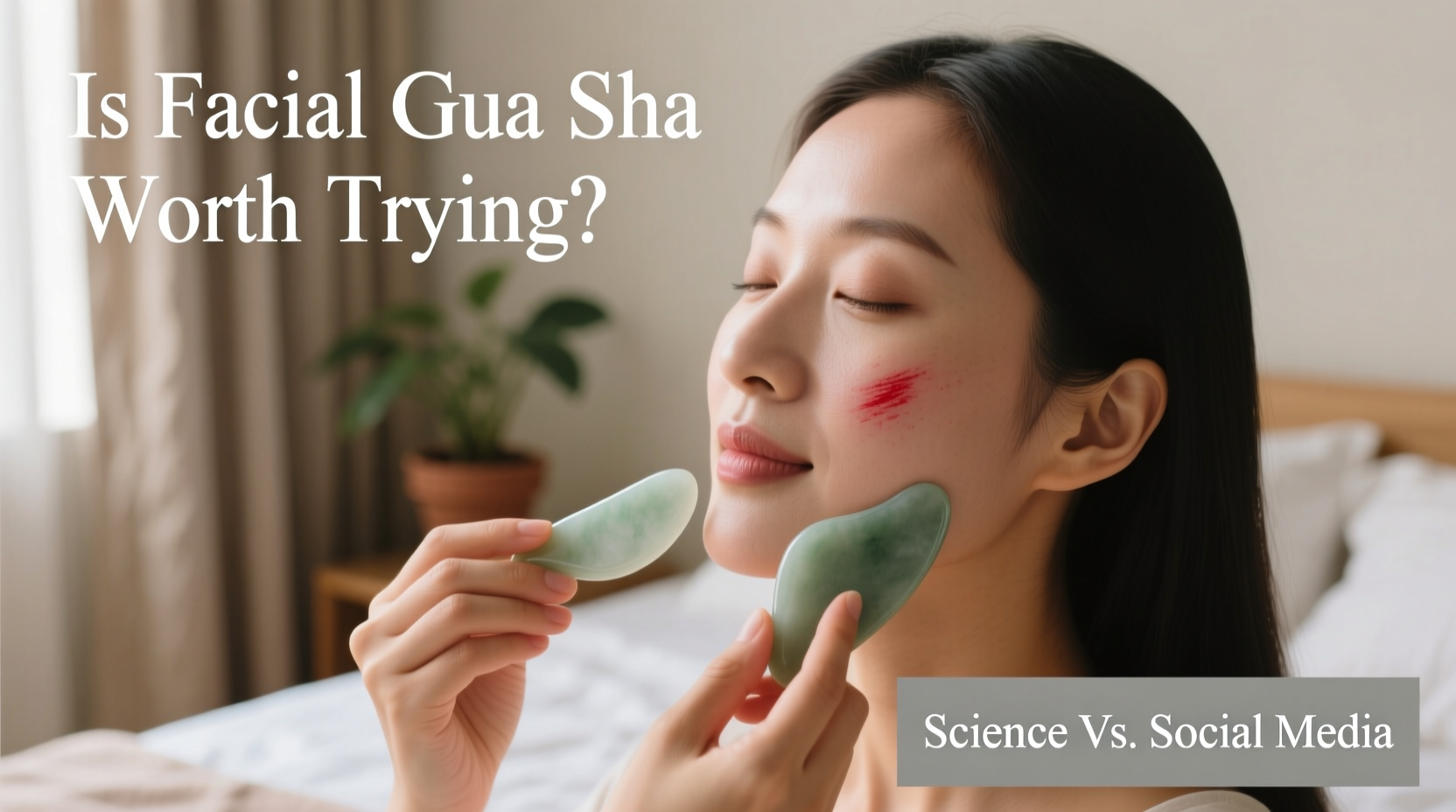
Gua sha isn’t a modern invention. It’s a traditional Chinese medicine (TCM) technique with roots stretching back centuries. Originally used on the body, gua sha involves scraping the skin with a smooth-edged tool to increase circulation, release muscle tension, and promote healing. The term “gua” means “to scrape,” and “sha” refers to the reddish petechiae—tiny dots—that appear as stagnant blood rises to the surface during treatment.
Facial gua sha evolved from this practice but adapts the method for delicate facial skin. Unlike body gua sha, which often leaves visible marks, facial versions use lighter pressure and focus on lymphatic drainage, circulation, and muscle relaxation. Practitioners believe consistent use can improve facial tone, reduce double chins, and soften fine lines.
“Gua sha is not about instant transformation—it’s about cumulative care. Like acupuncture or herbal therapy, its value lies in consistency and intention.” — Dr. Lin Mei, Licensed Acupuncturist and TCM Practitioner
While Western medicine may view some claims skeptically, the growing interest has prompted clinical exploration into its physiological effects.
What Science Says About Facial Gua Sha
Despite limited large-scale studies, emerging research supports several mechanisms behind gua sha’s potential benefits:
- Lymphatic drainage: Gentle scraping may stimulate lymph flow, reducing puffiness—especially around the eyes and jawline.
- Increased circulation: The friction and pressure boost blood flow, delivering oxygen and nutrients to skin cells.
- Muscle relaxation: Targeting facial muscles like the masseter (jaw) can relieve tension linked to clenching and grinding.
- Skin elasticity: One 2023 pilot study published in *Complementary Therapies in Clinical Practice* found improved skin firmness and hydration after four weeks of daily facial gua sha.
However, most evidence remains anecdotal or based on small trials. Dermatologists caution against overstating anti-aging effects. “There’s no proof it regenerates collagen or replaces retinoids,” says Dr. Alicia Turner, a board-certified dermatologist. “But as a complementary ritual, it can enhance product absorption and offer mild contouring through de-puffing.”
The placebo effect also plays a role. The act of self-care—touching your face mindfully, slowing down, applying oil—can reduce stress, which indirectly benefits skin health. In that sense, gua sha functions as both physical and psychological therapy.
Real Benefits vs. Overhyped Claims
Let’s separate what gua sha can realistically do from what influencers might exaggerate:
| Claim | Supported By Evidence? | Reality Check |
|---|---|---|
| Reduces facial puffiness | ✅ Yes | Stimulates lymphatic drainage; noticeable after morning use. |
| Improves skin glow | ✅ Likely | Increased blood flow gives temporary radiance. |
| Lifts sagging skin long-term | 🟡 Limited | No structural change; effects are subtle and short-lived. |
| Eliminates wrinkles | ❌ No | Cannot replace topical treatments or medical procedures. |
| Defines jawline | ✅ Temporarily | De-puffing creates visual slimming; not permanent reshaping. |
| Enhances skincare absorption | ✅ Plausible | Warming skin and opening pores may help serums penetrate better. |
The key takeaway? Facial gua sha delivers modest, immediate improvements—particularly in texture, tone, and puffiness—but it won’t replace medical-grade treatments like fillers, lasers, or prescription topicals.
A Step-by-Step Guide to Effective Facial Gua Sha
If you decide to try gua sha, technique matters more than frequency. Incorrect pressure or direction can irritate skin or stretch delicate tissues. Follow this five-minute routine for best results:
- Cleanse and prep: Start with clean skin. Apply a facial oil or serum to reduce friction. Avoid water-based products, which don’t provide enough glide.
- Warm the tool: Hold the gua sha under warm water for a few seconds. Warm tools relax muscles; cool ones reduce puffiness—choose based on your goal.
- Neck and jawline: Begin at the base of the neck, gliding upward toward the ears. Repeat 3–5 times per side to encourage lymph drainage.
- Under the chin: Place the curved edge under the chin and sweep outward along the jaw to the lymph nodes near the ears.
- Cheeks and midface: Starting from the nose, glide the tool diagonally up and out toward the temples. Avoid pulling downward.
- Forehead: Use the flat edge to sweep from the center of the forehead outward, then up toward the hairline.
- Eyes: With the smallest edge, gently trace under the orbital bone from inner to outer corners. Do not press directly on eyelids.
- Finish: Press lightly on acupressure points—like between the brows or at the temples—for 10 seconds to deepen relaxation.
Repeat each motion 3–5 times. Pressure should be firm but never painful. Redness is normal but excessive bruising is not. Perform 3–5 times per week for sustained results.
Mini Case Study: Two Months of Consistent Gua Sha
Sophie, a 38-year-old graphic designer, began using facial gua sha every morning after struggling with chronic under-eye puffiness and dull skin. She had seen influencers swear by the practice but was hesitant to invest in a jade roller alternative.
She committed to a six-week trial: five mornings a week, using a rose quartz heart-shaped tool with argan oil. She followed the step-by-step method, focusing on lymphatic drainage and avoiding harsh pressure.
After two months, Sophie reported visible changes: “My face looks less puffy by midday, especially around the jaw. My makeup sits better, and I’ve noticed fewer breakouts along my chin—maybe because I’m touching my face less throughout the day.” While she didn’t see dramatic lifting, her skin appeared brighter and felt firmer to the touch.
Her biggest surprise? The mental benefit. “It takes five minutes, but it feels like a mindfulness ritual. I start the day calmer, more present. That alone made it worth continuing.”
Choosing the Right Tool and Routine
Not all gua sha tools are created equal. Materials vary—jade, rose quartz, bian stone, stainless steel—each with different thermal properties and durability. Here’s a quick comparison:
| Material | Pros | Cons |
|---|---|---|
| Jade | Natural cooling, lightweight, traditional choice | Can chip, less precise edges |
| Rose Quartz | Durable, retains temperature well, popular for aesthetics | Heavier, may be too cold for sensitive skin |
| Bian Stone | Believed to emit far-infrared rays (unproven), authentic TCM material | Expensive, rare, limited availability |
| Stainless Steel | Hygienic, easy to clean, excellent for cold therapy | Less “natural” feel, can be slippery |
When selecting a tool, prioritize ergonomics. A well-designed shape should fit comfortably along your jaw, cheek, and brow. Avoid sharp edges or overly flat surfaces that can tug at skin.
Frequently Asked Questions
Can gua sha cause broken capillaries?
Yes—if done too aggressively. Always use light to moderate pressure. If you have rosacea or sensitive skin, consult a dermatologist before starting. Discontinue if you notice persistent redness or bruising.
How soon will I see results?
Some effects—like reduced puffiness and improved glow—are visible immediately. Structural changes, such as firmer skin, may take 4–6 weeks of consistent use. Results vary by individual.
Can I use gua sha with other treatments like microneedling or Botox?
Caution is advised. Avoid gua sha after invasive procedures until fully healed. If you’ve had Botox, wait at least two weeks and consult your provider. The manipulation could theoretically affect product distribution.
Checklist: Getting Started with Facial Gua Sha
- ☐ Choose a high-quality tool with smooth, ergonomic edges
- ☐ Pick a facial oil or serum for glide (avoid watery textures)
- ☐ Wash hands and cleanse face before beginning
- ☐ Use upward and outward motions only—never drag skin downward
- ☐ Apply gentle, consistent pressure (think “firm petting,” not scraping)
- ☐ Focus on lymphatic zones: neck, jaw, under eyes, sides of nose
- ☐ Clean the tool after each use
- ☐ Track changes weekly with photos in natural light
Conclusion: Ritual Over Hype
Facial gua sha isn’t a miracle cure, nor is it purely an Instagram illusion. It occupies a middle ground—a low-risk, potentially beneficial practice rooted in tradition and supported by modest science. Its real power may lie not in dramatic transformations, but in fostering a mindful relationship with your skin.
For those seeking subtle improvements in tone, texture, and morning puffiness, gua sha can be a worthwhile addition to a thoughtful skincare regimen. It won’t replace sunscreen, retinoids, or professional treatments, but it can complement them—while offering a moment of calm in a chaotic day.
So is it worth trying? If you approach it with realistic expectations and respect for proper technique, the answer is yes. Not because influencers say so, but because small, consistent acts of care often yield the most lasting results.




 浙公网安备
33010002000092号
浙公网安备
33010002000092号 浙B2-20120091-4
Comments
No comments yet. Why don't you start the discussion?