
Confusion between fennel and dill is common—even among experienced home cooks. Both possess a subtle anise-like aroma and appear together in Mediterranean, Middle Eastern, and Scandinavian dishes, leading many to assume they are interchangeable. They are not. While fennel and dill share a faint licorice note, they differ fundamentally in botanical origin, physical form, flavor intensity, and culinary function. Mistaking one for the other can dramatically alter the outcome of a dish. Understanding their distinctions ensures accurate seasoning, balanced flavor development, and greater confidence in the kitchen.
Fennel refers primarily to a crisp, bulbous vegetable with feathery fronds and seeds, while dill is an aromatic herb grown almost exclusively for its delicate leaves and seeds. Though both contribute brightness and complexity, their applications vary widely—from roasting and grilling to pickling and salad garnishing. This guide clarifies the essential differences, explores how each is used across global cuisines, and provides practical advice on when and how to use them correctly.
Definition & Overview: What Is Fennel?
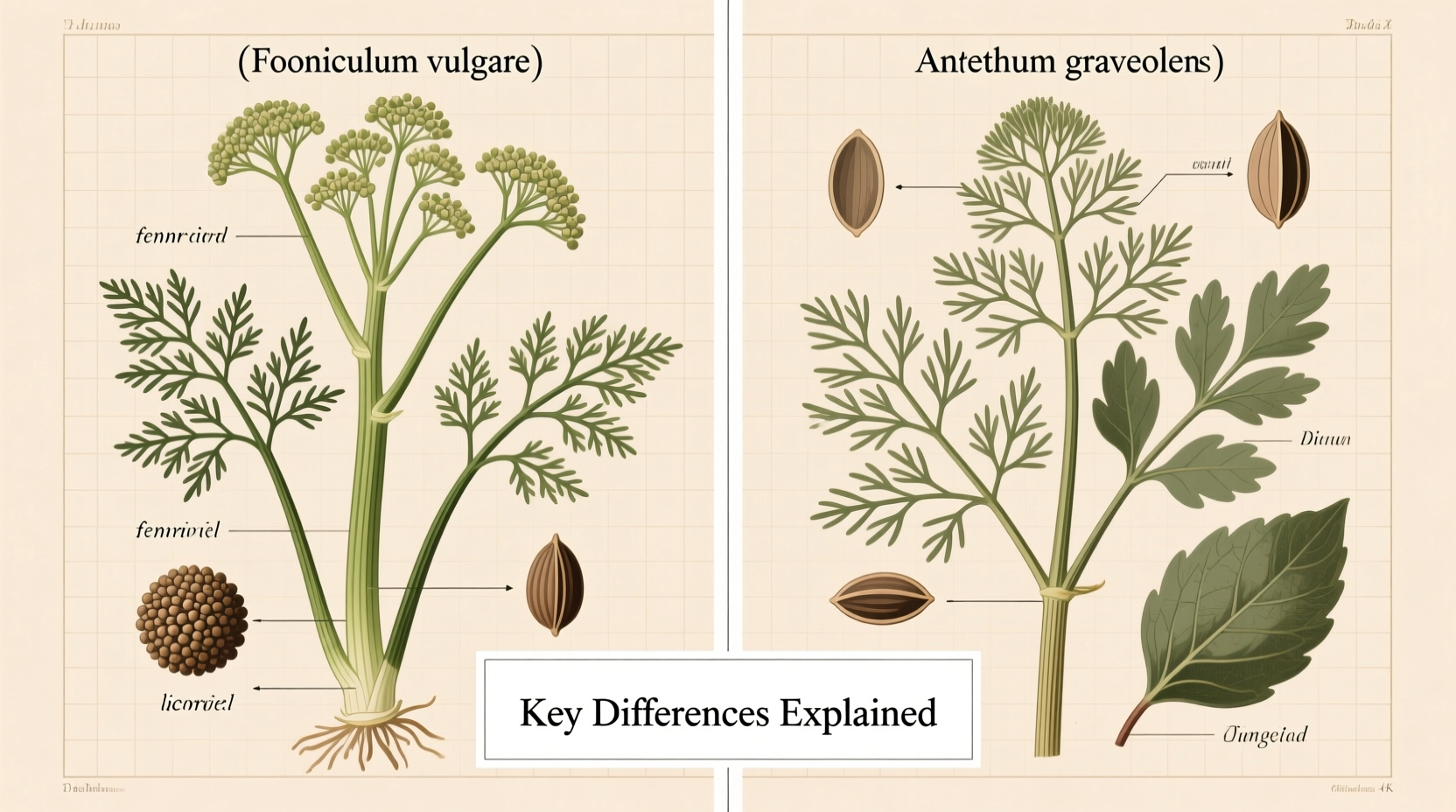
Fennel (Foeniculum vulgare) is a flowering plant in the carrot family (Apiaceae), native to the Mediterranean but now cultivated worldwide. It exists in two primary forms relevant to cooking: Florence fennel (also called bulb fennel or finocchio) and wild fennel. Florence fennel produces a swollen, white-green bulb at its base, prized for its crunchy texture and mild anise flavor. The entire plant—bulb, stalks, feathery fronds, and seeds—is edible.
Culinarily, fennel plays dual roles: as a vegetable and as a spice. The bulb is commonly roasted, sautéed, grilled, or shaved raw into salads. Fennel seeds, harvested from mature plants, are dried and used whole or ground in spice blends, charcuterie, and Indian curries. The fresh fronds resemble dill in appearance and are sometimes used as a garnish or chopped into dressings, which contributes to confusion between the two.
Definition & Overview: What Is Dill?
Dill (Anethum graveolens) is also a member of the Apiaceae family but is grown specifically as an annual herb. Unlike fennel, dill does not form an edible bulb. Instead, it develops soft, thread-like leaves (commonly labeled \"dill weed\") and flat, oval seeds. The herb thrives in cooler climates and is widely used in Eastern European, Nordic, Russian, and Middle Eastern cooking.
Dill weed imparts a grassy, slightly sweet, and tangy flavor with a faint hint of anise—more delicate than fennel’s pronounced licorice tone. It is highly perishable and best used fresh, though it can be frozen or dried with some loss of potency. Dill seeds are stronger and more pungent, often used in pickling brines (notably for dill pickles), breads, and stews. The plant's lifecycle is short; once it flowers (\"bolts\"), leaf production ceases, and seed formation begins.
Key Characteristics: A Side-by-Side Comparison
| Characteristic | Fennel (Bulb) | Fennel Fronds | Dill Weed (Leaves) | Dill Seeds |
|---|---|---|---|---|
| Flavor Profile | Crisp, sweet, mildly anise-like, with herbal undertones | Delicate, aromatic, lighter licorice note | Grassy, slightly citrusy, faint anise, tangy | Pungent, earthy, warm, moderate anise, bitter if overused |
| Aroma | Sweet, perfumed, reminiscent of star anise | Subtle, fresh, green | Bright, green, slightly sour | Strong, spicy, woody |
| Color & Texture | White to pale green bulb; firm, crunchy | Feathery, bright green, soft | Soft, lacy, bright green | Tan to olive-brown, flat, oval-shaped |
| Culinary Function | Vegetable (raw or cooked), base ingredient | Garnish, herb component, light seasoning | Fresh herb for finishing, marinating, cold dishes | Spice for pickling, baking, slow-cooked dishes |
| Heat Sensitivity | Improves with heat; mellows when cooked | Loses flavor quickly with heat; best raw | Very heat-sensitive; degrades rapidly | Withstands long cooking; ideal for simmering |
| Shelf Life (Fresh) | 7–14 days refrigerated | 3–5 days refrigerated | 5–7 days refrigerated | Years (when stored properly) |
Practical Usage: How to Use Fennel in Cooking
The fennel bulb is remarkably versatile. When raw, it adds crunch and a refreshing bite to salads. Thinly shaved fennel pairs beautifully with citrus segments, olives, and Parmesan in Mediterranean-style platters. Its natural sweetness balances bitter greens like arugula or radicchio.
When cooked, fennel undergoes a transformation. Roasting caramelizes its natural sugars, yielding a tender, savory-sweet result ideal for side dishes or grain bowls. Sautéing softens the fibers and integrates it into risottos, pasta sauces, and seafood stews. Grilled fennel develops smoky depth and works well as part of antipasto spreads or alongside grilled fish and meats.
Fennel fronds serve as a finishing herb. Chop them finely and sprinkle over soups, fish, or potato salads for a subtle aromatic lift. They can substitute for parsley or dill in moderation, though their flavor is more anise-forward. Avoid using large quantities, as the licorice note can dominate.
Pro Tip: Save fennel trimmings—core, stalks, and fronds—to make homemade vegetable stock. Their aromatic qualities enhance broths without overpowering, similar to celery but with a more nuanced profile.
Practical Usage: How to Use Dill in Cooking
Dill weed shines in uncooked or lightly heated applications. It is indispensable in cold sauces such as tzatziki, raita, and creamy dill dressing. Combine chopped dill with Greek yogurt, garlic, lemon juice, and cucumber for a refreshing dip that complements grilled meats and vegetables.
In Scandinavian cuisine, dill is central to gravlax—cured salmon seasoned with sugar, salt, and copious amounts of fresh dill. It also features in pickled herring, new potato salads, and butter-poached salmon. In Eastern Europe, dill appears in borscht, sour cream-based soups, and stuffed egg dishes.
Due to its fragility, dill should be added at the end of cooking. Prolonged heat diminishes its aroma and turns the leaves black and slimy. If incorporating into hot dishes, stir it in just before serving.
Dill seeds require a different approach. Use them in pickling spice blends—typically combined with mustard seeds, coriander, peppercorns, and bay leaves. They also enrich rye breads, lentil soups, and Indian-inspired spice mixes. Crush or toast the seeds lightly to release their volatile oils before use.
Variants & Types: Understanding Available Forms
Fennel Variants:
- Florence Fennel (Finocchio): The most common culinary type, grown for its bulb. Choose bulbs that are firm, white, and free of splitting.
- Wild Fennel: Grows naturally in Mediterranean regions. Lacks a substantial bulb but has intensely flavored fronds and seeds. Often foraged.
- Fennel Seeds: Dried fruits of the fennel plant. Used whole in Italian sausage, Indian masalas, and Chinese five-spice powder.
- Dried Fennel Fronds: Less common and less flavorful than fresh; acceptable in a pinch but lacks vibrancy.
Dill Variants:
- Fresh Dill Weed: Sold in bunches or clamshells. Look for bright green, perky fronds without yellowing or wilting.
- Dill Seeds: Harvested from bolted dill plants. Whole seeds retain flavor longer than ground.
- Dried Dill Weed: Convenient but significantly muted in flavor. Best reserved for long-simmered dishes where fresh dill isn’t feasible.
- Dill Pollen: A gourmet product—the golden dust collected from dill flowers. Highly aromatic and expensive; used sparingly as a finishing spice.
Comparison with Similar Ingredients: Fennel vs. Dill vs. Anise vs. Caraway
The confusion between fennel and dill is often compounded by their shared association with anise-like flavors. However, several plants exhibit this characteristic, each with distinct profiles:
| Ingredient | Primary Use | Flavor Intensity | Key Distinction from Fennel/Dill |
|---|---|---|---|
| Star Anise | Whole spice for braises, broths, mulled wine | Very strong, concentrated licorice | Woody, eight-pointed pod; much more potent than fennel |
| Anise Seed | Baking, liqueurs (e.g., ouzo, sambuca) | Sharper, sweeter licorice than fennel | Smaller, rounder seed; not related to the fennel plant |
| Caraway Seed | Rye bread, goulash, sauerkraut | Earthy, warm, with mild anise and citrus | Curved seed; dominant in Central European cuisine |
| Tarragon | French sauces, chicken, vinegar infusions | Moderate, sweet anise with herbal complexity | Leafy herb; no relation to fennel or dill botanically |
While tarragon and anise seed may mimic aspects of fennel’s flavor, none offer the textural contribution of the bulb or the freshness of dill’s foliage. Substitutions should be approached cautiously and contextually.
Practical Tips & FAQs
Can I substitute fennel for dill or vice versa?
Not directly. The bulb of fennel cannot replace dill weed, nor can dill seeds fully replicate fennel seeds. However, in a pinch: use a small amount of fennel frond in place of dill (expect a stronger licorice note), or use dill weed sparingly instead of fennel fronds. For seeds, fennel and dill can be interchanged in pickling, but adjust quantity—fennel seeds are sweeter, dill seeds more bitter.
How do I store fresh fennel and dill?
Wrap the fennel bulb in a damp cloth or paper towel and place in a sealed container in the crisper drawer. It will last up to two weeks. Fresh dill should be stored similarly but is more fragile—use within a week. To extend life, stand dill stems in a glass of water (like flowers) and cover loosely with a plastic bag.
Can I freeze dill or fennel?
Dill freezes well. Chop and freeze in ice cube trays with water or oil for easy portioning. Fennel bulb can be blanched and frozen but loses crispness—best used in cooked dishes later. Fennel fronds may be frozen but become limp; better dried or used fresh.
What are the best dishes to highlight each ingredient?
- Fennel Bulb: Roasted fennel with lemon and thyme, shaved fennel and orange salad, fennel gratin, Italian sausage and fennel pizza.
- Fennel Seeds: Chorizo, ras el hanout, mulled cider, spiced nuts.
- Dill Weed: Cucumber-dill soup (chaud-froid), smoked salmon tartine, Greek lemon-herb chicken, creamy pasta with peas and dill.
- Dill Seeds: Classic dill pickles, Scandinavian rye bread, lentil dal, beetroot relish.
Are fennel and dill safe for everyone?
Both are generally safe in culinary amounts. However, fennel contains estragole, a compound under study for potential carcinogenicity in very high doses (far exceeding normal consumption). Pregnant women may wish to limit excessive intake of fennel tea or extracts. Dill is considered low-risk but may interact with blood thinners due to vitamin K content. As always, consult a healthcare provider for medical concerns.
\"The difference between fennel and dill is the difference between structure and accent. Fennel builds the foundation; dill delivers the final whisper of flavor.\" — Chef Elena Maroulakos, Culinary Instructor, Athens School of Mediterranean Cooking
Summary & Key Takeaways
Fennel and dill are not the same, despite superficial similarities in appearance and a shared hint of anise. Fennel is a multi-component plant featuring a crisp, edible bulb, aromatic fronds, and sweet seeds. It functions as both vegetable and spice, capable of withstanding heat and contributing body to dishes. Dill is a delicate herb prized for its feathery leaves and pungent seeds, best used fresh and added at the end of cooking to preserve its bright, grassy character.
Understanding their differences prevents recipe mishaps and expands creative possibilities in the kitchen. Use fennel when you need texture, volume, and a mild licorice backbone. Reach for dill when finishing a dish with freshness, acidity, and aromatic lift. Their seeds, while both anise-tinged, serve distinct purposes—fennel seeds in sausages and spice rubs, dill seeds in pickling and rustic breads.
Final Advice: When in doubt, taste before adding. Sample a tiny piece of raw fennel bulb and a sprig of dill side by side. Notice how fennel is crisp and subtly sweet, while dill is softer and tangier. This simple exercise builds sensory memory and prevents future mix-ups.




 浙公网安备
33010002000092号
浙公网安备
33010002000092号 浙B2-20120091-4
Comments
No comments yet. Why don't you start the discussion?