
Fermented skincare has surged in popularity over the past few years, with products ranging from toners to serums featuring ingredients like galactomyces, bifida ferment lysate, and lactobacillus. Proponents claim these formulas are gentler, more effective, and better absorbed than traditional alternatives—especially for sensitive skin. But is that always true? With delicate skin types often reacting unpredictably, it’s crucial to separate marketing hype from dermatological reality.
This article examines the science behind fermentation in skincare, evaluates its compatibility with sensitive skin, and provides actionable guidance for those considering or already using fermented products.
The Science Behind Fermentation in Skincare
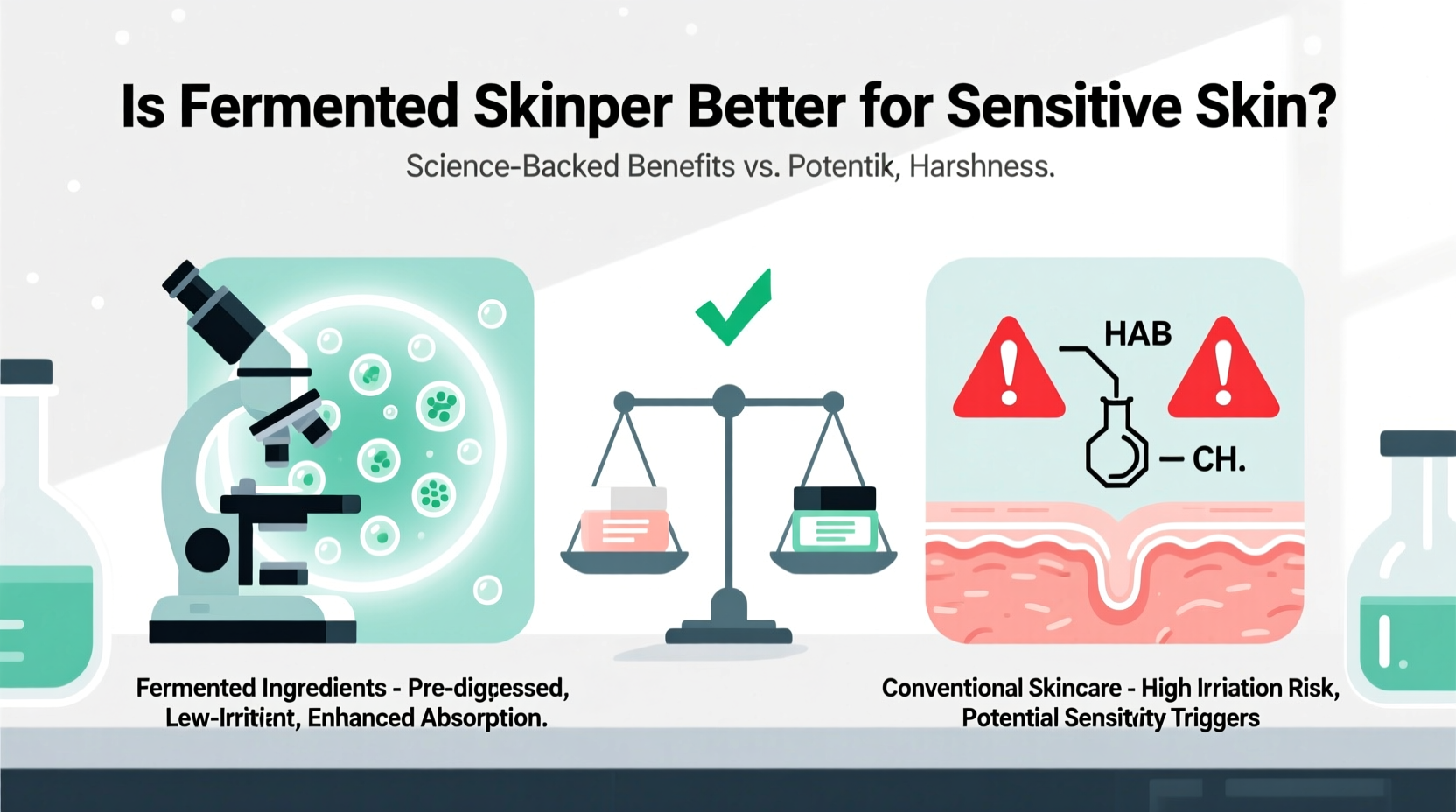
Fermentation is a biological process where microorganisms like yeast, bacteria, or fungi break down complex molecules into simpler ones. In skincare, this typically involves fermenting plant-based ingredients such as rice, soy, green tea, or mushrooms. The result? Smaller, more bioavailable compounds that can penetrate the skin more effectively.
During fermentation:
- Large proteins and carbohydrates are broken into amino acids, peptides, and organic acids.
- Nutrients become more concentrated and stable.
- New beneficial metabolites like antioxidants, enzymes, and prebiotics are formed.
These changes may enhance efficacy while reducing irritation potential—a promising combination for sensitive skin.
“Fermentation doesn’t just preserve ingredients—it transforms them. What emerges is often more potent and less likely to provoke reactions.” — Dr. Lena Park, Cosmetic Biochemist & Formulation Scientist
Why Fermented Ingredients Are Gaining Popularity for Sensitive Skin
Sensitive skin is characterized by a compromised skin barrier, leading to increased reactivity, redness, dryness, and susceptibility to environmental stressors. Traditional active ingredients (like retinoids or high-strength acids) can be too aggressive. Fermented skincare offers a potentially milder alternative.
Key benefits include:
Improved Barrier Support
Fermented extracts often contain ceramides, fatty acids, and peptides that reinforce the skin’s natural lipid barrier. A stronger barrier means fewer irritants get in and less moisture escapes.
Enhanced Microbiome Balance
Just like gut health relies on good bacteria, so does your skin. Fermented skincare introduces postbiotics—byproducts of bacterial fermentation—that nourish the skin’s microbiome. This helps maintain pH balance and reduces inflammation.
Better Absorption, Lower Irritation Risk
Because fermentation breaks down large molecules, the resulting ingredients are smaller and easier for the skin to absorb. This means lower concentrations can be effective, reducing the need for harsh solvents or high doses of actives.
When Fermented Skincare Can Be Too Harsh
Despite its reputation for gentleness, fermented skincare isn’t automatically safe for every sensitive skin type. Several factors can turn a well-intentioned product into a trigger for irritation.
Acidity Levels
Many fermented ingredients are naturally acidic due to lactic, acetic, or citric acid production during fermentation. While mild acidity supports the skin’s pH (around 4.5–5.5), some formulations may dip too low, especially if additional acids are added. Over time, this can weaken the barrier and increase sensitivity.
Potential for Allergens and Residual Components
Even after processing, trace amounts of yeast, mold, or fermentation substrates (like soy or rice) may remain. For individuals with allergies or histamine intolerance, these residues can cause flare-ups.
Overactive Formulations
Some brands combine fermented bases with strong actives (e.g., exfoliating acids, vitamin C, or retinol) under the assumption that fermentation “tames” their effects. However, layering multiple potent ingredients—even in gentle carriers—can overwhelm reactive skin.
Lack of Standardization
There’s no universal standard for how long or under what conditions fermentation should occur. One brand’s galactomyces ferment filtrate may differ significantly from another’s in potency and composition. This inconsistency makes predictability difficult for sensitive users.
“I’ve seen patients develop contact dermatitis from fermented products they assumed were ‘natural and safe.’ Just because something is biologically derived doesn’t mean it’s non-irritating.” — Dr. Amira Chen, Board-Certified Dermatologist
Comparing Fermented vs. Non-Fermented Ingredients for Sensitive Skin
| Factor | Fermented Ingredients | Non-Fermented Ingredients |
|---|---|---|
| Penetration Efficiency | Higher due to smaller molecular size | Lower; may require penetration enhancers |
| Irritation Potential | Generally lower, but varies by formulation | Can be higher, especially with raw actives |
| Stability | Often improved through fermentation | May degrade faster without preservatives |
| Microbiome Impact | Positive—supports healthy flora via postbiotics | Neutral to negative, depending on preservatives |
| Allergen Risk | Potentially higher due to residual substrates | Depends on source material, but usually clearer labeling |
| Suitability for Rosacea/Eczema | Cautious use recommended; patch test essential | Well-established options available |
How to Safely Introduce Fermented Skincare to Sensitive Skin
If you're intrigued by fermented skincare but wary of reactions, follow this step-by-step approach to minimize risk and maximize benefit.
- Identify Your Triggers: Know whether your sensitivity stems from allergies, rosacea, eczema, or general reactivity. This helps determine whether fermentation-related components (like yeast) could pose a problem.
- Read Labels Carefully: Avoid products combining fermented bases with alcohol, fragrance, essential oils, or strong exfoliants. Simpler formulas reduce variables.
- Patch Test Strategically: Apply a pea-sized amount behind the ear or on the inner forearm for five consecutive nights. If no redness, itching, or swelling occurs, proceed cautiously.
- Introduce One Product at a Time: Start with a fermented toner or essence—these are typically lighter and less occlusive. Wait at least one week before adding another new product.
- Monitor for Delayed Reactions: Some sensitivities appear after several days. Track changes in texture, tightness, or flushing.
- Adjust Frequency Based on Response: Begin using the product every other day. If tolerated, move to daily use. If irritation occurs, discontinue immediately.
Real-World Example: A Case Study in Caution
Sophia, 32, had lived with mild rosacea since her late twenties. After reading about the calming effects of fermented rice water, she purchased a popular Korean essence containing galactomyces ferment filtrate and snail mucin. Excited by early hydration improvements, she used it twice daily for two weeks.
By week three, however, she noticed persistent stinging upon application, along with increased redness across her cheeks. She consulted a dermatologist, who suspected subclinical irritation from lactic acid buildup and possible sensitivity to residual yeast proteins. Upon discontinuation, symptoms resolved within ten days.
With professional guidance, Sophia reintroduced a different fermented serum—one formulated specifically for sensitive skin, free of added acids and fragrances—and now uses it successfully every other night.
Her experience underscores a critical point: not all fermented products are created equal, and individual tolerance varies widely.
Actionable Checklist: Choosing Fermented Skincare for Sensitive Skin
- ✅ Check the full ingredient list—not just marketing claims.
- ✅ Avoid combinations of fermentation + fragrance, alcohol, or essential oils.
- ✅ Opt for products labeled “for sensitive skin” or “dermatologically tested.”
- ✅ Prioritize single-ingredient ferments (e.g., pure galactomyces) over complex blends.
- ✅ Patch test for at least five nights before facial application.
- ✅ Start with low frequency (every other day).
- ✅ Discontinue immediately if burning, itching, or redness develops.
- ✅ Consult a dermatologist if you have chronic conditions like eczema or lupus.
Frequently Asked Questions
Can fermented skincare cause breakouts or purging?
True purging (initial worsening due to accelerated cell turnover) is rare with fermented ingredients. More commonly, what appears to be purging is actually irritation or clogged pores from emollients in the formula. Ferments themselves are not comedogenic, but carrier ingredients might be.
Are there specific fermented ingredients best suited for sensitive skin?
Yes. Galactomyces ferment filtrate is widely studied and generally well-tolerated. Bifida ferment lysate (found in many probiotic serums) also shows promise for strengthening the barrier. Lactobacillus ferment is beneficial but may carry higher allergenic potential in those sensitive to dairy-derived microbes.
Do I need to refrigerate fermented skincare products?
Not necessarily. Most commercial products are stabilized and do not require refrigeration. However, storing them in a cool, dark cabinet can extend shelf life and preserve potency. Always follow label instructions.
Conclusion: Proceed with Knowledge, Not Hype
Fermented skincare holds genuine promise for sensitive skin—but only when chosen wisely. Its ability to deliver bioavailable nutrients, support the microbiome, and enhance absorption makes it a compelling option in modern dermatology. Yet, its complexity demands respect. Without careful selection and gradual introduction, even the most natural-seeming product can disrupt fragile skin balance.
The key lies in informed experimentation. Read labels, listen to your skin, and prioritize simplicity over novelty. Fermentation isn’t a magic bullet, but when aligned with your skin’s needs, it can be a powerful ally in achieving calm, resilient, and radiant skin.




 浙公网安备
33010002000092号
浙公网安备
33010002000092号 浙B2-20120091-4
Comments
No comments yet. Why don't you start the discussion?