
Microsoft’s Xbox Game Pass has reshaped how millions access video games. With a subscription model offering hundreds of titles across console, PC, and cloud, it promises convenience, variety, and cost savings. But the question remains: is Game Pass truly worth it for someone who plays casually—just a few hours a week—or is its value locked behind the habits of hardcore gamers who sink 20+ hours into new releases?
The answer isn’t binary. Game Pass delivers value differently depending on your playstyle, preferences, and expectations. For some, it's a gateway to gaming without financial risk. For others, it’s an endless library they can barely keep up with. Understanding where you fall in this spectrum is key to deciding whether the service fits your lifestyle.
How Game Pass Works: More Than Just a Library
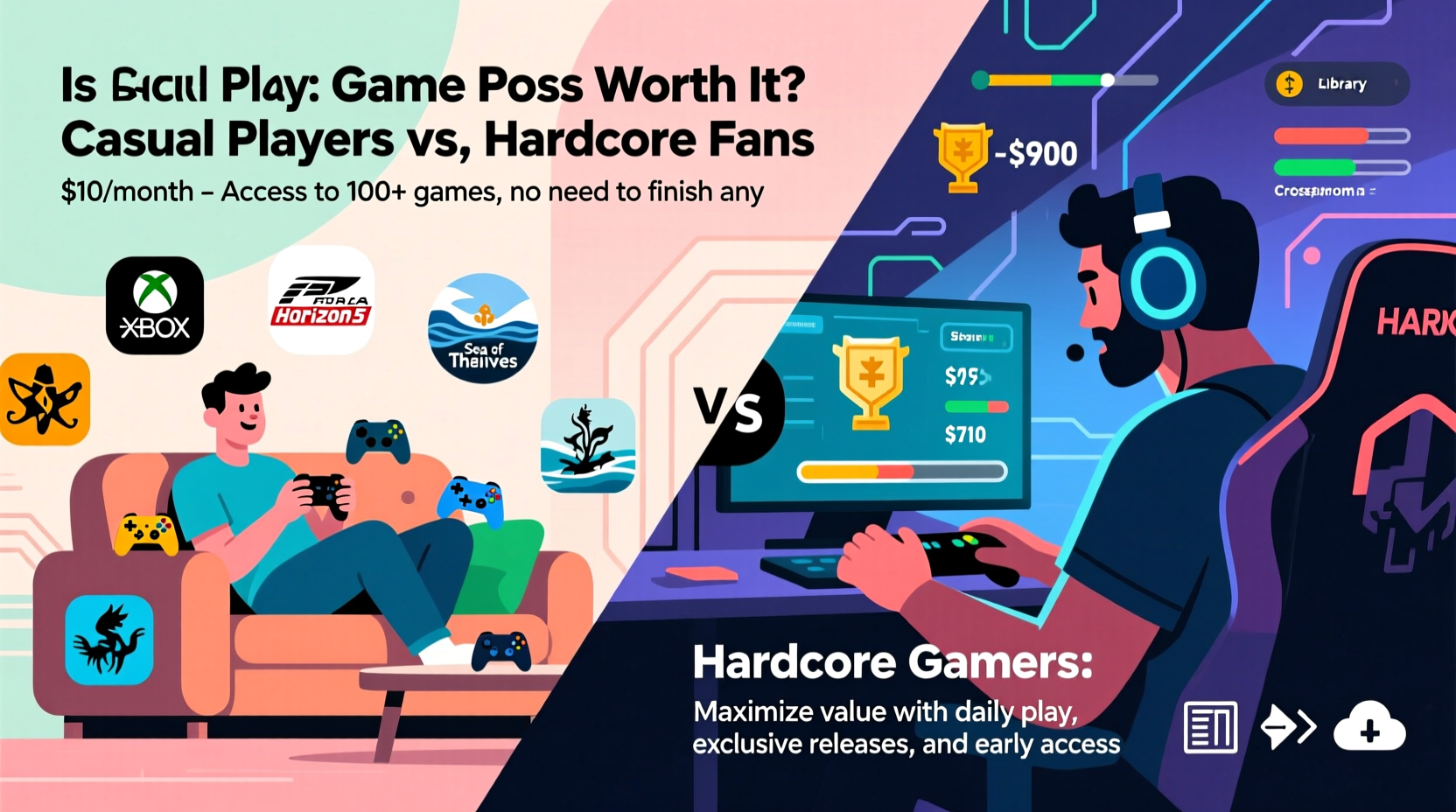
Xbox Game Pass operates on a monthly subscription model. For a flat fee—typically $9.99 for Console, $9.99 for PC, or $14.99 for Ultimate (which includes both, cloud gaming, and perks like EA Play and Xbox Live Gold)—subscribers gain access to a rotating catalog of over 400 games.
The library spans genres and generations: blockbuster exclusives like Starfield and Forza Motorsport, indie darlings such as Hades and Cult of the Lamb, backward-compatible classics, and third-party AAA titles from publishers like Ubisoft and Bethesda. New games are added regularly, often on launch day, while others rotate out after several months.
This structure creates a unique dynamic: access without ownership. You don’t buy the games; you rent access to them. This changes how value is calculated. Instead of measuring cost per game owned, subscribers should consider cost per hour played, diversity of experience, and opportunity to explore without commitment.
Value for Casual Players: Less Time, Same Access
Casual gamers typically play 1–5 hours per week, often in short bursts. They may prefer story-driven experiences, puzzle games, or relaxing simulations over competitive multiplayer or grind-heavy RPGs. The concern for this group is simple: can you justify $10–$15 a month if you’re not playing daily?
The answer hinges on utilization. Even limited playtime can yield high value if the games align with your tastes. Consider a player who downloads Outer Wilds and spends three evenings unraveling its mysteries—roughly 6–8 hours total. If that experience would have cost $25 to purchase outright, the single title nearly covers two months of Game Pass Ultimate.
Moreover, Game Pass reduces decision fatigue. Browsing a curated, ad-free library beats scrolling through sales on Steam or console stores. For someone who plays infrequently, the ability to try something new each weekend—without buyer’s remorse—is a quiet advantage.
The Trial Advantage
One underrated benefit for casual players is the ability to test-drive games before investing time or money. Many assume Game Pass is only valuable if you finish multiple full-length titles. But even sampling a demo-like portion of a game—say, the first five hours of Alan Wake 2—can be worthwhile. You learn whether a game suits your taste without spending $70.
This trial function turns Game Pass into a personal “gaming lab.” Want to see what all the hype is about with Palworld? Download it. Curious about survival crafting? Try Valheim. No obligation, no refund windows, no storage concerns.
Hardcore Gamers: Maximizing the Investment
Hardcore players—who average 15+ hours weekly—naturally extract more utility from Game Pass. Their volume of play allows them to cycle through multiple titles, complete seasonal events, and take full advantage of early access perks.
For these users, Game Pass functions like a premium entertainment package. It replaces the need to pre-order every new release or wait for deep discounts. Launch-day access to first-party Microsoft titles (Sea of Thieves, Hi-Fi Rush) alone can justify the subscription cost for loyal Xbox fans.
Additionally, hardcore players often engage with community-driven content—speedruns, modding, co-op campaigns—that benefits from shared access. When friends are playing Grounded or It Takes Two, being able to jump in instantly strengthens social gameplay.
“Game Pass levels the playing field. You don’t need to spend $600 a year on games to stay current. For passionate players, it’s one of the best values in entertainment.” — David Luepschen, Gaming Industry Analyst at NichePlay Insights
The Completionist Trap
Yet even among dedicated players, there’s a psychological downside: the pressure to “get your money’s worth” by finishing every game. This mindset leads to burnout and shallow engagement. Studies show that players who feel obligated to consume content report lower satisfaction than those who play freely.
Game Pass works best when treated as a buffet, not a homework assignment. You wouldn’t eat every dish at an all-you-can-eat restaurant just because you paid for it. Similarly, downloading ten games and abandoning most is not failure—it’s curation.
Comparing Cost: Ownership vs. Subscription
To determine true value, compare Game Pass against traditional purchasing habits. Below is a simplified breakdown based on average gamer behavior.
| Player Type | Avg. Games Bought/Year | Cost (Owned) | Game Pass Equivalent | Net Savings |
|---|---|---|---|---|
| Casual | 3 games | $150 | $120/year (PC) | $30 (break-even with flexibility) |
| Semi-Regular | 6 games | $300 | $180/year (Console) | $120 saved |
| Hardcore | 10+ games | $500+ | $180/year (Ultimate) | $320+ saved |
| Non-Buyer (Only Plays Free-to-Play) | 0 | $0 | $180/year | $180 spent—but gains access to premium titles |
Note that savings aren’t the only metric. Access to exclusives, same-day launches, and cloud gaming adds intangible value. A casual player who watches friends play Fable but can’t join due to cost might find social inclusion worth the fee—even if they only play once a month.
Real-World Example: Sarah’s Game Pass Journey
Sarah, a 34-year-old graphic designer, plays games during weekends and occasional weeknights. She averages 3–4 hours weekly. Before Game Pass, she bought one or two full-price games a year—usually holiday gifts or Black Friday deals.
After a free month trial, she subscribed to Game Pass PC. Over six months, she played:
- Before Your Eyes – 2 hours, emotional narrative
- Unpacking – 3 hours, relaxing puzzle game
- Wylde Flowers – 8 hours, cozy farming sim
- As Dusk Falls – 6 hours, branching story
She didn’t finish everything, but each experience was meaningful. The total retail cost of these games: ~$80. Her Game Pass cost: ~$60. More importantly, she discovered genres she now loves—narrative adventures and life sims—that she might never have tried otherwise.
For Sarah, Game Pass wasn’t about quantity. It was about quality of discovery. And that made it worth every dollar.
Optimizing Game Pass: A Practical Checklist
Whether you play daily or occasionally, use this checklist to maximize your subscription:
- ✅ Set up parental controls or usage limits if sharing with family
- ✅ Enable automatic updates during off-peak hours to save bandwidth
- ✅ Bookmark games you’re interested in using the in-app wishlist
- ✅ Check the “Leaving Soon” section weekly to catch departing titles
- ✅ Use cloud gaming to preview games before downloading
- ✅ Sync achievements across devices with Xbox Live account
- ✅ Take advantage of member discounts (up to 20% off purchases)
- ✅ Pair with Game Pass Family Pack for up to five users ($24.99/month)
When Game Pass Isn’t Worth It
Despite its strengths, Game Pass isn’t ideal for everyone. Here are scenarios where it may not deliver value:
- You only play one genre—e.g., exclusively retro platformers or mobile puzzle games not on the service.
- You prefer physical collections—owning discs, displaying cases, and preserving legacy games matters more than access.
- You rarely play—if you go months without gaming, the subscription becomes passive spending.
- You rely on non-Xbox ecosystems—Nintendo-only or PlayStation-focused players won’t benefit unless cross-play titles appeal to them.
- You dislike uncertainty—knowing games rotate out can cause anxiety about losing progress or missing out.
In these cases, selective purchasing during sales (Steam, Epic, PlayStation Store) or free-to-play platforms may offer better alignment with your habits.
FAQ: Common Questions About Game Pass Value
Can I play Game Pass games offline?
Yes. On console and PC, downloaded titles can be played offline for up to 30 days. After that, you must reconnect to verify your subscription. Cloud gaming requires constant internet.
Do games leave Game Pass permanently?
Some do, but many return later. Publishers control availability. Occasionally, removed games go on sale at steep discounts for subscribers—making it easy to buy and keep what you love.
Is Game Pass cheaper than buying games individually?
Statistically, yes—for anyone playing more than 2–3 games per year. Even casual players break even by accessing mid-tier titles and exclusives. The more you play, the greater the savings.
Final Verdict: Who Should Subscribe?
Game Pass is not exclusively for hardcore fans. Its real power lies in lowering barriers to entry and expanding horizons. Casual players benefit from low-risk exploration, emotional storytelling, and weekend diversions. Hardcore gamers enjoy volume, immediacy, and community access.
The service excels when viewed as a tool for discovery rather than a box to check. You don’t need to “beat” games to win. Simply experiencing them—fully or partially—is enough.
If you’ve ever hesitated before buying a $70 game, wondered what the latest buzz is about, or wanted to revisit classic RPGs without cluttering your hard drive, Game Pass offers a smarter, more flexible path.




 浙公网安备
33010002000092号
浙公网安备
33010002000092号 浙B2-20120091-4
Comments
No comments yet. Why don't you start the discussion?