
In 2025, the perm is not just making a comeback—it’s undergoing a quiet revolution. Once associated with frizz, overprocessing, and dated styles, modern perms have evolved into a sophisticated, customizable hair treatment that can enhance texture, volume, and manageability. With new formulas, gentler chemicals, and precision application methods, today’s perms are far removed from their 1980s predecessors. But is it still a smart choice for your hair goals this year? The answer depends on your hair type, lifestyle, and expectations—and understanding what modern perming really offers.
This guide breaks down the latest advancements in perm technology, explains who benefits most, and outlines how to protect your investment. Whether you're looking for soft waves, defined curls, or low-maintenance volume, the 2025 perm might be worth considering—if approached with care and knowledge.
The Evolution of Perms: From Acid Waves to Digital Styling
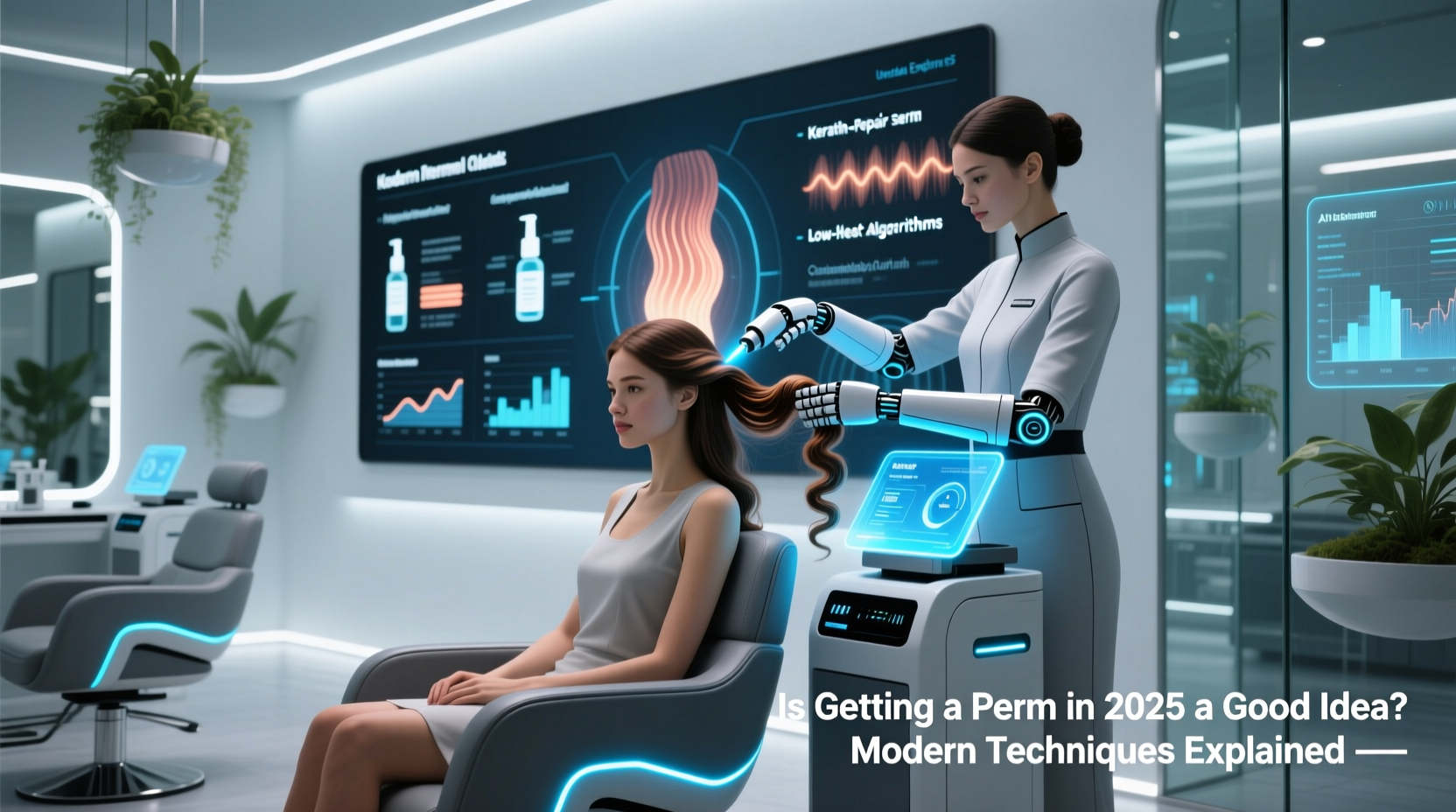
Perms have existed in some form since the early 20th century, but the versions most people remember—tight ringlets and brittle ends—stem from older chemical processes that relied heavily on ammonium thioglycolate and high heat. These formulations often disrupted the hair’s natural protein structure, leading to long-term damage, especially when repeated or improperly applied.
Fast forward to 2025, and the industry has shifted toward gentler, more intelligent solutions. Today’s perms use advanced alkaline and acid-balanced systems, digital curl mapping, and pH-controlled processing times. These innovations allow stylists to tailor the treatment to individual hair porosity, thickness, and curl pattern goals.
One major breakthrough is the rise of “digital perms,” which originated in East Asia but are now gaining traction globally. Unlike traditional perms that set curls while the hair is wet, digital perms use heated rods and computer-regulated temperature settings to create soft, bouncy waves that look natural and last longer. This method is particularly effective for straight or resistant hair types seeking body without daily styling.
Modern Perm Techniques You Should Know in 2025
Not all perms are created equal. In fact, the term “perm” now covers a wide range of treatments, each designed for specific results. Here’s a breakdown of the most popular options available today:
- Alkaline Perm (Cold Wave): Best for coarse or thick hair. Uses a higher pH solution to open the cuticle and reshape the cortex. Delivers firm, lasting curls but requires proper aftercare.
- Acid Perm: Gentler than alkaline, ideal for fine or damaged hair. Works slowly at room temperature, producing softer, more natural-looking waves with less risk of breakage.
- Digital Perm: Uses heated rods and precise timing to create voluminous roots and loose waves at the ends. Popular for shoulder-length cuts and layered styles.
- Exothermic Perm: A newer hybrid that generates its own heat during processing, reducing reliance on external tools. Offers consistent curl formation with reduced processing time.
- Bio-Ionic Perm: Infuses conditioning agents like keratin and argan oil into the perm solution. Designed to strengthen hair during the process, minimizing dryness.
These techniques reflect a broader trend: personalization. Salons now conduct strand tests, assess scalp sensitivity, and even use AI-assisted imaging to predict how curls will fall based on face shape and hair density.
“Today’s best perms aren’t about forcing hair into a mold—they’re about enhancing what’s already there.” — Lila Chen, Master Colorist & Texture Specialist, London Salon Collective
Who Benefits Most from a 2025 Perm?
A perm isn’t a one-size-fits-all solution. However, certain hair types and lifestyles stand to gain significantly from modern perming technology.
| Hair Type | Recommended Perm | Expected Result |
|---|---|---|
| Fine, flat hair | Acid or Bio-Ionic | Soft volume, improved body without stiffness |
| Thick, straight hair | Alkaline or Digital | Defined curls, reduced blow-dry time |
| Wavy, frizz-prone hair | Bio-Ionic or Exothermic | Smoothing effect with enhanced definition |
| Chemically treated or colored hair | Low-pH Acid Perm | Texture boost with minimal further damage |
Additionally, busy professionals, parents, and those with mobility challenges often find perms life-changing. Waking up with styled, ready-to-go hair eliminates hours of weekly maintenance. For individuals embracing natural textures or transitioning away from heat styling, a perm can offer confidence and consistency.
Real Example: Sarah’s Low-Maintenance Transformation
Sarah, a 34-year-old nurse in Toronto, spent nearly a decade straightening her thick, wavy hair every morning before shifts. After years of heat damage and split ends, she consulted a specialist about a digital perm. Her goal wasn’t tight curls but effortless movement and volume.
After a consultation and strand test, her stylist applied a digital perm focusing on the mid-lengths to ends, preserving root smoothness. The result? Soft, beachy waves that required only air-drying and a dab of curl cream. Six months later, Sarah reports spending 70% less time on her hair and experiencing fewer breakages thanks to reduced heat exposure.
“It wasn’t about chasing a trend,” she says. “It was about reclaiming time and treating my hair better. I wish I’d done it sooner.”
Step-by-Step Guide: Getting a Safe, Long-Lasting Perm in 2025
To ensure optimal results and minimize risks, follow this professional timeline when considering a perm:
- Consultation (1–2 weeks before): Book a session with a licensed stylist experienced in chemical texturizing. Discuss your hair history, including color treatments, previous perms, and any sensitivities.
- Strand Test (Day of appointment): A small section of hair is processed to evaluate reaction time, curl formation, and potential damage. Never skip this step.
- Clean & Condition (Pre-Perm): Arrive with clean, product-free hair. Some salons recommend using a clarifying shampoo 24 hours prior to remove buildup.
- Rod Placement & Processing: Rods are selected based on desired curl size and tension. Processing time varies (20–60 minutes), depending on technique and hair resistance.
- Neutralizing & Rinse: The stylist applies a neutralizer to lock in the new shape. Hair is rinsed thoroughly with cool water to seal the cuticle.
- Post-Treatment Conditioning: A deep conditioning mask or protein treatment is applied to restore moisture and strength.
- At-Home Care Plan: Follow salon instructions strictly for the first 48–72 hours—no washing, tying back, or heat styling.
Do’s and Don’ts of Perm Aftercare
Your perm’s longevity hinges on what you do after leaving the salon. Follow this essential checklist to protect your curls:
| Do’s | Don’ts |
|---|---|
| Use sulfate-free, curl-friendly shampoos | Wash hair daily—overwashing strips natural oils |
| Apply leave-in conditioner or curl serum regularly | Scrunch hair aggressively with a towel—use a microfiber cloth instead |
| Sleep on a silk pillowcase or use a satin bonnet | Use hot tools without heat protectant |
| Get trims every 8–10 weeks to prevent split ends | Brush curls when dry—use fingers or a wide-tooth comb when wet |
| Refresh curls with a spray-in mousse or sea salt spray | Ignore signs of dryness or brittleness—act early |
FAQ: Common Questions About 2025 Perms
How long does a modern perm last?
Most perms last between 3 to 6 months, depending on hair growth rate, aftercare, and technique used. Root-focused digital perms may show regrowth faster, while full-head acid perms tend to fade gradually.
Can I get a perm if my hair is colored?
Yes, but timing matters. If you’ve recently lightened your hair, wait at least two weeks before perming. For permanent dyes, consult your stylist—some pigments can interact unpredictably with perm solutions.
Are perms safe for thinning or fragile hair?
Proceed with caution. While gentler formulas exist, any chemical process stresses the hair. If you’re experiencing hair loss or breakage, consider a non-chemical alternative like heatless curling or a keratin-infused texturizing treatment first.
Final Checklist Before Booking Your Perm
- ✅ Research salons with certified texture specialists
- ✅ Review before-and-after photos of actual clients
- ✅ Confirm they perform strand tests
- ✅ Disclose all previous chemical treatments
- ✅ Understand the aftercare routine and product recommendations
- ✅ Schedule the appointment during a low-stress week (avoid weddings or travel immediately after)
Conclusion: Is a 2025 Perm Worth It?
The perm of 2025 is no longer a gamble. Backed by science, customization, and a growing emphasis on hair health, it has transformed into a legitimate tool for self-expression and practicality. For those seeking enduring texture, reduced styling time, and renewed confidence in their natural flow, a well-executed perm can be a powerful investment.
But success hinges on informed choices. Choose a skilled stylist, understand your hair’s needs, and commit to proper maintenance. When done right, a modern perm doesn’t just change your look—it simplifies your life.




 浙公网安备
33010002000092号
浙公网安备
33010002000092号 浙B2-20120091-4
Comments
No comments yet. Why don't you start the discussion?