
In 2024, comparing a modern Google Pixel to an iPhone 7 Plus might seem like pitting a sports car against a vintage sedan. But for users clinging to older devices or considering budget upgrades, the question remains relevant: Is a current-generation Pixel truly better than Apple’s once-flagship 7 Plus? The answer isn’t just about specs—it hinges on real-world performance, software longevity, security, and user experience.
The iPhone 7 Plus launched in 2016 with impressive hardware for its time—dual cameras, water resistance, and solid build quality. Fast forward to 2024, and while some users still rely on it, Apple ended major iOS updates for the device with iOS 16. Meanwhile, Google continues releasing new Pixel models annually, each backed by guaranteed Android updates, AI-driven features, and long-term support. So how do they stack up today?
Performance and Hardware: A Generation Gap
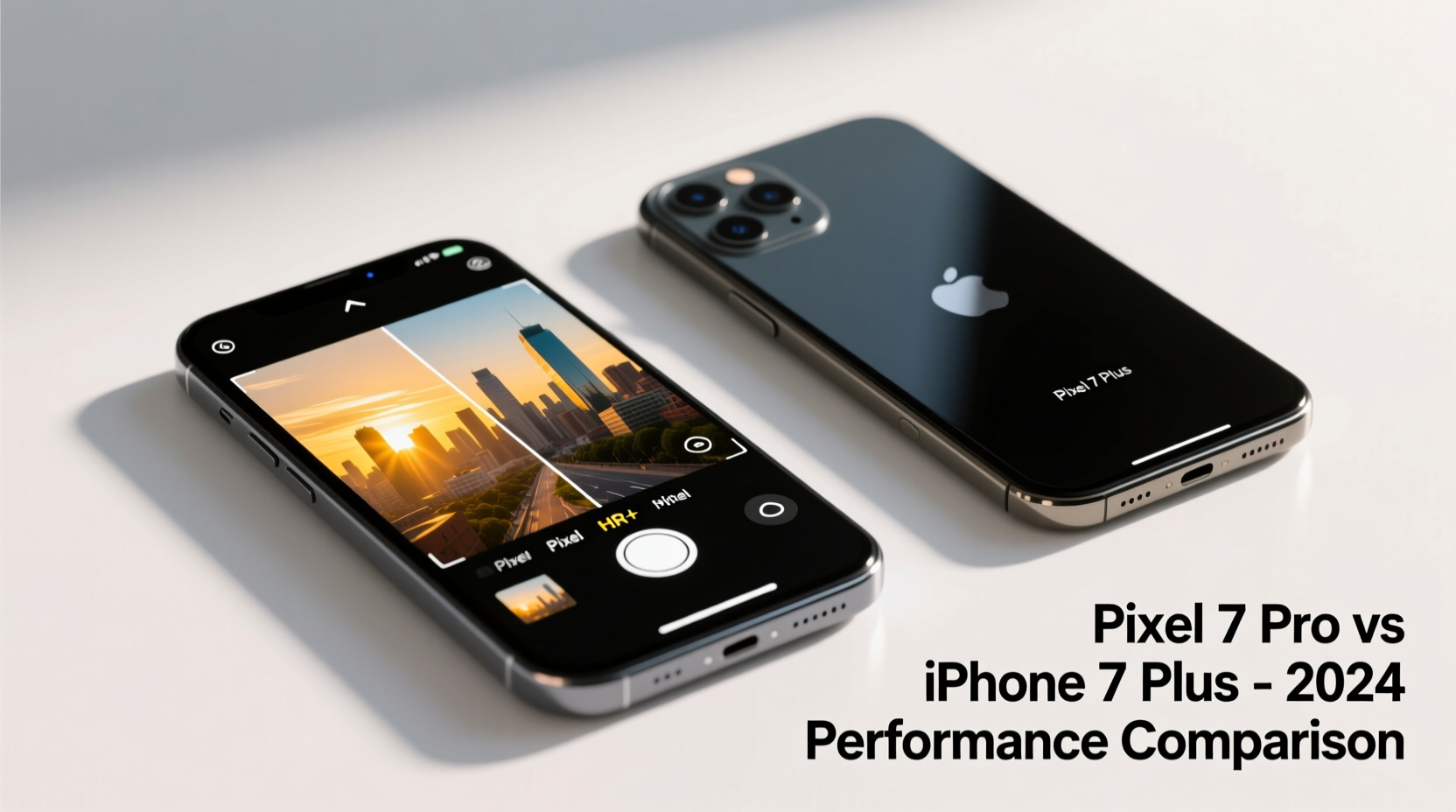
The most immediate difference lies in processing power. The iPhone 7 Plus runs on Apple’s A10 Fusion chip—a 64-bit quad-core processor that was groundbreaking in 2016. At the time, it outperformed nearly every Android competitor. However, even optimized iOS software can’t mask the limitations of aging silicon in 2024.
Modern Google Pixel phones (e.g., Pixel 8 or Pixel 7a) use Google’s Tensor G3 or G2 chips—custom-designed for machine learning, AI photography, and efficient multitasking. These processors are built for contemporary workloads: high-resolution video editing, real-time language translation, advanced voice assistants, and seamless app switching.
On benchmarks alone, a mid-tier 2024 Pixel outpaces the iPhone 7 Plus by over 300% in CPU performance and more than 500% in GPU tasks. Real-world usage reflects this: apps launch instantly on Pixels, while the 7 Plus often stutters or reloads background apps repeatedly.
Software and Security: Where the Divide Widens
Software support is where the gap becomes critical. Apple stopped delivering major iOS updates to the iPhone 7 Plus after iOS 16, released in 2022. That means no access to newer features like StandBy mode, improved Focus filters, or enhanced privacy tools in iOS 17 and beyond. More importantly, security patches have also ceased.
Google, on the other hand, guarantees at least five years of OS and security updates for recent Pixel devices. This ensures protection against emerging threats, compatibility with updated apps, and continued functionality of essential services like banking, messaging, and cloud sync.
“Security isn’t optional after 2023. Devices without regular patches are vulnerable to data theft and malware.” — Dr. Lena Torres, Mobile Security Analyst at CyberShield Labs
Even if the iPhone 7 Plus still turns on, many modern apps either won’t install or will run poorly due to minimum OS requirements. For example, newer versions of WhatsApp, Instagram, and Google Maps require iOS 15 or higher—cutting off the 7 Plus from full functionality.
Camera Comparison: Computational Photography vs. Legacy Optics
The iPhone 7 Plus featured a dual 12MP rear system—one wide, one telephoto—with optical zoom and Portrait Mode introduced later via software. In its prime, it delivered excellent color accuracy and depth effects.
Today’s Pixels leverage computational photography to achieve superior results. Night Sight, Magic Eraser, Photo Unblur, and HDR+ with AI subject detection allow Pixels to capture usable images in near-darkness, remove photobombers automatically, and restore blurry shots—all features unimaginable in 2016.
| Feature | iPhone 7 Plus (2016) | Google Pixel 8 (2024) |
|---|---|---|
| Main Sensor | 12MP f/1.8 | 50MP f/1.65 |
| Night Mode | No | Yes, with astrophotography |
| Zoom Quality | 2x optical, poor digital | 5x Super Res Zoom, 7x clipped |
| AI Enhancements | None | Face unblur, auto retouch, erase motion |
| Video Recording | 4K@30fps | 4K@60fps with cinematic blur |
In side-by-side tests under low light, the Pixel captures significantly more detail, dynamic range, and accurate colors. The iPhone 7 Plus tends to produce grainy, oversaturated, or underexposed images in similar conditions.
Real-World Example: Maria’s Upgrade Journey
Maria, a freelance photographer based in Portland, used her iPhone 7 Plus for eight years. She appreciated its durability and familiar interface but began noticing issues in late 2023: slow iCloud uploads, crashes in Lightroom, and inability to export videos in modern formats.
After switching to a Pixel 7a, she found her workflow transformed. RAW photo processing became instant, Google Photos’ search-by-object worked flawlessly, and she could edit 4K footage directly on-device. “It’s not just faster,” she said. “It feels like my phone understands what I’m trying to do.”
Her old iPhone couldn’t even install the latest version of Adobe Express, limiting her social media output. The Pixel, despite being a mid-range model, handled all her creative apps with ease.
Battery Life and Charging: Efficiency Meets Modern Standards
The iPhone 7 Plus had a 2900mAh battery—modest by today’s standards. With iOS 16 optimizations, it could last a day for light users in 2023, but by 2024, battery degradation affects nearly all units. Replacement batteries help, but charging remains limited to 5W via USB-A unless using third-party accessories.
Newer Pixels offer larger batteries (typically 4,000–5,000mAh), adaptive battery management powered by AI, and faster charging (up to 30W). They also support wireless and reverse charging—features absent from the 7 Plus entirely.
- Average screen-on time (2024): iPhone 7 Plus ≈ 3–4 hours | Pixel 8 ≈ 8–10 hours
- Charging speed: 0–50% in ~30 min (Pixel) vs. ~2 hours (iPhone 7 Plus)
- Battery health algorithms actively learn usage patterns on Pixels
Checklist: Should You Keep Using an iPhone 7 Plus in 2024?
Use this checklist to evaluate whether upgrading makes sense:
- ✅ Does your phone receive security updates? (No for iPhone 7 Plus)
- ✅ Can you install the latest versions of essential apps? (Many deny installation)
- ✅ Does the camera perform well in low light? (Limited capability)
- ✅ Is battery life sufficient for a full day? (Rarely, without degradation)
- ✅ Do you need features like Face ID, dark mode, or modern multitasking? (Unavailable)
- ✅ Are you comfortable with potential data vulnerability? (High risk without patches)
If three or more answers are “no,” upgrading is strongly advised.
Frequently Asked Questions
Can the iPhone 7 Plus still be used safely in 2024?
Technically yes, but not securely. Without security updates, it’s vulnerable to phishing, malware, and exploits in outdated browser engines. Avoid entering passwords or using financial apps on it.
Is a Google Pixel worth it for someone coming from an iPhone?
Absolutely. While the transition involves adjusting to Android, Pixels offer seamless integration with Gmail, Google Drive, and YouTube. Features like Call Screen, Now Playing, and Live Translate provide unique advantages over iOS.
Are there any reasons to stick with the iPhone 7 Plus?
Only if you use it as a secondary device, music player, or emergency phone. For daily driving, communication, or internet use, it’s functionally obsolete.
Conclusion: The Verdict in 2024
The Google Pixel is not just slightly better than the iPhone 7 Plus in 2024—it operates in an entirely different technological era. From processing power and camera intelligence to software support and security, modern Pixels deliver a safer, faster, and more capable experience.
The iPhone 7 Plus was a landmark device in its time, but technology moves quickly. Holding onto outdated hardware risks your productivity, privacy, and digital experience. Whether you choose a Pixel 8, Pixel 7a, or another modern smartphone, upgrading isn’t just about new features—it’s about staying connected, protected, and empowered in today’s mobile-first world.




 浙公网安备
33010002000092号
浙公网安备
33010002000092号 浙B2-20120091-4
Comments
No comments yet. Why don't you start the discussion?