
In recent years, grain-free dog food has surged in popularity, driven by marketing claims that it's more “natural” or “ancestral” for canines. Many pet owners have switched their dogs to grain-free diets believing they offer superior nutrition, especially for pets with sensitivities. However, a growing body of evidence and regulatory warnings suggest a potential link between grain-free diets and an increased risk of dilated cardiomyopathy (DCM), a serious heart condition in dogs. This article examines both sides of the debate, evaluates scientific findings, and provides actionable guidance for pet owners navigating this complex issue.
The Rise of Grain-Free Diets
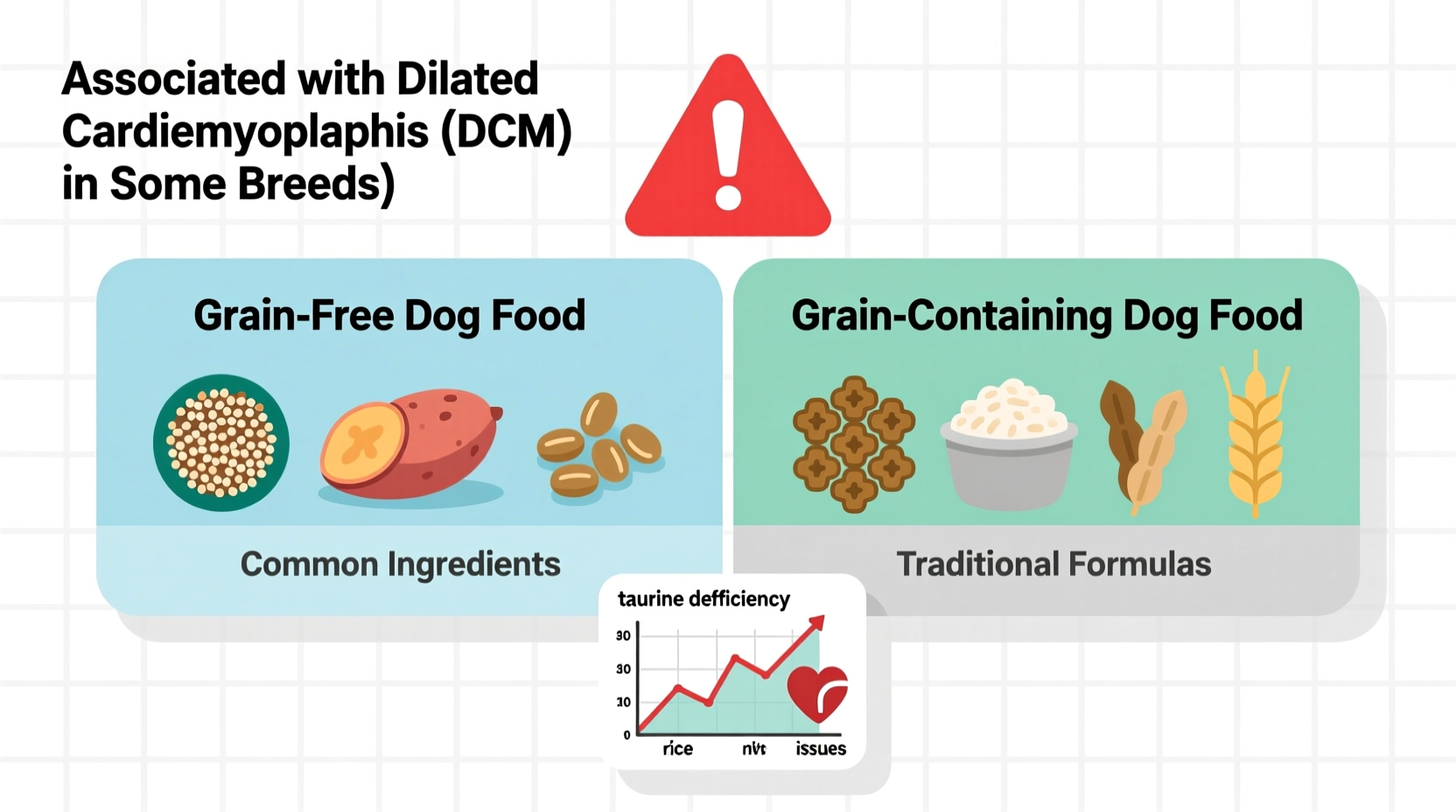
Grain-free dog foods emerged as part of a broader human trend toward gluten-free and paleo-style eating. Pet food manufacturers capitalized on this shift, promoting grain-free formulas as healthier alternatives—free from corn, wheat, and soy, which some believe are common allergens. These diets often replace grains with legumes (like peas and lentils), potatoes, and other starch-rich plant ingredients.
For some dogs with confirmed grain allergies—a rare condition—removing grains may provide relief. However, true grain allergies affect less than 5% of dogs. Most food-related sensitivities in pets stem from animal proteins like beef or dairy, not grains. Despite this, grain-free sales grew rapidly, making up nearly 40% of the premium dog food market by 2020.
The FDA Investigation and DCM Concerns
In 2018, the U.S. Food and Drug Administration (FDA) began investigating a potential link between certain grain-free dog foods and canine dilated cardiomyopathy (DCM). DCM is a disease of the heart muscle that leads to enlarged chambers and reduced pumping efficiency, often resulting in congestive heart failure.
Historically, DCM was primarily seen in large-breed dogs like Doberman Pinschers and Great Danes and was considered largely genetic. But the FDA noticed an unusual increase in DCM cases among breeds not typically predisposed, such as Golden Retrievers and Whippets—all of which were consuming grain-free diets high in legumes and potatoes.
As of 2023, the FDA had collected over 1,100 reports of DCM in dogs linked to specific diets. While no definitive cause has been proven, the agency identified a pattern: many affected dogs ate foods where legumes made up the first several ingredients, sometimes comprising more than 30% of the formula.
“While we haven’t concluded that grain-free diets cause DCM, the statistical association between certain formulations and non-hereditary DCM is too strong to ignore.” — Dr. Susan Baker, Veterinary Nutritionist, FDA Center for Veterinary Medicine
Why Might Grain-Free Foods Pose a Risk?
The exact mechanism connecting grain-free diets to heart disease remains under investigation, but several theories are being explored:
- Taurine Deficiency: Taurine is an amino acid essential for heart function. Dogs can synthesize taurine from other amino acids, but some researchers believe that legume-heavy diets may interfere with this process. Certain breeds, including Cocker Spaniels and Newfoundlands, are particularly susceptible to taurine deficiency-induced DCM.
- Anti-Nutritional Factors: Legumes contain compounds like phytates and lectins that may reduce nutrient absorption, potentially affecting cardiac metabolism.
- Dietary Imbalance: High levels of plant-based proteins and starches may alter gut microbiota or metabolic pathways involved in heart health.
- Processing Effects: Some hypothesize that processing methods used in grain-free kibble could degrade key nutrients or create harmful byproducts.
It's important to note that not all grain-free foods carry the same risk. The concern centers on formulations where legumes and potatoes dominate the ingredient list, often marketed as “high-protein” despite deriving much of their protein from plants rather than meat.
Are Grain-Free Diets Ever Beneficial?
Yes—but only in specific circumstances. For dogs with diagnosed grain allergies (confirmed via veterinary testing), a grain-free diet may be medically necessary. Symptoms include chronic ear infections, gastrointestinal upset, and skin irritation that improve when grains are eliminated.
Additionally, some raw or fresh food diets use grain-free bases to align with a whole-food philosophy. When properly balanced by a veterinary nutritionist, these can be healthy options.
However, for the vast majority of dogs, there is no proven benefit to avoiding grains. In fact, whole grains like brown rice, barley, and oats provide valuable fiber, vitamins (especially B-complex), and essential fatty acids. They also contribute to sustained energy release and digestive health.
| Nutrient | Found in Grains | Role in Canine Health |
|---|---|---|
| Fiber | Oats, barley | Supports digestion and gut microbiome balance |
| Vitamin B6 | Brown rice, quinoa | Crucial for metabolism and nervous system function |
| Linoleic Acid | Corn, millet | Maintains skin and coat health |
| Energy (Complex Carbs) | All whole grains | Provides steady fuel, especially for active dogs |
Real-Life Example: Max, the Golden Retriever
Max, a six-year-old Golden Retriever, was brought to a veterinary cardiology clinic after collapsing during a walk. An echocardiogram revealed severe DCM with markedly reduced ejection fraction. Surprisingly, Max had no family history of heart disease. His diet, however, consisted of a popular grain-free kibble where peas and lentils were the top three ingredients.
Blood tests showed borderline low taurine levels. Max’s veterinarian recommended switching to a grain-inclusive, meat-forward diet and supplementing with taurine. Within six months, follow-up imaging showed measurable improvement in heart function, and Max regained his energy. While not fully reversed, the progression of DCM halted—an outcome increasingly observed in diet-responsive cases.
This case highlights how nutritional factors can mimic genetic disease—and how timely intervention can make a life-saving difference.
How to Choose a Safe, Balanced Diet for Your Dog
Selecting the right food requires looking beyond labels like “grain-free” or “natural.” Focus instead on nutritional adequacy, ingredient quality, and your dog’s individual needs.
- Consult Your Veterinarian: Before changing your dog’s diet—especially if considering grain-free—discuss it with your vet. Request blood work to check taurine levels if switching to a legume-heavy food.
- Read Ingredient Lists Critically: Look for named animal proteins (e.g., “chicken meal,” “salmon”) as the first ingredients. Avoid foods where legumes or potatoes dominate the top five.
- Check for AAFCO Compliance: Ensure the food meets standards set by the Association of American Feed Control Officials, indicating it’s nutritionally complete for your dog’s life stage.
- Avoid Trend-Driven Marketing: Terms like “holistic,” “ancient grains,” or “grain-free” are not regulated and don’t guarantee quality.
- Monitor for Changes: After a diet switch, watch for lethargy, coughing, breathing difficulty, or decreased stamina—potential signs of heart issues.
Checklist: Evaluating a Dog Food for Heart Health Safety
- ✅ Is the first ingredient a named animal protein (e.g., chicken, beef, lamb)?
- ✅ Are legumes (peas, lentils, chickpeas) listed multiple times in the first five ingredients?
- ✅ Does the brand have a veterinary nutritionist on staff?
- ✅ Has the food undergone feeding trials per AAFCO standards?
- ✅ Has your vet approved this food based on your dog’s breed, age, and health status?
- ✅ Are you monitoring your dog for symptoms like fatigue, coughing, or fainting?
Expert Consensus and Ongoing Research
Veterinary nutritionists emphasize that while the grain-free/DCM link isn’t yet causal, the correlation is significant enough to warrant caution. The Board-Certified specialists at the American College of Veterinary Nutrition (ACVN) recommend prioritizing scientifically formulated diets over trendy ones.
“We’re seeing dogs develop reversible heart disease due to diet choices that seemed harmless. This is a wake-up call for pet owners and the pet food industry alike.” — Dr. Lisa Freeman, Tufts University, Board-Certified Veterinary Nutritionist
Research continues into why certain diets may impair taurine synthesis or utilization. Universities like UC Davis and Purdue are conducting clinical studies comparing grain-inclusive and grain-free formulas in controlled settings. Early data suggests that even dogs on grain-free diets with adequate taurine can develop DCM, pointing to other contributing factors such as protein digestibility and gut microbial interactions.
Frequently Asked Questions
Can I still feed my dog grain-free food safely?
Yes, but with caution. If you choose a grain-free diet, ensure it’s from a reputable brand that employs veterinary nutritionists, uses animal-based proteins as the main ingredients, and avoids excessive legumes. Regular vet checkups and taurine testing are advisable.
What are the signs of DCM in dogs?
Early symptoms include lethargy, reduced stamina, coughing, rapid breathing, and abdominal swelling. In advanced stages, dogs may collapse or experience sudden heart failure. Any concerning symptoms should prompt immediate veterinary evaluation.
Should I switch my dog off a grain-free diet?
If your dog is currently healthy and thriving on a grain-free food without legume overload, consult your veterinarian before making changes. Abrupt diet switches can cause gastrointestinal upset. However, if your dog is on a pea- or lentil-heavy formula, transitioning to a grain-inclusive option may be a prudent preventive step.
Conclusion: Prioritizing Science Over Trends
The question of whether grain-free dog food is better must be answered with nuance. For most dogs, there is no advantage to eliminating grains, and emerging evidence suggests that some grain-free formulations may pose serious health risks, particularly to heart function. The rise in diet-associated DCM cases underscores the importance of basing pet nutrition decisions on science—not marketing.
Choosing a diet that supports long-term health means reading labels critically, consulting veterinary professionals, and staying informed about ongoing research. Your dog’s heart depends on it.




 浙公网安备
33010002000092号
浙公网安备
33010002000092号 浙B2-20120091-4
Comments
No comments yet. Why don't you start the discussion?