
Hyaluronic acid has earned its reputation as a skincare superstar. Known for its ability to hold up to 1,000 times its weight in water, it’s a go-to ingredient for plumping, smoothing, and hydrating the skin. But if you’ve noticed increased dryness, tightness, or flaking during colder months—especially after applying your trusted hyaluronic acid serum—you might be wondering: is this miracle ingredient actually making things worse?
The short answer: hyaluronic acid isn’t inherently drying. However, under certain winter conditions, it can backfire if used incorrectly. The key lies in understanding how it works, the environment it’s used in, and how it fits into your broader skincare routine.
How Hyaluronic Acid Works on the Skin
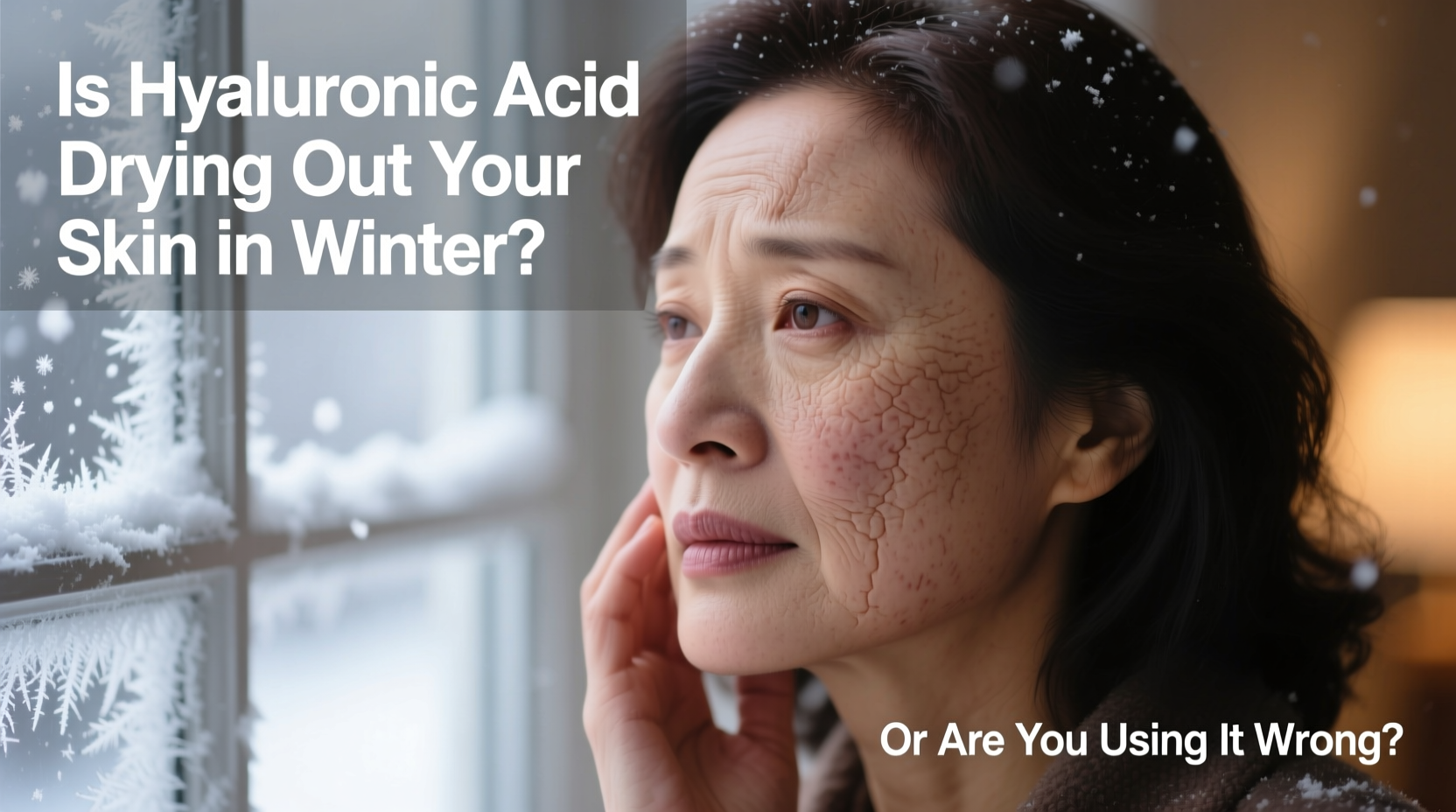
Hyaluronic acid (HA) is a glycosaminoglycan naturally found in the body, particularly in the skin, eyes, and connective tissues. Its primary function is moisture retention. In skincare, it acts as a humectant—a substance that draws water from its surroundings into the skin’s outer layer.
When applied topically, HA sits on the surface of the skin and pulls in moisture from two potential sources:
- The air: If humidity levels are high, HA absorbs ambient moisture and delivers it to the skin.
- The deeper layers of the skin: In low-humidity environments, HA may draw water from beneath the epidermis, which can lead to dehydration if not properly sealed.
This dual behavior explains why hyaluronic acid performs exceptionally well in humid climates but can contribute to dryness in dry, heated indoor spaces typical of winter.
“Hyaluronic acid is only as effective as the environment it’s used in. Without proper occlusion, it can pull moisture from the skin itself in arid conditions.” — Dr. Lena Park, Board-Certified Dermatologist
Why Winter Changes the Game
Cold weather brings low humidity both outdoors and indoors. Central heating systems further reduce indoor moisture, often dropping relative humidity below 30%—far below the ideal 40–60% range for healthy skin.
In such an environment, there’s little moisture in the air for hyaluronic acid to absorb. Instead, it may pull water from the deeper layers of your skin to hydrate the surface temporarily—only for that moisture to evaporate quickly due to the dry air. This process, known as transepidermal water loss (TEWL), can leave skin feeling tighter, rougher, and more dehydrated over time.
This doesn’t mean hyaluronic acid is harmful—it just means context matters. Using it like you do in summer without adjustments can lead to counterproductive results.
Common Mistakes That Make Hyaluronic Acid Dry Out Skin
Most people don’t realize they’re using hyaluronic acid incorrectly—especially during winter. Here are the most frequent missteps:
- Applying it on dry skin: Spritzing HA serum onto completely dry skin limits its ability to attract water. For best results, apply to damp skin to give it immediate moisture to bind to.
- Skipping the moisturizer: Using HA without a follow-up cream or oil means no barrier to lock in hydration. The absorbed moisture evaporates, leaving skin drier than before.
- Using it in overly dry environments: If your bedroom or office is heated and lacks a humidifier, HA struggles to find moisture in the air, increasing the risk of drawing from your skin.
- Layering too many actives: Combining HA with strong exfoliants like AHAs or retinoids in winter can compromise the skin barrier, making it more vulnerable to dehydration—even with hydrating ingredients.
- Using low-quality or improperly formulated products: Some serums contain high concentrations of HA without supporting ingredients, or use forms of HA that sit only on the surface without penetrating effectively.
Step-by-Step Guide: How to Use Hyaluronic Acid Correctly in Winter
To harness the benefits of hyaluronic acid without risking dryness, follow this optimized winter routine:
- Cleanse gently: Use a non-stripping, hydrating cleanser to preserve the skin’s natural oils.
- Exfoliate sparingly: Limit chemical exfoliation to 1–2 times per week to maintain barrier integrity.
- Apply HA to damp skin: After cleansing, lightly pat your face so it remains slightly wet. Then apply your hyaluronic acid serum. This gives the ingredient immediate water to bind to.
- Layer with a hydrating toner or essence (optional): These add another layer of moisture before sealing.
- Seal with a moisturizer: Use a rich cream containing ceramides, squalane, or shea butter to create a protective barrier.
- Add facial oil for extra protection (if needed): Oils like marula, jojoba, or rosehip provide occlusive properties that lock everything in.
- Use a humidifier at night: Increasing ambient humidity helps HA pull moisture from the air instead of your skin.
Choosing the Right Hyaluronic Acid Product for Winter
Not all hyaluronic acid products are created equal. Look for formulations that include multiple molecular weights of HA to ensure both surface and deeper-layer hydration:
- High molecular weight HA: Stays on the surface, providing immediate plumping and smoothing.
- Low molecular weight HA: Penetrates deeper into the skin for longer-lasting hydration.
- Sodium hyaluronate: A salt form of HA that is more stable and penetrates more easily.
Better yet, choose products that combine HA with other supportive ingredients like glycerin, panthenol, or betaine—these boost hydration and help stabilize moisture levels.
| Product Feature | Recommended for Winter | Avoid in Winter |
|---|---|---|
| Multiple molecular weights of HA | Yes – ensures layered hydration | No – single-weight HA may not penetrate deeply |
| Includes occlusive ingredients (e.g., ceramides, oils) | Yes – helps lock in moisture | No – pure HA serums without emollients |
| Alcohol or fragrance-heavy formulas | No – can disrupt barrier | Yes – increases irritation and dryness |
| Lightweight gel texture | Only if followed by moisturizer | Standalone in dry environments |
Mini Case Study: Sarah’s Winter Skincare Struggle
Sarah, a 34-year-old marketing executive in Chicago, loved her hyaluronic acid serum. It gave her skin a dewy glow in the summer. But every winter, her face felt increasingly tight and flaky—despite using the same routine.
She visited a dermatologist who asked one key question: “Are you applying it to dry skin and not following with a moisturizer?” Sarah realized she was exactly that—using the serum on towel-dried skin and skipping moisturizer because she thought it would feel too heavy.
Her dermatologist advised her to splash water on her face after cleansing, apply the serum while skin was damp, and follow with a ceramide-rich cream. She also added a small humidifier to her bedroom.
Within a week, her skin felt softer and more resilient. The flakiness disappeared. “I didn’t need a new product,” she said. “I just needed to use the one I had differently.”
Checklist: Optimize Your Hyaluronic Acid Routine for Winter
- ✅ Apply HA serum to damp skin—not dry
- ✅ Layer immediately with a nourishing moisturizer
- ✅ Avoid combining with harsh actives unless your skin is conditioned
- ✅ Use a humidifier in your bedroom or workspace
- ✅ Choose a multi-weight HA formula with supporting hydrators
- ✅ Limit exfoliation to 1–2 times per week
- ✅ Patch test new HA products before full integration
Frequently Asked Questions
Can hyaluronic acid cause breakouts?
Pure hyaluronic acid is non-comedogenic and unlikely to clog pores. However, some HA serums contain additives like silicones or oils that may trigger breakouts in acne-prone individuals. Always check the full ingredient list and opt for lightweight, non-greasy formulas if you’re prone to congestion.
Should I stop using hyaluronic acid in winter?
No—but you should adjust how you use it. Hyaluronic acid can still be highly beneficial in winter when paired with proper occlusion and used in a humid environment. The issue isn’t the ingredient itself, but the lack of follow-up hydration and poor application timing.
Is more hyaluronic acid better?
Not necessarily. Overloading the skin with high-concentration serums without adequate support can disrupt balance. A well-formulated product with 1–2% HA, combined with other humectants and emollients, is typically more effective than a 5%+ serum used alone.
Expert Insight: What Dermatologists Recommend
Leading dermatologists emphasize that hyaluronic acid is safe and effective year-round—if used intelligently.
“In my practice, I see patients blaming their serums when the real issue is routine structure. Hyaluronic acid needs a partner—something to seal it in. In winter, that’s non-negotiable.” — Dr. Rachel Kim, Clinical Dermatologist, New York
Dr. Kim also recommends layering techniques: “Think of HA as the middle layer in a sandwich. Water-based first, then HA, then a lipid-rich cream. That’s the golden rule for winter hydration.”
Final Thoughts: It’s Not the Ingredient—It’s the Application
Hyaluronic acid isn’t drying out your skin. You’re likely using it in a way that, under winter conditions, leads to moisture loss rather than retention. The ingredient itself is a powerful ally for hydration, but it requires environmental support and strategic layering to work effectively.
The cold months demand a shift in skincare logic. Lightweight routines that worked in summer often fall short when humidity drops. By adjusting your technique—applying HA to damp skin, sealing it properly, and improving your environment—you can continue enjoying its plumping, smoothing benefits without the tightness or flakiness.
Skincare isn’t about replacing products every season. It’s about understanding how they interact with your skin and surroundings. With a few mindful tweaks, your hyaluronic acid serum can remain a winter staple—not a source of frustration.




 浙公网安备
33010002000092号
浙公网安备
33010002000092号 浙B2-20120091-4
Comments
No comments yet. Why don't you start the discussion?