
Intermittent fasting has become one of the most popular lifestyle approaches for weight management, metabolic health, and longevity. At its core, it’s simple: cycle between periods of eating and fasting. But simplicity doesn’t always mean ease. The real challenge lies in consistency—knowing when to eat, when to fast, and how to stay on track without constant mental effort.
As more people adopt this practice, a common question arises: is it better to rely on digital tools like fasting apps, or can you succeed just as well by tracking your fasts manually? The answer isn't one-size-fits-all. It depends on your personality, goals, tech habits, and how much structure you need to stay consistent.
The Role of Tracking in Intermittent Fasting
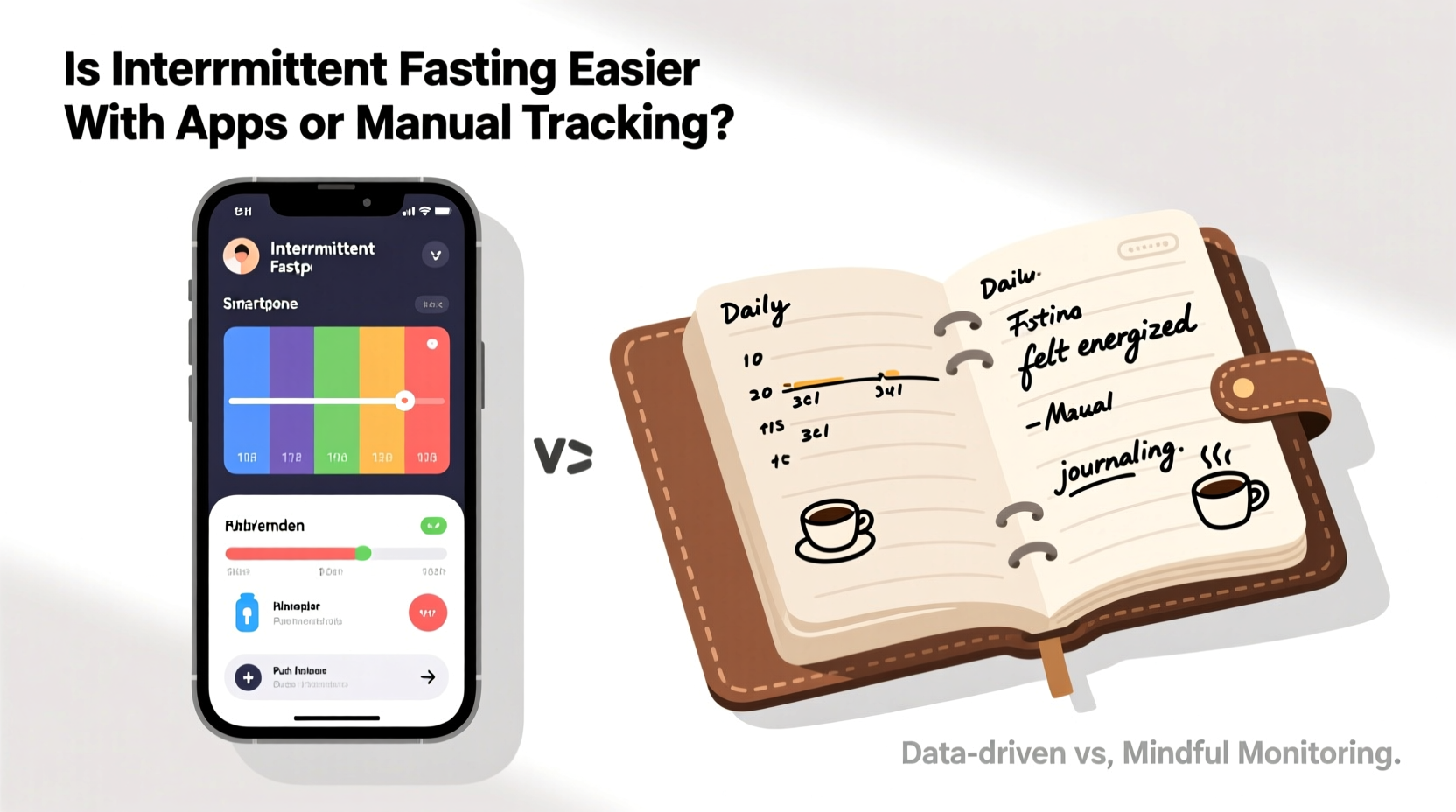
Tracking is essential in intermittent fasting—not because calories or macros are being counted, but because timing is everything. Whether you follow the 16:8 method, alternate-day fasting, or the 5:2 approach, knowing your fasting window and sticking to it determines success.
Without tracking, it's easy to lose count, misjudge start and end times, or give in to early hunger cues under the guise of “I think I’m done fasting.” This is where both apps and manual systems come into play—each offering different advantages in accountability, awareness, and habit formation.
How Apps Simplify the Fasting Experience
Fasting apps have exploded in popularity over the past five years. Platforms like Zero, FastHabit, and MyFast offer timers, progress logs, educational content, and even community support. These tools do more than just track time—they create a structured environment that supports long-term adherence.
Key features include:
- Customizable fasting schedules (e.g., 16:8, 18:6, OMAD)
- Visual countdown timers with notifications
- Log water intake, mood, energy levels, and weight trends
- Synchronize with wearables like Apple Watch or Fitbit
- Provide science-backed articles and motivational tips
For many users, the app becomes a daily ritual. Opening it first thing in the morning to start the fast reinforces commitment. Receiving a notification at 10 a.m. that says, “You’ve been fasting for 14 hours—only 2 more to go!” can be the psychological boost needed to push through.
The Case for Manual Tracking: Simplicity and Mindfulness
Despite the appeal of high-tech solutions, many experienced fasters swear by low-tech, manual tracking. This might involve nothing more than jotting down start and end times in a notebook, using a basic calendar, or relying solely on memory and routine.
Manual tracking promotes mindfulness. When you’re not relying on alerts or automated logs, you develop a deeper internal sense of your body’s rhythms. You learn to recognize true hunger versus habit, and you become more attuned to energy fluctuations throughout the day.
Some prefer pen-and-paper journals because they encourage reflection. Writing down how you felt during a fast—energized, sluggish, focused—helps identify patterns over time. Unlike an app that passively collects data, manual logging forces engagement, which can deepen behavioral change.
“Technology can support habits, but true discipline comes from self-awareness. Some of my most successful patients fast without any app—they’ve internalized the rhythm.” — Dr. Lena Torres, Functional Medicine Practitioner
App vs. Manual: A Practical Comparison
| Feature | Fasting Apps | Manual Tracking |
|---|---|---|
| Convenience | High – automatic timers, push notifications | Low – requires active input and timekeeping |
| Accuracy | High – precise timestamps and alerts | Variable – depends on user diligence |
| Motivation | Strong – streaks, badges, progress charts | Moderate – relies on personal discipline |
| Data Insights | Detailed – graphs, trends, exportable logs | Limited – only what you choose to record |
| Learning Curve | Moderate – setup and navigation required | None – intuitive and immediate |
| Privacy & Simplicity | Lower – data stored digitally, potential ads | Higher – no data sharing, minimal distractions |
This comparison shows that neither method is inherently superior. Apps excel in automation and motivation, especially for beginners. Manual tracking fosters autonomy and presence, often preferred by those who’ve been fasting for months or years.
When Apps Make the Most Difference
Apps shine in specific scenarios:
- Beginners: New fasters benefit from clear guidance and structure. Not knowing when your 16-hour fast ends can lead to confusion or accidental breaking.
- Inconsistent Schedules: If your work hours vary or you travel frequently, an app can adapt quickly and remind you when to start or stop fasting.
- Data-Oriented Individuals: People who love metrics—tracking fasting duration, frequency, and correlations with sleep or mood—gain insights from app analytics.
- Motivation Challenges: Seeing a 7-day streak or earning a badge can provide just enough dopamine to keep going on tough days.
When Manual Tracking Works Best
Manual methods are ideal for:
- Routine-Based Lifestyles: If you wake up and eat at the same time every day, your fast becomes automatic. No tracking needed beyond habit.
- Digital Minimalists: Those avoiding screen time or app dependency may find manual tracking more aligned with their values.
- Long-Term Fasters: After several months, many people internalize their fasting rhythm and no longer need external prompts.
- Privacy-Conscious Users: Not everyone wants health data stored on servers or shared with third parties.
A Real-World Example: Two Approaches, One Goal
Consider two individuals starting intermittent fasting for weight loss and improved energy.
Case 1: Sarah uses the Zero app.
Sarah is a 34-year-old nurse working rotating shifts. Her schedule changes weekly, making consistency difficult. She downloads Zero and sets up her fasting plan based on her shift each week. The app sends her a notification when her fasting window begins after her night shift ends. She logs her water intake and notes feeling less bloated after three days. After two weeks, she checks her progress chart and sees she’s completed 12 fasts. That visual motivates her to keep going—even on tough days.
Case 2: James tracks manually.
James, 48, is a teacher with a predictable routine. He skips breakfast, starts eating at noon, and finishes by 8 p.m. every day. He keeps a small notebook in his kitchen drawer. Each morning, he writes the date and “Fasting until 12.” Occasionally, he adds a note: “Felt strong today,” or “Craved coffee at 10 a.m.” Over time, he notices that on days he sleeps well, his fasts feel easier. He doesn’t need reminders—he’s built fasting into his identity.
Both succeed, but through different paths. Sarah thrives on structure and feedback; James thrives on routine and reflection.
Step-by-Step: Choosing Your Tracking Method
Follow this timeline to determine the best approach for your lifestyle:
- Week 1–2: Try Both Methods
Start your fast using an app timer, then log the same fast in a notebook. Note which felt more natural, less stressful, or more motivating. - Week 3: Evaluate Consistency
Did you forget to start/stop your fast without an app? Did manual tracking feel burdensome? Or did the app feel intrusive? - Week 4: Choose and Optimize
Select the method that caused the least friction. If using an app, customize notifications and disable unnecessary features. If tracking manually, design a simple template (date, start/end time, notes). - Ongoing: Reassess Monthly
Lifestyle changes. If you travel more, switch to an app. If you feel overly dependent on alerts, try weaning off the app gradually.
Checklist: Picking the Right Tracking Strategy
- ✅ Are you new to fasting? → Apps may help with clarity and confidence.
- ✅ Do you have an irregular schedule? → An app with flexible scheduling is beneficial.
- ✅ Do you enjoy data and progress tracking? → Apps offer richer insights.
- ✅ Are you sensitive to screen time or notifications? → Manual tracking reduces digital clutter.
- ✅ Have you been fasting for months? → You may no longer need an app.
- ✅ Do you value privacy? → Paper logs keep your data completely private.
Frequently Asked Questions
Can I switch between app and manual tracking?
Absolutely. Many people use apps during the initial learning phase and transition to manual tracking once the habit is solid. Others switch back to apps during busy or disruptive periods, like holidays or travel.
Do I need to track every single fast?
Not necessarily. Once fasting becomes routine, strict tracking may become redundant. However, periodic logging—say, once a week—can help maintain awareness and catch slipping habits.
Are fasting apps worth paying for?
Most offer free versions with core features. Paid upgrades typically include ad-free experiences, advanced analytics, and guided programs. For casual users, free versions are usually sufficient. Serious practitioners may find value in premium content, but it’s not essential.
Conclusion: Tools Serve Habits—Not the Other Way Around
Whether you use an app or track manually, the goal remains the same: to integrate intermittent fasting into your life sustainably. Technology can reduce friction and boost motivation, especially at the beginning. But long-term success depends not on the tool, but on your understanding of your body, your consistency, and your ability to listen to internal cues.
Apps are excellent scaffolding. They provide support while you build the habit. But like training wheels, they may eventually be outgrown. Manual tracking, in contrast, strengthens self-reliance and deepens mindfulness. It turns fasting from a timed event into a lived experience.
The best approach is the one you can stick with—without burnout, guilt, or dependency. Try both. Reflect on what serves you. Adjust as life changes. Because ultimately, intermittent fasting isn’t about perfection. It’s about progress, awareness, and creating a rhythm that fits your life.




 浙公网安备
33010002000092号
浙公网安备
33010002000092号 浙B2-20120091-4
Comments
No comments yet. Why don't you start the discussion?