
For many homeowners, the holiday season is a brief but cherished window to bring joy through festive decorations. Programmable light sequences—those dynamic, synchronized displays that dance to music or fade in intricate patterns—have become increasingly popular. But if you're only decorating for three weeks a year, is the investment truly justified? The answer depends on more than just timing. It involves understanding upfront costs, long-term durability, ease of use, and the emotional and social return on your effort.
While the allure of a dazzling light show might seem fleeting for such a short season, the decision isn’t purely about duration. It’s about frequency over years, the quality of experience, and how much value you place on convenience, creativity, and community impact. Let’s explore whether programmable lighting makes sense for seasonal decorators with limited timeframes.
The True Cost of Programmable Lighting
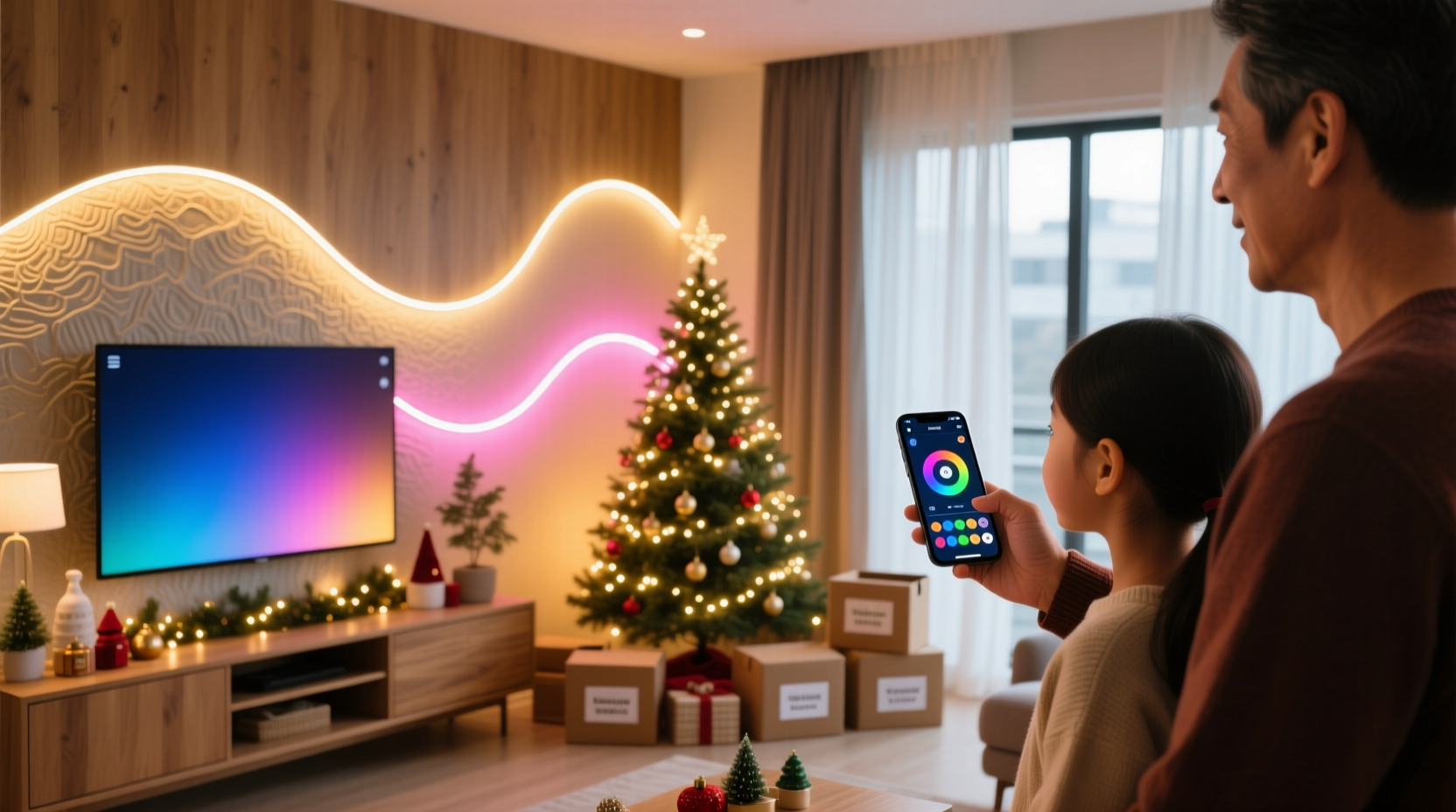
Programmable LED light sequences range from simple plug-in controllers under $30 to full smart systems with Wi-Fi integration, app control, and synchronization capabilities costing several hundred dollars. A basic setup might include:
- Addressable LED strips (e.g., WS2812B)
- A microcontroller (like an ESP8266 or Arduino)
- A power supply and controller unit
- Software for sequencing (e.g., xLights, Falcon Player)
Entry-level kits can get you started for around $100, while advanced installations with hundreds of nodes, custom animations, and sound synchronization may exceed $500. Compared to traditional static string lights priced at $10–$20 per strand, this seems steep—especially when used just 21 days annually.
However, longevity changes the equation. High-quality programmable LEDs are built to last 30,000 to 50,000 hours. If used only 8 hours per day during a 3-week span, that’s roughly 168 hours per year. At that rate, a single set could last over 175 years. Even accounting for weather degradation and occasional failures, a well-maintained system should easily endure 10–15 seasons or more.
Time Investment vs. Reusability
One of the biggest misconceptions about programmable lighting is that each season requires starting from scratch. In reality, once you’ve created a sequence using software like xLights or Light-O-Rama, you can save and reuse it indefinitely. After the initial setup—which can take anywhere from 5 to 20 hours depending on complexity—the annual redeployment becomes significantly faster.
Consider this timeline:
- Year 1: Design layout, purchase components, install wiring, program first sequence — ~15–20 hours
- Year 2: Retrieve stored files, test system, minor tweaks — ~3–5 hours
- Year 3+: Plug in, sync, enjoy — ~1–2 hours
This diminishing time commitment means that even a short display window becomes easier and more rewarding over time. Unlike disposable decor, programmable systems grow more efficient with age.
Comparing Traditional vs. Programmable Lights
| Feature | Traditional String Lights | Programmable Light Sequences |
|---|---|---|
| Upfront Cost (per 100 lights) | $10–$25 | $80–$150 |
| Lifespan (years, average) | 3–5 | 10–15+ |
| Durability | Moderate; prone to bulb burnout | High; individual LEDs fail independently |
| Customization | Low (on/off, blink modes) | Very high (animations, music sync, colors) |
| Installation Time (first year) | 1–2 hours | 10–20 hours |
| Reusability of Designs | None | Full reuse with minor updates |
| Energy Efficiency | Good (LED versions) | Excellent (low-wattage per node) |
While traditional lights win on simplicity and immediate affordability, programmable systems offer far greater long-term value through reusability, customization, and energy efficiency. Over five years, the total cost of ownership often evens out—or favors programmable setups—when factoring in replacement purchases and enhanced user satisfaction.
Real-World Example: The Suburban Display That Grew a Following
Take Mark T., a homeowner in Minneapolis who installed his first programmable display in 2018. Initially skeptical due to the 3-week usage window, he spent $320 on addressable LEDs, a NodeMCU controller, and a Raspberry Pi for sequencing. The first year took him nearly 18 hours to design a 4-minute synchronized show synced to classic carols.
But something unexpected happened: neighbors began stopping by. Local news featured his home. By year three, he had over 2,000 visitors during the season. Inspired, he added new sequences each year, reused old ones, and eventually shared his designs online. Now, his display runs reliably every November 25 through January 15—with minimal effort—and has become a neighborhood tradition.
“I thought I was buying a decoration,” Mark said. “Turns out, I was investing in a shared experience. The lights are up for three weeks, but the memories last all year.”
“We often undervalue emotional ROI in home décor. A programmable light display isn't just about aesthetics—it's about connection, rhythm, and storytelling. For many families, these moments are priceless.” — Dr. Lena Patel, Environmental Psychologist & Urban Experience Researcher
When It Makes Sense (And When It Doesn’t)
Not every household will benefit equally from programmable lighting. Here’s a checklist to help determine if it’s right for your situation:
- ✅ Do you plan to decorate for at least 5 consecutive years?
- ✅ Are you comfortable with basic tech setup (Wi-Fi, apps, cables)?
- ✅ Do you enjoy creative projects or DIY electronics?
- ✅ Does your home receive foot or drive-by traffic during holidays?
- ✅ Are you interested in syncing lights to music or creating themes?
- ✅ Can you store equipment safely between seasons?
If you answered yes to three or more, a programmable system is likely a worthwhile investment—even for a 3-week display.
On the other hand, if you move frequently, lack storage space, or prefer minimalist decor, traditional lights may still be the better fit. Programmable systems shine best when there’s intent to reuse, refine, and share.
Maximizing Value in a Short Season
To get the most out of a programmable system within a narrow timeframe, follow this step-by-step guide:
- Start Small: Begin with one animated section—like a tree or roofline—instead of a full-house setup.
- Use Pre-Made Sequences: Download free or low-cost animations from communities like HolidayCoro or r/LightShow on Reddit.
- Schedule Automatically: Program your controller to turn on at dusk and off at midnight via GPS or timer settings.
- Add Music Sync (Optional): Use an FM transmitter or Bluetooth speaker to broadcast audio, enhancing viewer enjoyment.
- Document & Improve: Take notes each year on what worked, what failed, and ideas for next season.
- Share Your Show: Post your address on local event boards or Nextdoor to invite visitors and build community goodwill.
By treating your display as an evolving project rather than a one-off, you shift from consumption to creation—a mindset that amplifies value regardless of runtime.
Frequently Asked Questions
Can I use programmable lights outdoors in winter?
Yes, provided they are rated for outdoor use (IP65 or higher). Most modern addressable LEDs are designed for cold temperatures and moisture resistance. Avoid submerging connections and use protective conduit for ground-level wiring.
Do I need technical skills to maintain the system?
Basic troubleshooting helps, but many modern systems now come with user-friendly apps and plug-and-play features. Platforms like Twinkly or LightFX offer guided setup and cloud-based sequencing, reducing the learning curve significantly.
Are programmable lights safe for homes with children or pets?
Generally, yes. These systems operate at low voltage (5V or 12V DC), making them safer than standard 120V AC string lights. Always inspect cords for damage and avoid tripping hazards by securing wires away from walkways.
Final Verdict: Worth It, With Conditions
Investing in programmable light sequences for a 3-week holiday display can be absolutely worth it—if you approach it as a long-term project. The initial time and financial outlay pay dividends in subsequent years through reduced labor, increased enjoyment, and deeper engagement with family and community.
The key is recognizing that the value isn’t measured solely in days of operation, but in years of reuse, emotional resonance, and creative fulfillment. Much like purchasing a high-quality kitchen appliance or a durable piece of furniture, the return comes over time, not overnight.
For those who love personal expression, enjoy technology, or want to create a memorable seasonal experience, programmable lighting offers a level of artistry and precision that static lights simply can’t match. And while three weeks may seem short, the ripple effects—smiles from passersby, photos on social media, traditions passed to children—often extend far beyond December.
“The best holiday displays aren’t the brightest—they’re the ones that make people pause, smile, and feel connected. Technology doesn’t replace warmth; it amplifies it.” — James Holloway, Creator of \"The Neighborhood Lights Project\"




 浙公网安备
33010002000092号
浙公网安备
33010002000092号 浙B2-20120091-4
Comments
No comments yet. Why don't you start the discussion?