
Choosing between the iPhone 11 and the Samsung Galaxy S10 (commonly referred to as S11 in error—Samsung’s 2019 flagship was the S10, not S11) comes down to more than brand loyalty. These two smartphones represent mature platforms from Apple and Samsung at pivotal points in their evolution. Released just months apart in 2019, they now occupy the budget-friendly end of the premium market. For buyers looking for high-end features without the $1,000 price tag, comparing their real-world performance, pricing trends, ecosystem fit, and longevity is essential.
The iPhone 11 runs iOS with Apple’s A13 Bionic chip, while the Galaxy S10 uses Android with either Snapdragon 855 or Exynos 9820, depending on region. Both devices have aged gracefully, but their paths diverge significantly when it comes to software updates, resale value, and daily usability. Let’s break down where each excels—and whether one truly outperforms the other in practical terms.
Price Differences: What You Can Expect Today
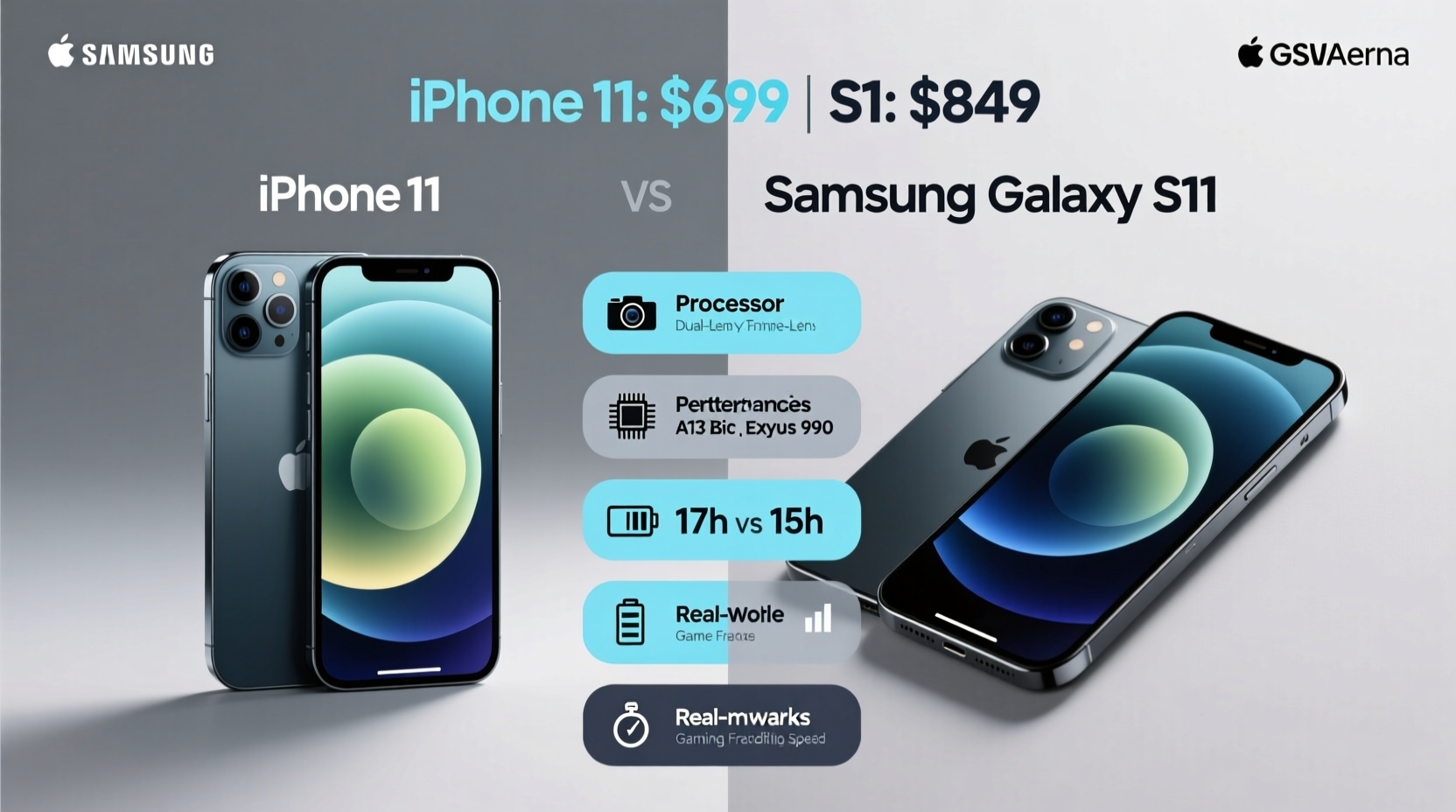
When originally released, the iPhone 11 started at $699, while the Galaxy S10 launched at $899. That $200 gap was significant, especially considering the iPhone 11 offered better battery life and longer software support. Today, both phones are available unlocked and refurbished for far less, making them compelling options for budget-conscious buyers.
| Device | Launch Price (USD) | Avg. Current Refurbished Price (USD) | Where Typically Sold |
|---|---|---|---|
| iPhone 11 (64GB) | $699 | $270–$330 | Apple Certified Refurbished, Amazon, eBay |
| Samsung Galaxy S10 (128GB) | $899 | $220–$280 | Carrier outlets, Swappa, Best Buy Open Box |
Interestingly, the S10 often sells slightly cheaper today despite its higher launch cost. However, storage plays a role—the S10 typically came with 128GB standard, while the base iPhone 11 has only 64GB. If you're heavy on media, that extra storage may justify the initial cost difference.
Real-World Performance: Speed, Longevity, and Daily Use
On paper, the Galaxy S10 had a slight edge in multitasking thanks to its larger RAM (8GB vs. iPhone 11’s 4GB). But real-world experience tells a different story. iOS’s memory management and app optimization allow the iPhone 11 to maintain snappy performance even after years of use. Apps reopen quickly, animations remain smooth, and background processes are efficiently handled.
The A13 Bionic chip still holds up remarkably well. It outperforms many mid-range 2023 Android chips in single-core tasks and remains highly efficient. In contrast, the S10’s Snapdragon 855, while excellent in its time, shows signs of aging—especially under sustained loads like gaming or video editing.
“Even three years post-launch, the A13 Bionic delivers near-flagship responsiveness. That’s rare in the smartphone world.” — David Kim, Mobile Hardware Analyst at TechPulse Weekly
Battery life is another area where the iPhone 11 pulls ahead. Apple claims up to 17 hours of video playback; real users report 10–12 hours of mixed usage. The S10 manages about 8–9 hours under similar conditions. This gap matters for commuters, travelers, or anyone who can’t charge midday.
Camera Comparison: Photos, Video, and Low Light
The iPhone 11 introduced Apple’s Night mode, which automatically activates in low light. Combined with Smart HDR and Deep Fusion, it produces consistently balanced photos with accurate colors and excellent dynamic range. Its 12MP dual-camera system (wide and ultra-wide) captures more detail in shadows than the S10’s setup.
The Galaxy S10 also has a 12MP main sensor and a 16MP ultra-wide, plus a telephoto lens on some models (S10+). Samsung’s processing favors brighter, punchier images—great for social media—but sometimes oversaturates skies or loses detail in highlights.
- Low-light photography: iPhone 11 wins with cleaner noise reduction and natural tone preservation.
- Video recording: iPhone 11 supports 4K at 60fps across all cameras; S10 limits 4K to the rear main cam.
- Front camera: S10 has a 10MP selfie shooter; iPhone 11 uses 12MP with 4K video and slow-motion support.
If you shoot frequently in dim environments or prioritize video quality, the iPhone 11 is the clear winner. For casual daytime snaps, the S10 remains very capable.
Ecosystem Fit and Software Updates
This is where the decision becomes deeply personal. If you already own AirPods, a Mac, or an Apple Watch, the iPhone 11 integrates seamlessly. Features like Handoff, iMessage, FaceTime, and iCloud sync add tangible convenience. Android users tied to Google services—or those who prefer expandable storage, headphone jacks (S10 retains one), and customizable launchers—will find the S10 more accommodating.
Software longevity is a major differentiator. Apple guarantees five years of OS updates for the iPhone 11—it received iOS 17 in 2023 and will likely get iOS 18. The Galaxy S10 stopped receiving major Android updates after Android 12, though it still gets occasional security patches.
Mini Case Study: Sarah Chooses Between iPhone 11 and S10
Sarah, a freelance photographer based in Portland, needed a reliable second phone for client communication and quick social media uploads. She owned a MacBook and used Adobe Creative Cloud daily. Her old Pixel 3a struggled with app crashes and poor battery.
She considered the S10 for its headphone jack and microSD slot but ultimately chose the iPhone 11. “I didn’t realize how much I relied on AirDrop until I tried working without it,” she said. “Being able to shoot in 4K, edit on my iPad, and instantly share via Messages made the iPhone the obvious pick—even if I missed expandable storage.”
After six months, she reported no slowdown, praised the consistent camera output, and appreciated the continued iOS updates. “It feels like a $700 phone that still performs like it’s current.”
Checklist: How to Decide Which Phone Is Right for You
- ✅ Assess your ecosystem: Do you use Apple or Google services daily?
- ✅ Prioritize update longevity: Will you keep the phone for 3+ years?
- ✅ Evaluate camera needs: Do you record video or shoot in low light often?
- ✅ Consider battery demands: Are you away from chargers most of the day?
- ✅ Check accessories: Do you rely on a specific case, charger, or earbuds?
- ✅ Review current deals: Is one model significantly cheaper in your region?
Frequently Asked Questions
Can the iPhone 11 run modern apps smoothly in 2024?
Yes. The A13 Bionic handles most current apps—including Instagram, TikTok, and mobile games—without lag. Only the most demanding titles may require lowered settings.
Does the Galaxy S10 still receive security updates?
Limited updates are provided by Samsung, but official support ended in 2022. Some custom ROMs offer extended life, but they void warranties and carry risks.
Which phone holds resale value better?
The iPhone 11 does. After two years, it retains about 50% of its original value compared to the S10’s 30%. Apple’s consistent refurbishment demand drives this trend.
Final Verdict: Is the iPhone 11 Worth It Over the S10?
For most users, yes—the iPhone 11 offers better long-term value. Its superior processor efficiency, stronger software support, better battery life, and cohesive ecosystem integration outweigh the S10’s hardware flexibility. While the Galaxy S10 was a brilliant device in 2019, it has aged faster, particularly in software and performance consistency.
The price difference today is minimal, but the experience gap isn't. If you want a phone that will last three years without slowing down, take clear photos in any lighting, and stay secure with regular updates, the iPhone 11 is the smarter investment. The S10 remains a solid option for Android loyalists or those needing specific features like a headphone jack or microSD expansion—but with caveats around future usability.




 浙公网安备
33010002000092号
浙公网安备
33010002000092号 浙B2-20120091-4
Comments
No comments yet. Why don't you start the discussion?