
In a world where space is limited and efficiency is prized, the debate between owning one versatile multi-tool versus a collection of dedicated single-function gadgets has never been more relevant. Whether you're outfitting a kitchen, equipping a workshop, or preparing for outdoor adventures, the decision impacts not only functionality but also convenience, cost, and long-term satisfaction. The answer isn't universal—it depends on context, usage patterns, and personal priorities. Understanding the strengths and limitations of each approach allows for smarter decisions that align with how you actually live and work.
The Multi-Tool Advantage: Simplicity and Portability
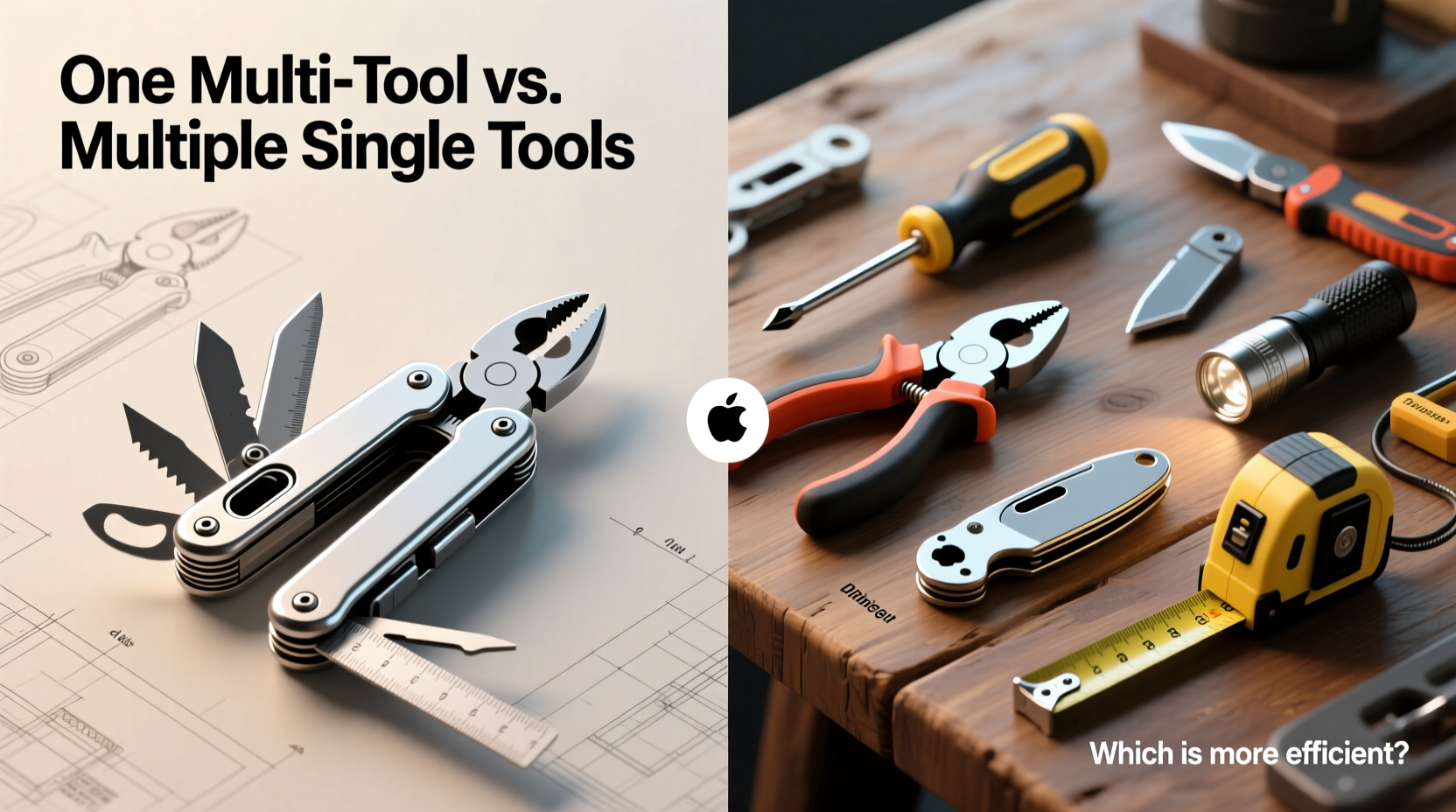
A multi-tool consolidates multiple functions into a single device. Think of a Swiss Army knife, a 7-in-1 kitchen gadget, or a smartphone that replaces cameras, GPS units, and music players. The appeal lies in simplicity: fewer items to carry, store, and maintain. For travelers, campers, or anyone operating in tight quarters, this consolidation can be a game-changer.
Multi-tools excel in emergency situations or when space is at a premium. A hiker with a Leatherman on their keychain carries pliers, a knife, screwdrivers, and wire cutters without adding bulk. Similarly, compact kitchen devices like an immersion blender with whisk and chopper attachments reduce clutter while offering moderate performance across several tasks.
However, the convenience of a multi-tool often comes with compromises. Each function is typically less powerful or precise than its standalone counterpart. Blades may dull faster, motors may overheat, and ergonomics may suffer due to design constraints.
The Case for Single-Function Gadgets: Performance and Precision
Single-function tools are engineered for one job—and they do it exceptionally well. A chef’s knife slices through ingredients with balance and sharpness no pocketknife can match. A stand mixer kneads dough with torque and consistency that a multi-purpose food processor struggles to replicate. These tools prioritize durability, precision, and user comfort.
Professionals across fields—from electricians to baristas—rely on specialized equipment because performance cannot be compromised. A dedicated power drill offers more speed settings, higher torque, and better battery life than the drill function embedded in a multi-tool. In high-frequency or high-stakes environments, reliability trumps versatility.
Moreover, single-function gadgets often provide better ergonomics and safety. Because they’re designed around one task, manufacturers can optimize grip, weight distribution, and control mechanisms. This reduces user fatigue and lowers the risk of accidents during prolonged use.
“Specialization drives innovation. When a tool focuses on one purpose, every engineering decision enhances that outcome.” — Dr. Alan Reyes, Industrial Design Researcher at MIT
Comparing Real-World Scenarios: Where Each Approach Shines
The ideal choice hinges on context. Below is a comparison of common scenarios to illustrate when a multi-tool makes sense—and when single-function devices are worth the extra space and cost.
| Scenario | Best Choice | Why |
|---|---|---|
| Camping or backpacking | Multi-tool | Limited pack space; need for lightweight solutions covering basic repairs, food prep, and emergencies. |
| Home kitchen (daily cooking) | Single-function gadgets | Better results with blenders, knives, and ovens; frequent use justifies investment in quality. |
| Emergency preparedness kit | Multi-tool | Compact, reliable access to cutting, prying, lighting, and signaling in crisis situations. |
| Professional woodworking shop | Single-function gadgets | Precision, safety, and repeatability are critical; dedicated saws, sanders, and drills deliver consistent output. |
| Dorm room or tiny apartment | Multi-tool | Space-saving is essential; a combination kettle-toaster oven or foldable furniture maximizes utility. |
Mini Case Study: Sarah’s Kitchen Upgrade
Sarah, a home cook living in a 400-square-foot studio, initially bought a 5-in-1 kitchen appliance promising blending, steaming, slow cooking, baking, and juicing. It saved counter space, but she quickly noticed limitations: the motor strained when making nut butter, the “bake” function produced uneven results, and cleaning took longer due to complex parts.
After six months, she sold the unit and invested in a high-speed blender, a rice cooker with steam function, and a compact air fryer. Though she now owns three devices instead of one, her cooking improved dramatically. Meals were ready faster, textures were better, and cleanup was simpler. For Sarah, the shift to single-function gadgets enhanced both enjoyment and efficiency—even in a small space.
How to Decide: A Step-by-Step Evaluation Guide
Making the right choice requires assessing your actual needs, not just idealized ones. Follow this practical timeline to evaluate whether a multi-tool or individual gadgets suit your situation best.
- Identify your primary use case. Are you using the tool daily, occasionally, or only in emergencies?
- List the specific tasks required. Break down what you need to accomplish—e.g., chopping, mixing, tightening screws, measuring voltage.
- Evaluate frequency and intensity. Will the tool be used for short bursts or extended periods? Under heavy load or light duty?
- Assess available space and portability needs. Do you travel with it? Is storage extremely limited?
- Compare performance specs. Look at reviews, power ratings, material quality, and user feedback for both multi-tools and individual options.
- Calculate total cost of ownership. Include purchase price, replacement parts, energy use, and expected lifespan.
- Test if possible. Borrow or rent before buying, especially for high-cost or infrequently used tools.
Common Pitfalls to Avoid
- Overestimating versatility. Many multi-tools promise too much and deliver mediocre results across the board.
- Underestimating maintenance. Multi-tools with interconnected parts can be harder to clean and repair.
- Ignoring workflow integration. A tool might work in isolation but disrupt your process—e.g., switching attachments slows cooking time.
- Falling for marketing hype. Phrases like “all-in-one miracle device” often mask fundamental design flaws.
Hybrid Strategy: The Best of Both Worlds
Many people find success with a blended approach. Use multi-tools for mobility and backup roles, while relying on single-function devices for core tasks. For example:
- Keep a full-sized chef’s knife and cutting board in the kitchen, but carry a compact multi-tool when picnicking.
- Use a professional-grade drill at home, but stash a mini multi-driver in your car toolkit.
- Own a dedicated coffee grinder for daily use, but opt for a travel mug with a built-in French press for trips.
This hybrid model balances performance with practicality. It acknowledges that life happens in different contexts—some demanding peak performance, others prioritizing convenience.
Checklist: Choosing the Right Tool Setup
Before purchasing, go through this checklist to ensure you’re making a thoughtful decision:
- ✅ I’ve clearly defined the main tasks I need to perform.
- ✅ I’ve considered how often and how intensely I’ll use the tool.
- ✅ I’ve evaluated my storage and transport constraints.
- ✅ I’ve researched real-world reviews, not just manufacturer claims.
- ✅ I’ve compared long-term costs, including durability and repair options.
- ✅ I’m not paying for features I’ll rarely or never use.
- ✅ I’ve considered a trial period or return policy in case it doesn’t meet expectations.
FAQ
Can a multi-tool really replace several single-function gadgets?
In limited or emergency situations, yes—but with caveats. A multi-tool can handle basic versions of multiple tasks, but it won’t match the speed, precision, or durability of dedicated tools under regular or heavy use.
Are multi-tools less durable than single-function devices?
Often, yes. The mechanical complexity of folding joints, shared motors, or modular components introduces more potential failure points. High-end multi-tools mitigate this with superior materials, but they come at a premium price.
What’s the most underrated benefit of single-function gadgets?
User confidence. When a tool does one thing well, you develop muscle memory and trust in its performance. This leads to faster, safer, and more enjoyable work—whether cooking, building, or repairing.
Conclusion: Match the Tool to Your Life, Not the Hype
The question isn’t whether multi-tools or single-function gadgets are inherently better—it’s about alignment with your lifestyle. A minimalist traveler will thrive with a well-designed multi-tool. A passionate home baker deserves a stand mixer that won’t quit mid-dough. There’s no shame in owning multiple tools if they serve you reliably, just as there’s wisdom in streamlining when simplicity wins.
Technology continues to blur the lines—smart devices integrate functions seamlessly, and modular systems offer customization without sacrificing performance. But the core principle remains: choose based on real needs, not imagined ones. Evaluate honestly, test when possible, and don’t be afraid to change your mind as your circumstances evolve.




 浙公网安备
33010002000092号
浙公网安备
33010002000092号 浙B2-20120091-4
Comments
No comments yet. Why don't you start the discussion?