
Shaving is a daily ritual for millions, yet surprisingly few get the best possible results. One of the most debated aspects of shaving technique centers on timing: should you shave before stepping into the shower, during, or after? The answer isn't just about personal preference—it's rooted in skin physiology, hair structure, and long-term skin health. Understanding when to shave in relation to your shower can dramatically improve smoothness, reduce irritation, and extend the time between shaves.
The key lies in how water affects both the skin and facial or body hair. When exposed to warm water, keratin—the protein that makes up hair—softens, and pores begin to open. This softening process makes hair easier to cut, reducing tugging and resistance from the razor. At the same time, hydrated skin becomes more pliable, lowering the risk of nicks, cuts, and razor burn.
The Science Behind Hair and Water Exposure
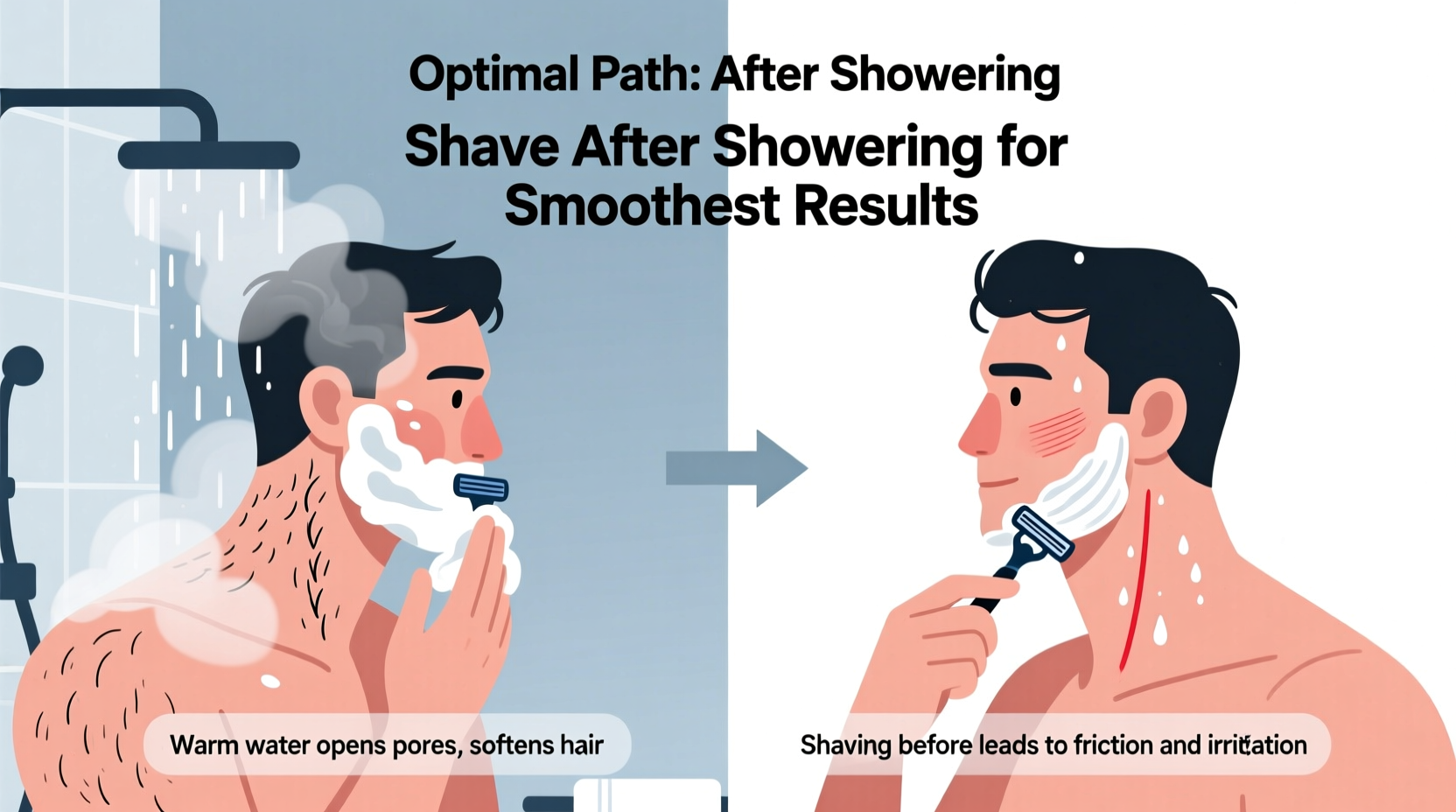
Facial and body hair has a natural resistance to cutting due to its dense keratin structure. Dry hair is stiff and brittle, making it harder for a blade to slice cleanly through. When hair is exposed to warm water for several minutes, it absorbs moisture and swells slightly. Studies show that soaking hair in warm water for 3–5 minutes can reduce its tensile strength by up to 40%, meaning it cuts more easily and with less force.
Simultaneously, the skin benefits from heat and steam. Blood flow increases, pores dilate, and sebum (natural skin oil) loosens. This prepares the follicle for a closer shave and reduces ingrown hairs. Dermatologists agree that pre-shave hydration is one of the most effective ways to prevent irritation.
“Hydrating the skin and softening the hair prior to shaving significantly improves glide and minimizes microtrauma to the skin.” — Dr. Rebecca Tran, Board-Certified Dermatologist
Shaving Before the Shower: Pros and Cons
Some people prefer to shave before turning on the shower, often citing time efficiency or habit. However, this approach skips one of the most beneficial prep stages: hydration.
- Pros:
- Saves time if you're in a rush.
- May be necessary if using non-waterproof electric razors.
- Reduces post-shave moisture exposure, which some find drying.
- Cons:
- Hair is dry and harder to cut, increasing friction.
- Higher risk of razor drag, leading to irritation and nicks.
- Pores are closed, making it easier for hairs to retract and cause ingrowns.
- Less effective lather formation if using shaving cream post-shave.
Shaving on dry skin may yield acceptable results for those with fine hair and resilient skin, but it’s suboptimal for achieving a truly smooth, close, and comfortable shave—especially for coarse or curly hair types prone to bumps and irritation.
Shaving During or After the Shower: The Optimal Approach
For the smoothest results, shaving during the final minutes of a warm shower—or immediately afterward—is widely recommended by skincare professionals. This method maximizes the benefits of steam and water exposure without over-drying the skin.
During a typical 5–10 minute shower, facial or body hair absorbs enough moisture to soften significantly. The ideal window for shaving is between 3 and 7 minutes of continuous exposure to warm water. By this point, hair has reached approximately 70% of its maximum hydration capacity, making it far easier to cut cleanly.
Why Mid-to-End Shower Shaving Wins
Shaving at the end of the shower allows you to apply product effectively while the skin is still damp but not overly saturated. Overly wet skin can become macerated (waterlogged), which weakens the skin barrier and increases sensitivity. Timing matters: too early, and the hair hasn’t softened enough; too late, and the skin may be too fragile.
If you choose to shave after the shower, do so within 60 seconds of stepping out. This ensures that the skin and hair remain warm and hydrated, preserving the softening effect. Use a towel to gently pat the area dry—don’t rub—then proceed with your shave.
Step-by-Step Guide to the Smoothest Shave
Follow this sequence to optimize your shaving routine for maximum smoothness and minimal irritation:
- Start the shower with warm (not hot) water. Hot water can strip natural oils and irritate sensitive skin.
- Allow 3–5 minutes of steam and water exposure to soften hair and open pores.
- Cleanse the area with a gentle facial or body wash to remove oil and debris.
- Apply pre-shave oil or conditioner (optional but beneficial for coarse hair).
- Lather generously with a quality shaving cream or gel—preferably one containing glycerin or aloe.
- Shave with the grain first using light pressure and short strokes.
- Rinse the blade frequently to prevent clogging.
- Re-lather and go across or against the grain only if needed for closeness.
- Rinse with cool water to close pores and soothe the skin.
- Pat dry and apply alcohol-free aftershave or moisturizer.
“Most razor burns occur not from the blade itself, but from poor preparation. Hydration is half the battle.” — Marcus Lee, Master Barber and Skincare Educator
Comparison: Shaving Before vs. After the Shower
| Factor | Shaving Before Shower | Shaving During/After Shower |
|---|---|---|
| Hair Softness | Dry, stiff hair | Softened by moisture |
| Pore Condition | Closed | Open and cleansed |
| Shaving Ease | Higher resistance, more drag | Smooth glide, less effort |
| Irritation Risk | Higher (nicks, burns, ingrowns) | Lower with proper technique |
| Shave Closeness | Moderate | Closest possible |
| Skin Comfort Post-Shave | Often tight or irritated | Softer, smoother feel |
| Best For | Quick touch-ups, electric dry shaving | Wet shaving, sensitive skin, coarse hair |
Real Example: A Week of Optimized Shaving
James, a 34-year-old office worker with thick beard growth and a history of neck bumps, decided to test the impact of shaving timing. For one week, he shaved before his morning shower using an electric trimmer. He experienced frequent tugging, minor bleeding, and developed two ingrown hairs by midweek.
The following week, he switched to shaving in the last three minutes of a warm shower using a safety razor and cream. He pre-wet his face, applied lather, and used short strokes with minimal pressure. The difference was immediate: smoother results, no nicks, and his skin felt less tight. By day five, he reported fewer visible stubble shadows and no new bumps.
His takeaway: “I didn’t realize how much the water was doing until I actually timed it right. It’s not just about convenience—it’s about effectiveness.”
Common Mistakes That Undermine Even the Best Timing
Even if you shave after proper hydration, certain habits can sabotage your results:
- Using dull blades – A blunt edge pulls hair instead of cutting it cleanly.
- Applying too much pressure – Let the weight of the razor do the work.
- Skipping lubrication – Shaving soap or gel creates a protective barrier.
- Shaving against the grain too soon – Always start with the grain to reduce irritation.
- Not rinsing properly – Residual cream or hair can clog pores and cause breakouts.
Special Considerations: Sensitive Skin and Body Shaving
For individuals with sensitive skin, eczema, or rosacea, shaving after a shower offers additional protection. Warm water helps calm inflammation temporarily, and post-shower moisturizing locks in hydration. Avoid fragranced products and use hypoallergenic creams.
When shaving larger body areas like legs, underarms, or chest, the same principles apply. Coarse body hair benefits even more from pre-soaking. In fact, many dermatologists recommend a dedicated 5-minute soak in a bath or extended shower before tackling large surface areas.
Frequently Asked Questions
Can I get a close shave without showering?
Yes, but it requires extra steps. If you must shave without a shower, apply a warm, damp towel to your face or legs for 3–5 minutes to mimic the softening effect of steam. Then proceed with a rich lather and a sharp blade.
Is it bad to shave in the shower?
No—shaving in the shower is ideal as long as you use the right products. Avoid regular bar soap, which can dry the skin and create poor lather. Instead, use a dedicated shaving cream formulated for wet environments.
What if I only have time to shave quickly in the morning?
Optimize what little time you have. Turn on the shower and let it fill with steam while you brush your teeth. Splash warm water on your face, apply pre-shave oil, and use a hydrating cream. Even 60 seconds of warmth makes a difference.
Checklist: Achieve the Smoothest Shave Possible
- ✅ Take a warm (not hot) shower for at least 5 minutes before shaving
- ✅ Cleanse the skin to remove oil and dead cells
- ✅ Use a high-quality shaving cream or gel
- ✅ Wait until the last 2–3 minutes of your shower to begin
- ✅ Shave with the grain first, then re-lather if going against it
- ✅ Rinse with cool water to close pores
- ✅ Apply a soothing, alcohol-free moisturizer or balm
- ✅ Replace blades regularly to ensure sharpness
Final Thoughts: Timing Matters More Than You Think
The question of whether to shave before or after showering isn’t trivial—it directly impacts comfort, closeness, and skin health. While shaving before a shower might save a few seconds, it sacrifices performance and long-term skin condition. The evidence is clear: allowing hair and skin to absorb warmth and moisture before shaving delivers superior results.
Whether you’re managing a full beard, maintaining body hair, or simply want a bump-free face, aligning your shave with your shower routine is a simple adjustment with significant returns. It costs nothing, requires no special tools, and leverages natural physiological responses to water and heat.




 浙公网安备
33010002000092号
浙公网安备
33010002000092号 浙B2-20120091-4
Comments
No comments yet. Why don't you start the discussion?