
For over a decade, the iPhone has been the gold standard for smartphone design, ecosystem integration, and brand loyalty. But as Android technology accelerates—particularly in China—the gap between premium iPhones and flagship Android devices like those from OPPO is narrowing fast. In fact, in several key areas, OPPO isn't just catching up—it's pulling ahead. If you're an Apple user who values innovation, speed, and real-world usability, it might be time to ask: Is sticking with the iPhone costing you more than just money?
1. Charging Speed: The End of All-Night Plugs
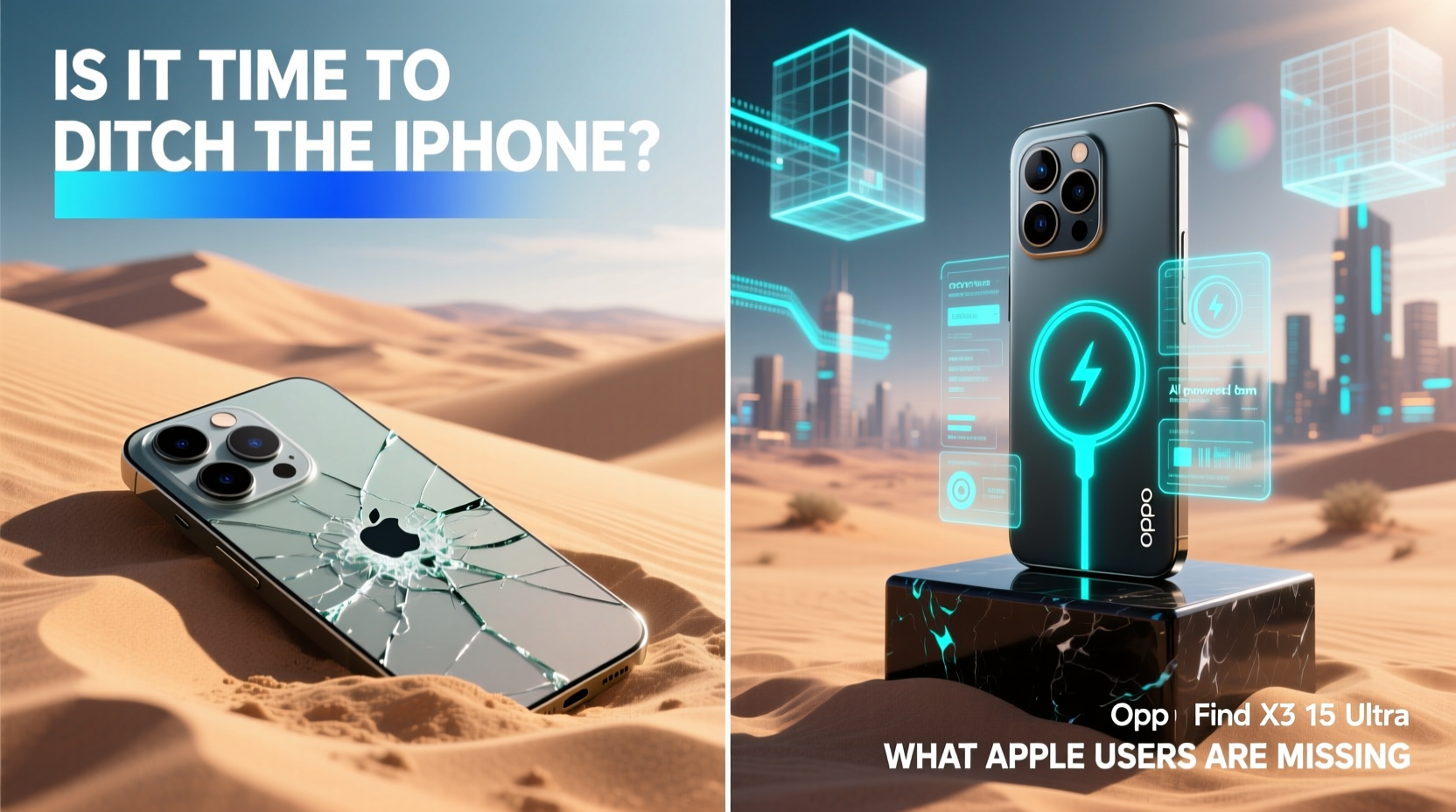
One of the most glaring differences between current-gen iPhones and OPPO flagships is charging speed. While Apple still caps its fastest wired charging at around 27W—and only under ideal conditions—OPPO has long surpassed that. Models like the Find X6 Pro support 100W SuperVOOC charging, delivering a full charge in under 30 minutes.
This isn’t just about convenience; it’s about rethinking how we use our phones. Need 50% before heading out? Plug in during your shower. Forgot to charge overnight? A 10-minute top-up gives you hours of usage.
2. Camera Innovation Beyond the Basics
iPhones are known for consistent, natural-looking photos, especially in video. But OPPO has taken a different approach: pushing hardware boundaries. The Find X6 Pro features a 1-inch Sony IMX989 sensor on its main camera—one of the largest in any smartphone—alongside a periscope telephoto lens offering 3x optical zoom and up to 120x digital zoom with impressive clarity.
What sets OPPO apart is computational photography tuned for dynamic range and low-light detail. In side-by-side tests, the Find X6 Pro often captures richer shadows and more nuanced highlights than the iPhone 15 Pro, particularly in challenging lighting.
“Smartphone cameras are no longer just about megapixels—they’re about light capture, processing speed, and AI optimization. OPPO is investing heavily where it matters.” — Lin Zhao, Mobile Imaging Analyst at TechPulse Asia
3. Display and Design: Subtle Elegance Meets Cutting Edge
The iPhone’s design language remains minimalist and timeless. But OPPO counters with refined craftsmanship and bolder innovations. The Find series uses curved quad-curved displays that reduce glare and enhance immersion, paired with matte-finish glass or sustainable vegan leather options.
More importantly, OPPO integrates advanced display tech like LTPO 2.0, enabling adaptive refresh rates from 1Hz to 120Hz. This means smoother scrolling when needed and extreme power savings when idle—something iPhones now do, but OPPO has optimized further with deeper system-level tuning.
4. Performance vs. Real-World Use: Are You Overpaying?
Apple’s A-series chips consistently lead in single-core benchmarks. But raw power doesn’t always translate to better daily experience. OPPO’s partnership with Qualcomm and aggressive software optimization (ColorOS) delivers fluid multitasking, faster app launches, and better thermal management during extended gaming or photo editing sessions.
And let’s talk value. The iPhone 15 Pro Max starts at $1,199. The OPPO Find X6 Pro offers comparable—if not superior—specs in camera, screen, and charging, starting at roughly $999 (in global markets). That’s a meaningful difference for many consumers.
iPhone vs. OPPO: Key Feature Comparison
| Feature | iPhone 15 Pro Max | OPPO Find X6 Pro |
|---|---|---|
| Charging Speed | ~27W (wired), 15W MagSafe | 100W SuperVOOC (wired), 50W wireless |
| Main Camera Sensor | 48MP (1/1.28\") | 50MP (1-inch IMX989) |
| Telephoto Zoom | 5x (tetraprism) | 3x optical, up to 120x digital |
| Display Refresh Rate | Adaptive 1–120Hz | LTPO 1–120Hz |
| Starting Price (USD) | $1,199 | $999 |
| Water Resistance | IP68 | IP68 |
5. Software Experience: Simplicity vs. Flexibility
iOS is praised for its simplicity, security, and seamless integration with other Apple devices. But it also limits customization. ColorOS, OPPO’s Android-based interface, offers granular control—from icon shapes and fonts to permission monitoring and split-screen workflows.
For users who want more control over their device behavior, such as automating app permissions or using dual accounts simultaneously (e.g., two WhatsApp profiles), OPPO provides functionality iOS simply doesn’t allow.
Moreover, OPPO has improved its update policy. Recent models receive four major Android OS upgrades and five years of security patches—closing the historical gap with Apple’s long-term support.
Real Example: Sarah Makes the Switch
Sarah, a freelance photographer based in Berlin, used iPhones exclusively for nine years. She valued the color accuracy and ecosystem compatibility. But after borrowing a friend’s Find X6 Pro during a trip to Morocco, she was struck by how quickly it charged in her rental car, how well the main camera captured desert sunsets, and how smoothly it handled editing 4K footage.
She switched six months ago. “I missed iMessage at first,” she admits, “but I gained so much in flexibility. I can edit RAW files directly on the phone, charge fully while eating breakfast, and customize my workspace exactly how I want. For my workflow, OPPO just makes more sense now.”
Step-by-Step: How to Transition from iPhone to OPPO
Moving from iOS to Android doesn’t have to be disruptive. Follow this timeline for a smooth switch:
- Week 1: Prepare Your Data – Back up contacts, photos, and notes to Google or a cloud service. Export important documents.
- Day of Switch: Use Move to iOS Alternative – Download “Google Drive” or “Switch Me” on both devices to transfer messages, media, and call logs.
- First 48 Hours: Set Up Core Apps – Install WhatsApp, banking apps, and productivity tools. Enable two-factor authentication.
- Day 3–7: Customize Your Experience – Explore ColorOS features like Always-On Display, Dark Mode scheduling, and privacy controls.
- After One Week: Evaluate & Optimize – Check battery habits, charging patterns, and app performance. Adjust settings accordingly.
Frequently Asked Questions
Can I keep using my AirPods with an OPPO phone?
Yes. AirPods work via Bluetooth with any smartphone, including OPPO devices. Pair them through Bluetooth settings. Note: Features like automatic switching and spatial audio are limited without an Apple ecosystem.
Will I lose iMessage and FaceTime?
You’ll lose native iMessage unless you keep an old iPhone active. On OPPO, use RCS (via Google Messages) for enhanced texting. FaceTime calls can be joined via web browser, but hosting requires an Apple device.
How is OPPO’s customer support compared to Apple’s?
Apple still leads in global service network and ease of repair. However, OPPO has expanded its international support, offering mail-in repairs and partner service centers in Europe and Southeast Asia. Response times vary by region but are improving.
Final Thoughts: Time to Reassess Your Loyalty?
Loyalty has its perks—but so does openness to change. The iPhone remains a polished, reliable device with unmatched ecosystem synergy. But for users who prioritize fast charging, cutting-edge camera hardware, and greater customization, OPPO represents a compelling alternative.
The smartphone market is no longer a one-horse race. With OPPO pushing boundaries in ways Apple hasn’t matched, the real question isn’t whether you *can* switch—it’s whether you’re missing out by staying put.




 浙公网安备
33010002000092号
浙公网安备
33010002000092号 浙B2-20120091-4
Comments
No comments yet. Why don't you start the discussion?