
For over a decade, many smartphone users have lived within tightly woven ecosystems. If you started with an iPhone, chances are you’ve stayed there—not because you were dissatisfied, but because switching felt like too much effort. But now, with Samsung’s Galaxy S22 pushing boundaries in hardware customization, camera versatility, and software flexibility, and Apple’s iPhone 13 holding strong on ecosystem cohesion and longevity, a growing number of users are asking: Is it finally time to switch?
The mainstream reviews often focus on specs: megapixels, processor speeds, battery life. While those matter, they miss deeper questions about usability, personal workflow integration, and the subtle costs—both financial and emotional—of changing platforms after years of loyalty.
The Hidden Realities of Ecosystem Lock-In
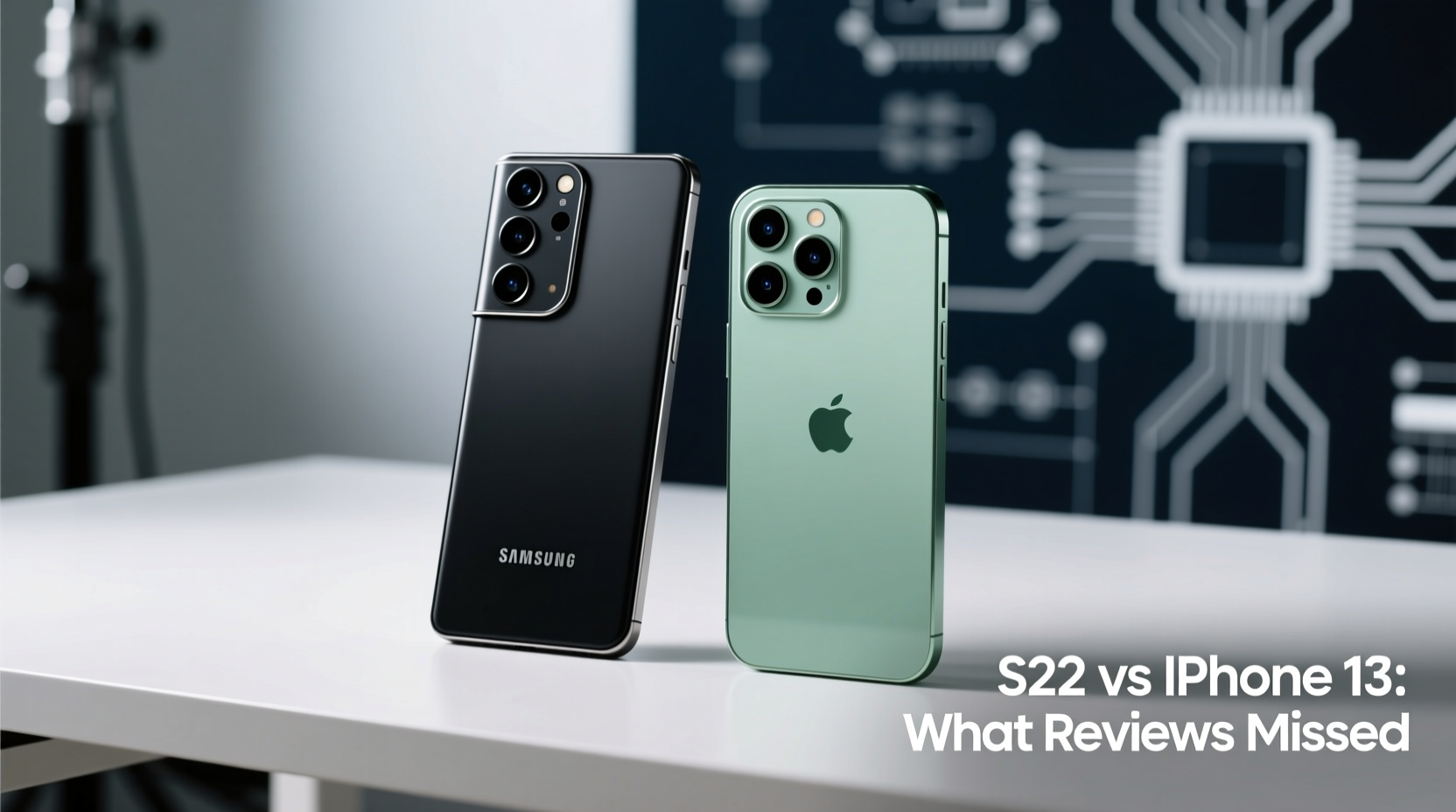
One of the most underreported aspects of the iPhone-to-Galaxy debate is ecosystem inertia. Apple has spent years refining continuity between devices: iMessage, FaceTime, iCloud Photos, AirDrop, Handoff, and seamless syncing across Macs, iPads, and Apple Watches. These features aren’t just convenient—they become invisible infrastructure in your daily life.
Switching to Android means rebuilding that infrastructure. Google Messages doesn’t replace iMessage’s ubiquity. Nearby Share isn’t as universally adopted as AirDrop. And while Samsung’s Smart Switch can migrate data, it can’t replicate the ambient awareness that comes from living inside Apple’s world.
“People don’t leave ecosystems because of better specs—they leave when the cost of staying outweighs the pain of leaving.” — Dr. Lena Patel, Digital Behavior Researcher at MIT Media Lab
This psychological friction explains why so many users tolerate iPhone limitations—like the lack of expandable storage or consistent fast charging—while dismissing Galaxy strengths. The convenience of staying put often trumps incremental improvements elsewhere.
What Most Reviews Ignore: Software Longevity vs. Hardware Innovation
iPhone 13 still receives iOS updates and security patches, with Apple promising support until 2027 or beyond. In contrast, the Galaxy S22, despite launching with similar premium positioning, officially ended its major Android OS update cycle in 2024, receiving only security patches thereafter.
This disparity reveals a core difference in philosophy: Apple prioritizes long-term software support; Samsung emphasizes cutting-edge hardware iteration. For users who upgrade every three years or more, this makes the iPhone a safer long-term investment. But for those who value having the latest camera sensors, display tech, or AI processing each year, Samsung’s rapid innovation may justify shorter device lifespans.
Camera Performance: Beyond Megapixels and Night Mode
Reviewers rave about the S22’s 50MP main sensor and advanced AI-powered night photography. Meanwhile, the iPhone 13’s 12MP system is praised for color accuracy and dynamic range. But real-world use exposes nuances that spec sheets can’t capture.
The S22 excels in controlled conditions—bright daylight, stable lighting—but sometimes over-processes images, applying aggressive sharpening or saturation. The iPhone 13, by contrast, delivers consistency across environments, especially in video recording, where its cinematic mode and Dolby Vision HDR remain unmatched in the Android space—even today.
Yet, Samsung offers something Apple still lacks: a truly versatile telephoto lens. The S22’s 3x optical zoom and up to 30x digital zoom give photographers far more creative control than the iPhone 13’s modest 2x optical zoom.
| Feature | Galaxy S22 | iPhone 13 |
|---|---|---|
| Main Camera | 50MP, f/1.8 | 12MP, f/1.6 |
| Telephoto Zoom | 3x optical, 30x digital | 2x optical, 10x digital |
| Video Recording | 8K @ 24fps, HDR10+ | 4K @ 60fps, Dolby Vision HDR |
| Low-Light Photo | Strong AI enhancement | Natural tone preservation |
| Front Camera | 10MP, f/2.2 | 12MP, f/2.2 with Auto-Focus |
A Real User’s Journey: From iPhone to Galaxy After 11 Years
Take Mark T., a freelance photographer in Portland who used iPhones exclusively from 2010 to 2023. He loved the simplicity and reliability but grew frustrated with the lack of manual camera controls and limited file management.
“I wanted to shoot RAW more easily, edit directly on-device, and transfer large files without relying on iCloud,” he said. “The S22 gave me desktop-grade folder access, DeX for multitasking, and Pro Mode in the camera app. It took two weeks to adjust, but now I can’t go back.”
His biggest hurdle wasn’t functionality—it was social. “Everyone assumed I’d lost my iPhone or broken it. Friends asked why I ‘downgraded.’ Messaging became awkward because green bubbles made me feel like an outsider.”
Still, Mark found workarounds: using WhatsApp consistently, enabling RCS (where available), and setting expectations with close contacts. His transition succeeded not because the S22 was objectively “better,” but because it aligned with his evolving professional needs.
Practical Checklist: Are You Ready to Switch?
Moving from iPhone to Galaxy isn’t just about preference—it’s a logistical shift. Use this checklist to assess readiness:
- ✅ Back up all iPhone data via iCloud and export key documents manually
- ✅ Verify compatibility of essential apps (e.g., banking, productivity tools) on Android
- ✅ Set up Google Account and enable 2FA before transferring
- ✅ Disable iMessage on your old device to avoid message delivery issues
- ✅ Install Samsung Smart Switch and test data migration on a secondary device if possible
- ✅ Plan for messaging adjustment: encourage contacts to use cross-platform apps like WhatsApp or Signal
- ✅ Evaluate accessory ecosystem (watch, earbuds, car integration) and replacement costs
Charging, Battery, and Daily Usability: The Unseen Trade-Offs
The Galaxy S22 supports faster wired and wireless charging than the iPhone 13, but Apple includes optimized battery charging that learns usage patterns to reduce wear. Samsung has improved its adaptive battery features, but they’re still less refined.
However, the S22 includes power-sharing capabilities—reverse wireless charging—that let you juice up earbuds or another phone in a pinch. The iPhone 13 lacks this entirely.
Battery size favors the S22 slightly (3700mAh vs. 3227mAh), but real-world endurance depends heavily on software optimization. iOS remains more efficient in background task management, giving the iPhone 13 surprisingly competitive battery life despite smaller capacity.
Frequently Asked Questions
Will my AirPods work with a Galaxy phone?
Yes, AirPods function as standard Bluetooth headphones with any Android device, including Galaxy phones. However, you’ll lose automatic switching, spatial audio with head tracking, and quick setup features. For full integration, consider Samsung’s Buds series.
Can I recover my iMessages on Android?
No. iMessages are end-to-end encrypted and tied to Apple’s ecosystem. Once you disable iMessage, previous messages cannot be transferred. SMS texts can be migrated via third-party tools, but iMessage history remains inaccessible.
Is the Galaxy S22 still worth buying in 2024?
Only if purchased at a significant discount. With official OS updates completed, it’s no longer ideal for long-term ownership. However, as a secondary device or short-term solution, its camera and build quality remain impressive.
Conclusion: Time to Make the Leap?
The decision to switch from iPhone to Galaxy isn’t one that specs alone can answer. The S22 offers tangible advantages in camera flexibility, charging speed, and hardware customization. But the iPhone 13 continues to deliver unmatched ecosystem synergy, software longevity, and video performance.
If you value control, openness, and hands-on customization—and are willing to rebuild parts of your digital routine—the Galaxy S22 represents a compelling alternative. But if peace of mind, long-term support, and seamless integration matter more, staying with iPhone remains a rational choice.
Ultimately, the right device isn’t the one with the best benchmark score. It’s the one that fits how you live, work, and connect. For some, that life has outgrown the walled garden. For others, it’s still home.




 浙公网安备
33010002000092号
浙公网安备
33010002000092号 浙B2-20120091-4
Comments
No comments yet. Why don't you start the discussion?