
Friendships are among the most meaningful relationships in life. They offer companionship, support, and shared joy. Yet, like all human connections, they are not immune to change. It’s common—and often necessary—for friendships to evolve, distance themselves, or quietly dissolve. Recognizing that this process is natural can bring relief, especially when you're left wondering whether you've failed or been failed by someone you once cared about deeply.
Fading friendships don’t always signal failure or neglect. Sometimes, people grow in different directions. Life circumstances shift—careers, relationships, locations, values—and what once felt essential may no longer serve either person. The real challenge lies in knowing when a friendship has naturally run its course and when it might be worth repairing. More importantly, understanding when it’s time to let go with grace and self-respect is crucial for emotional well-being.
Why Friendships Naturally Fade Over Time
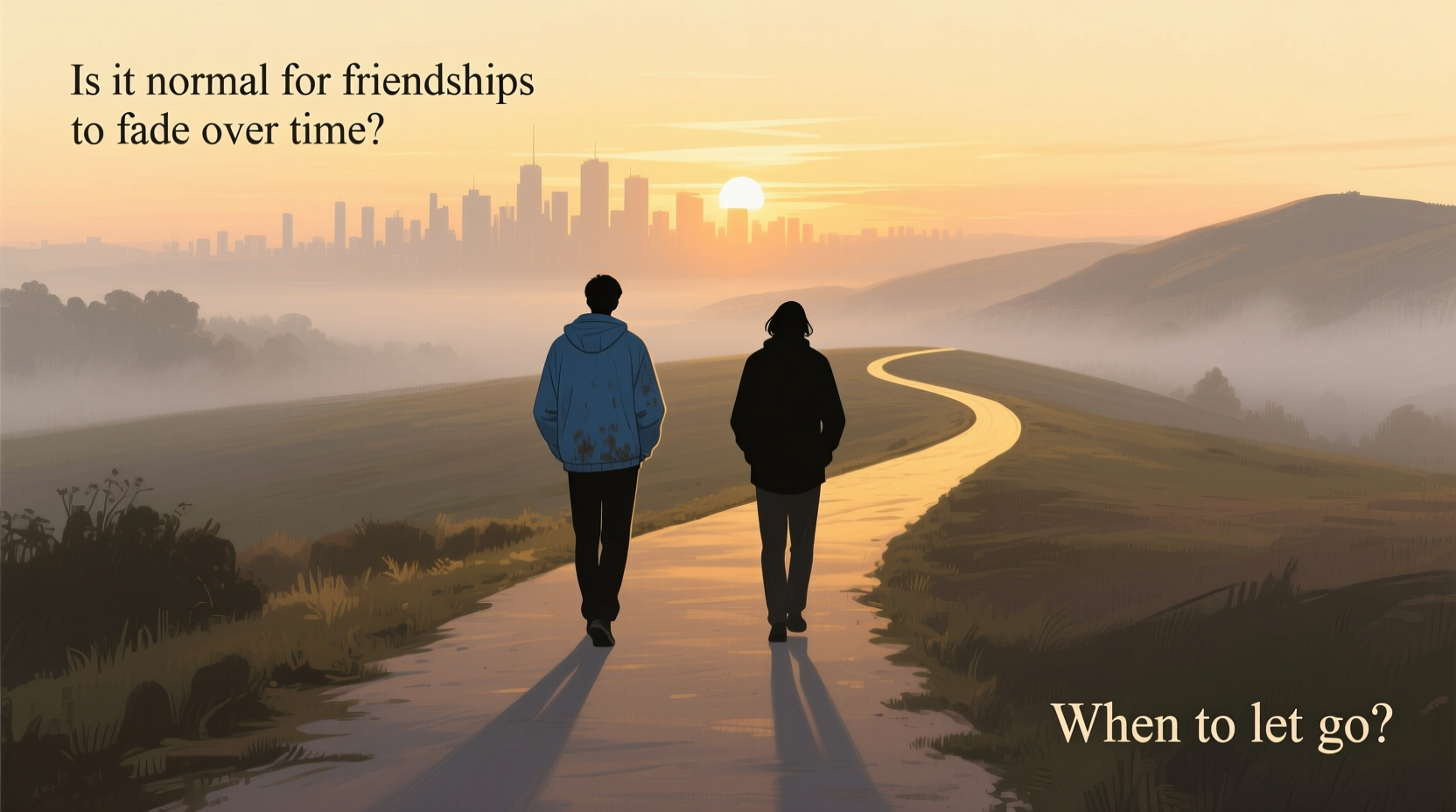
Growth is inevitable. As individuals mature, their priorities, interests, and emotional needs change. A friendship that thrived in college may lose momentum when one person moves across the country for a demanding job while the other starts a family. These shifts aren't failures—they’re signs of life unfolding as it should.
Psychologists often describe friendships in stages, much like romantic relationships. There’s an initiation phase, deepening connection, maintenance, and eventually, possible dissolution. Not every bond is meant to last forever. Some friendships exist to teach us something specific: how to trust, how to set boundaries, or how to enjoy spontaneity. Once that lesson is learned, the relationship may naturally recede.
Sociologist Dr. Robin Dunbar’s research on social networks suggests that humans can maintain only about five close friendships at any given time. As new people enter our lives—colleagues, partners, neighbors—we may unintentionally deprioritize older connections. This isn’t callousness; it’s cognitive limitation. We simply don’t have the emotional bandwidth to sustain every past bond at peak intensity.
“People come into your life for a reason, a season, or a lifetime. When you know which one it is, you know exactly what to do.” — Iyanla Vanzant, author and relationship expert
Signs a Friendship Has Run Its Course
Not all fading friendships end abruptly. Many erode slowly, marked by subtle but telling signals. Recognizing these early can prevent prolonged emotional strain.
- One-sided effort: You’re consistently the one initiating contact, planning meetups, or checking in.
- Lack of emotional reciprocity: Conversations feel shallow, or your friend shows little interest in your life during tough times.
- Drifting values: Your core beliefs—on politics, ethics, parenting, or lifestyle—no longer align, leading to tension or avoidance.
- Resentment builds: You start feeling drained, judged, or taken for granted after interactions.
- No growth together: The friendship feels stagnant, stuck in old patterns without room for evolution.
- Avoidance: You find excuses not to respond to messages or decline invitations without guilt.
These signs don’t mean you were bad friends. They indicate a mismatch in current life phases or emotional availability. Accepting this allows space for healthier relationships to form.
When to Actively Let Go of a Friendship
Some friendships don’t just fade—they harm. Staying in toxic or draining relationships under the guise of loyalty can damage self-esteem and mental health. Knowing when to cut ties is an act of self-preservation.
Consider stepping away if:
- Your friend regularly disrespects your boundaries.
- They compete with you instead of celebrating your successes.
- There’s manipulation, gossip, or emotional blackmail.
- You feel anxious before or after spending time with them.
- The friendship brings more stress than comfort.
Letting go doesn’t always mean confrontation. In many cases, gently creating distance—reducing contact, unfollowing on social media, declining invitations—is enough. Direct closure may be needed only if there’s unresolved conflict affecting your peace.
A Real-Life Example: Sarah’s Story
Sarah and Mia were inseparable in their late twenties, sharing everything from career struggles to dating woes. But after Mia got married and moved to another city, their weekly calls dwindled to occasional texts. Sarah tried to keep the connection alive, but responses grew shorter, then nonexistent.
After six months of one-sided effort, Sarah realized Mia had emotionally withdrawn. Instead of resenting her, Sarah reflected: “We supported each other through a major life transition. Now we’re in different chapters.” She sent a final message wishing Mia well, then quietly unfollowed her on Instagram. Over time, she made space for new friendships that matched her current rhythm.
This wasn’t loss—it was release. And in that release, Sarah found freedom to invest in relationships that were mutually nourishing.
How to Navigate the End of a Friendship with Grace
Even when ending a friendship feels necessary, grief is normal. You’re mourning not just the person, but the memories, inside jokes, and sense of belonging. Processing this with care supports emotional resilience.
- Acknowledge the significance: Journal about what the friendship meant to you. Celebrate the good without denying the reasons for parting.
- Allow yourself to grieve: It’s okay to feel sad, confused, or even relieved. Emotions aren’t linear.
- Limit rumination: Avoid obsessing over “what ifs” or replaying old conversations. Focus on what you can control—your own healing.
- Seek support: Talk to a trusted friend or therapist. Naming your feelings reduces their power.
- Create closure rituals: Write a letter (not to send), delete old photos, or visit a meaningful place to symbolize letting go.
Grace also means refraining from public blame or gossip. Protect your integrity—and theirs—even in silence.
Do’s and Don’ts of Fading Friendships
| Do | Don’t |
|---|---|
| Reflect on your role without self-blame | Dwell on who was “right” or “wrong” |
| Express appreciation if reconnecting briefly | Reignite contact just to seek validation |
| Set gentle boundaries if interaction continues | Engage in passive-aggressive behavior |
| Make space for new connections | Idealize the past or compare new friends unfairly |
| Honor the friendship’s season | Pretend the bond still exists when it doesn’t |
When to Try to Repair a Fading Friendship
Not every fading friendship should be abandoned. Some can be revived with honest communication and mutual willingness to adapt.
Consider repair if:
- The drift happened due to external factors (e.g., illness, relocation, busy parenting).
- Both parties show regret or desire to reconnect.
- The foundation of trust and respect remains intact.
- You both have capacity to invest time and energy now.
A simple message can open the door: *“I’ve missed our talks. No pressure, but I’d love to catch up if you’re open to it.”* Leave room for honesty—if the other person isn’t ready, honor that too.
FAQ: Common Questions About Fading Friendships
Is it selfish to end a friendship?
No. Prioritizing your mental health and emotional safety isn’t selfish—it’s responsible. Healthy relationships should uplift, not deplete. Letting go of a harmful or unbalanced friendship creates space for ones that align with your values and well-being.
Can a friendship come back after years of no contact?
Sometimes, yes—but with caveats. Reconnecting after a long gap requires mutual effort, updated expectations, and recognition that both people have changed. Some reunions reignite beautifully; others reveal incompatibility. Approach with openness, not nostalgia.
How do I deal with guilt when letting go?
Guilt often stems from conflating care with obligation. You can care deeply for someone and still recognize the relationship no longer serves either of you. Remind yourself: ending a chapter doesn’t erase its value. Guilt fades when you replace judgment with compassion—for them, and for yourself.
Final Thoughts: Embracing Change as Part of Connection
Friendships are living things. They breathe, grow, and sometimes, quietly cease. Accepting this truth removes the burden of permanence and allows you to appreciate relationships for what they are: dynamic, temporary, and profoundly human.
Letting go isn’t a sign of weakness or failure. It’s an act of maturity—an acknowledgment that people change, and so do needs. The courage to release a fading friendship makes room for deeper authenticity in the ones that remain and those yet to come.
You don’t need closure from everyone to move forward. Sometimes, the quietest endings are the most peaceful. Trust your instincts. Honor your journey. And remember: every friendship, however brief, shaped who you are today.




 浙公网安备
33010002000092号
浙公网安备
33010002000092号 浙B2-20120091-4
Comments
No comments yet. Why don't you start the discussion?