
For many parents, hearing their toddler have full conversations with someone who isn’t there can be both amusing and unsettling. One moment, your child is laughing with “Charlie,” the invisible dragon at the dinner table; the next, they’re negotiating bedtime rules with “Lila,” the purple cat who lives under the bed. While it might seem strange, talking to imaginary friends is not only common—it’s a healthy and developmentally appropriate part of early childhood.
Research shows that up to 65% of children between the ages of 3 and 7 have an imaginary companion at some point. These invisible playmates are not a sign of loneliness, social difficulty, or psychological disturbance. On the contrary, they often reflect creativity, emotional intelligence, and advanced language skills. Understanding why toddlers create these companions—and how to respond—can help parents support their child’s growth without unnecessary concern.
The Psychology Behind Imaginary Friends
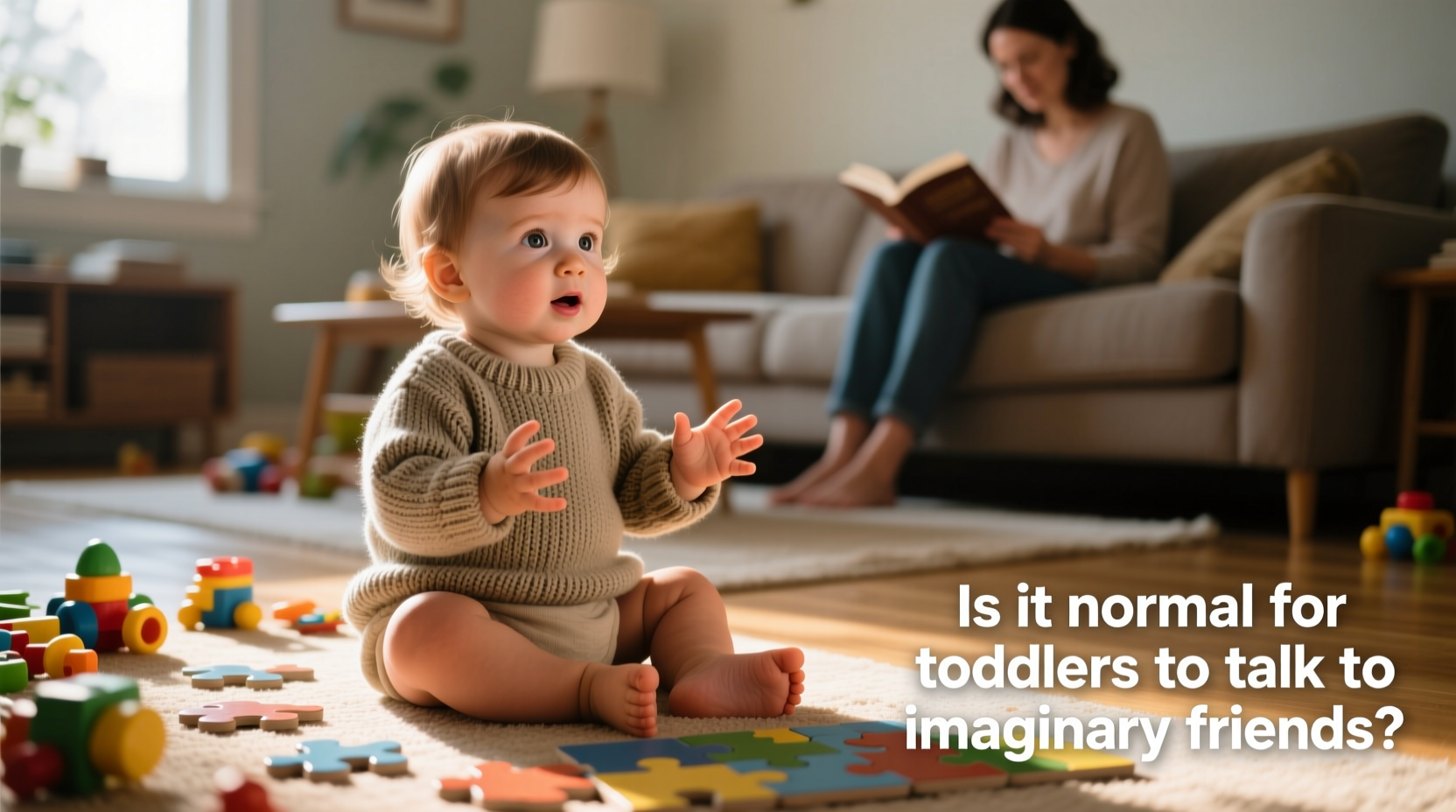
Imaginary friends emerge during a critical stage of cognitive and emotional development. Between the ages of 2 and 5, children rapidly expand their language abilities, theory of mind (the understanding that others have thoughts and feelings different from their own), and imaginative capacities. An imaginary friend is often the natural result of these evolving skills.
Psychologists view imaginary companions as tools for exploration. Toddlers use them to rehearse social interactions, express emotions they may not yet understand, and experiment with identity. For example, a shy child might create a bold, adventurous friend who speaks confidently in situations where the child feels hesitant. This allows the child to explore courage indirectly, without personal risk.
“Imaginary friends are not a retreat from reality but a way of mastering it.” — Dr. Marjorie Taylor, Professor of Psychology and Author of *Imaginary Companions and the Children Who Create Them*
Dr. Taylor’s decades of research reveal that children with imaginary friends often score higher on measures of empathy, storytelling ability, and emotional regulation. They are not confused about reality; most can clearly distinguish between real and pretend. In fact, the ability to sustain a fictional character while knowing it’s not real requires sophisticated cognitive control.
Why Toddlers Create Imaginary Friends: Key Reasons
The motivations behind imaginary companions vary, but several developmental and emotional factors commonly contribute:
- Creative expression: Toddlers are discovering their imagination. Creating a character gives them a safe outlet to explore ideas, roles, and stories.
- Emotional regulation: A child dealing with change—such as a new sibling, moving homes, or starting preschool—might invent a friend to process complex feelings like anxiety or jealousy.
- Social practice: Talking to an imaginary friend helps toddlers practice conversation, negotiation, and conflict resolution before applying those skills with peers.
- Autonomy: Young children have limited control over their daily lives. An imaginary friend offers a relationship they fully direct, boosting confidence and decision-making.
- Companionship: Even in loving families, young kids spend time alone. An imaginary friend fills moments of solitude with engagement and comfort.
When Imaginary Friends Are a Sign of Strength, Not Struggle
Contrary to outdated myths, imaginary friends are rarely linked to social deficits or emotional problems. In fact, modern developmental psychology suggests the opposite. Children who invent companions often demonstrate advanced social-cognitive abilities.
A landmark study by Dr. Taylor followed children with and without imaginary friends over several years. The results showed that those with imaginary companions:
- Used more complex sentences in speech
- Told richer, more detailed stories
- Showed greater empathy in peer interactions
- Were better at understanding others’ perspectives
These findings challenge the stereotype that imaginary friends indicate loneliness or maladjustment. Instead, they suggest that such play is a form of mental rehearsal—like a sandbox for social and emotional development.
Real Example: Maya and Her Invisible Dog
Maya, a 4-year-old from Portland, began talking about “Barkley,” a tiny invisible dog, shortly after her family moved to a new city. At first, her parents worried she was struggling with the transition. But they noticed Barkley only appeared during quiet times or when Maya felt uncertain. She’d ask Barkley what he thought about preschool or whether it was okay to try broccoli.
Instead of discouraging the friendship, Maya’s parents gently engaged. “What did Barkley say about your painting today?” they’d ask. Over time, Maya used Barkley less frequently—especially as she made real friends at school. By age 6, Barkley had “moved to the countryside,” and Maya spoke of him fondly, like a childhood phase now passed.
This case illustrates how imaginary friends can serve as emotional anchors during change, fading naturally as confidence grows.
How Parents Should Respond: A Balanced Approach
Your reaction to your toddler’s imaginary friend can shape how they process the experience. While it’s important not to reinforce the illusion, it’s equally vital not to shame or dismiss it.
Do’s and Don’ts for Parents
| Do’s | Don’ts |
|---|---|
| Respect the friend as part of your child’s world | Tease or mock the imaginary friend |
| Use the friend to encourage positive behavior (“I bet Luna would like it if you shared your toys”) | Insist the friend is real or participate in the fantasy |
| Ask open-ended questions about the friend to encourage language and reflection | Worry that the friend indicates a problem unless other red flags exist |
| Set boundaries (e.g., “We don’t feed imaginary friends at the table”) | Force the child to “stop pretending” |
| Monitor for signs of distress, aggression, or withdrawal related to the friend | Compare your child to others who don’t have imaginary friends |
Step-by-Step Guide: Supporting Your Child’s Imaginary Friend
- Observe without judgment: Notice when and how the friend appears. Is it during transitions, playtime, or stressful moments?
- Engage lightly: Ask curious questions like, “What kind of games do you and Sam play together?” This encourages storytelling and emotional expression.
- Respect boundaries: If your child says their friend doesn’t like loud noises, acknowledge the feeling without validating the fiction: “I see you’re feeling overwhelmed. Let’s find a quiet spot.”
- Encourage real-world connections: Support opportunities for peer play and social interaction, ensuring the imaginary friend doesn’t replace human relationships.
- Know when to seek help: If the friend encourages harmful behavior, causes fear, or persists beyond age 8 with signs of social withdrawal, consult a child psychologist.
When to Be Concerned: Red Flags to Watch For
In most cases, imaginary friends are temporary and harmless. However, certain behaviors may warrant professional attention:
- The child seems afraid of or controlled by the imaginary friend.
- The friend encourages self-harm or aggression toward others.
- The child withdraws from real-life interactions and prefers only the imaginary companion.
- The behavior continues past age 8–9 without signs of natural decline.
- There are delays in language, social skills, or reality testing.
It’s crucial to note that having an imaginary friend—even a persistent one—does not mean a child has a psychiatric condition. Many gifted and highly imaginative children maintain rich fantasy lives well into elementary school. Concern arises only when the fantasy interferes with functioning or reflects deeper distress.
“Most children outgrow imaginary friends the way they outgrow training wheels. It’s a sign of progress, not pathology.” — Dr. Laura Markham, Clinical Psychologist and Parenting Expert
Frequently Asked Questions
Do imaginary friends mean my child is lonely?
No. Research consistently shows that children with imaginary friends are just as socially active as those without. In fact, they often have strong real friendships. The imaginary companion is typically an addition to, not a replacement for, human interaction.
Should I play along and pretend the friend is real?
It’s best to acknowledge the friend without reinforcing the illusion. You might say, “I know Barkley is special to you,” rather than sitting down to feed an empty chair. This validates your child’s feelings while maintaining a clear boundary around reality.
When do imaginary friends usually go away?
Most fade naturally between ages 6 and 8, especially as children build stronger peer relationships and gain confidence in navigating the world. Some may linger in quieter moments, but they typically lose their central role in daily life.
Conclusion: Embracing Imagination as a Developmental Gift
Talking to imaginary friends is not just normal—it’s a powerful sign of a thriving young mind. Far from indicating confusion or isolation, these invisible companions reflect creativity, emotional insight, and social learning in action. They help toddlers navigate a world that is still large, unpredictable, and full of new challenges.
As a parent, your role isn’t to correct or eliminate the fantasy, but to guide with empathy and curiosity. By respecting your child’s imaginative world while gently anchoring them in reality, you support both emotional resilience and cognitive growth. The same mind that invents a dragon today will one day solve complex problems, craft compelling stories, and empathize deeply with others.




 浙公网安备
33010002000092号
浙公网安备
33010002000092号 浙B2-20120091-4
Comments
No comments yet. Why don't you start the discussion?