
In a culture that often celebrates extroversion—where networking, social media presence, and weekend gatherings are seen as markers of success and happiness—it’s easy to feel out of step if you’d rather spend an evening reading than attending a loud party. Yet, millions of people quietly choose solitude over socializing, not out of shyness or avoidance, but because it aligns with who they are. The question isn’t whether this preference is common, but whether it’s understood. The truth is: yes, it is entirely normal to prefer solitude over parties. More than that, it can be a sign of emotional intelligence, self-awareness, and psychological well-being.
This article explores the psychology behind preferring solitude, examines how personality types influence social energy, and dispels myths about introversion. We’ll look at the science of alone time, its cognitive and emotional benefits, and how modern society mislabels quiet individuals. Whether you're someone who recharges in silence or know someone who does, understanding this preference can lead to greater self-acceptance and healthier relationships.
The Psychology of Solitude: Why Alone Time Matters
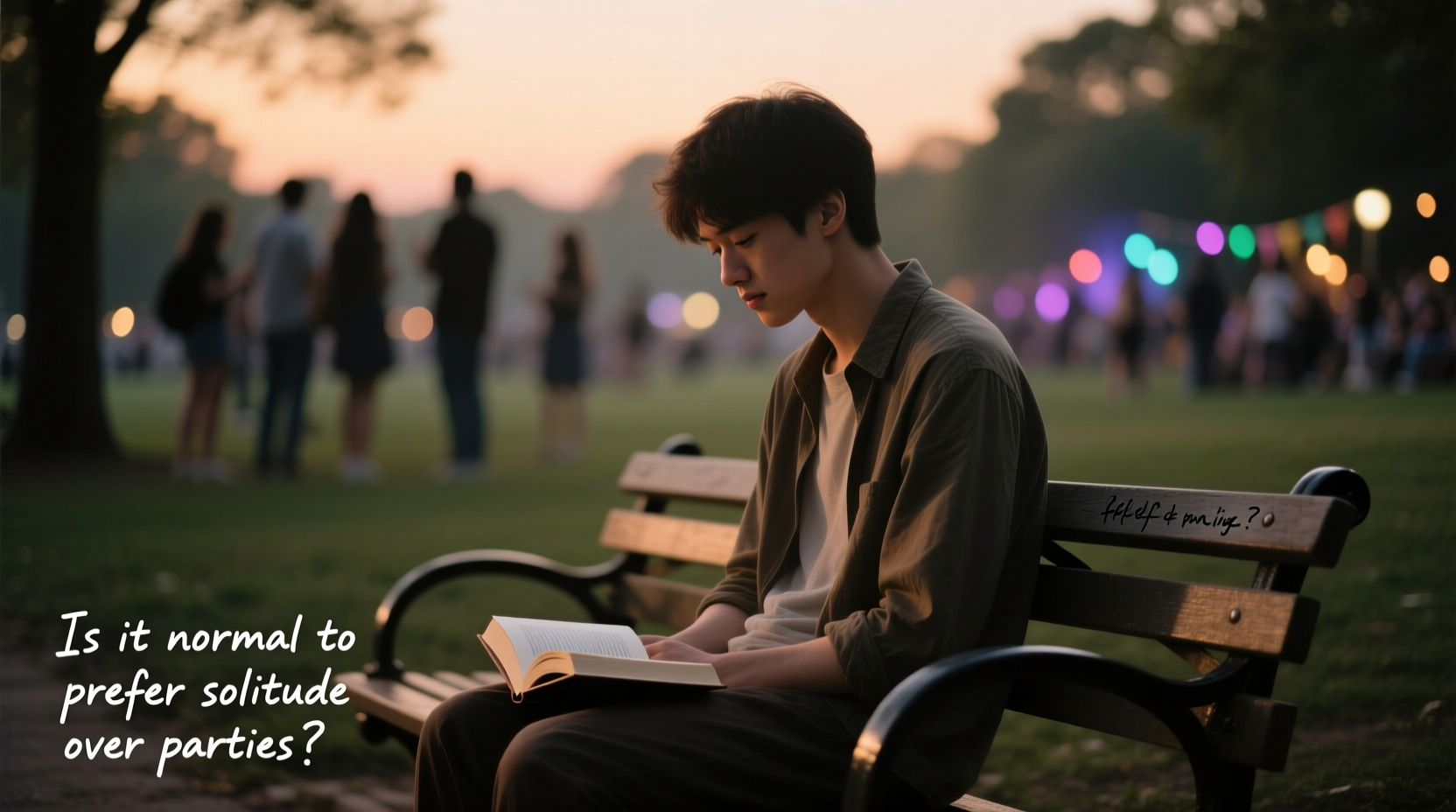
Solitude is often misunderstood. It’s not synonymous with loneliness, which is an unwanted state of isolation accompanied by distress. Solitude, in contrast, is a voluntary state—a conscious choice to disconnect from external stimuli and reconnect with oneself. Psychologists have long studied the effects of solitude on mental health, creativity, and identity formation.
Dr. Netta Weinstein, a psychologist at the University of Reading, conducted research showing that individuals who spend regular time alone report higher levels of self-reflection, autonomy, and emotional regulation. Her studies suggest that solitude fosters internal clarity, allowing people to process experiences without external noise.
“Solitude isn’t emptiness; it’s the space where self-understanding grows.” — Dr. Netta Weinstein, Social Psychologist
For many, solitude functions like a mental reset. It provides room to think deeply, make decisions free from group influence, and recover from social exhaustion. In a world saturated with notifications, conversations, and expectations, choosing solitude becomes an act of self-preservation.
Introversion vs. Extroversion: Understanding Your Energy Source
The preference for solitude often ties back to temperament, particularly the introversion-extroversion spectrum popularized by Carl Jung and later expanded in the Myers-Briggs Type Indicator (MBTI). While these labels are sometimes oversimplified, they offer useful insight into how people gain energy.
- Introverts recharge through internal stimulation. They tend to feel energized after spending time alone and may find prolonged social interaction draining, even if enjoyable.
- Extroverts gain energy from external environments—people, movement, conversation. They often feel invigorated after social events and may feel restless or bored in prolonged solitude.
It’s crucial to understand that introversion is not social anxiety, nor is extroversion inherently more desirable. These are simply different ways of processing the world. A study published in the Journal of Neuroscience found that introverts show higher activity in brain regions linked to internal thought, such as the frontal cortex, while extroverts exhibit stronger responses to external rewards.
Choosing solitude doesn’t mean disliking people—it means recognizing your limits and honoring your need for balance. Just as some bodies require more sleep, some minds require more quiet.
Do’s and Don’ts for Introverts Navigating a Social World
| Do | Don't |
|---|---|
| Plan social events in advance to mentally prepare | Force yourself into last-minute gatherings when drained |
| Communicate your boundaries kindly but clearly | Apologize excessively for needing downtime |
| Choose smaller, meaningful interactions over large groups | Compare your social habits to extroverted peers |
| Use solitude to recharge, not to isolate from connection | Assume solitude means something is wrong with you |
The Hidden Benefits of Preferring Solitude
While society often rewards gregariousness, those who embrace solitude gain unique advantages. Research consistently links regular alone time with enhanced creativity, improved decision-making, and deeper emotional insight.
1. Enhanced Creativity and Problem-Solving
Many groundbreaking ideas emerge in moments of quiet reflection. Writers, scientists, and artists often describe their best work occurring during solitary hours. Without external input, the mind wanders freely, making unexpected connections. A 2016 study from the University of Buffalo found that participants who spent time alone before tackling creative tasks performed significantly better than those in constant group settings.
2. Greater Emotional Intelligence
People who spend time alone often develop stronger self-awareness. They learn to identify their emotions, triggers, and needs without relying on others’ feedback. This introspection builds empathy—because they understand themselves deeply, they’re better equipped to understand others.
3. Reduced Stress and Mental Clarity
Constant social engagement activates the sympathetic nervous system—the body’s “fight or flight” response. Over time, this leads to chronic stress. Solitude allows the parasympathetic system to take over, promoting relaxation and recovery. Mindfulness practices, meditation, and journaling—all typically done in solitude—are proven tools for reducing anxiety and improving focus.
4. Stronger Boundaries and Authentic Relationships
Those comfortable with solitude are less likely to seek validation through social approval. They form relationships based on mutual respect rather than dependency. As a result, their connections tend to be more intentional and fulfilling.
Mini Case Study: Maya’s Journey from Guilt to Self-Acceptance
Maya, a 32-year-old graphic designer, grew up in a large, outgoing family where Sunday dinners included 15 relatives shouting over each other. From a young age, she preferred drawing in her room to joining the chaos. As she got older, friends invited her to clubs, rooftop parties, and networking mixers. She went occasionally, but always left early, feeling overwhelmed and emotionally drained.
For years, Maya believed there was something wrong with her. She questioned why she didn’t “light up” in crowds like her coworkers did. After reading Susan Cain’s Quiet: The Power of Introverts in a World That Can’t Stop Talking, she began reframing her nature—not as a flaw, but as a strength.
She started scheduling one solo day per weekend: walks in nature, museum visits, or simply reading at home. Over time, her confidence grew. She realized her best design ideas came after quiet reflection. At work, she became known for thoughtful solutions, not flashy presentations. When colleagues asked how she stayed so focused, she said, “I protect my energy.” Today, Maya still attends occasional events—but only when she chooses to, not out of obligation.
Her story reflects a broader shift: from self-doubt to self-knowledge. By honoring her need for solitude, Maya didn’t become isolated—she became more authentic.
Step-by-Step Guide: How to Embrace Solitude Without Guilt
If you’ve spent years feeling guilty for skipping parties or leaving early, reclaiming solitude as a positive practice takes intention. Here’s a practical five-step approach:
- Reflect on Your Social Patterns
Track your energy for a week. Note which activities leave you energized versus drained. Look for patterns: large groups? Small talks? Loud environments? - Redefine Solitude Positively
Replace negative self-talk (“I’m antisocial”) with affirmations (“I honor my energy needs”). Language shapes perception. - Create a Solitude Ritual
Design a daily or weekly routine—morning coffee in silence, evening walks, journaling. Consistency builds comfort. - Communicate Your Needs
Tell close friends or family: “I love spending time with you, but I also need downtime to stay balanced.” Most will respect honesty. - Balance, Not Avoidance
Solitude isn’t about cutting off connection. Aim for a rhythm: social engagement followed by recovery. Think of it like exercise and rest.
FAQ: Common Questions About Preferring Solitude
Isn’t wanting to be alone a sign of depression or social anxiety?
Not necessarily. Depression often involves withdrawal paired with low mood, fatigue, and loss of interest in previously enjoyed activities. Social anxiety is marked by intense fear of judgment. In contrast, choosing solitude with peace and purpose—followed by renewed energy—is healthy. If isolation feels forced or distressing, professional support may help. But peaceful solitude is not a red flag.
Can introverts be good leaders or build strong networks?
Absolutely. Introverted leaders often excel in listening, deep thinking, and empowering teams. Famous examples include Bill Gates, Angela Merkel, and Rosa Parks. Networking doesn’t require being the loudest in the room—many meaningful connections form in one-on-one conversations or written exchanges. Introverts often build deeper, more loyal relationships over time.
How do I explain my need for solitude to extroverted friends?
Frame it as self-care, not rejection. Say: “I really enjoy our time together, but I recharge best with some quiet time during the week. It helps me show up more fully when we meet.” Most people understand when you speak from a place of balance, not avoidance.
Conclusion: Honor Your Nature, Build a Life That Fits
There is no universal blueprint for a well-lived life. Some thrive in bustling cities and crowded bars; others find meaning in quiet mornings and deep conversations. Preferring solitude over parties isn’t abnormal—it’s a valid expression of human diversity. In fact, it may be a sign of maturity: the ability to listen to your inner voice amid a noisy world.
Society will always celebrate extroversion. But real progress happens when we stop asking, “Why don’t I like parties?” and start asking, “What kind of connection truly nourishes me?” The answer might involve fewer crowds and more stillness—and that’s perfectly okay.




 浙公网安备
33010002000092号
浙公网安备
33010002000092号 浙B2-20120091-4
Comments
No comments yet. Why don't you start the discussion?