
Attending a social gathering often comes with unspoken expectations—especially when it comes to arrival and departure times. While showing up late is widely considered impolite, the question of whether it’s acceptable to leave early is less clear-cut. Social norms vary by culture, occasion, and relationship, but one thing remains constant: how you leave matters as much as when. The good news is that leaving a party early isn’t inherently rude—if done thoughtfully and respectfully. In fact, doing so gracefully can reflect maturity, self-awareness, and consideration for your host.
Understanding the nuances of social etiquette allows you to navigate these situations confidently. Whether you're attending a formal dinner, a casual backyard barbecue, or a milestone celebration, knowing how to exit without causing offense is a valuable life skill. This guide explores when it's appropriate to leave early, how to do so without awkwardness, and what mistakes to avoid.
When Leaving Early Is Acceptable (and Sometimes Expected)
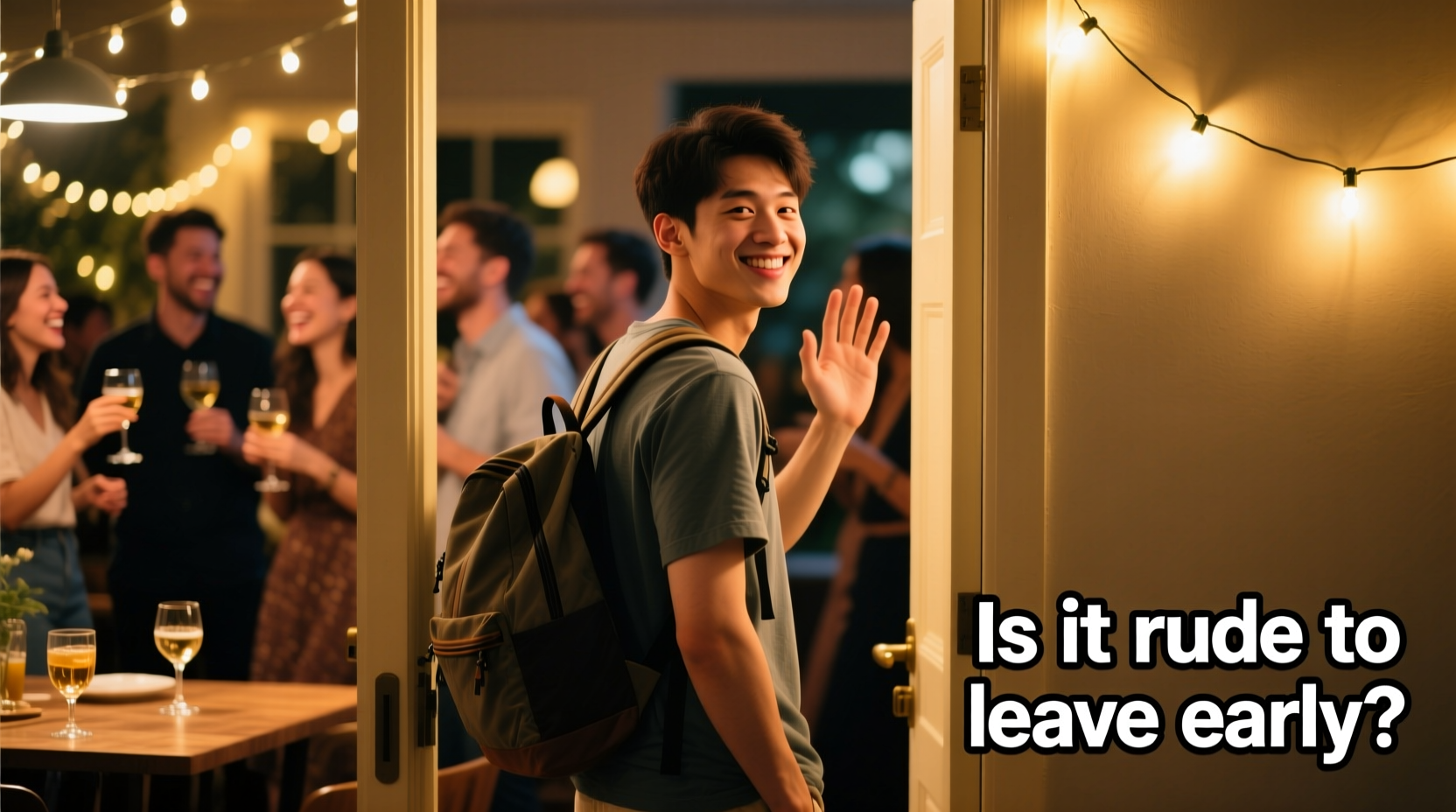
The idea that staying until the very end is the only polite option is outdated. Modern social dynamics recognize that people have varied schedules, responsibilities, and energy levels. In many cases, hosts anticipate that some guests may need to leave early—and they won’t take it personally.
Certain types of events are structured with early departures in mind:
- Cocktail parties: Often designed to last 2–3 hours, with no expectation to stay for dinner or late-night festivities.
- Work-related gatherings: Professionals may attend briefly to network before heading home after a long day.
- Weekend daytime events: Baby showers, garden parties, or brunches typically conclude by mid-afternoon.
- Large celebrations: At weddings or milestone birthdays, not every guest stays until the last dance.
In these contexts, arriving on time and spending a meaningful amount of time—usually at least 60 to 90 minutes—is sufficient. Staying longer is appreciated but not mandatory. The key is ensuring your presence feels intentional, not fleeting.
How to Leave Gracefully: A Step-by-Step Guide
Timing and technique matter when exiting a social event. A well-executed departure preserves relationships and reinforces your reputation as a considerate guest. Follow this five-step approach:
- Assess the event flow. Avoid leaving during pivotal moments like speeches, cake cutting, or group games. Wait for a natural lull in conversation or activity.
- Locate the host. Find them discreetly and express your gratitude. A personal goodbye is more respectful than slipping out unnoticed.
- Be honest but tactful. Use a simple, sincere explanation: “I need to get going because I have an early morning,” or “I’m so glad I could come—I really enjoyed catching up.”
- Offer appreciation. Compliment the food, atmosphere, or effort: “Everything was delicious,” or “You’ve created such a warm vibe tonight.”
- Exit smoothly. Don’t draw attention. A brief wave to close friends is fine, but avoid making a production of your departure.
This method ensures you honor the host’s effort while respecting your own boundaries. It also prevents misunderstandings—hosts are far more likely to remember your kindness than your early exit.
Do’s and Don’ts of Early Departure
To further clarify best practices, here’s a comparison of common behaviors and their social impact:
| Do’s | Don’ts |
|---|---|
| Say goodbye to the host personally | Slip out without saying anything |
| Stay for at least 60–90 minutes | Leave within 15–20 minutes of arrival |
| Give a brief, positive reason for leaving | Make exaggerated excuses or over-apologize |
| Arrive on time if leaving early | Arrive late and leave early |
| Send a thank-you message afterward | Disappearing without follow-up |
Following the “do’s” builds trust and goodwill. Violating the “don’ts” risks appearing indifferent or disrespectful, regardless of your intentions.
Real Example: Navigating a Friend’s Birthday Dinner
Consider Sarah, invited to a Saturday night birthday dinner for a close friend. She knows she has a family commitment early Sunday morning and plans to leave by 9 PM, while the event runs until 11. She arrives at 7, brings a thoughtful gift, and engages warmly with the group. Around 8:45, she sees the main course being cleared and dessert about to be served. She waits until the host steps into the kitchen, then follows to say goodbye.
“I had such a wonderful time,” Sarah says. “The meal was incredible, and it meant a lot to celebrate with everyone. I need to head out soon to get some rest for tomorrow, but please thank your partner again for cooking. Let’s plan that brunch we’ve been talking about!”
The host smiles, gives her a hug, and thanks her for coming. Later, Sarah sends a photo from the evening with a note: “So grateful I could be there—what a special night!” Her graceful exit and follow-up reinforce her sincerity. No one questions her early departure; instead, they remember her warmth and presence.
“We often overestimate how closely others monitor our movements at social events. Most hosts care more that you showed up meaningfully than that you stayed until midnight.” — Dr. Lydia Chen, Social Psychologist and Etiquette Consultant
Checklist: Leaving a Party Early Without Offense
Use this practical checklist to ensure your early departure is handled with grace:
- ✅ Arrive on time or as promised
- ✅ Engage genuinely with the host and guests
- ✅ Stay for a reasonable duration (at least 60–90 minutes)
- ✅ Choose an appropriate moment to leave
- ✅ Say a personal goodbye to the host
- ✅ Express appreciation for the event
- ✅ Offer a brief, honest reason for leaving
- ✅ Send a thank-you message or note afterward
- ✅ Avoid drawing excessive attention to your exit
- ✅ Refrain from criticizing the event or comparing it to others
Checking off even seven or eight of these items significantly reduces the risk of misunderstanding. The goal isn’t perfection—it’s demonstrating respect and presence.
When Leaving Early Can Be Rude
While early departures are often acceptable, certain situations make them inappropriate or offensive:
- You’re a key guest. If you’re part of the honored group (e.g., wedding party, immediate family at a milestone), leaving early may signal disinterest or disrespect.
- The host went to great effort. A multi-course homemade dinner, themed decor, or a surprise element deserves full participation if possible.
- You’re the only one leaving. If most guests are staying, your early exit may stand out and feel dismissive, especially if not explained.
- You’ve made prior commitments. If you promised to help set up, give a toast, or assist with cleanup, leaving breaks trust.
In these cases, reevaluate your schedule. If you must leave, communicate in advance: “I can’t stay past 9, but I wouldn’t miss this for anything.” This sets expectations and shows intentionality.
Frequently Asked Questions
Can I text the host instead of saying goodbye in person?
If you can’t find the host and the event is large or chaotic, a quick text is acceptable: “Had to run but truly loved being here—thank you!” However, in smaller gatherings, making the effort to say goodbye face-to-face is expected and appreciated.
What if I feel awkward announcing my departure?
Many people feel this way, but remember: hosts expect comings and goings. Keep your tone warm and appreciative, not apologetic. Instead of “Sorry to run,” say “I’m so glad I came—this was wonderful.” Confidence conveys respect.
Is it okay to leave right after eating?
This depends on context. At casual potlucks or open-house events, yes. But at seated dinners or intimate gatherings, leaving immediately after dessert may seem transactional. Stay for at least 20–30 minutes of post-meal conversation unless you’ve communicated otherwise.
Mastering the Art of the Thoughtful Exit
Navigating social events with grace isn’t about following rigid rules—it’s about balancing consideration for others with honesty about your needs. Leaving a party early isn’t rude when done with awareness, gratitude, and proper timing. In fact, it can reflect emotional intelligence: knowing your limits, honoring commitments, and respecting the host’s effort without overstaying your welcome.
Social confidence grows when you realize that most people are focused on their own experience, not monitoring your clock. What they remember is how you made them feel. Did you engage? Did you express appreciation? Did you treat the occasion as meaningful, even if brief?
By prioritizing presence over duration, you redefine what it means to be a good guest. You show up—not just physically, but emotionally—and you leave with dignity.




 浙公网安备
33010002000092号
浙公网安备
33010002000092号 浙B2-20120091-4
Comments
No comments yet. Why don't you start the discussion?