
In a world that often glorifies constant availability and perpetual busyness, saying no to a social invitation can feel like a betrayal—especially when the reason is simply needing time for yourself. Many people wrestle with guilt when they decline an event to prioritize rest, reflection, or emotional recharge. The underlying question becomes: Is it actually rude to skip gatherings in favor of self care? The answer, backed by psychology and relationship experts, is a clear no—provided you communicate your boundaries with respect and clarity.
Self care isn’t indulgence; it’s maintenance. Just as we service our cars or charge our phones, humans require downtime to function optimally. Yet societal expectations often paint declining invitations as selfish or disengaged. This article explores why prioritizing self care is not only acceptable but necessary, how to set boundaries without damaging relationships, and practical strategies for communicating your needs effectively.
Why Self Care Is Not a Luxury—It’s a Necessity
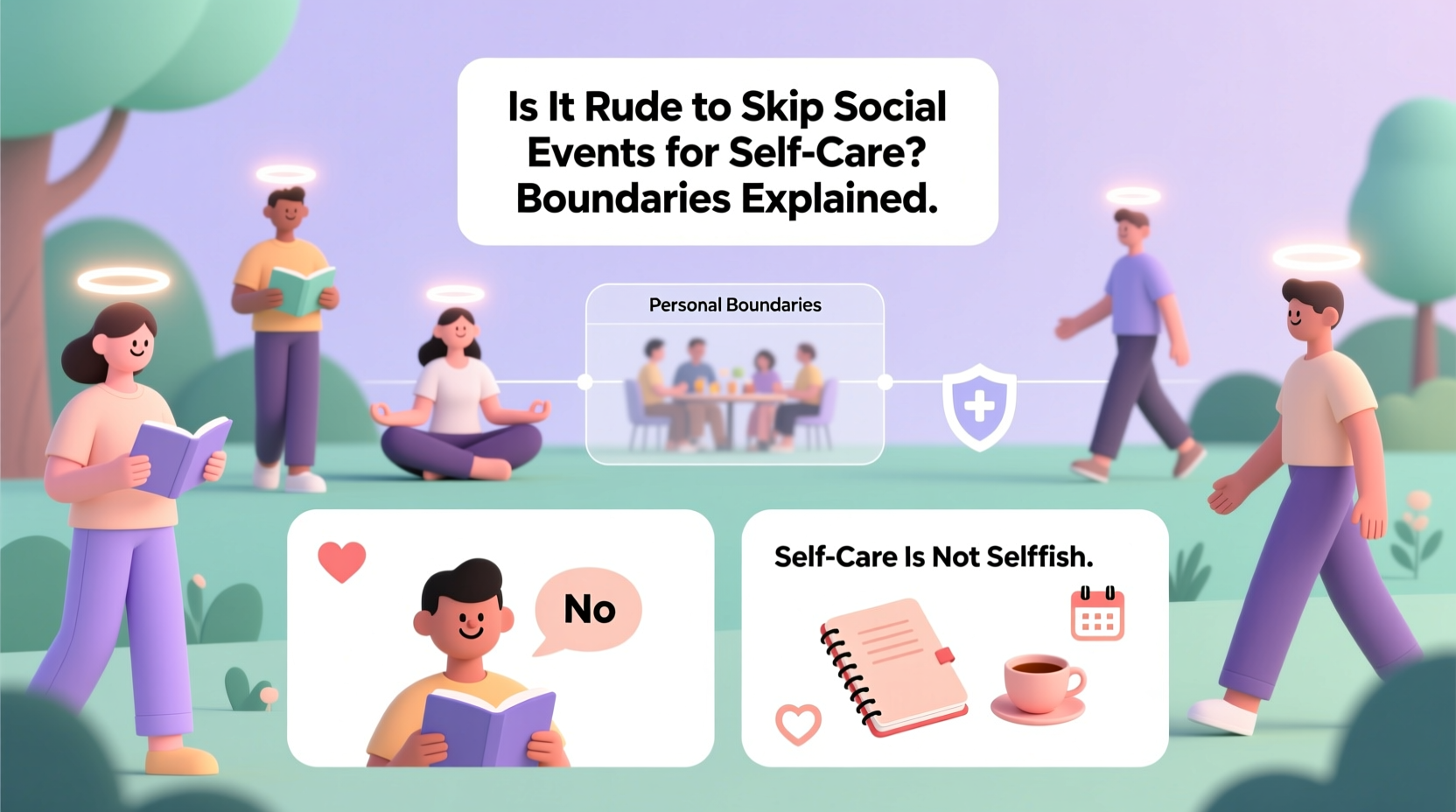
Self care refers to intentional actions that preserve or improve one’s mental, emotional, and physical well-being. It includes sleep, nutrition, therapy, meditation, exercise, and yes—saying no to overcommitment. When we neglect these practices, burnout, anxiety, and strained relationships follow.
Chronic over-scheduling leads to what psychologists call “social fatigue,” especially among introverts or highly sensitive individuals. A 2022 study published in the Journal of Happiness Studies found that people who regularly scheduled personal recovery time reported higher life satisfaction and stronger social connections than those who didn’t.
“Boundaries aren’t walls—they’re gates. They allow us to choose what enters our lives, including energy, obligations, and relationships.” — Dr. Leila Peterson, Clinical Psychologist
The idea that skipping a party or dinner means you don’t value the people involved is a myth. In reality, taking time for yourself often enables you to show up more fully when you do attend events. You’re less irritable, more present, and genuinely engaged—not just physically present but emotionally drained.
When Skipping Events Crosses Into Rude Behavior (And When It Doesn’t)
Context matters. Declining an occasional gathering for personal recharge is reasonable. But repeatedly canceling last-minute or ignoring major milestones (like weddings or birthdays) without explanation can strain relationships. The difference lies in consistency, communication, and consideration.
Here’s a breakdown of acceptable vs. potentially problematic behavior:
| Acceptable (Healthy Boundaries) | Potentially Problematic (Rude Patterns) |
|---|---|
| You decline an invitation politely and in advance. | You ghost invitations or respond at the last minute. |
| You explain briefly that you need personal time. | You give vague excuses repeatedly without follow-through. |
| You attend some events but not all, showing balance. | You never attend any events, even after repeated invites. |
| You express appreciation for the invite despite declining. | You criticize the event or make others feel guilty for inviting you. |
The key distinction is whether your actions reflect thoughtful intentionality or consistent disregard. If you're making space for self care while still honoring important commitments, you're practicing emotional intelligence—not rudeness.
How to Say No Without Guilt: A Step-by-Step Guide
Knowing you *should* say no is one thing. Doing it gracefully is another. Follow this five-step approach to decline invitations with empathy and clarity:
- Acknowledge the Invitation Promptly
Respond as soon as possible. Delaying creates uncertainty and may inconvenience hosts planning logistics. - Express Appreciation
Start with gratitude. Example: “I’m really touched you thought of me for your birthday dinner.” - State Your Decision Clearly
Be direct but kind. Avoid over-explaining or fabricating excuses. Try: “I won’t be able to make it this time.” - Offer a Brief Reason (Optional)
If comfortable, share a simple truth: “I’ve been feeling stretched thin and need to recharge this weekend.” - Reaffirm the Relationship
Close positively: “I’d love to catch up over coffee next week if you’re free.”
This method maintains connection while asserting your needs. It prevents misunderstandings and reduces the chance of being perceived as dismissive.
Mini Case Study: Sarah’s Boundary Breakthrough
Sarah, a 32-year-old marketing manager, used to accept every social invite out of fear of seeming aloof. After months of late nights, poor sleep, and rising anxiety, she realized she was running on empty. When her best friend invited her to a weekend getaway, Sarah felt torn. She wanted to support her friend but knew she desperately needed downtime.
She sent a message: “I’m so grateful you included me—it means a lot. I’ve been pushing myself hard lately and need to take this weekend to reset. I hope you have an amazing trip! Can we plan a walk next Sunday? I’d love to hear all about it.”
Her friend responded warmly: “Totally understand. Take care of yourself—and yes, let’s meet up!” Sarah preserved the friendship, honored her limits, and returned to work on Monday feeling refreshed.
Common Misconceptions About Self Care and Social Obligations
Several myths keep people trapped in cycles of overcommitment. Debunking them is essential for building sustainable boundaries.
- Misconception: “If I say no, people will think I don’t like them.”
Reality: Most mature adults understand that everyone has different energy levels and needs. Respectful declines are rarely taken personally. - Misconception: “Self care means doing spa days or yoga retreats.”
Reality: True self care includes mundane but vital acts—sleeping eight hours, eating regularly, or spending a quiet evening alone. - Misconception: “I have to explain everything to justify my decision.”
Reality: You owe others transparency, not full disclosure. A simple “I need some time to myself” is enough. - Misconception: “Setting boundaries will make me seem cold or unkind.”
Reality: Clear boundaries often deepen trust. They signal self-awareness and reliability—qualities that strengthen relationships.
Checklist: Setting Healthy Social Boundaries
Use this checklist to evaluate and refine your approach to social invitations:
- ✅ Assess your energy level before accepting new plans
- ✅ Schedule regular self care blocks in your calendar
- ✅ Respond to invites within 24–48 hours
- ✅ Use kind but firm language when declining
- ✅ Offer alternative ways to connect when possible
- ✅ Reflect on patterns—are you consistently overcommitted?
- ✅ Reconnect after declining (e.g., send a message post-event)
- ✅ Forgive yourself if you feel guilty—it’s normal, but not always accurate
Frequently Asked Questions
Isn’t skipping events selfish?
Not if done with awareness and balance. Selfishness involves disregarding others’ needs for personal gain. Self care, however, ensures you’re in a better position to support others long-term. As flight attendants remind us: put on your own oxygen mask first.
What if my friends get upset when I decline?
Some discomfort may arise, especially if your behavior changes suddenly. But healthy friendships can tolerate respectful boundaries. If someone reacts harshly to a polite no, it may reflect their own insecurities or dependency issues—not your wrongdoing.
How often is it okay to skip events?
There’s no universal rule. It depends on your capacity, schedule, and relationships. A useful benchmark: Are you showing up meaningfully when it matters most? If yes, occasional absences are perfectly valid.
Conclusion: Prioritizing Yourself Is Not Disrespectful—It’s Responsible
Choosing to skip a social event for self care isn’t rude—it’s responsible. It reflects self-knowledge, emotional maturity, and long-term thinking. The goal isn’t isolation, but sustainability: maintaining your well-being so you can engage meaningfully when you choose to.
Boundaries aren’t barriers to connection—they’re the foundation of authentic ones. When you honor your limits with honesty and care, you model the same permission for others to do the same. Over time, this fosters deeper, more resilient relationships built on mutual respect rather than obligation.




 浙公网安备
33010002000092号
浙公网安备
33010002000092号 浙B2-20120091-4
Comments
No comments yet. Why don't you start the discussion?