
Aromatherapy has become a cornerstone of modern wellness routines, with essential oil diffusers offering a simple way to infuse homes with calming scents like lavender, eucalyptus, and citrus. Many people use diffusers to promote relaxation, improve sleep, or purify the air. But as their popularity grows, so do questions about safety—particularly whether it's wise to leave a diffuser running throughout the night. While the gentle mist and soothing fragrance may seem harmless, doing so can pose real risks to health, home, and equipment longevity.
This article examines the potential dangers of overnight diffuser use, explores what experts say, and provides practical, science-backed alternatives that deliver the benefits of aromatherapy without compromising safety.
Understanding How Diffusers Work
Most essential oil diffusers on the market today are ultrasonic models. These devices use electronic frequencies to vibrate water and break essential oils into micro-sized particles, dispersing them into the air as a cool mist. Other types include nebulizing, heat, and evaporative diffusers, each operating differently but serving the same purpose: releasing aromatic compounds into indoor environments.
Because ultrasonic diffusers require water and electricity, they function similarly to humidifiers. This means they are subject to the same operational constraints—such as water levels, electrical safety, and room ventilation—as other household appliances that run on power and moisture.
While convenient, continuous operation—especially while sleeping—introduces variables that manufacturers and safety experts caution against.
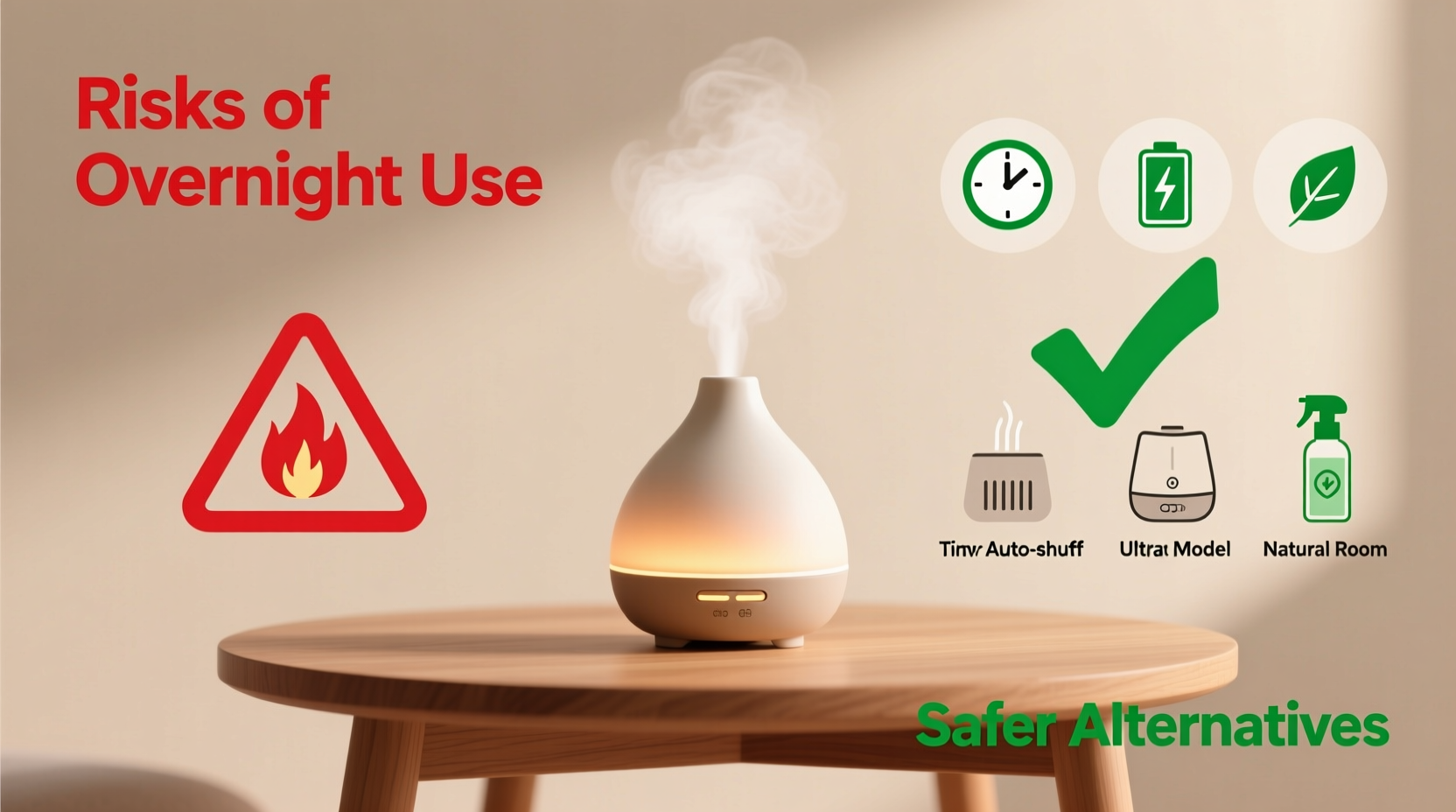
Risks of Leaving a Diffuser On Overnight
Leaving a diffuser running unattended during sleep may seem like a passive wellness habit, but it introduces several underappreciated risks:
1. Fire Hazard from Overheating or Electrical Failure
Though rare, electrical malfunctions in any plugged-in device can lead to overheating or short circuits. Most diffusers are designed with auto-shutoff features when water runs low, but not all models have reliable sensors. A unit that continues to operate without water may overheat its internal components, increasing fire risk—especially if placed near bedding, curtains, or flammable materials.
2. Excessive Humidity and Mold Growth
Ultrasonic diffusers add moisture to the air. Running one for 6–8 hours straight, particularly in small or poorly ventilated rooms, can elevate humidity levels beyond comfort. Prolonged high humidity encourages mold growth on walls, ceilings, and furniture, especially in climates already prone to dampness. For individuals with asthma or respiratory conditions, this creates an unhealthy environment.
3. Essential Oil Overexposure
Continuous diffusion leads to prolonged inhalation of concentrated essential oil particles. While short-term exposure is generally safe, extended contact—especially with potent oils like peppermint, tea tree, or clove—can cause headaches, dizziness, or respiratory irritation. Sensitive individuals, including children and pets, may experience adverse reactions even at low concentrations.
“Prolonged exposure to essential oils, even natural ones, can trigger sensitization or allergic responses over time. It’s best to use them intermittently and in well-ventilated spaces.” — Dr. Lena Torres, Environmental Health Specialist
4. Damage to the Diffuser Unit
Running a diffuser continuously accelerates wear and tear. Components such as the ceramic plate or transducer can degrade faster without adequate cooling periods. Units lacking proper maintenance or automatic shutoff are especially vulnerable to premature failure.
5. Risk to Pets and Children
Cats, birds, and small animals are particularly sensitive to airborne essential oils. Oils like eucalyptus, citrus, and pine contain compounds toxic to pets when inhaled in enclosed spaces. Leaving a diffuser on overnight increases their exposure during rest periods when they’re least able to escape the scent.
Safer Alternatives to Overnight Diffusing
You don’t need to sacrifice the benefits of aromatherapy to stay safe. Several effective, low-risk strategies can help you enjoy essential oils without leaving a diffuser running all night.
Use Timers or Smart Diffusers
Modern diffusers often come with built-in timers (e.g., 1-hour, 3-hour, or 6-hour cycles) or app-based controls. Instead of running continuously, set the device to operate for 30–60 minutes before bedtime, allowing the scent to fill the room and then dissipate naturally. Some smart models can be scheduled remotely via smartphone, giving you full control without manual intervention.
Intermittent Diffusion Technique
Experts recommend using a \"pulse\" method: diffuse for 30 minutes, then turn off for 30–60 minutes. This prevents oil buildup in the air and reduces the risk of olfactory fatigue (when your nose stops detecting the scent). Repeating this cycle ensures consistent aroma without overexposure.
Natural, Passive Diffusion Methods
For nighttime scent without electricity, consider non-powered alternatives:
- Aroma stones or lava beads: Place a few drops of essential oil on porous stones and position them near your bed.
- Reed diffusers: These use capillary action to release scent slowly over days. Choose non-alcohol-based formulas for gentler dispersion.
- Scented sachets: Fill small fabric pouches with dried herbs (like lavender or chamomile) and place them under your pillow or in drawers.
Pre-Treat Your Linens
Add 2–3 drops of calming essential oil (e.g., lavender or cedarwood) to a damp washcloth, then toss it in the dryer with your bedsheets for 10 minutes. The heat gently bonds the oil to the fabric, creating a subtle, long-lasting scent without continuous diffusion.
Bedtime Spray Mist
Create a DIY linen spray by mixing 10–15 drops of essential oil with 1 cup of distilled water and 1 tablespoon of vodka or witch hazel (to disperse the oil). Lightly spritz your pillow and sheets 15 minutes before sleep. This delivers immediate aromatherapy benefits with minimal exposure.
Do’s and Don’ts of Diffuser Use
| Do’s | Don’ts |
|---|---|
| Use distilled water to prevent mineral buildup | Run the diffuser without water |
| Place the diffuser on an elevated, stable surface | Put it near electronics or fabrics that could get wet |
| Diffuse in well-ventilated areas | Use in tightly sealed rooms for more than 2 hours |
| Limit sessions to 30–60 minutes | Leave it on overnight or while away from home |
| Clean the reservoir weekly | Mix incompatible oils (e.g., citrus + photosensitizing agents) |
Real-Life Scenario: A Cautionary Example
Jenna, a 34-year-old yoga instructor, used a popular ultrasonic diffuser every night with lavender and frankincense to aid sleep. She placed it on her nightstand and left it running all night, believing it was harmless. After two weeks, she began waking up with sinus pressure and mild nausea. Her cat also started sneezing and avoiding the bedroom.
After consulting an integrative health practitioner, she learned that continuous diffusion had led to oil residue buildup in the air and on surfaces. The vet confirmed her cat was reacting to airborne terpenes. Jenna switched to a linen spray and now uses her diffuser only for 45 minutes before bed—with immediate improvement in both her symptoms and her pet’s behavior.
Her story highlights how even “natural” products require mindful use.
Step-by-Step Guide to Safe Aromatherapy at Night
- Choose the right oil: Opt for calming, non-irritating oils like lavender, chamomile, or sandalwood. Avoid strong or stimulating oils like rosemary or lemon late at night.
- Set a schedule: Program your diffuser to run for 30–60 minutes before your usual bedtime.
- Prepare the space: Ensure the room has some airflow—crack a window or use a fan on low.
- Fill with care: Use distilled water and no more than 3–5 drops of essential oil per 100ml capacity.
- Position safely: Place the diffuser on a hard, level surface at least 2 feet from your bed and out of reach of children or pets.
- Monitor response: If you wake with dry throat, headache, or congestion, reduce usage time or switch to passive methods.
- Clean regularly: Wipe the tank weekly with white vinegar or rubbing alcohol to prevent mold and oil residue buildup.
Frequently Asked Questions
Can I leave my diffuser on while I sleep if it has auto-shutoff?
Even with auto-shutoff, it’s not recommended. While the feature prevents dry running, it doesn’t eliminate risks from prolonged oil exposure or humidity buildup. Use timed intervals instead.
Are there any essential oils that are safe to diffuse all night?
No essential oil should be diffused continuously. Even mild oils can cause sensitization or respiratory irritation over time. Always limit diffusion duration and ensure room ventilation.
What’s the safest way to use a diffuser for better sleep?
The safest approach is to diffuse for 30–60 minutes before bedtime, then turn it off. Combine this with passive methods like linen sprays or aroma stones for sustained effect without risk.
Conclusion: Prioritize Safety Without Sacrificing Serenity
Essential oil diffusers offer a powerful tool for enhancing mood, promoting relaxation, and improving sleep quality. But like any wellness practice, they work best when used mindfully. Leaving a diffuser on overnight may seem like a shortcut to tranquility, but it introduces avoidable risks to your health, home, and loved ones.
By adopting smarter habits—like using timers, intermittent cycles, and passive scenting methods—you gain all the benefits of aromatherapy with none of the danger. Small changes in routine can make a lasting difference in how safely and effectively you integrate essential oils into your life.




 浙公网安备
33010002000092号
浙公网安备
33010002000092号 浙B2-20120091-4
Comments
No comments yet. Why don't you start the discussion?