
Programmable LED icicle lights add festive charm to homes year-round, especially during holidays. Their shimmering strands mimic snow-laden eaves, creating a cozy ambiance indoors and out. But for pet owners—particularly those with dogs, cats, or small animals prone to chewing—these decorative lights pose real concerns. When pets interact destructively with electrical cords, the risks extend beyond damaged decor. The combination of electricity, frayed wires, and curious teeth raises legitimate safety questions: Can leaving these lights on overnight lead to fire hazards? Could a pet suffer electrocution? And what practical steps can homeowners take to enjoy their lights without endangering their furry companions?
This article explores the intersection of pet behavior, electrical safety, and modern lighting technology. It provides a detailed assessment of the dangers associated with pets chewing LED light cords, evaluates whether overnight operation is advisable, and offers actionable solutions for minimizing risk while preserving seasonal enjoyment.
Understanding the Risks of Pets Chewing LED Light Cords
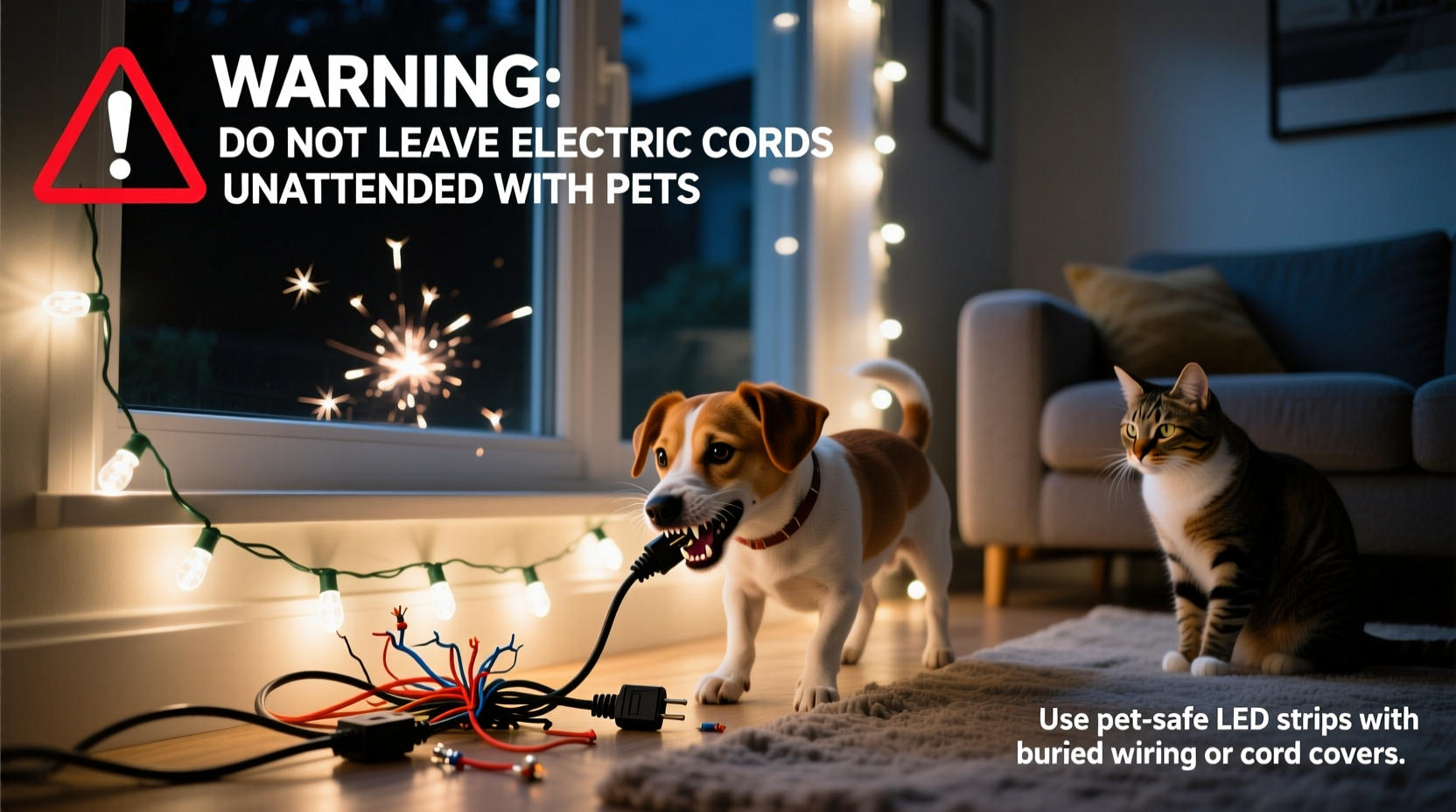
LED icicle lights are often marketed as energy-efficient and cooler-running than traditional incandescent bulbs, which reduces—but does not eliminate—the risk of fire. While LEDs generate less heat, they still rely on electrical current flowing through insulated wiring. If a pet chews through the insulation, several dangerous outcomes become possible:
- Electrical shock to the pet: Even low-voltage systems can deliver enough current to cause pain, burns, or cardiac arrest in small animals.
- Short circuits: Damaged wires may spark, potentially igniting nearby flammable materials like curtains, carpet fibers, or dry foliage.
- Fire hazard: Though rare with LEDs, sustained arcing at a chewed junction can overheat components and start a fire, especially if the strand remains powered overnight.
- Damage to smart controls: Programmable lights often connect to timers, remotes, or Wi-Fi hubs. A chewed wire can disrupt circuitry, leading to malfunction or permanent failure.
Pets chew for various reasons: puppies teethe, anxious animals self-soothe, and some breeds explore the world orally. Electrical cords present an irresistible combination of texture and subtle electromagnetic hum that may attract sensitive pets. According to the American Veterinary Medical Association (AVMA), accidental electrocution is one of the top preventable causes of sudden death in young pets exposed to household wiring.
“Even low-power decorative lighting can carry lethal current for small animals. Prevention through environmental management is far safer than relying on training alone.” — Dr. Lena Torres, DVM, Small Animal Emergency Specialist
Can You Leave LED Icicle Lights On Overnight Safely?
The short answer: It depends. Leaving LED icicle lights on overnight isn't inherently unsafe for humans, but introducing a pet that chews cords changes the equation significantly. Several factors determine whether overnight use is justifiable:
Location of Installation
Lights placed high on exterior eaves or behind secure railings pose minimal risk. However, indoor installations near baseboards, furniture legs, or floor level dramatically increase accessibility. Pets often target cords running along walls or under sofas, where they simulate “tunnels” or hidden pathways.
Type of Wiring and Insulation
Not all LED light cords are created equal. Thicker-gauge, rubber-coated cables resist chewing better than thin plastic-sheathed wires. Commercial-grade strings typically use more durable materials than budget holiday sets. Look for models labeled “heavy-duty” or “outdoor-rated,” even for indoor use.
Presence of Timers or Auto-Shutoff
Programmable features help mitigate risk by limiting active hours. A timer that turns lights off after midnight reduces exposure time. Some smart systems allow remote shutdown via smartphone—if you notice your dog gnawing the strand from another room, you can cut power instantly.
Supervision and Pet Behavior History
A well-trained, older pet with no history of destructive chewing presents lower risk than a teething puppy or an anxious rescue animal. However, behavioral patterns can change due to stress, illness, or environmental shifts. Relying solely on past behavior is unwise.
In general, experts recommend against leaving any electrical decor unattended overnight in households with known cord-chewers—regardless of bulb type.
Pet-Proofing Strategies for LED Icicle Lights
Prevention is the most effective defense. Instead of asking whether it's safe to leave lights on, focus on making them inaccessible or undesirable to pets. The following methods combine physical barriers, behavioral conditioning, and product selection to create a safer environment.
Use Cord Protectors and Concealment
Rigid plastic tubing, spiral wrap conduits, or braided cable sleeves physically block access to wires. These are inexpensive, easy to install, and available in neutral colors to blend with decor.
Elevate or Redirect Wiring Paths
Route cords along ceilings, crown molding, or door frames using adhesive clips. Avoid floor-level runs entirely. If you must cross a walkway, use flat cord covers designed for rugs or thresholds.
Apply Bitter-Tasting Deterrents
Pet-safe anti-chew sprays contain bittering agents like denatonium benzoate. Apply lightly to cords (avoiding LED nodes) every few days. Most animals avoid treated surfaces after one taste. Reapply after cleaning or heavy dust accumulation.
Provide Alternative Chew Outlets
Satisfy natural chewing instincts with durable toys, food puzzles, or frozen treats. For puppies, rotate chew items regularly to maintain novelty. Mental stimulation reduces boredom-related destruction.
Train with Positive Reinforcement
Teach commands like “leave it” using rewards. Pair verbal cues with gentle redirection when your pet approaches cords. Consistency over weeks builds reliable habits. Consider professional training if your pet shows compulsive chewing.
Comparison: Safety Features in Common LED Icicle Light Models
| Feature | Budget Indoor Set | Outdoor-Rated String | Smart Programmable Model |
|---|---|---|---|
| Wire Gauge & Insulation | Thin PVC, easily chewed | Thick rubberized coating | Moderate; varies by brand |
| Voltage Output | 120V standard | 120V with surge protection | Often 12–24V with adapter |
| Auto Shutoff Timer | Rare | Sometimes included | Standard feature |
| Remote Monitoring | No | No | Yes (via app) |
| Pet-Safety Recommendation | Not recommended indoors with pets | Acceptable if elevated and secured | Best option with monitoring |
As shown, higher-end programmable models offer superior control and lower operating voltage, enhancing safety. However, even advanced systems require proper installation to be effective.
Step-by-Step: Securing LED Icicle Lights in a Pet-Friendly Home
Follow this timeline to install and maintain LED icicle lights safely in a home with cord-chewing pets:
- Week 1: Assess Risk Zones
Walk through your space and identify where pets spend time. Note areas near windows, furniture, and baseboards where cords might run. - Week 1: Purchase Supplies
Buy cord protectors, adhesive clips, bitter spray, and outdoor-rated lights if possible. Choose models with built-in timers. - Week 2: Install Without Power
Mount lights during daylight. Use ceiling routes or wall tops. Secure every 6–8 inches with clips. Avoid dangling ends. - Week 2: Apply Deterrents
Spray cords (not bulbs) with pet-safe repellent. Let dry completely before powering on. - Week 3: Supervised Testing
Turn lights on while actively supervising your pet. Watch for interest or attempts to chew. Redirect immediately. - Ongoing: Monitor and Maintain
Check weekly for wear, chew marks, or loose connections. Reapply deterrent every 5–7 days or after dust storms.
Real-Life Example: Managing a Teething Puppy During Holiday Season
Sarah, a dog owner in Colorado, installed new programmable LED icicle lights along her living room windowsill for Christmas. She adopted a 10-week-old Labrador mix the same week. Within two days, the puppy began mouthing the dangling end of the light strand.
Instead of scolding, Sarah took action: she unplugged the lights, rerouted the cord up the wall using paintable adhesive clips, and covered the visible portion with spiral plastic conduit. She applied a veterinarian-recommended bitter spray and gave the puppy a frozen Kong toy each evening when the lights turned on.
Within five days, the puppy lost interest in the cord. By pairing the lights’ activation with positive experiences (playtime, treats), Sarah associated the visual stimulus with good outcomes—not something to chew. Her proactive adjustments prevented injury and preserved both the lights and family peace.
Frequently Asked Questions
Can a dog get electrocuted from chewing LED light cords?
Yes. Although LED lights use less power, they’re often plugged into standard 120V outlets. If a dog bites through the insulation and contacts live wires, especially with wet mouth tissue, electrocution can occur. Symptoms include yelping, muscle tremors, burns around the mouth, difficulty breathing, or sudden collapse. Immediate veterinary care is critical.
Are battery-operated LED icicle lights safer for homes with pets?
Generally, yes. Battery-powered strings eliminate line-voltage risks and reduce fire hazards. Most operate at 3–12V, posing minimal shock danger. However, batteries themselves can be toxic if swallowed. Ensure battery compartments are securely closed and out of reach. These lights are ideal for low-height displays or temporary setups.
Do automatic timers make LED lights safer around pets?
Timers reduce risk by limiting exposure time, but they don’t address physical access. A pet can still chew a live cord during the on-cycle. However, combining timers with elevation and deterrents creates layered protection. Smart timers with motion alerts or remote shutoff offer even greater control.
Conclusion: Balancing Beauty and Safety
Decorative lighting enhances mood, celebrates seasons, and expresses personal style. But when pets are part of the household, aesthetics must coexist with responsibility. Leaving programmable LED icicle lights on overnight with a pet that chews cords is generally not safe unless multiple protective measures are in place.
The goal isn’t to eliminate joy but to manage risk intelligently. By choosing robust lighting products, installing them thoughtfully, using deterrents, and understanding pet behavior, you can enjoy festive illumination without compromising safety. Technology helps—but vigilance and prevention remain irreplaceable.




 浙公网安备
33010002000092号
浙公网安备
33010002000092号 浙B2-20120091-4
Comments
No comments yet. Why don't you start the discussion?