
Smart lighting has transformed the way we interact with our homes. With voice commands, mobile apps, and automation routines, controlling your lighting environment is more convenient than ever. Many users rely on smart bulbs to create ambiance, enhance security, or provide low-level illumination throughout the night. But a common question arises: is it safe to leave smart lights on overnight? While these devices are designed with modern safety features, understanding the potential risks — from fire hazards to long-term wear — is essential for responsible use.
Unlike traditional incandescent bulbs that generate significant heat, most smart lights today use LED technology, which runs cooler and consumes less energy. However, even LEDs are not immune to failure, especially when left operating continuously. This article explores the real-world implications of leaving smart lights on overnight, evaluates manufacturer guidelines, and offers practical steps to balance convenience with safety.
Understanding Smart Light Technology
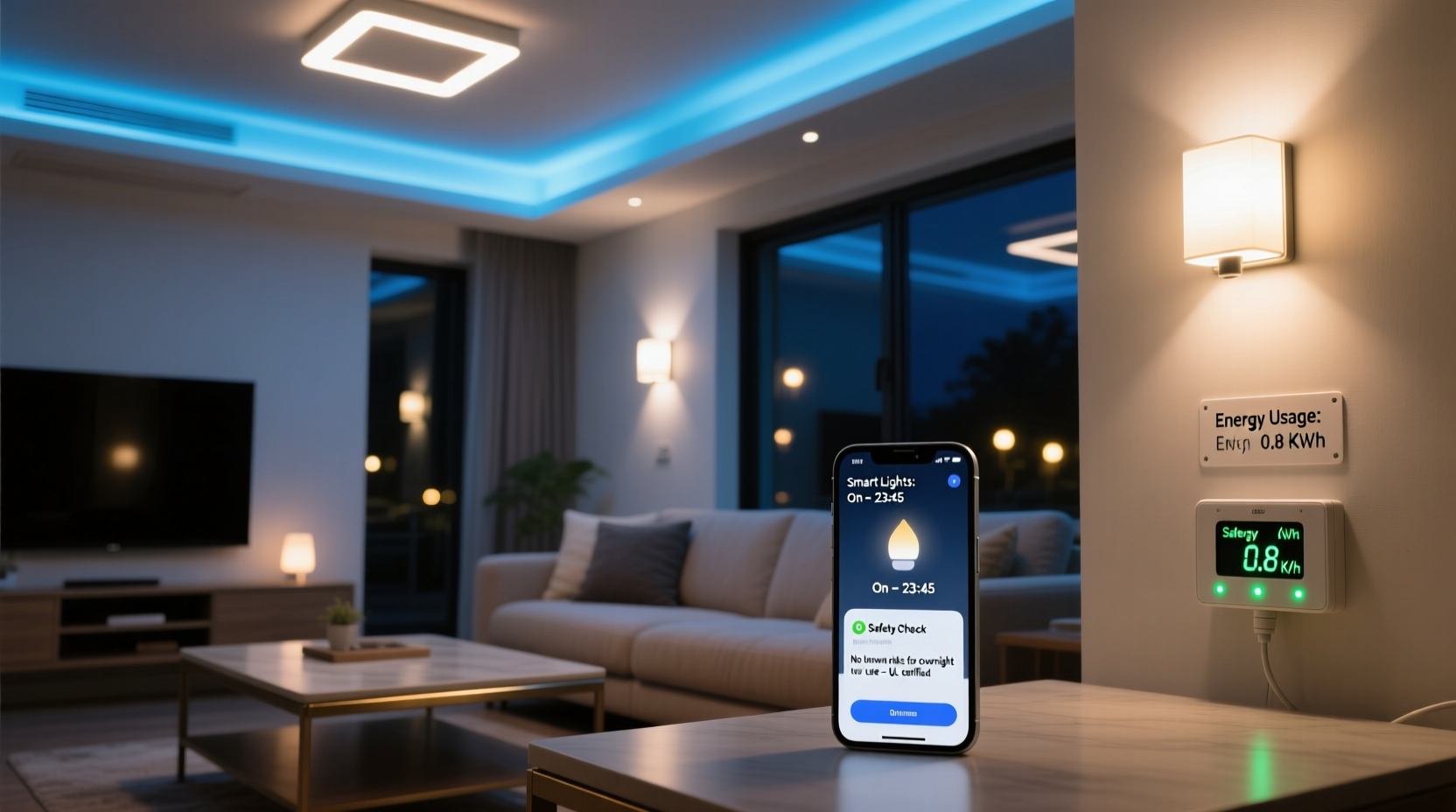
Smart lights typically consist of LED bulbs integrated with wireless communication modules (like Wi-Fi, Zigbee, or Bluetooth) and microcontrollers that allow remote control and automation. These components enable features such as color changing, scheduling, dimming, and integration with smart home ecosystems like Amazon Alexa, Google Home, or Apple HomeKit.
The efficiency of LED-based smart bulbs means they convert most of their energy into light rather than heat, reducing the risk of overheating compared to older bulb types. However, the added circuitry inside smart bulbs introduces new variables. The internal electronics must manage power regulation, signal processing, and thermal dissipation over extended periods.
Manufacturers design these bulbs to handle continuous operation under normal conditions. For example, Philips Hue states that its LED bulbs have a rated lifespan of up to 25,000 hours—equivalent to about 2.8 years of non-stop use. Yet, longevity claims assume ideal environmental factors: proper ventilation, stable voltage, and average room temperatures.
Potential Risks of Leaving Smart Lights On Overnight
While generally safe, leaving smart lights on for prolonged periods does carry some risks, particularly if best practices are ignored or if substandard products are used.
1. Overheating and Fire Hazards
Although rare, overheating can occur due to poor ventilation, incompatible fixtures, or defective units. Enclosed ceiling fixtures without adequate airflow may trap heat around the bulb, especially if the fixture is covered or located in an insulated area. In extreme cases, this can degrade internal components or solder joints, potentially leading to short circuits.
A 2021 report by the U.S. Consumer Product Safety Commission noted that while LED bulbs pose significantly lower fire risks than incandescent models, electrical failures in smart lighting systems accounted for a small number of residential incidents—often linked to third-party or uncertified brands lacking proper safety certifications.
2. Reduced Lifespan and Premature Failure
Even though smart LEDs are rated for tens of thousands of hours, continuous operation accelerates wear on electronic components. Capacitors, drivers, and wireless chips degrade faster under constant load. This not only increases replacement costs but may also lead to inconsistent performance, such as flickering or connectivity drops.
3. Energy Waste and Cost Accumulation
Smart lights are energy-efficient, but leaving them on all night still adds up. A typical smart bulb uses between 6–12 watts. If left on for 8 hours every night, one bulb consumes roughly 2.9 kWh per month. At the U.S. average electricity rate of $0.15/kWh, that’s about $0.44 monthly per bulb—or over $5 annually. Multiply this across multiple rooms, and unnecessary usage becomes a measurable expense.
4. Security Misconceptions
Some users leave lights on overnight to simulate occupancy and deter burglars. While this tactic was effective decades ago, experienced intruders often recognize patterns. A light that stays on in the same room every single night may signal an unoccupied home rather than an active one. Randomized or scheduled lighting via automation is far more effective for security purposes.
“Leaving lights on constantly isn’t just inefficient—it can undermine the very security benefit people think they’re gaining.” — David Lin, Smart Home Security Analyst at SafeTech Labs
Do’s and Don’ts: Safe Usage Practices
| Do | Don’t |
|---|---|
| Use smart lights in open or well-ventilated fixtures | Install them in tightly enclosed fixtures unless rated for it |
| Choose bulbs with UL, ETL, or CE safety certifications | Purchase cheap, no-name brands without verified compliance |
| Leverage scheduling to turn lights off after bedtime | Leave lights on 24/7 without monitoring usage |
| Update firmware regularly to patch vulnerabilities | Ignore software updates that fix stability or security issues |
| Use motion sensors or dimmed night modes instead of full brightness | Run bulbs at 100% brightness overnight unnecessarily |
Real-World Example: A Case of Overheating
In early 2023, a homeowner in Austin, Texas reported intermittent flickering and a burning smell coming from a smart bulb installed in a recessed ceiling fixture. The bulb, a budget brand purchased online, had been running nightly for over six months in a fully enclosed housing. Upon inspection, an electrician found discolored wiring and melted plastic near the base of the bulb—signs of thermal stress. Although no fire occurred, the fixture required rewiring, and the homeowner replaced all non-certified bulbs with UL-listed alternatives.
This case underscores two key points: not all smart bulbs are created equal, and installation context matters. Even if a bulb works initially, long-term reliability depends on compatibility with the fixture and adherence to safety standards.
Step-by-Step Guide to Safer Overnight Lighting
If you prefer having some level of illumination during the night—for safety, comfort, or routine reasons—follow this practical guide to minimize risk while maintaining functionality.
- Evaluate Your Needs: Determine whether you truly need lights on all night. For hallway navigation or bathroom access, consider motion-activated nightlights instead.
- Check Fixture Compatibility: Review your light fixture’s rating. Only install smart bulbs in enclosures labeled as suitable for enclosed use.
- Select Certified Products: Purchase bulbs with recognized safety marks such as UL, ETL, CSA, or CE. Avoid unknown brands sold exclusively through discount marketplaces.
- Set Automation Schedules: Use your smart home app to turn lights off automatically after bedtime—e.g., 30 minutes after you go to sleep.
- Enable Dimming or Color Modes: If keeping a light on, reduce brightness to 10–20%. Warmer color temperatures (2700K–3000K) are gentler on eyes and consume slightly less power.
- Monitor Performance: Periodically inspect bulbs for signs of overheating, discoloration, or erratic behavior. Replace any unit showing abnormalities immediately.
- Update Firmware Regularly: Manufacturers release patches for bugs, improve thermal management algorithms, and enhance stability. Enable automatic updates where available.
Frequently Asked Questions
Can smart lights cause fires if left on overnight?
The risk is extremely low with reputable, certified smart bulbs used in appropriate fixtures. Most modern LED smart lights generate minimal heat and include built-in safeguards. However, using uncertified or damaged bulbs in poorly ventilated enclosures increases the chance of overheating and electrical faults, which could contribute to fire under rare circumstances.
Do smart lights use a lot of electricity when left on all night?
Individually, smart LED bulbs are efficient—typically consuming 6–12 watts. One bulb left on for eight hours uses about 0.08 kWh per night, costing less than $1.50 per year. However, multiple bulbs across several rooms can increase cumulative usage. Using timers or automations reduces unnecessary consumption and saves energy over time.
Should I turn off smart lights at the switch when not in use?
Yes, especially for extended absences. Turning off the physical switch cuts power completely, preventing phantom drain and protecting against power surges. Note: Some smart bulbs require a trickle of power to remain connected; consult your model’s manual. For those, use smart switches instead of relying solely on wall toggles.
Expert Recommendations and Final Thoughts
According to Dr. Lena Park, an electrical safety researcher at the National Institute of Building Sciences, “Smart lighting is among the safest home technologies we have today—but user behavior plays a critical role. Just because something *can* run 24/7 doesn’t mean it *should*.” She emphasizes that longevity, safety, and efficiency are maximized when devices operate within their intended parameters.
The consensus among home automation experts is clear: smart lights can be safely left on overnight under controlled conditions, but doing so routinely without purpose offers diminishing returns. Instead of defaulting to \"always on,\" smarter strategies like timed shutdowns, motion activation, or adaptive night modes deliver the same benefits with fewer risks.
Additionally, integrating smart lights into broader routines enhances both utility and peace of mind. For instance, programming lights to gradually dim after midnight supports healthy sleep hygiene by reducing blue light exposure. Similarly, linking bedroom lights to alarm systems ensures illumination only when needed—such as turning on gently before wake-up time.
Conclusion: Make Safety a Priority Without Sacrificing Convenience
Leaving smart lights on overnight isn’t inherently dangerous, but treating it as a default habit overlooks important considerations around energy use, device longevity, and safety margins. By choosing quality products, respecting installation guidelines, and leveraging automation intelligently, you can enjoy the benefits of smart lighting without compromising peace of mind.
Take action today: audit your current smart lighting setup, remove uncertified bulbs, set up sleep schedules, and explore sensor-based alternatives. Small adjustments now can prevent problems down the line—and help you build a smarter, safer home environment.




 浙公网安备
33010002000092号
浙公网安备
33010002000092号 浙B2-20120091-4
Comments
No comments yet. Why don't you start the discussion?